
Fading 100-year-old pieces of Tri-Cities history are hiding in plain sight
AI-generated summary reviewed by our newsroom.
- Concrete stamps from 1926 mark parts of old Highway 410 in Columbia Park in Kennewick.
- Amateur historian Bill Glenn counted 25 stamps and urges preserving them.
- City pursues ownership and federal approvals to manage park infrastructure.
It was right underneath Bill Glenn’s foot.
During a slow day of hydroplane racing in 1968 at Columbia Park, the Tri-Cities radio engineer noticed something peculiar beneath his feet while standing in the pits: A stamp in the concrete pavement.
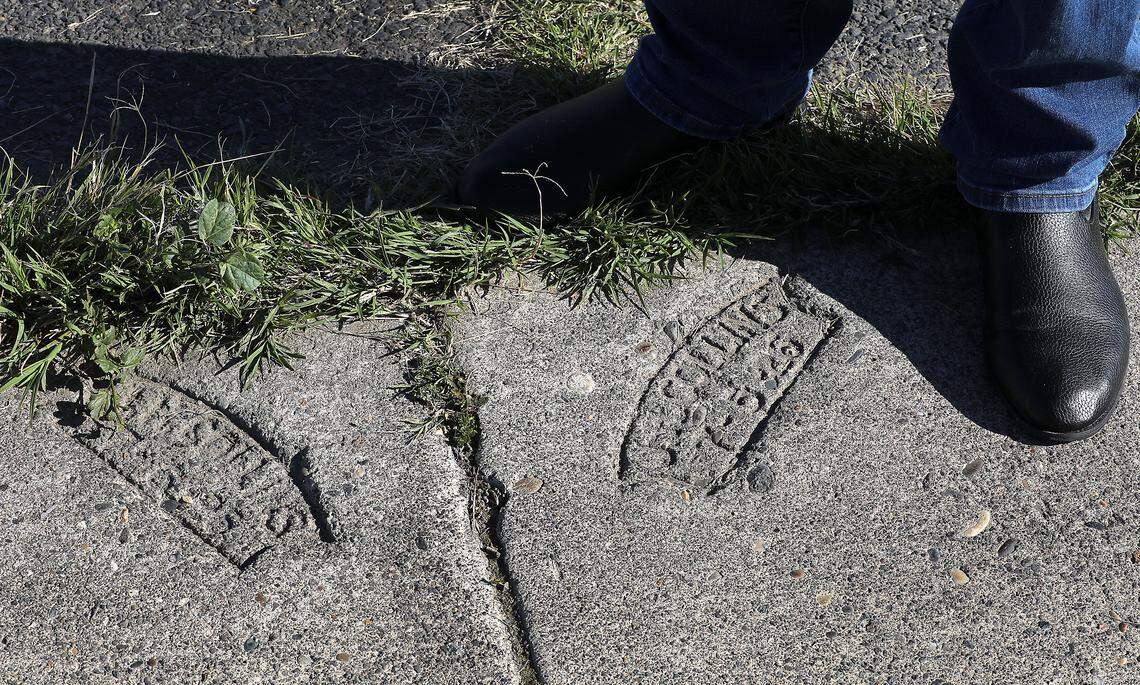
“J.H. Collins” it read, with a date ending in “26.”
Now approaching a century in age, the markings along what is now the Sacajawea Heritage Trail hint at the story of the first federal road in the American West.
Route 410 might not exist anymore, but the stamps of the early connection between the Rocky Mountains and Pacific Ocean are still there. Glenn says the markings in the Tri-Cities are possibly the last remnants of the old highway still in existence.
“Over the years, walking up and down (the trail), I started seeing more of them. It kind of gelled in my head that they were marking what they had done that day,” Glenn told the Tri-City Herald, nearly six decades after his discovery.
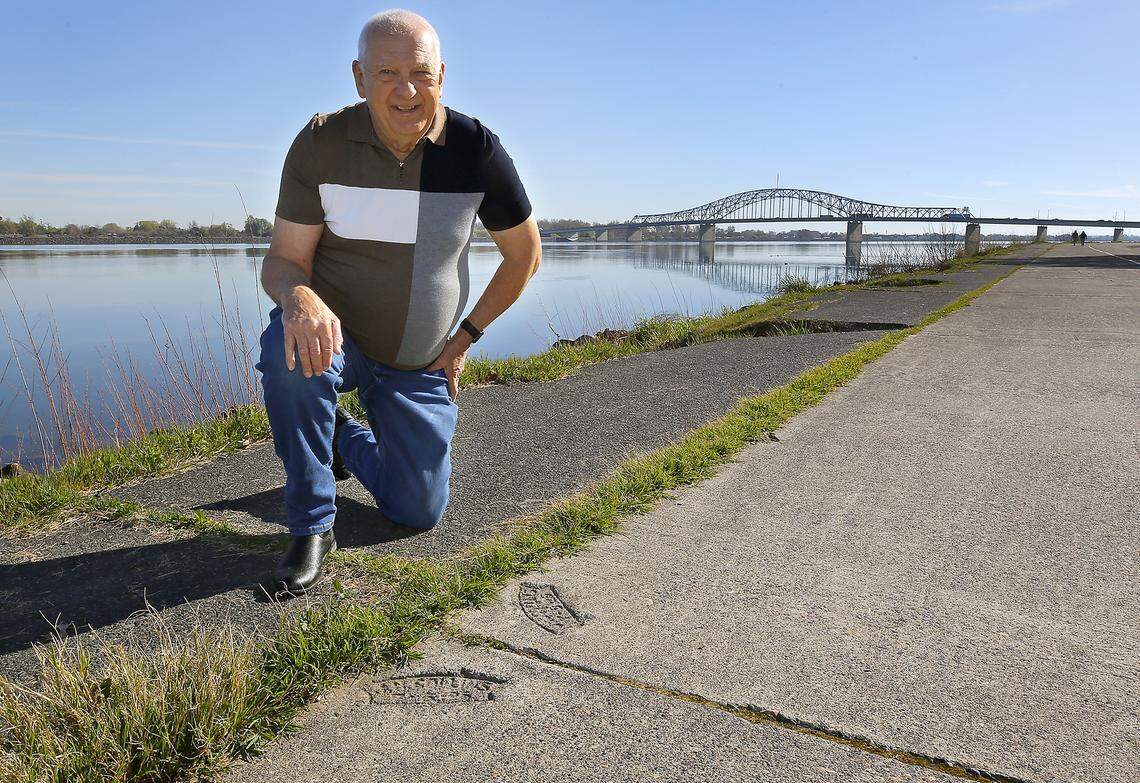
The highway ran through Columbia Park before it existed. Highway 410 spanned the Vaughn Hubbard Bridge entering Pasco, then crossed the green bridge into Kennewick. It hugged the western shore of both the Columbia and Yakima rivers, before making its way up the Yakima Valley and across Chinook Pass.
After 41 years, it was decommissioned in 1967 and parts were renamed to Highway 12.
Years later, the U.S. Army Corps of Engineers would clear the road and create Columbia Park as part of the McNary Dam backwater project. Sections of the old, bumpy roadway still exist in Kennewick as part of the Columbia Park Trail.
The stamps also are reminder of the ever-changing face of Columbia Park, which has transformed over the decades from farmland and residential homes into a recreational jewel in the Tri-Cities.
“It’s 100 years. It’s a significant piece of early Tri-Cities history,” said Glenn, 83, of Richland. “This was a connecting piece... This whole project was a major thoroughfare for the Pacific Northwest, from east to west.”
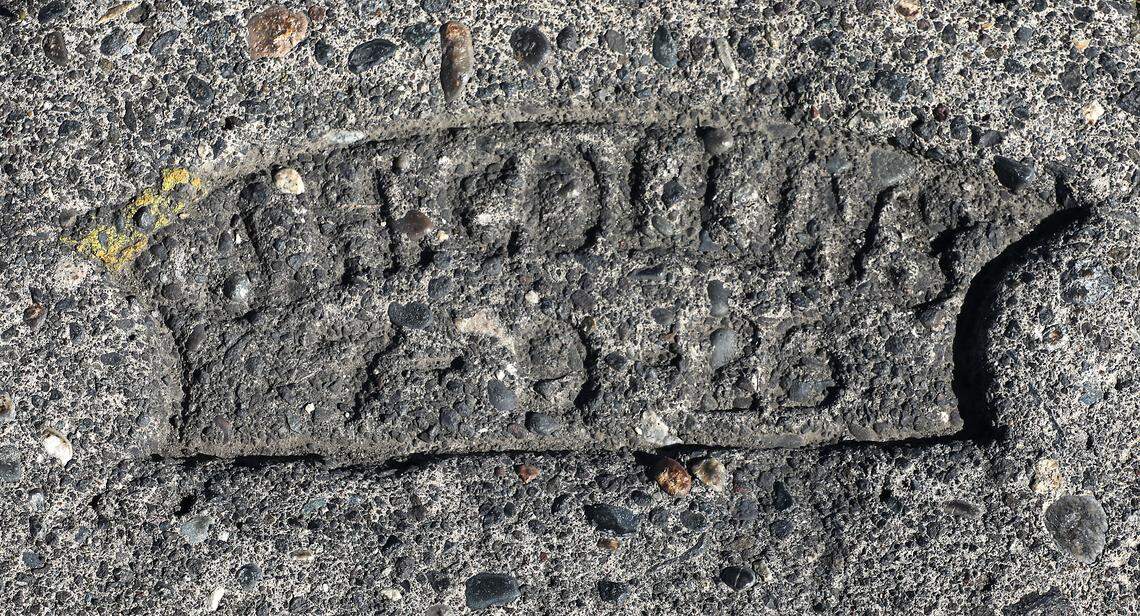
Glenn would like to see the concrete stamps retained and preserved whenever the time comes to replace the last of Highway 410.
“I’d just hate to see it completely gone,” he said.
As the 21st Century rolls on, more centennial celebrations are bound for the Tri-Cities and its young roots.
Just this month, Pasco Aviation Museum marked a hundred years since the launch of U.S. Air Mail and commercial aviation at a small dirt field in the Tri-Cities.
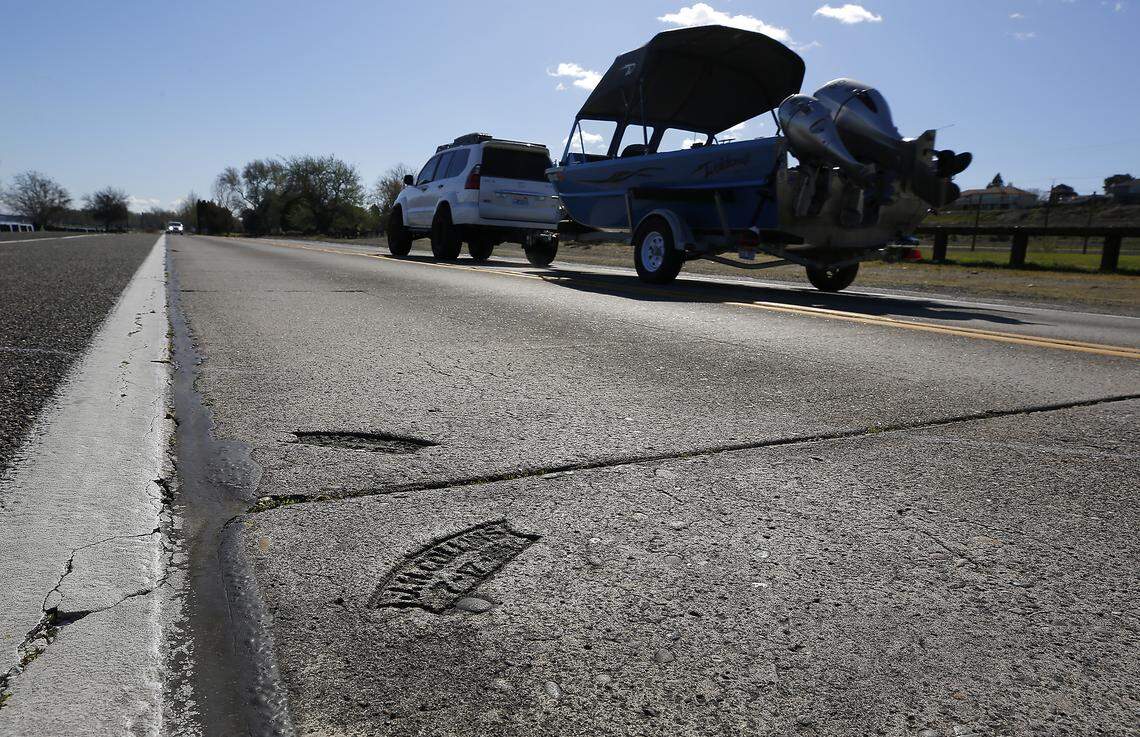
Highway 410 stamps
Columbia Park visitors can see the old highway erected through its concrete stamps that work crews punched daily into the slabs.
Glenn counted 25 between the Lampson Pits and the Reach Museum. The highway was laid east to west, with its earliest stamp near the pits dated June 10, 1926. The oldest he found was poured on Aug. 11, 1926, near the museum.
He estimates the J.H. Collins crew poured about an eighth of a mile each day, working as many as six days a week on the project. The route following the river was based on an old Native American path used before European arrival.
“They marked their work. They dated their term paper,” Glenn said of the highway crew.
If he was luckier, Glenn might have stumbled upon the Kennewick Man, known by tribes around the region as the “Ancient One.” The estimated 9,000-year-old skeletal remains were found upstream by hydroplane fans in July 1996, nearly three decades after Glenn’s stamp discovery.
The stamps are easiest to find on sunny mornings or evenings, when its shadows accentuate their fading details. Others have been eroded from decades of wear and are harder to find.
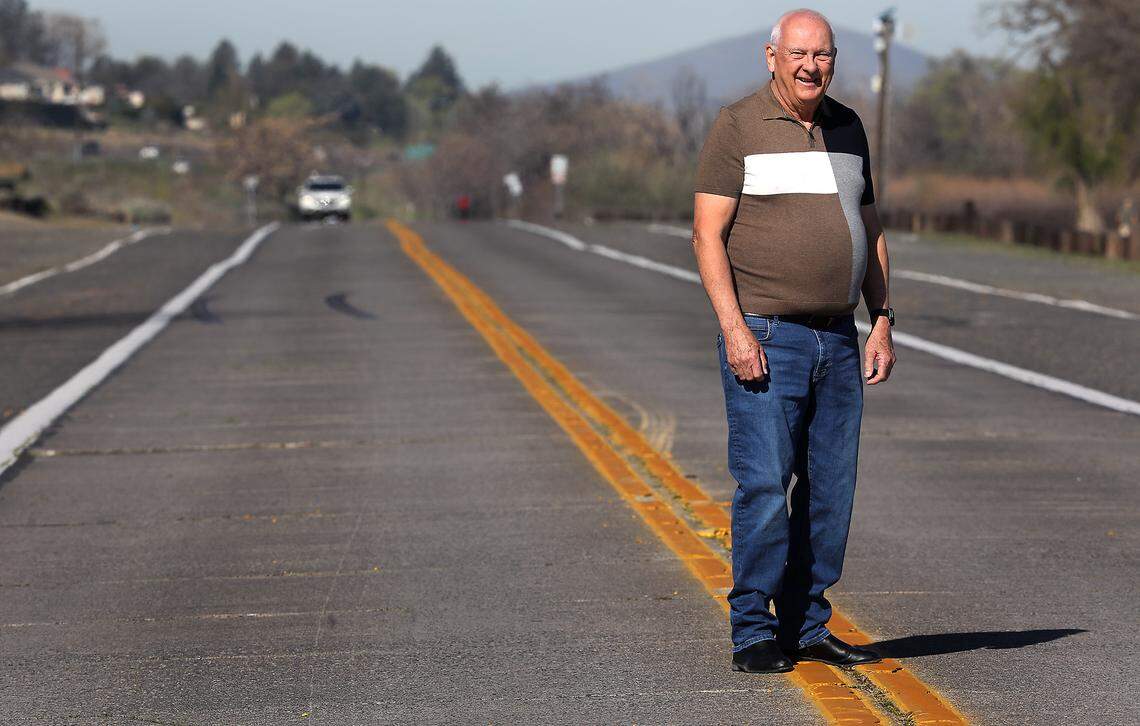
The U.S. Air Force veteran and amateur historian — who says he has an “insatiable curiosity about stuff” — stood over a pair of stamps at the pits on a recent spring morning, parts of them covered by old asphalt that was slowly degrading away.
Glenn doesn’t know if recent crews really knew they were burying something that would later become historically relevant.
“I don’t necessarily say they did a bad thing. They were doing what they needed to do,” he said.
Glenn paints a picture of the Tri-Cities in 1926, before the boom of the Manhattan Project came to town: There were a mere 5,000 residents, and Richland was “literally a crossroads.” Ownership of low-priced automobiles were beginning to boom in the 1920s, which made interstate travel more feasible.
“Pasco was the thriving community, but it was only a couple of thousands of people,” he said of the then-burgeoning railroad community. “We were far removed from all of the other population centers.”
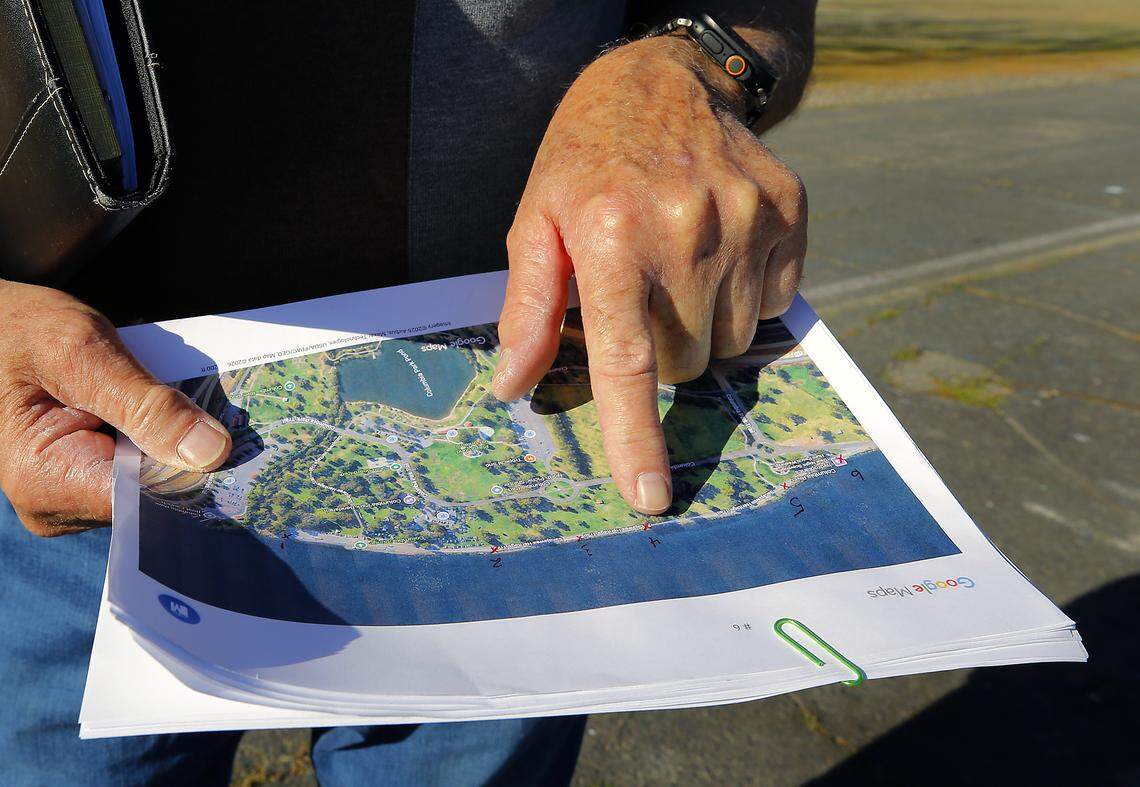
The west’s first major road
Highway 410 largely lends its creation to Congress seven decades before it would even open. The federal government gave $20,000 in 1852 for the construction of the West’s first major military road that would connect Fort Walla Walla to Steilacoom.
Oregon Territory settlers were eager to find a crossing in the northern Cascade Mountains to encourage settlement in the Puget Sound area as the Willamette Valley populated. Private citizens cleared land along established Native American trails to form a route over the Naches Pass, famously used by the Longmire-Biles wagon train a year later.
Later parties found it easier to abandon the Naches route. They instead followed the Columbia River Gorge and traveled north from Portland to reach the Sound.
The old Highway 410 also had its roots in the Inland Empire Highway, also known as State Route 3, which traced a similar route through the Tri-Cities.
A few things still remain a mystery to Glenn about the old stamps.
Who was the “J.H. Collins” contractor that constructed this portion of Highway 410, and how much did they do the work for?
There is also a collection of four-digit stamps along the route that use backward numbers and letters. Glenn has his theories about what these could be, but he’s not confident.
“It was some sort of code. I’m not sure if it signified either the type of mix or the phases of the moon,” he jested.
Columbia Park’s changing face
Columbia Park continues to shift and change decades later.
Last year, the city opened the off-leash, 3-acre Columbia River Dog Park east of the family fishing pond.
Next year, pending Army Corps permitting, the city hopes to begin the $1.4 million construction to replace a bridge built in the 1920s that spans a Columbia Irrigation District drainage ditch.
It’s near the Camp Kiwanis Building, near the disc golf course. There don’t appear to be any stamps left on the span, if there were any.
Kennewick also hopes to fulfill a decade-plus dream of owning Columbia Park East instead of leasing it through the Army Corps.
City Manager Erin Erdman says they’re working with federal legislators to navigate the details of the transfer, including the process, environmental considerations and the cost of the land. They hope to include those in this biennium’s Water Resources Development Act.
“The overall timeline will be tied to the WRDA legislative process, but we are hopeful that we will have a clear status update — and potentially approval — by the end of the year,” Erdman told the Herald in a statement.
Ownership of the land would help the city to replace old infrastructure, including old roadway like the Highway 410 concrete. Erdman said the city has been hesitant to invest in large replacement projects that it does not own.
But replacement of the road along Columbia Park Trail has not been a high priority in the city’s recent budgeting cycles to begin with.
“The road itself presents a significant cost challenge as well — it is an older concrete roadway, meaning a full replacement would require complete removal and reconstruction, making it a substantial financial undertaking,” she said.
For now, at least, it appears that Glenn’s stamps are here to stay.
This story was originally published April 12, 2026 at 5:00 AM.
