
Stay safe on Tri‑Cities trails: how to spot ticks, snakes and poison oak
AI-generated summary reviewed by our newsroom.
- Ticks in grasses, sage, riparian areas; check people/pets every few hours.
- Snakes emerge on trails; step away, leash dogs and avoid reaching into brush.
- Poison oak grows along creeks and valley bottoms. How to identify it.
Spring has finally arrived in the Columbia Basin. The grass is stretching higher, birdsong fills the mornings, and wildlife is shaking off the last of winter’s chill. But as families head back to the trails, riverbanks, and open spaces around the Tri‑Cities, a familiar trio of natural hazards is waking up too: ticks, snakes, and poison oak. These natural elements of the area are part of life in our shrub‑steppe landscape, and knowing where they show up—and how to avoid them—can make all the difference for a safe season outdoors.
Ticks: Tiny hitchhikers with a big impact
Ticks thrive anywhere people and pets brush against vegetation. In the Tri‑Cities, that means tall grasses, sagebrush flats, riparian corridors, and wooded paths from the Columbia River shoreline to the foothills of the Cascades. They can be encountered just about anywhere people and their animals walk, from the banks of the river, in the sage and along tree-covered paths, anywhere from along the local riverbanks to the alpine areas in the mountains. They don’t jump or fly. Instead, they wait on blades of grass or low shrubs, sense movement, and drop onto a passing host. Once aboard, they crawl to a warm, protected spot and latch on to grab hold with their pincers and as they feed on the blood of their unsuspecting host, their body swells and become noticeable. Research from the Washington State Department of Health shows that 1–2% of ticks tested in the state carry pathogens that can cause illnesses such as Lyme disease or tick‑borne fever. While the risk is lower on the east side of the state, prevention is still key.
How to avoid tick bites
You can avoid ticks by staying on established trails and avoid brushing against vegetation. Wear long sleeves, long pants, and light‑colored clothing, so ticks are easier to spot. Pull socks over pant cuffs to block entry points. The tight weave makes it harder for the tick to attach itself. Use repellents containing DEET, as recommended by the Centers for Disease Control and Prevention. Consider clothing treated with permethrin, which is also recommended by the CDC. Check yourself, your kids, and your pets every few hours—ticks love waistbands, sock lines, armpits, and hairlines. Ticks like tight places, like waistbands and tops of socks. Check on the head, neck, ears, under arms, between legs, and back of knees. Look for what may appear like a new freckle or speck of dirt. Ticks can take up to several hours to embed, which gives you time to find them first and remove them. Check your pets the same way especially after they spend time outdoors. Run your fingers through your pet’s fur with gentle pressure to feel for any small bumps. Look closely for ticks in and around their ears, eyelids, around their neck and collar, in between their legs, between their toes, all over their fur, and around their tail. Hunters and their dogs need to devote extra care looking for ticks because of the time they spend in tick-infested areas. Shower or bathe, preferably within two hours after being in tick habitat to wash off and more easily find ticks that are crawling on you.
If you find a tick
To find a tick bite, check your whole body. You may find a tick attached and sometimes your skin will turn red with a visible tick or exhibit swelling and tenderness. Remove it promptly with fine‑tipped tweezers, pulling straight upward with steady pressure. Clean the bite area thoroughly and note the date. Most tick bites are harmless and don’t cause any symptoms, but you can experience an allergic reaction. If you develop a fever, rash, or flu‑like symptoms within a month, tell your doctor you had a tick bite. The Washington State Department of Health advises against folk remedies such as hot matches, petroleum jelly, nail polish, or oils. These methods don’t work and may increase the risk of infection.
Snakes: sharing the trails with spring’s sun seekers
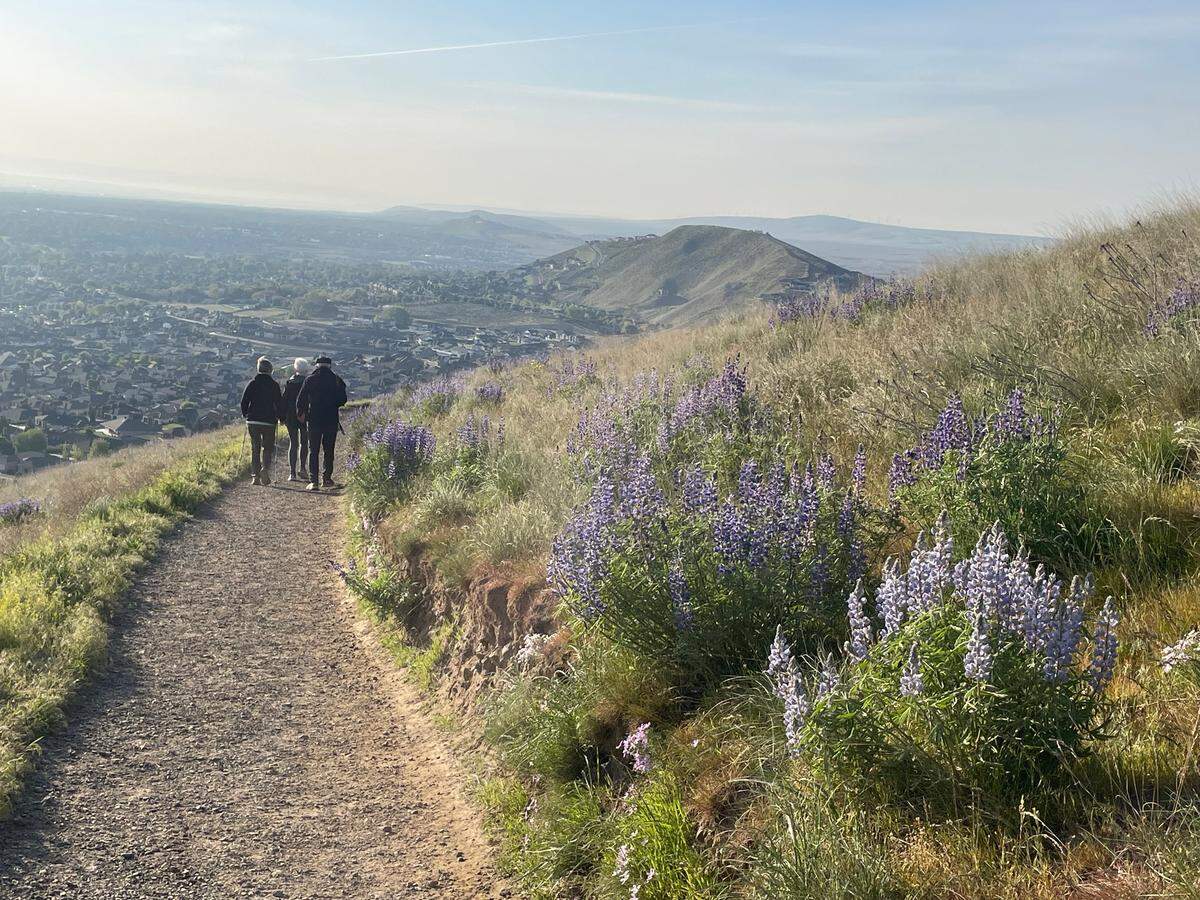
As temperatures climb into the 60s, snakes begin emerging from their winter dens. Morning hikers across the Tri‑Cities are already spotting them on Badger Mountain, Candy Mountain, Chamna Natural Preserve, Rattlesnake Slope, and other favorite trails. Most snakes you’ll see are harmless garter snakes, or helpful Bull Snakes, but the Northern Pacific rattlesnake—Washington’s only venomous species—also calls our hills home. The Washington Department of Fish and Wildlife provides a helpful identification guide.
How to tell a rattlesnake from a bull snake
Head shape: Rattlesnakes have a wide, triangular head; Bull Snakes have a narrow, finger‑shaped head. Eyes: Rattlesnakes have slit pupils; bull snakes have round, dark eyes. Tail behavior: Rattlesnakes raise their tail when threatened; Bull Snakes keep theirs flat. Rattle: Many rattlesnakes have one—but not all. Never rely on the rattle alone.
Staying safe on the trail
Step away quickly if you encounter a snake; they can only strike within the length of their body. Keep children on the trail and dogs leashed and close. Never reach blindly into sagebrush, rock crevices, or the bases of shrubs—snakes shelter in cool, shaded pockets. Give any snake plenty of space. Most want nothing more than a warm rock and a quiet morning.
Poison Oak: “leaves of three, let It be”
Poison oak is common along creek beds, valley bottoms, and riparian areas of the Columbia, Yakima, and Snake rivers. The plant grows as a low shrub with three shiny, waxy leaves—a simple but essential pattern to remember. The U.S. Forest Service offers a very informative identification guide. Contact with poison oak can cause a painful rash, and the oils can cling to pet fur, clothing, and gear.
Avoiding and handling poison oak
Learn to recognize the three‑leaf pattern. Keep pets out of brushy areas where the plant grows. If exposed, wash the area with soap and water immediately. More guidance is available from the CDC. Spring is one of the best times to explore the Tri‑Cities’ trails and open spaces. With a little awareness and preparation, you and your families can enjoy the season’s beauty while steering clear of its hazards. Paul Krupin is an avid local outdoor enthusiast and a member of the Intermountain Alpine Club (IMAC). He can be reached at pjkrupin@gmail.com.