Students debate AI benefits in projects at 71st Mid-Columbia Science fair
AI-generated summary reviewed by our newsroom.
- Students showcased AI-driven cancer and computing projects at the regional fair.
- Winners earned trips, camps and shared thousands in prize money.
- Some used AI while many stuck to hands-on work and voiced skepticism.
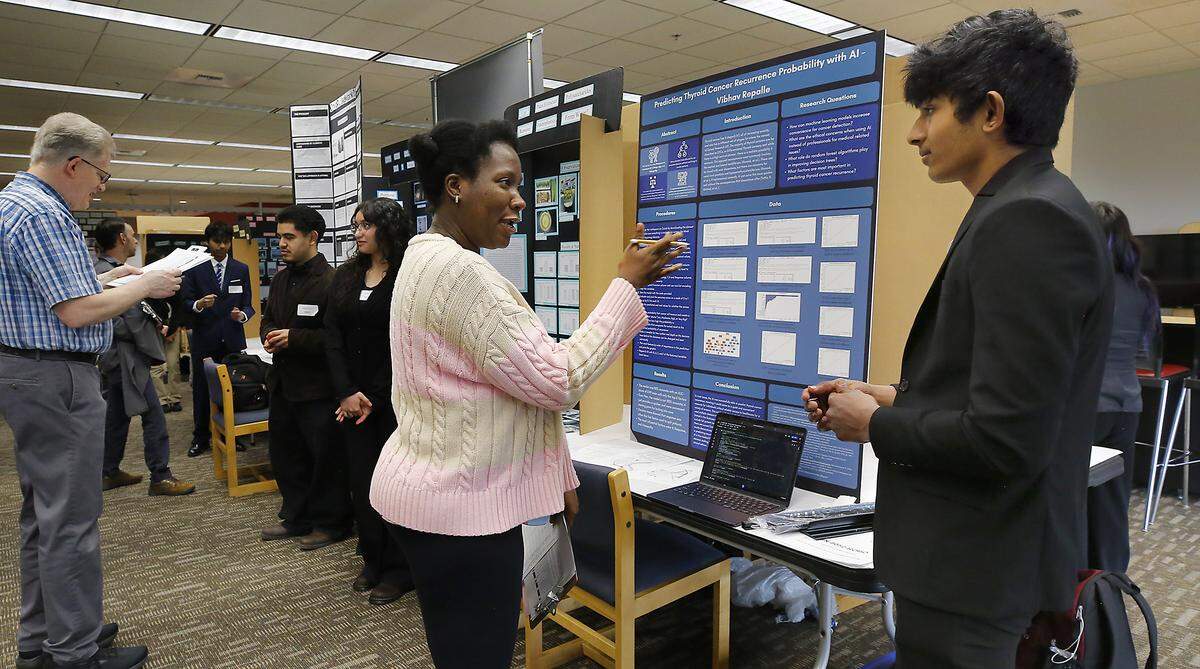
Hanford High School junior Vibhav Repalle looked calm and collected on Thursday presenting his AI-powered research on thyroid cancer recurrence.
Never mind the hum from the library at Washington State University Tri-Cities — or his untied shoes — Repalle came well-rehearsed and snazzy in a black suit and popped collar.
He’s done the work, now it was just time to execute. Repalle shook off the nerves, one presentation after another.
“It’s just one of those days,” said the med school hopeful, noting his busy day with an afternoon varsity tennis match.
“I feel like everyone is kind of nervous, but at the end of the day it’s me and my judge, and I got to do the best that I can do. That’s my mindset,” he continued.
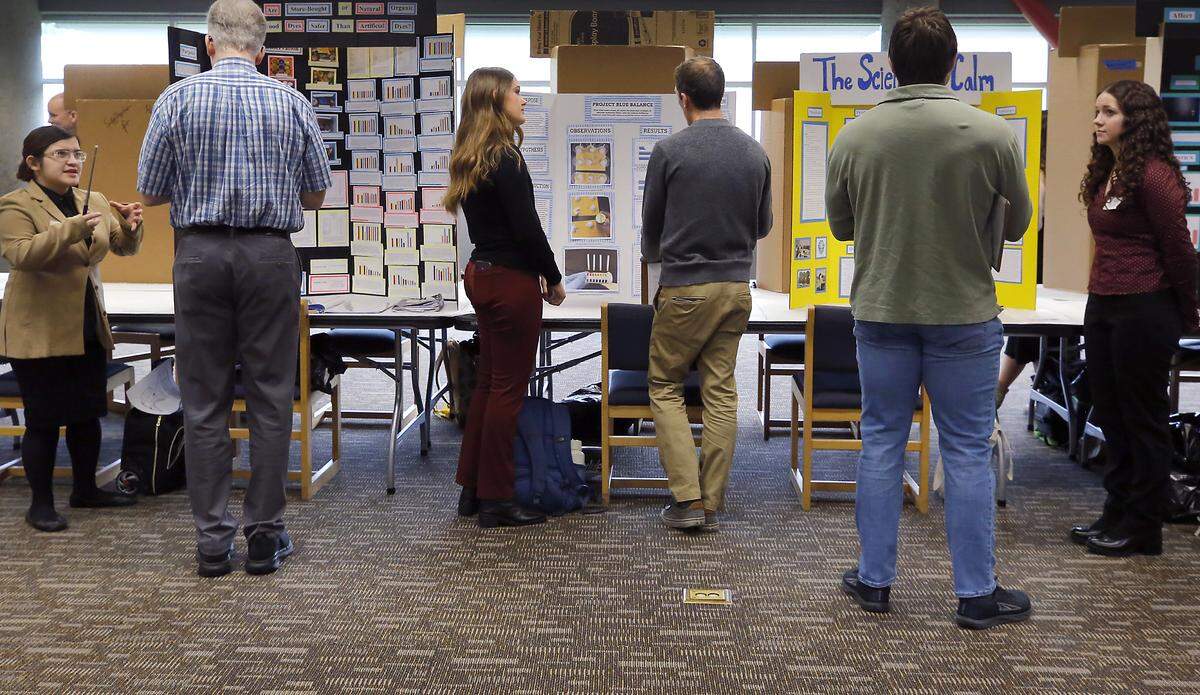
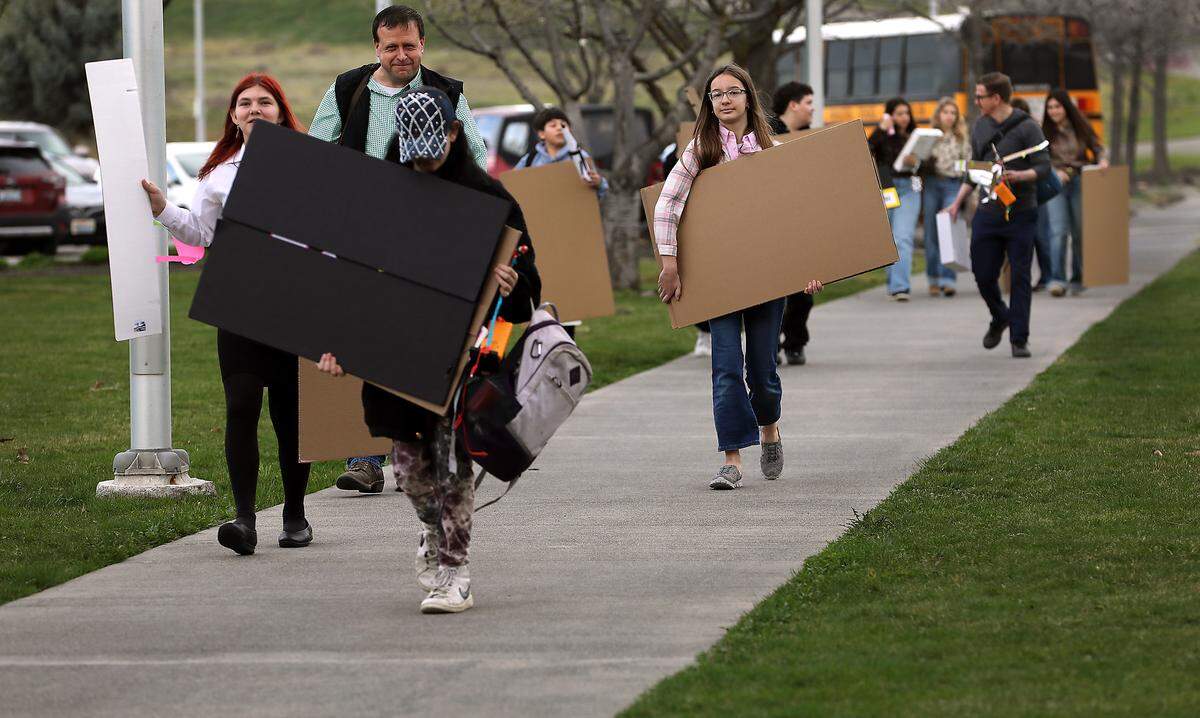
Repalle was just one of several hundred students who came out this week for the 71st annual Mid-Columbia Regional Science and Engineering Fair.
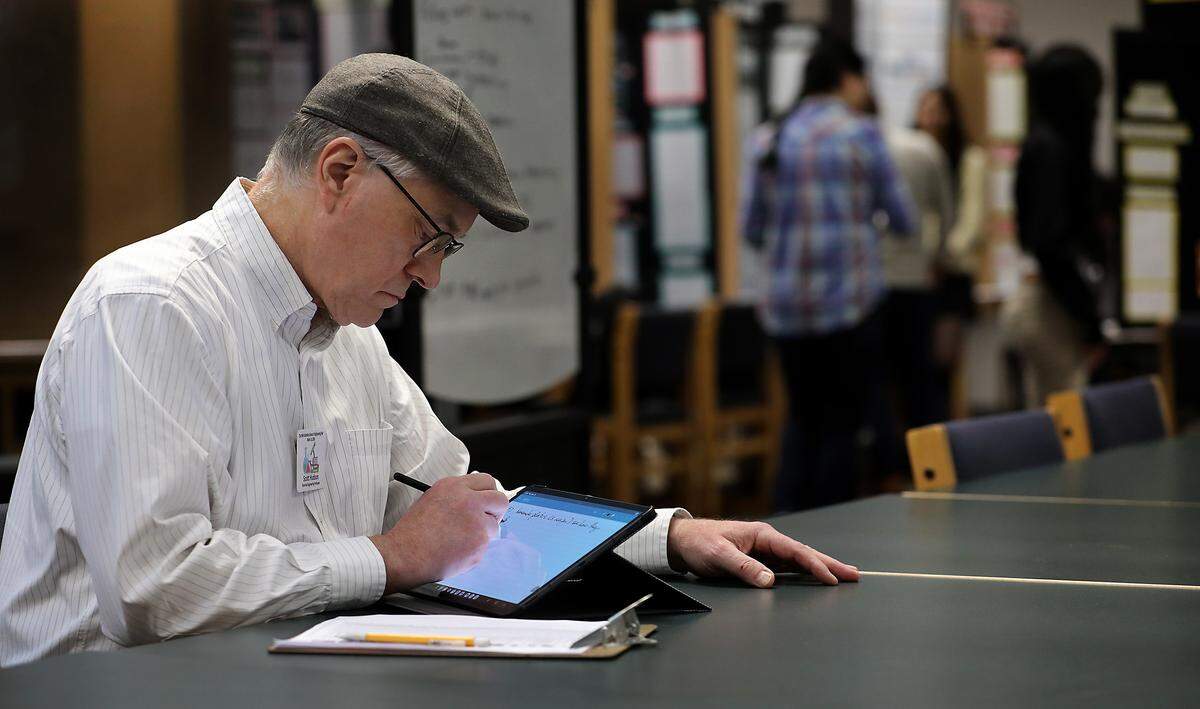
Middle and high school students from 14 Central Washington counties competed for thousands of dollars in prize money. More than 100 industry judges scoured the floors of the Consolidated Information Center to assess 170 projects.
It was no secret that projects powered by artificial intelligence and large-language models were all the rage this year.
High school students vied for three seats on an expenses-paid trip to the Regeneron International Science and Engineering Fair, which will take place May 10-15 in Phoenix.
First place middle school students from each grade level will be awarded a science camp opportunity worth $900.
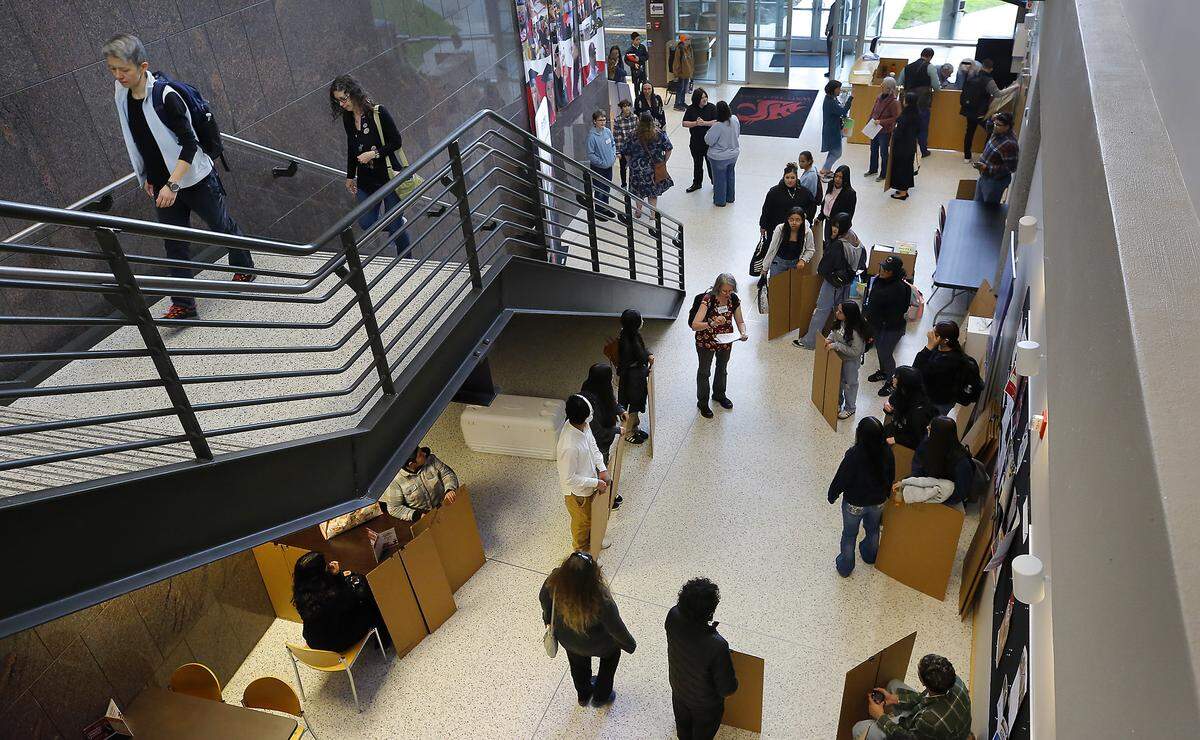
“It’s a chance for them to explore something entirely of their own choosing, and really do that independent learning and get a taste of what it is to be a scientist,” said Michelle Gotthold, board president of the Mid-Columbia Science Fair Association.
Student projects are judged on creative ability, scientific thought, thoroughness, skills, clarity and visual display.
Regardless of whether students go on to become research scientists, they still walk away with some important lifelong skills, Gotthold said. Those include critical thinking, data evaluation, communication and public speaking.
Thanks to grant funding from the Three Rivers Foundation, the fair was able to distribute “starter kits” with suggested projects this year. About 20 of those made it to the presentation floor.
“Sometimes kids are really interested in science fair but don’t know where to start,” Gotthold said
Dozens of businesses, individuals, organizations and government agencies have provided funding or special awards for this year’s fair.
“The local community really steps up,” she said.
Student interest in AI is booming
Several students applied new AI tech to medical data and cancer research, while others focused on its potential to improve communication or its stress on computer hardware.
But most projects took the traditional route to test hypotheses around food dyes, microplastics, environmental and chemical research, and energy efficiencies.
Students even tested the safety of leftover pizza and the impact music has on plant growth.
Repalle said he trained an AI model to look at public data on thyroid cancer patients and their symptoms. The tech would use variables to determine if the cancer would reoccur, and generate a risk level.
He found it incredibly effective. Repalle thinks AI could be used as a quick and convenient resource to study recurrence in individuals who don’t have reliable or timely access to health care. But he cautions that it needs to be used in addition to clinical advice.
Mavis Boamah-Agyemang, a judge who works as a geochemist at Pacific Northwest National Laboratory, said students have been “very creative” with their projects and are hungry to have a real-world impact.
“AI is the big thing now, so to see they’ve already incorporated them into their projects, I think that’s very inspiring,” she said. “It’s great that they are thinking about problems and how we can use new tools to solve our problems.”
Students used it to code and interpret data, but Boamah-Agyemang said they’re not looking at the data “blindly.” There’s a fair bit of skepticism, and they’re also working to improve these models with their research.
She uses AI in her own work to refine scientific questions and hypotheses. PNNL is using tools to understand what’s been done, and what is the “next best experiment” or innovation, she said.
Some students have AI skepticism
Alba Vides-Mancia, a sophomore at Sunnyside High School, who hopes to become a psychologist, studied the effectiveness of using natural materials to filter fertilizer from water.
Her research and project took about 40 hours over several months, and she measured water acidity using various filters.
She’s skeptical of using AI, and says its potential to disrupt and heat water ecosystems is an issue. She declined to use the technology, and cautions her peers from using it as a crutch.
“If you ask AI to multiply 2x2 all the time, you’re going to end up forgetting how to do the whole process. It’s better to just do it yourself,” she said.
Vides-Mancia hoped to place or receive an honorable mention, and she acknowledged the competition this year is tough.
Gavin Montelongo, a junior also at Sunnyside High, used ground seaweed to create “bioyarn” that could be used as bandages.
It’s a concept that’s at the forefront of medical research, and he read up on more than a dozen scientific articles as the basis for his project. He pursued the project after his mother received a skin graft last year, with hopes to improve the post-operation complications.
Montelongo — who is competing in his third regional science fair — studied the flexibility, strength and ability to filter these materials.
He also declined to use AI for his project. Montelongo said he wanted to be more involved in the research and data.
He thinks commercial AI products have the potential for social harm, but is bullish on its use in scientific settings. He fears it can propagate misinformation and disinformation.
“What I’ve seen and been interested in is using AI to help detect future cancerous cells,” he said, adding later: “I think it’s still in the early stages, so there’s a lot of refinement that needs to be done.”
This story was originally published March 20, 2026 at 5:00 AM.