Fewer students in public schools a new Tri-City reality. Can they adjust?
AI-generated summary reviewed by our newsroom.
- Tri‑City fall counts show about 730 fewer FTEs, tightening school budgets
- Districts plan attrition and conservative staffing to offset lost apportionment
- Pasco faces major levy vote that puts $50M in annual funding on the line
Hundreds of fewer students enrolled in K-12 public school districts in the Tri-Cities means another tight budget season.
Fall enrollment counts show there were on average about 730 fewer full-time students as compared to 2024 figures. Altogether that’s about the population of a large elementary school.
It’s a troubling sign for the dozens of schools in Kennewick, Pasco and Richland that rely heavily on the money from the state of Washington calculated on the number of students enrolled.
Despite that, budgets for the current school year remain in good shape, say officials. School administrators — projecting slowed growth in public schools — passed conservative budgets last year that balanced flat revenues while trimming spending.
School district budgets have been battered in recent years due to inflation, jumps to utility and service costs, and higher staff salaries. State and federal resources have not risen to match that growth, and districts are feeling the pressure.
Washington’s larger school districts began to buckle under budget pressures about two years ago, but it took another year for Tri-City schools to make substantial cuts to programs.
This year, state lawmakers in Olympia cut more than $4.5 million in levy matching money for Tri-Cities schools that will take effect in the fall.
Local educators and school board officials gave the Legislature poor grades for slashing programs that help the youngest students from poor and rural backgrounds.
But it’s still too early to tell what impact legislative changes will have on area schools.
“We expect additional guidance (from Office of Superintendent of Public Instruction) in the coming weeks,” said Joseph Castilleja, Pasco School District’s executive director of fiscal services.
The fall Tri-Cities count is based on monthly student full-time equivalents, or FTEs, reported between September and December 2025. It compares those to values of the prior year.
- Kennewick School District lost 352 full-time students.
- Pasco School District lost 123 full-time students.
- Richland School District lost 259 full-time students.
While the loss is less than a 2% drop in total FTEs, it likely represents broader demographic shifts and economic impacts of families having fewer children.
Also, families who pulled their students out of public school for other options haven’t returned, either.
Statewide, there were about 10,700 fewer student FTEs in the fall. But there are still more than 1 million full-time students enrolled in public schools in the Evergreen State.
In addition, there have been about 10% fewer annual births in Washington state over the last decade.
As a result, Chris Reykdal, Washington’s state superintendent, said at a news conference earlier this year, there will be a “steady decline for many, many years in the state of Washington” in student enrollment.
Tri-City districts in budget mode
Tri-City school districts are already deep into budgeting for the 2026-27 school year, though the public won’t get a peek at draft budgets until later this spring. Teachers will begin receiving renewal letters this month.
A decline of about 300 full-time students would mean about $3 million less in basic education revenues for Kennewick School District’s $333 million budget, said Thomas Brillhart, the district’s assistant superintendent of operations.
Decreases to special education could total $500,000.
He gave a brief and early budget look at a school board meeting in early March, before the end of the legislative session. Staffing estimates are not finished, and the next budget presentation will be at the May 27 school board meeting.
Kennewick Superintendent Lance Hansen told the Herald this week his district will continue to use attrition — cutting vacant positions rather than layoffs — if needed, and will staff “appropriately to our needs” as it has done in prior years.
Estimating enrollment is always a “moving target,” he said. Similar to its peer districts, Kennewick is not seeing new classes of kindergarteners large enough to replace high school seniors who graduate.
Pasco expects to cut $4 million from basic education funding next school year, mostly through attrition, but the bigger question is if it will have to cut an additional $50 million without levy funds starting in 2027.
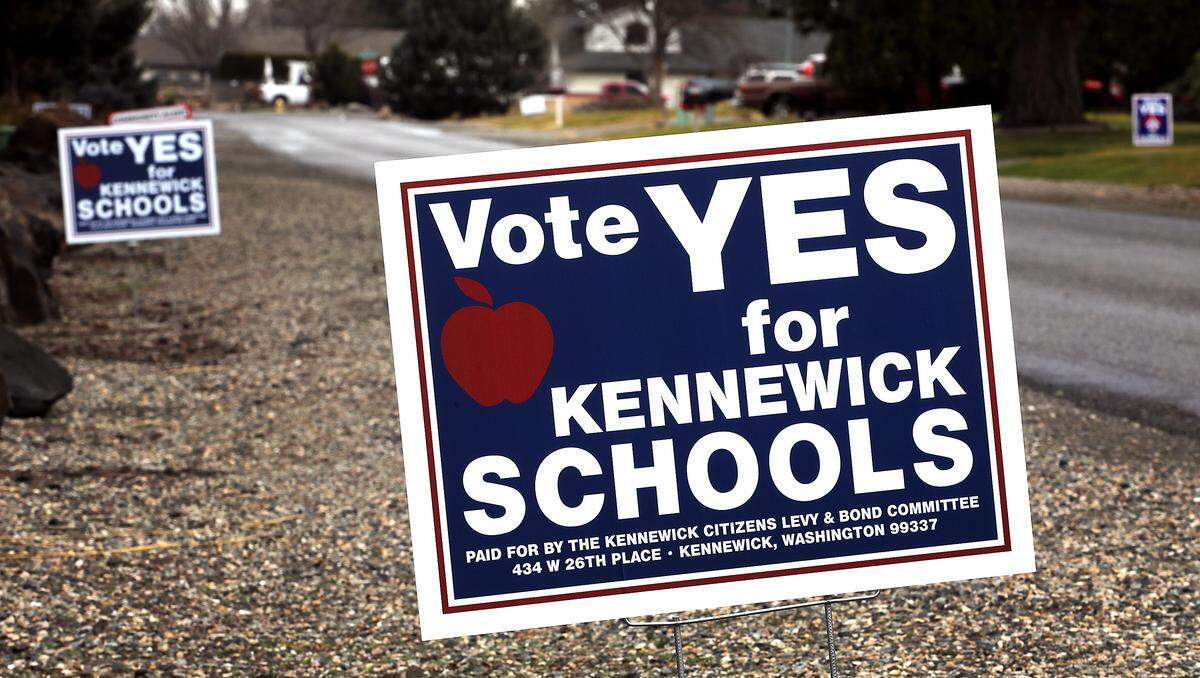
The school district is asking April 28 voters to approve a four-year, $153 million measure to pay for athletics, basic education and other programs. That comes after its last measure was narrowly voted down by Pasco voters in February.
If voters this month decline the measure, the district will be forced to make deep cuts to enrichment and safety programs on top of basic education. Levy funds and state match make up about 13% of Pasco’s $340 million budget.
The $4 million reduction already planned is part of a multi-year effort from to slowly reduce Pasco’s spending and improve its financial standing after last year’s budget crisis. Those cuts are expected to save the district about $12 million to $15 million in the next couple years, and help rebuild its fund balance to 5%.
“While it is my role to remain cautious, I am optimistic about our current trajectory,” Castilleja said. “Our budget managers and staff are doing an excellent job maintaining discipline, and I am proud of the work happening across the organization.”
School finances far from recovered
Both Kennewick and Richland’s financial health indicators scores improved last year, while Pasco’s slumped slightly. The OSPI grade — measured on a scale from 0-4, with 4 being the “healthiest— is given annually to each of the state’s 295 school districts and reflects positive fiscal practices.”
It takes into account a district’s fund balance-to-revenue ratio, spending-to-revenue ratio, the number of days cash on hand and its four-year budget summary.
Kennewick’s budget — rated at a 3.85 — is now the healthiest in the Mid-Columbia region. Hansen gave kudos to his staff who have worked diligently to keep their budget steady despite economic pressures.
Richland has improved two years in a row and stands at 2.2. Pasco’s budget was scored a 2. The average score across Washington state is 2.85.
Last school year, both Pasco and Richland had to make major pivots in their budgets in order to control runaway spending and avert layoffs.
Those painful money maneuvers paid off, though both districts will have to work many more years to restore reserves and restore their budgets’ health. Both have their own unique plans to do that.
Richland is currently projecting to end this school year below its traditional student enrollment budget by about 153 FTE. Add on fewer students in its alternative learning programs, that could mean a $1.67 million reduction in general apportionment next year.
Still, Richland is spending much less than the revenue it’s taking in. The district expects to end the fiscal year with a net gain of nearly $9 million, boosting its end fund balance to $12.1 million. Its budget this year is about $239 million.
This school year, Richland developed a disciplined and “game changing” budget framework that will help its administrators and school board members make more intentional and data-driven decisions in the future. It could be a model for other struggling school districts.