‘Deeply concerning.’ Tri-City leaders blast WA lawmakers for cutting education money
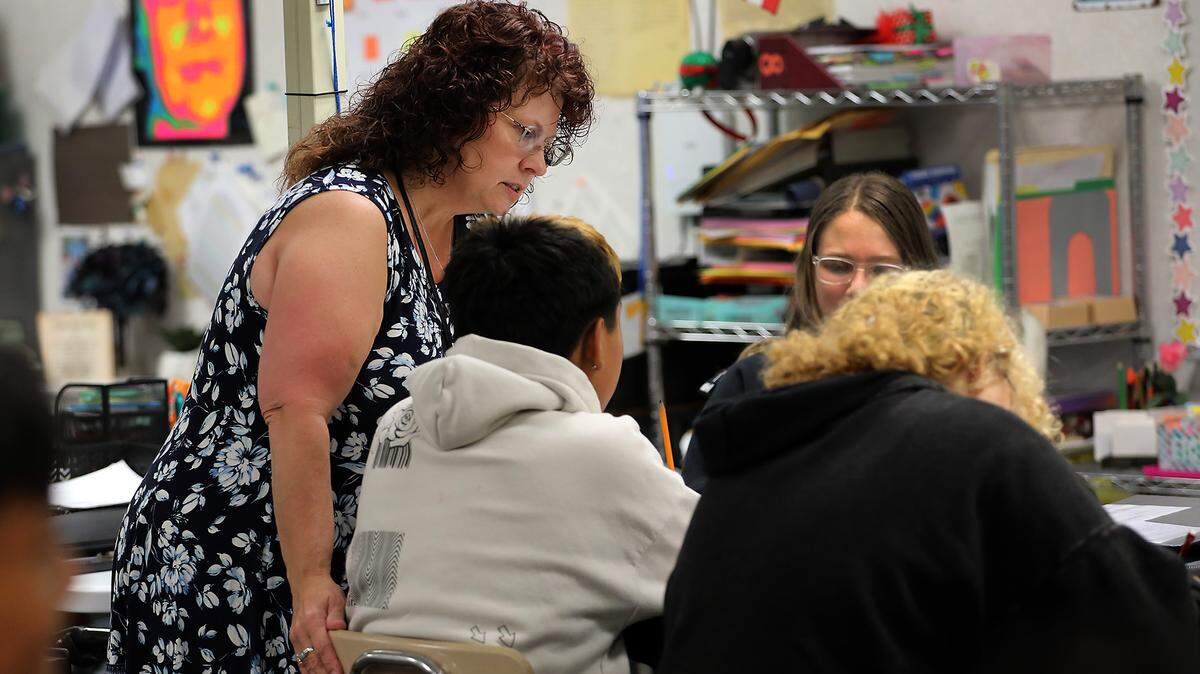
Tri-City educators, lawmakers and officials say the state continues to shirk its responsibility to fund K-12 education after the 2026 legislative session left much more to be desired.
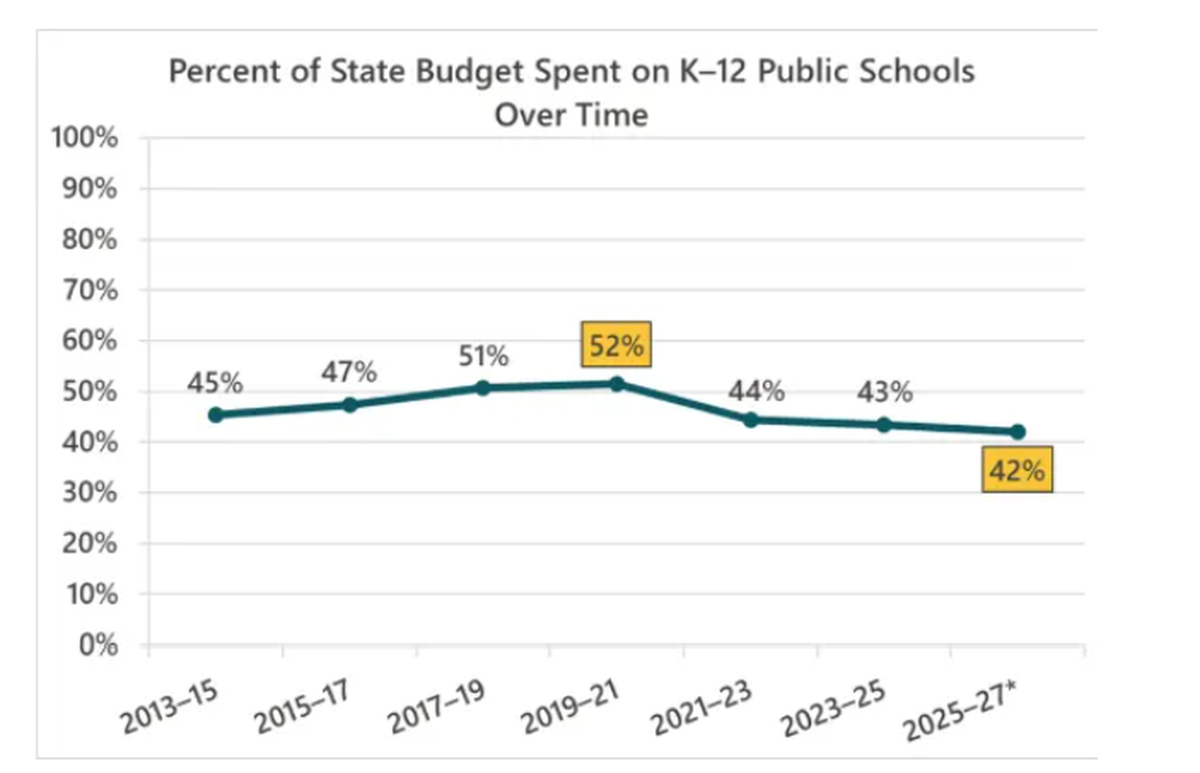
It’s the “paramount duty” of Washington state government to fund public schools, as defined in the state constitution. Despite this, funding as a percent of the total operating budget slipped to 42%, a decrease of about 1 percentage point, year-over-year.
The Legislature slashed about $80 million from education funding this year while raising non-education related expenditures, Washington OSPI says. Those cuts are likely to have an outsized impact on the poorest and most rural school districts.
Tri-City cuts
The two key reductions sure to impact rural schools in the Tri-City region touch early learners and equity funding for property poor districts.
About $25 million was slashed from Transition to Kindergarten, a state program that helps 4 year olds prepare for their first year in public school. The Legislature already capped the program at about 7,300 students last legislative session.
Lawmakers also cut $27 million in Local Effort Assistance match money by eliminating a temporary per-pupil increase. These are coveted dollars that districts get for having operation levies active.
- Pasco School District will lose $1.8 million.
- Kennewick School District will lose $1.5 million.
- Richland School District will lose $1.3 million.
They also temporarily reduced funding for Running Start, a flagship program that covers tuition for high schoolers to attend college classes. The $7 million reduction means that those students will no longer get to attend summer courses.
The state’s colleges and universities themselves were also trimmed by about $5 million.
But there were some silver linings in this year’s supplemental budget.
Lawmakers approved 10,000 more seats over the next decade for the state Early Childhood Education and Assistance Program, or ECEAP.
Those will mostly be made possible through private contributions and a philanthropic organization, the Ballmer Group, which was founded by former Microsoft CEO Steve Balllmer’s family. The state cut 2,000 seats for preschoolers in the 2025 session.
Secondary school programs will also get a shot in the arm.
Olympia restored $3.5 million in funding to help foster youth in the Graduation Success Program. The High School and Beyond Plan, which is a requirement to graduate, will receive a $1.8 million modernization to help students weigh careers and post-secondary education.
Lawmakers also boosted dual language funding by $1.25 million.
Gov. Bob Ferguson has also ensured school lunches will be free for all students by 2028, and Democrats say some of the $2.2 billion in revenue from the millionaires tax will fund basic education in the 2027 biennium, although it’s unclear how much.
The passed income tax, which Ferguson still needs to act on, is guaranteed to face substantial political and judicial scrutiny in the coming months and years.
Here’s where state and local educators, lawmakers and school board members landed on this year’s legislative session.
Cuts are ‘harmful,’ ‘senseless’
Washington Superintendent Chris Reykdal did not give a grade for the 60-day session.
But in a statement earlier this month, he blasted lawmakers for “following along” with Ferguson’s “heavy cuts to education,” noting that the state hasn’t fully funded education since 2019.
Education advocates use 50% in the operating budget as an informal watermark to measure if the state is meeting its duty to fund K-12 education, although it is not required by law.
“This budget makes harmful reductions to programs that directly serve students — reductions that are likely to impact students identified as low-income the most,” Reykdal said.
He notes the cuts to Transition to Kindergarten impact about one-third of the program. But students who participate in the program are shown to consistently outperform their peers on the state kindergarten readiness assessment, Reykdal says.
He even called the Legislature’s unwillingness to fully fund the Imagination Library “senseless.”
That program provides regular books to children at no charge until their fifth birthday, based on Dolly Parton’s gift giving program, and Reykdal’s office has provided stopgap funding to continue the beloved program.
“If the tax on household invomes above $1 million is challenged and upheld, relief for schools and other vital services is years away,” he said. “Sadly, schools across the state are already reducing services while trying to provide the basic education that students are legally entitled to. Our state constitution says public education is the paramount duty. It’s not a function of new revenue, it’s an everyday and every year legal obligation.”
Schools in recent years have struggled to provide quality programming in the wake of inflation and slowing investments in the K-12 space. Earlier this year, Congress passed a spending bill that included slight increases to programs that benefit early childhood education and students with learning disabilities.
Rude gives WA a D-
The Walla Walla legislator gives his peers poor marks for slicing education programs while continuing to expand the size of operating expenditures beyond revenue projections.
Rude, R-Walla Walla, says he came to the session this year optimistic that his caucus would be able to work with Democrats, but he says in the end the cuts were “very partisan.”
The majority was also focused on preemptive Medicaid cuts in advance of H.R. 1, the One Big Beautiful Bill Act.
“As I work myself up, you can see that I’m a little bit frustrated by this session because there was so much cutting to vulnerable populations, and at the same time there was a lot of maintaining of a lot of the new programs that the Legislature has been enacting over the last few years that are irresponsible and led to this budget situation,” he said at a Saturday town hall.
Rude was enrolled in Running Start while in high school, and said the program reduces families debt burden. At the same time, he criticized “generous” raises approved for state employees, rising litigation costs, and the Legislature utilizing $4 billion from officer and firefighter pensions to balance the budget without “making meaningful cuts” first.
Jansons gives lawmakers an F
Richlad School Board member Rick Jansons isn’t shy to call out the Legislature for shirking its responsibility to fund K-12 education. He’s been one of the most vocal school board members in the Tri-Cities.
“They have the funds to do it, it’s just not their priority right now,” he said at Tuesday’s school board meeting. “Let’s hope they do better next year. They should be on some sort of remediation plan.”
Local funds will continue to play a big role in supporting special education, transportation and other things that Jansons says the state should cover.
Additionally, Richland Superintendent Shelley Redinger said in a statement that the state “continues to fall short in meeting its constitutional responsibility to fully fund basic education.”
“This trend is deeply concerning and reflects a continued shift of financial responsibility from the state to local communities. While we are grateful for the role our community plays in supporting our schools, our students deserve a system where their education is not dependent on local capacity but fully supported by the state as required by law,” she said in a statement.
Finley supe gives WA a C
Rural schools had the most to lose from K-12 cuts this session, though it wasn’t all dire.
Finley School District Superintendent Bryan Long, who oversees the education of nearly 900 rural Benton County students, gives lawmakers subpar marks.
“They’re trying to support a lot of resources in the state, in addition to education. And, right now, their priorities seem to be on those other state supports and not education,” he said.
Finley found itself with a $1.5 million appropriation in the 2026 supplemental capital budget. Those dollars will go toward replacing the high school’s HVAC system and improving water-source heat pumps.
Long thanked Reps. Gloria Mendoza, R-Grandview, and Deb Manjarrez, R-Wapato, for backing those projects.
But Finley’s levy match will take an $80,000 hit, a slight bump to its $16 million budget. Reductions to Running Start will impact attendance for about 35 Finley students, Long said.
Long says they’re working on a tight budget as is, but they’ll still be able to offer quality programs. He hopes more get involved in the legislative process to remind lawmakers about the importance of K-12 education.
Schools are already the cornerstone for small communities, including in Finley, he said. Lawmakers should take note.
“People need to share their voice and let their voice be heard,” Long said.
This story was originally published March 26, 2026 at 2:44 PM.