Are Richland school leaders overpaid? Its superintendent did some digging to find out
Richland School District’s administration office is undergoing more staffing changes after already trimming millions from its general fund budget this school year.
Under a draft plan, that means a net two more positions could be eliminated as people leave or retire.
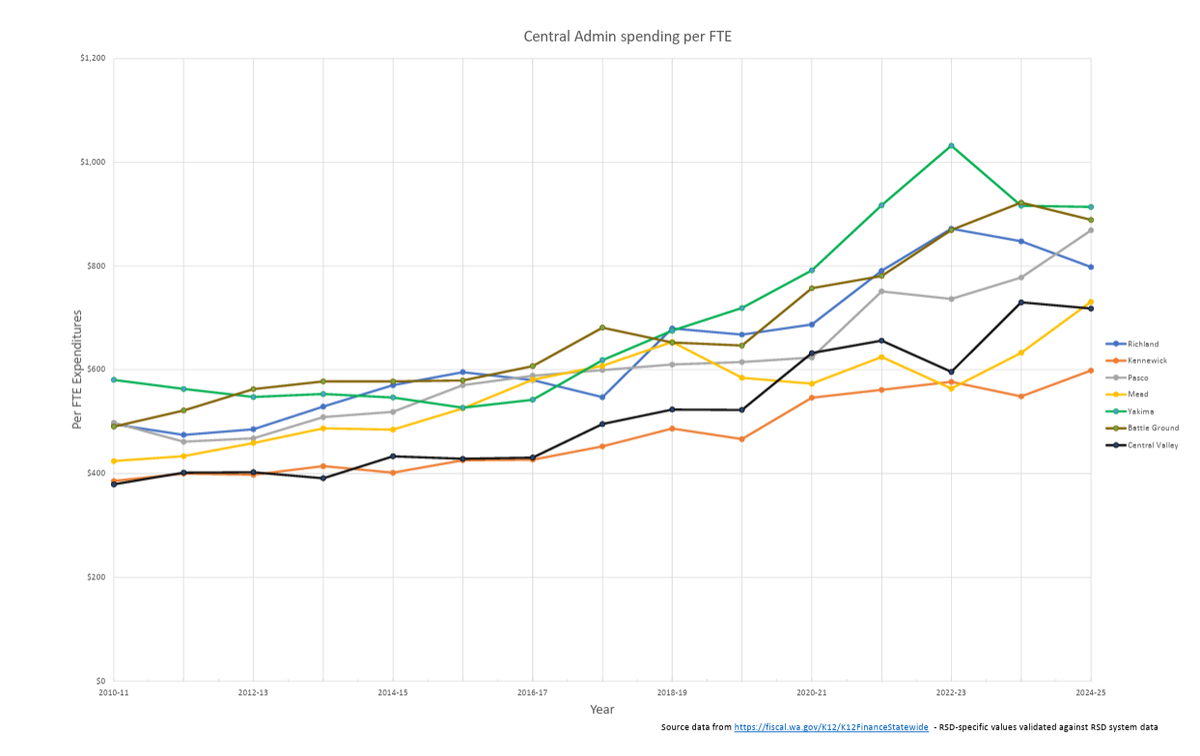
And a new salary study from Superintendent Shelley Redinger shows district leaders’ take-home pay is on par with neighboring districts.
“We’re not out of bounds as far as peer districts. And I think we really need to stay the course and make sure we’re paying attention,” Redinger told the school board this week.
The Richland superintendent says fiscal responsibility is the primary factor driving a long-term reorganization at the district office.
“This strategic realignment is designed to enhance efficiency, improve support for our schools and ensure that resources are directed where they matter most — our students and classrooms,” Redinger wrote in a memorandum this week.
Richland, the state’s 25th largest district, paid its superintendent $328,000 in total salary during the 2023-24 school year. But Redinger notes there are 28 other public school superintendents throughout Washington who earn more.
Wages of its 19 assistant directors, directors, executive directors and assistant superintendents range between $145,000 and $202,000. The district is not the highest-paying in any leadership position.
Redinger has proposed reducing the number of administrators down to 17 as people leave or retire.
Over time, some executive director positions will transition to directors for savings. And assistant director positions will be slowly cut to ensure efficiency and cost-effectiveness.
One assistant superintendent, Tory Christensen, who oversees instruction in the middle and high schools, will take an executive director role doing similar work.
In exchange, a new assistant superintendent position will be created to provide “comprehensive support for district operations and human resources,” Redinger’s letter reads.
Richland has reduced central administration operations by 12%, when comparing total expenditures through February with the 2022-23 fiscal year. And at least 20% of district office positions, mostly vacant, have been cut to help with a budget gap.
The district serving 14,500 has been on better footing in recent months after implementing a $3 million savings plan in the fall. But more cuts are being discussed for next school year, with $3.8 million in “Phase 2” reductions highlighted.
In addition to cuts, Richland School District also approved a $13.5 million advance on state money it gets from OSPI, and will also need to repay before year’s end a $10 million interfund loan it approved to cover general fund bills.
School districts across the region and U.S. have made steep cuts in recent years with rising costs to materials and operations, higher insurance costs, lower enrollment and a “spending cliff” caused by one-time federal dollars dolled out during the COVID pandemic.
Richland has been especially burdened with rising student need, incremental K-12 state funding increases that don’t keep up with the true cost of service, and a $10 million cut to its annual levy equalization funding from the state.
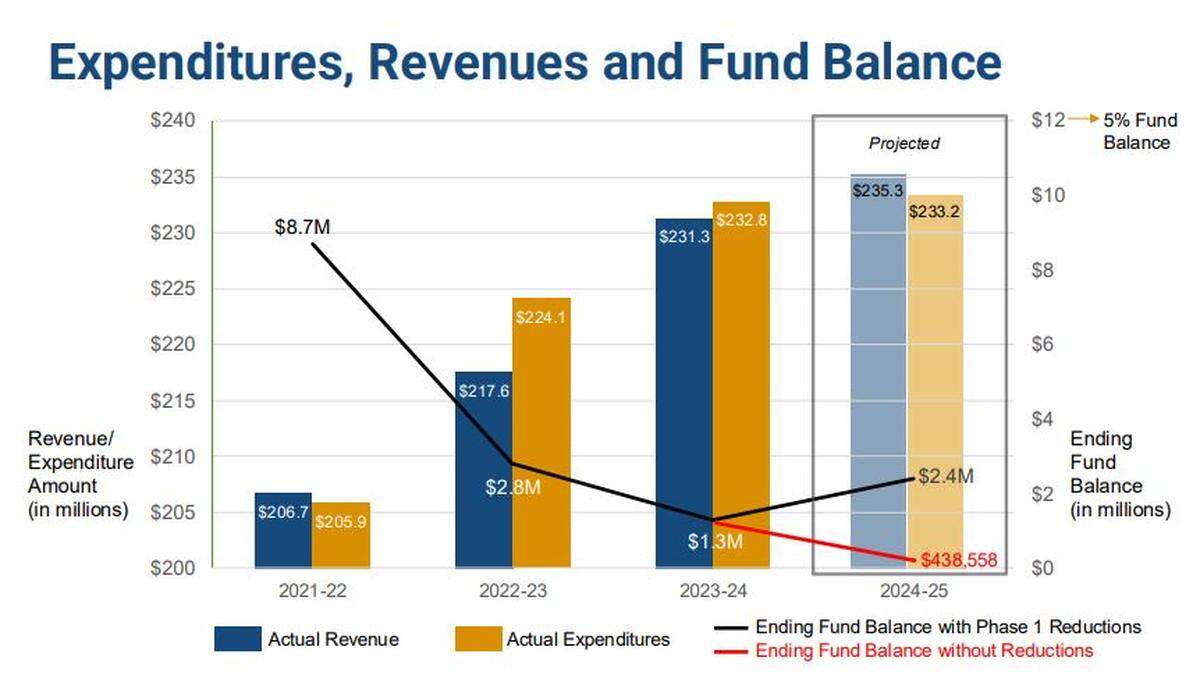
The district has overspent its budget the past two school years and had to dip into reserves to make up the difference. “actual” expenditures exceeded revenues by $6.5 million in 2022-23 and $1.5 million in 2023-24, according to district documents.
As early as 2022-23, the school district was reviewing contracts to identify redundancies and cut costs. Millions of dollars in vacant positions have been cut over the years, including 52 alone between August 2023 and October 2024.
When student enrollment dropped during the pandemic, Richland chose to keep employees on to get students caught up. Between 2018 and 2023, for example, the district increased staff by 12% while its full-time student enrollment only grew by 2%.
Public school leaders are pushing the Legislature this year to pass crucial funding tweaks for special education, school materials and operating costs, and transportation — known by education advocates collectively as the “big three.”
At least one of those bills — SB 5192, increasing funding for materials and operating costs — had cleared the Senate by Wednesday afternoon and was on track to becoming law.