Richland asks WA state for ‘emergency’ $13.5M advance to cover school district bills
The Richland School Board this week requested an emergency $13.5 million advance on state money it receives for enrollment to help cover the school district’s bills.
It’s the latest move for the Tri-Cities school district, which recently approved a $3 million plan to cut expenses this school year after a financial crisis caused by enrollment fluctuations, inflationary costs and gaps in state funding came to a head.
Districts can only request up to 10% of the their annual education apportionment for emergency purposes from the state Office of Superintendent of Public Instruction (OSPI).
Richland receives about $137 million in total annual apportionment — a big chunk of its total $235 million in budgeted revenue.
The advance is not a loan, but instead a change to monthly installments. It’s an additional amount of regular apportionment provided upfront to get them past a short financial strain.
The district repays it to OSPI over subsequent months.
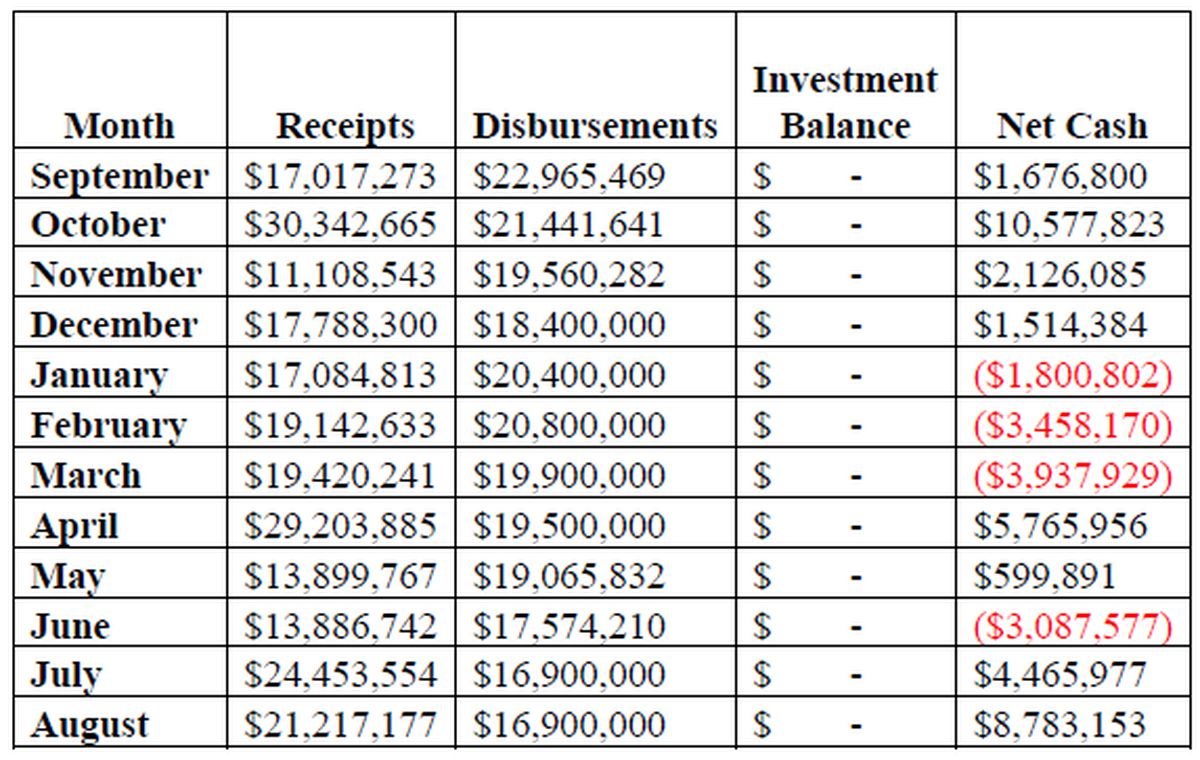
Without the advance, Richland will operate on a negative cash balance during January, February, March and June — combined by about $12 million.
The funds dispersed for the four months would be paid from June’s and August’s allocation.
“Ultimately, the bottom line figure is a net-zero change as far as revenue that comes in,” said the district’s new executive director of finance, Travis Belisle. “We’re not going to lose revenue, we’re not going to gain any revenue through an apportionment advance. It’s just getting to us early.”
Richland’s net cash at the time of request was about $4.1 million.
Similar to other Washington school districts, Richland’s expenditures are “front-loaded” toward the beginning of the school year, despite OSPI delaying larger payments to the end of the fiscal year after school has concluded, Belisle says.
Nearly 36% of Richland’s current budget has been expended so far, but the state has distributed just 31% of the district’s apportionment revenue. Roughly 23% of the district’s apportionment comes during the months of July and August alone.
School board member Jill Oldson argued that’s unfair because the state makes money off the interest collected by holding onto local school districts’ money so late.
Katy Payne, OSPI’s chief communications officer, says OSPI does not collect interest off of apportionment. Those funds are distributed to districts through a formula prescribed by the Legislature and held by the state treasurer.
More WA districts ask for advances
The largest risk with apportionment advances is that they’re intended to support districts through a temporary cash flow issue and are not long-term solutions, according to Payne.
“They should not be considered a strategy for balancing a budget. Ultimately, districts will need to identify more permanent ways to balance their budget,” she told the Tri-City Herald in a statement.
Richland has a long-term goal to rebuild a 5% reserve balance, roughly $12 million, in its general fund.
Advances in Washington state have not historically been sought by districts. Payne says school districts began petitioning for them last year as they began feeling the financial hangover from the COVID pandemic.
As Washington school districts last year implemented historic budget cuts, OSPI reported more requests for advances as “one of the tools in a district’s toolbox,” Payne said.
OSPI’s hands are tied on the monthly payment schedule. Payne says the Legislature defines it and does not give the state education department the authority to make changes.
School districts across the region and U.S. have made steep cuts in recent months with rising costs to materials and operations, higher insurance costs, lower enrollment and a “spending cliff” caused by one-time federal dollars dolled out during the COVID pandemic.
The Herald reported earlier this week about plans by the Pasco School District to pause large purchases, eliminate positions through attrition and suspend non-essential travel to fix a $5.4 million budget gap this school year.
The budget pressures Pasco faces are the same impacting Richland.
But some districts, Richland included, continued to hire new staff as enrollment dipped during the pandemic years. Enrollment of full-time equivalents is tied directly to funding school districts receive from the state.
Between 2018 and 2023, for example, Richland increased staff by 12% while its full-time student enrollment only grew by 2%. Last school year, the district employed 1,530 and served 13,795 full-time students.
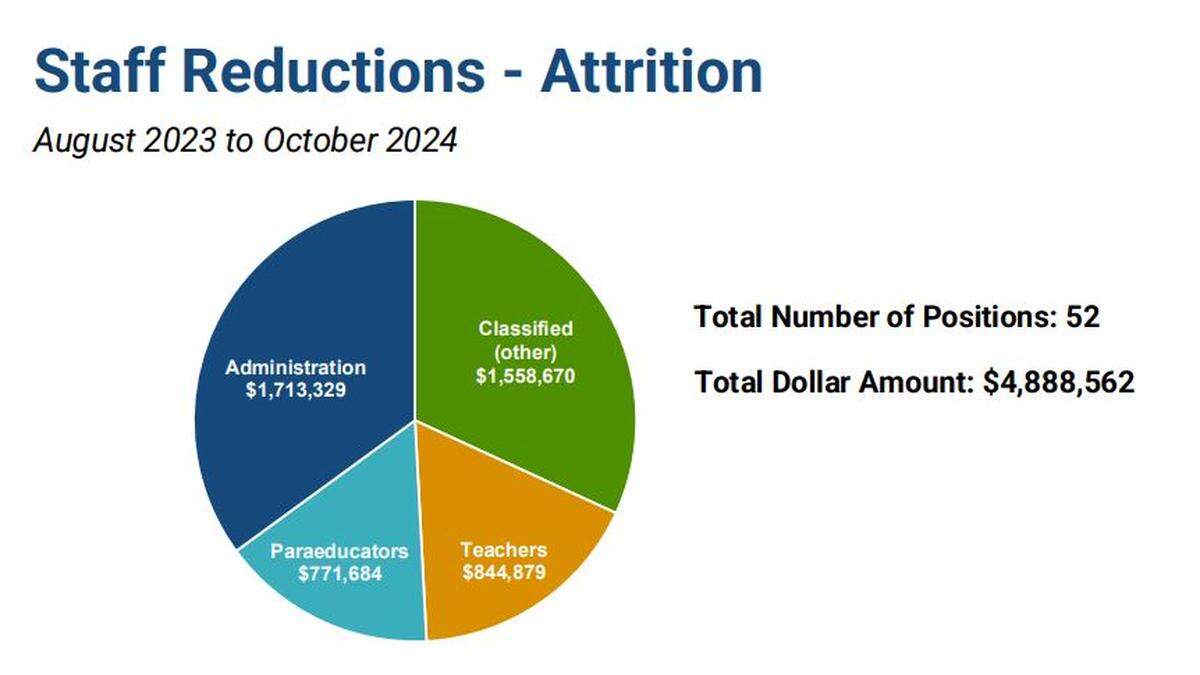
In addition to millions of dollars worth of cuts Richland recently implemented — which included buyouts to more than a dozen paraeducators — it also approved last month a $10 million interfund loan to cover its rising general fund costs.
That loan from its capital projects fund must be repaid — with more than $150,000 in interest paid by the borrowing fund to the loaning fund — before the end of the year.
This story was originally published January 16, 2025 at 11:44 AM.