Richland schools to cut busing for sports, offer paras bonuses to quit to fill $3M hole
Richland School District will suspend busing to high school sporting events within the Tri-Cities and pay some paraeducators bonuses to quit as part of a new plan to slash spending by $3 million.
Details of the comprehensive savings proposal were included in the agenda packet for its Tuesday, Nov. 26, school board meeting and also in an email sent to parents.
The district is trying to correct a financial crisis that’s come to a head this year, it says is caused by enrollment fluctuations, inflationary costs and gaps in state funding, in particular less Washington levy equalization money because home values have risen.
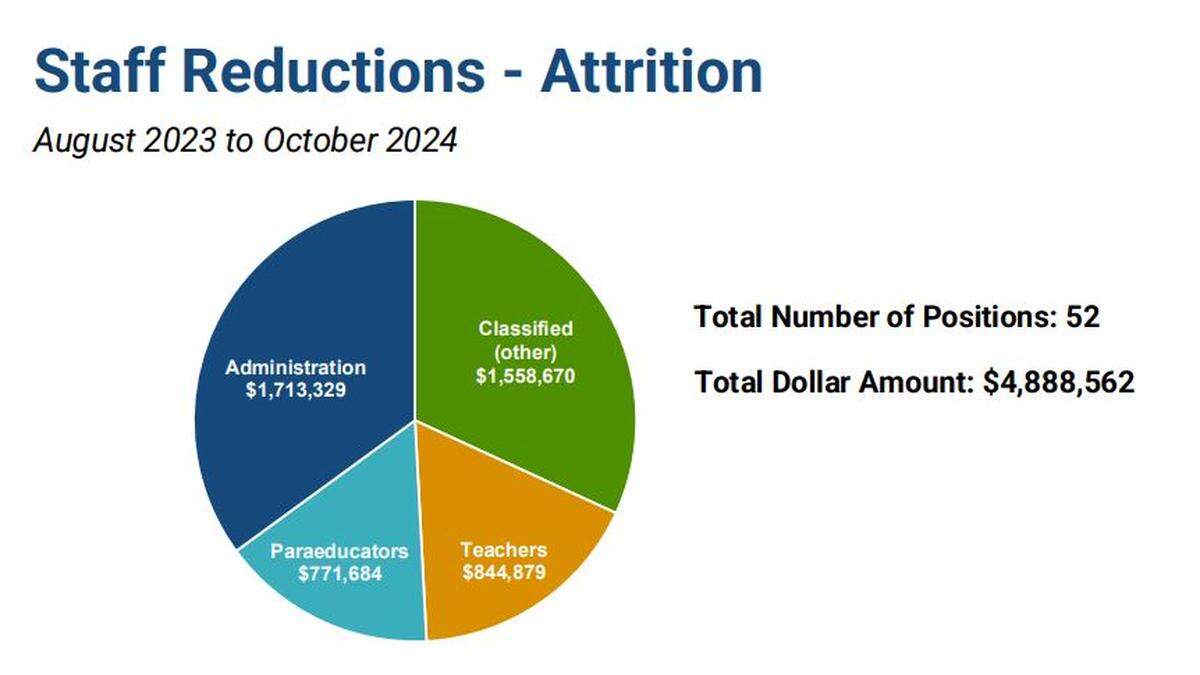
The district already has made nearly $6.5 million in other payroll cuts and cost-cutting efforts. About 52 full-time equivalent positions have been reduced through attrition since August 2023, saving $4.88 million, it said.
The incentive bonuses being offered to paraeducators is a one-time $1,000 buyout for early retirement or resignation.
If the 38 most senior basic education paraeducators pass on the offer, they can opt to take a similar position in special education, said Tim Praino, the district’s human resources executive director. Richland employs more than 400 paraeducators.
In addition, starting Dec. 1, the district will cut all transportation to high school sports events within the cities of Richland, Kennewick and Pasco.
In all, the new $3 million reduction plan also includes $2 million in staffing cuts and $1 million in cuts to services:
- Superintendent Shelley Redinger will donate five days pay to the district. Her cabinet will donate three days and other administrators will donate one day.
- The district will continue to reduce positions through resignations, retirements and eliminations.
- Schools will fill classes up to union “negotiated sizes” where possible.
- Basic education paraeducators will be reassigned to special education positions that are currently filled by substitutes.
- Facilities and operations costs will be cut by an additional $1.1 million.
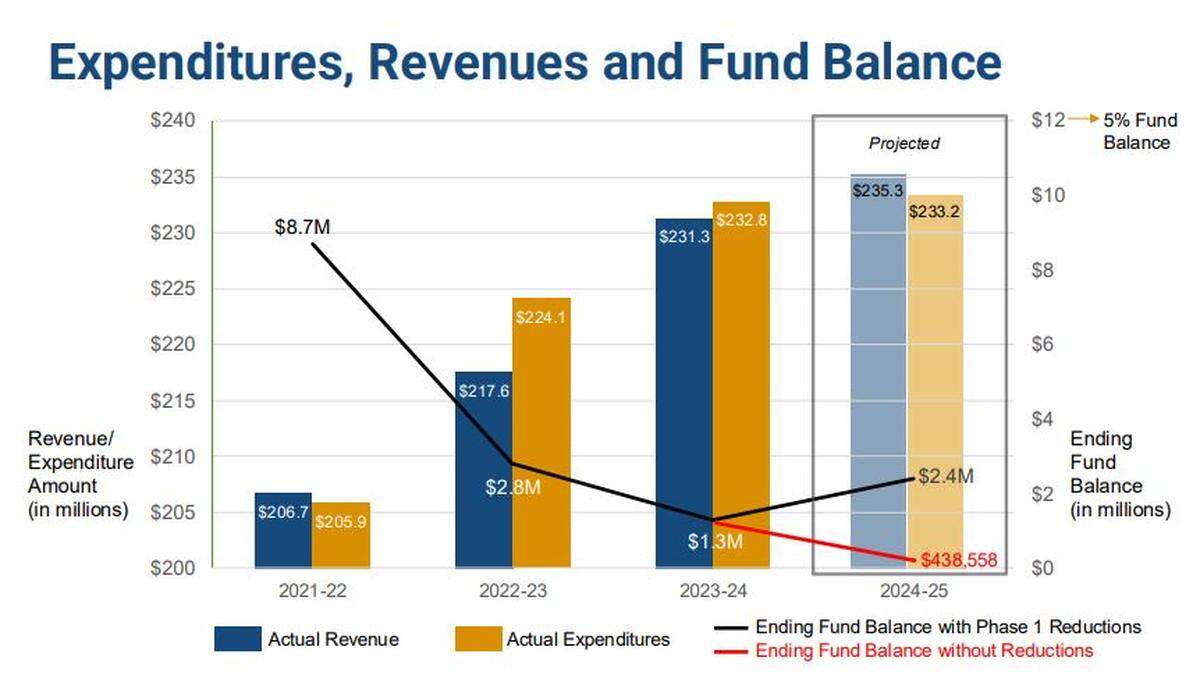
Richland has overspent its budget the past two school years and had to dip into reserves to make up the difference. “Actual” expenditures exceeded revenues by $6.5 million in 2022-23 and $1.5 million in 2023-24, according to district documents.
With the new plan, Richland expects to end the school year in June with a general fund balance of $2.4 million. Without any action, the district’s reserves would drop to just $438,000.
Longer term, the district aims to come back into realignment with district policy that recommends the district hold a 5% fund balance or about $12 million this year.
“We understand the stress these changes create, and we remain committed to supporting our paraeducators with respect and transparency,” Redinger said in a statement. “These challenges do not diminish our unwavering belief in the importance of paraeducators and the critical support they provide our students.”
District officials say since last school year, 23% of district office staff and 4% of principals have been cut.
And roughly $1.6 million in contract adjustments and service cuts have been made since the 2022-23 school year.
Spending freeze and cuts
Last month, teachers were warned the district would go into an indefinite spending freeze and were told to hold off on class supply purchases. The district also limited travel to essential purposes, reduced overtime and put into place a system for approve all expenditures.
Then, in late October, basic education paraeducators were put on notice that as many as 34 would lose their jobs, likely through layoffs, as the district looked to right-size its spending.
The school board intervened several days later, saying the school district would pause paraeducator layoffs while it took another look at cuts it could make away from the classroom.
Paraeducators assist certificated teachers in the classroom education of students. They are among the lowest-paid, highest-impact district employees, working one-on-one with students and teachers to support instruction.
Two weeks ago, paras packed the Richland School Board meeting and voiced their anxieties about the current situation and frustrations with the district’s plan.
Redinger apologized at that meeting, saying their plan was “too hasty, too quick.”
School districts across the region and U.S. have made steep cuts in recent months with rising costs to materials and operations, higher insurance costs, lower enrollment and a “spending cliff” caused by one-time federal dollars dolled out during the COVID pandemic.
Some districts, Richland included, even continued to hire more staff as enrollment temporarily dipped during the pandemic years. Enrollment of full-time equivalents is tied directly to funding school districts receive from the state.
Between 2018 and 2023, for example, Richland increased staff by 12% while its full-time student enrollment only grew by 2%. Last school year, the district employed 1,530 and served 13,795 full-time students.
But some say only the Washington Legislature can fix the spending discrepancy to ensure the state’s quality of education doesn’t slip.
In recent years, the Washington Legislature’s investment in K-12 public education — the “paramount duty,” according to the state constitution — has slipped to about 43% of the entire budget.
Compared to 2018, the Legislature is sending out $1,000 less per student today when adjusted for inflation.