Pasco schools’ $5.4M budget hole means some jobs won’t be filled, other spending halted
Pasco School District is tightening its purse strings.
Faced with the same bleak economic challenges impacting neighboring districts, Pasco plans to put a pause on large purchases, reconsider filling vacant positions and suspend non-essential travel and meals to fix a $5.4 million budget gap.
Cuts to 2024-25 school year spending are needed to avert reductions in staff and student programs, said Superintendent Michelle Whitney.
But unlike budget trims in recent years, she says, these will be noticeable.
“This is about keeping people employed,” Whitney said in a budget update to staff that was posted on YouTube.
“At the end of the day, I don’t want to have to walk up to anybody and say, ‘We don’t have a job for you here.’ If you want to be in Pasco I want you to be here, and we need to be really thoughtful and intentional about how we plan moving forward to live up to that promise,” she said.
As Pasco opens two new high schools next school year, the district will remain focused on staffing needs.
Since 2021, about 4% of the district’s K-12 teaching staff has been cut through departures and retirements. And more cuts to vacant positions are likely.
School districts across the country are grappling with budget shortages caused by the rising cost to materials and operations, higher insurance costs, higher wages and lower enrollment.
Some also were hit by a “spending cliff” caused when one-time COVID federal dollars went away.
In Washington state, school leaders are speaking out about the state’s waning priority of properly funding K-12 education and the affects its having on local budgets.
Faced with a dire outcome, neighboring Richland School District recently implemented a $3 million plan to cut positions and programs on top of several million in previous budget reductions.
Many of the variables that bruised Richland’s budget also are impacting Pasco’s — and they’re years in the making.
Inflation continues to outpace revenue, student enrollment remains below pre-pandemic levels and matching dollars from the state for levy equalization continue to decrease.
Pasco also is receiving fewer Title I funds for low-income students.
WA education funding
Funding public education remains the state’s “paramount duty.” But as lawmakers reconvene this week in Olympia for the 2025 legislative session, they will be crafting a new budget and solutions to fund education may not come easy.
Gov.-elect Bob Ferguson wants the state to cut $4 billion from state agencies as Washington itself faces a possible $12 billion budget gap over the next four years. But he’s also called for a boost in the percentage of the budget supporting K-12 education.
About 43% of the state’s budget goes to public education. Roughly five years ago, in 2019, that number was higher at 53%. Comparing 2018 to today, the Legislature allocates about $1,000 less per student, adjusted for inflation.
Education advocates, who started a “Billion Dollar Bake Sale” in South Seattle over the weekend as a way of raising awareness of the state’s funding gap, are pushing for $4 billion more annually.
“Pasco School District has a history of being responsible stewards of taxpayer investments,” said district spokesperson Anna Tensmeyer.
“We remain diligent and forward-thinking as public education navigates fiscal challenges at the national, state and local levels. This year, we will closely monitor the legislative session as education leaders advocate for full funding of special education, transportation, and the increased costs of materials, supplies and operating costs.”
The district employs more than 2,500.
Pasco budget hits
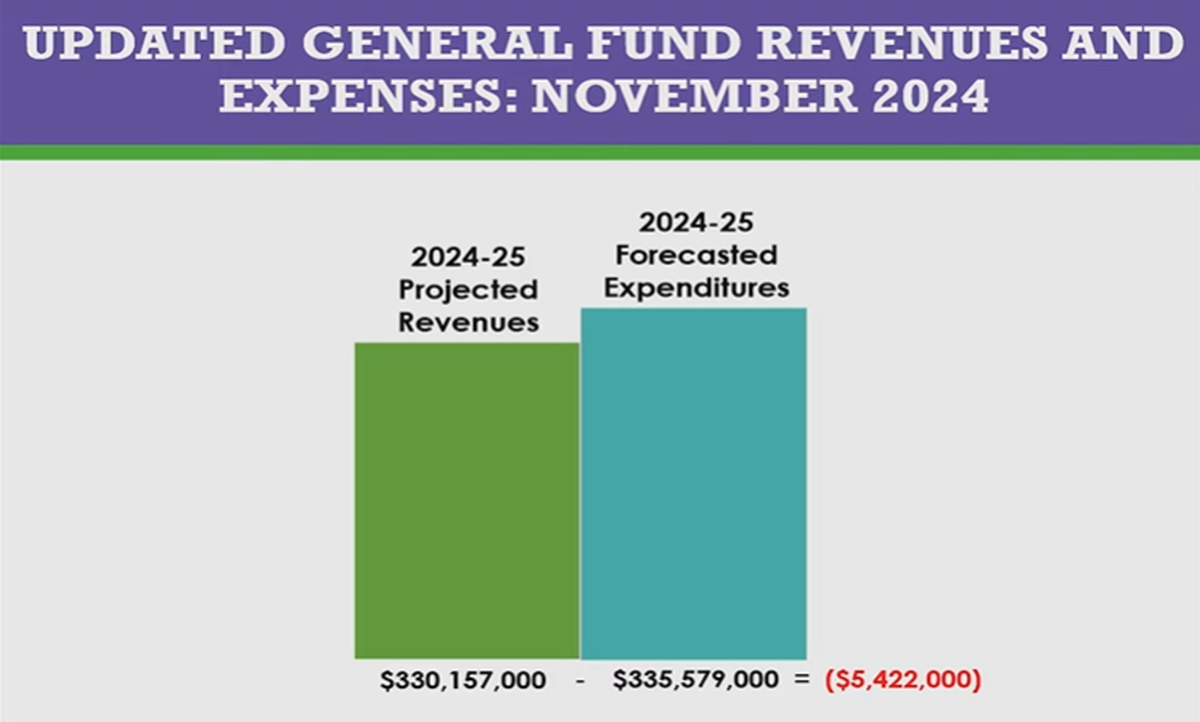
An updated general fund forecast from November showed Pasco on track to receive about $330 million in revenue this school year while spending more than $335 million.
Whitney says Pasco in 2023-24 received about $2 million less from the state’s “Local Effort Assistance” program, known as LEA. That program was created decades ago to adjust for the educational disparities between property-poor districts and high-value districts.
She says the reason they received less than they had budgeted for was because of formula adjustments and higher property assessments in the Pasco district. More wealth in school districts translates to less LEA money.
Pasco’s LEA funding has been decreasing for years. Since 2018, it’s lost out on about $5.3 million in annual funds.
Enrollment, which is a major driver for state apportionment, also continues to be an issue. About 17,700 full-time equivalent students attend class across Pasco School District’s 17 elementary schools, four middle schools, four high schools and various online learning programs.
Whitney says Pasco schools didn’t see an October “spike” this year like they normally see after students have settled in to their classes. Despite booming enrollment in the high schools, the school district remains below pre-pandemic levels by about 300 full-time equivalent students.
The district’s days of rapid enrollment growth are likely over, especially as birthrates in Franklin County continue to drop and result in smaller kindergarten classroom sizes, she said.
“There was a time when we were getting 600, 900, 700, 300 new kids every summer. That is not occurring, and I think that is a very important thing for all of us to start to wrap our heads around,” she said.
“That, in and of itself, will require that we think about our budget very differently than we have in the past — even if we weren’t dealing with this inflation,” she said.
Still, Pasco’s enrollment largely remains “on budget” for this school year, Whitney said.
Inflation continues to impact nearly every aspect of school operations. Cost escalations include insurance, benefits, utilities, supplies, contract services and curriculum materials.
To fill the $5.4 million gap this year, Pasco plans to maximize grant money, scrub its budget for efficiencies and implement cost savings. That includes:
- Evaluating vacant positions as needed and approach staffing conservatively.
- Pausing large purchases, such as new student electronic devices.
- Suspending non-essential travel and meals.
- Reviewing non-payroll budgets to identify reductions.
- Canceling some consultants and professional development.
- Implement stricter oversight of printing of materials for teachers.
Pasco’s local levy is up for reelection in February 2026. It currently taxes about $1.68 per $1,000 of assessed value within the school district.
Whitney says while they will weigh the financial needs of the district in the future levy, it’s unlikely they will ask for an increase covering everything they need.
“I don’t want the message to be, like, ‘Oh, we just have to hold on until we pass that high levy and this is all going to go away.’ This is still going to be a multi-year effort, even when we go out to the taxpayer we’re going to have to be very thoughtful about that,” she said.
This story was originally published January 14, 2025 at 3:17 PM.