43 Richland paraeducators reassigned to new jobs this week. Others quit or retired
Richland School District this week began the process of reassigning dozens of basic paraeducators to new jobs as part of a cost-cutting effort to trim $3 million in spending this school year.
A total 145 of the district’s 431 paraeducators — about one-third — were notified of potential changes to their position after a budget shortfall came to light this fall.
In the end, the district had enough paraeducators agree to take new positions or leave the district that layoffs were not required.
Officials said 15 paraeducators resigned or retired early, taking a one-time $1,000 buyout in exchange.
Nine more chose to resign rather than take new positions.
Of the 145 notified, 43 will take on new roles. Reassignments were made based on seniority.
- 22 will move to special education positions
- 10 accepted “temporary positions” that will likely lapse at the end of the school year
- 9 took general education para jobs in other schools
- 2 will fill early childhood education positions
The remaining 93 will stay in the same position at the same school.
Those who were asked to fill special education paraeducation positions began training Thursday and Friday.

“All general education paraeducators in RSD were given the option to stay in their current positions or accept a different assignment if displaced,” wrote Richland Paraeducator PSE Chapter leadership in a statement to the Tri-City Herald.
“While some paraeducators chose to go on layoff status, it’s important to highlight the union’s tireless efforts in protecting as many jobs as possible. Thanks to their hard work and dedication, all paraeducators were offered positions, with many choosing to stay on board and continue their valuable work,” it continued.
An update from school district leaders says they remain focused on ensuring a smooth transition for staff and to maintain quality support for students across all K-12 programs.
“We recognize the strain this year has brought to staff, students and families as we address financial challenges,” Superintendent Shelley Redinger said in a provided statement.
Paraeducators are among the lowest-paid, highest-impact district employees, working on-on-one with students and teachers to support instruction and learning. Many have characterized these workers as the “backbone” of the classroom.
While district leaders have said they plan to prioritize cuts away from the classroom during this period of financial turmoil, many educators have been critical of the decision to cut positions that have such a direct impact on students.
Richland school budget woes
Nearly 14,000 students are enrolled and 1,500 workers employed by Richland, which operates on an annual general fund budget of about $235 million.
The district’s budget issues go back years, but it came to a head in recent months after the state cut its levy equalization money, known as Local Effort Assistance, by $10 million due to higher assessed property values. Like other school districts, Richland has had to fight rising costs and salaries with only incremental increases in K-12 funding from the state.
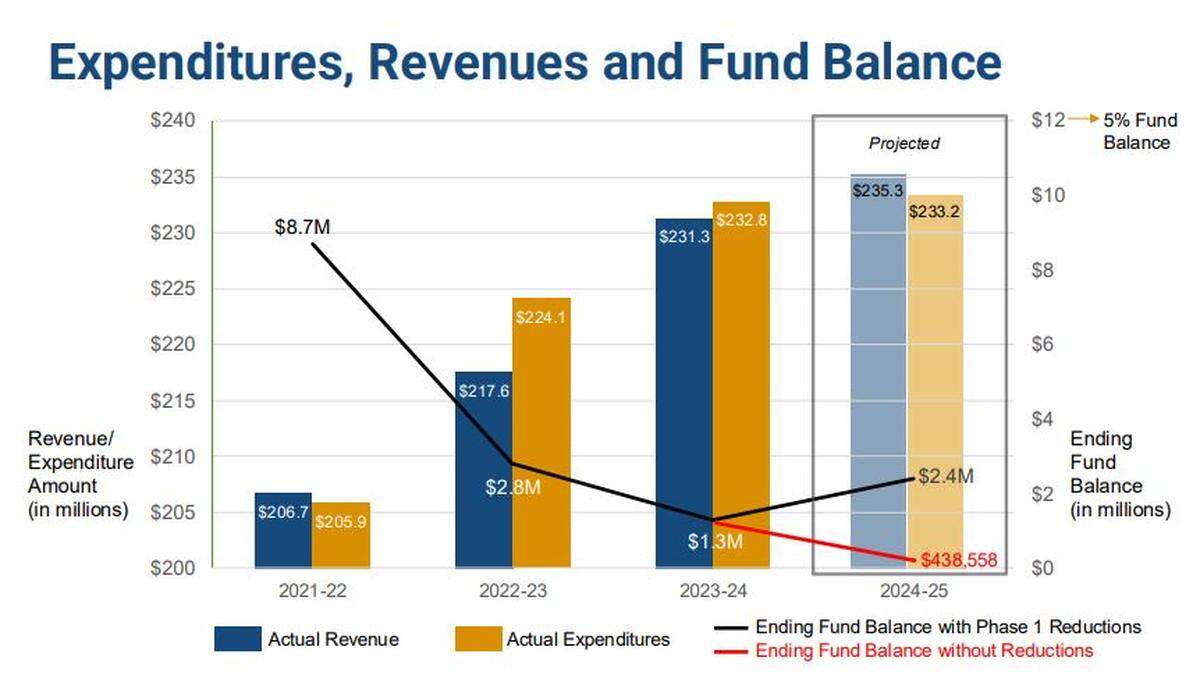
Richland also has overspent its budget the past two school years and had to dip into reserves to make up the difference. “Actual” expenditures exceeded revenues by $6.5 million in 2022-23 and $1.5 million in 2023-24, according to district documents.
The district already has made nearly $6.5 million in payroll cuts and cost-cutting efforts so far.
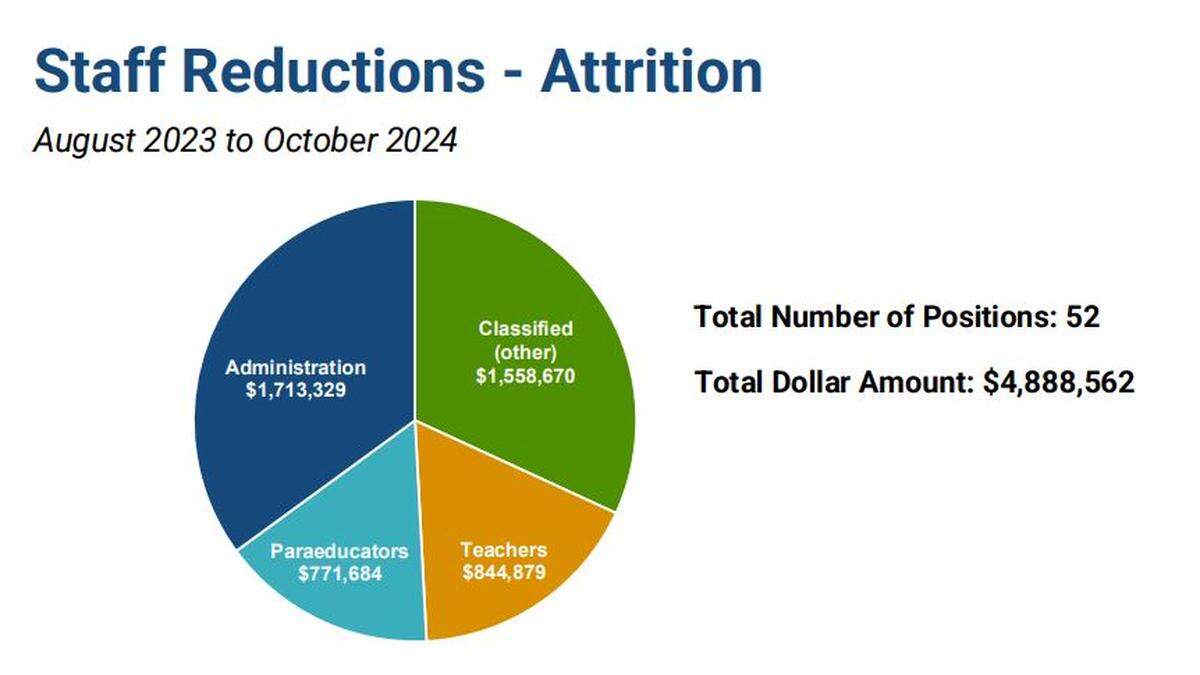
Since August 2023, the district has saved about $4.88 million by eliminating 52 full-time equivalent positions through attrition, either by retirements or departures.
With its plan to immediately cut $3 million — which includes $2 million in staffing cuts and $1 million in cuts to services — Richland expects to end the school year in June with a general fund balance of $2.4 million. Without any action, the district’s reserves would drop to just $438,000.
In addition to the paraeducator reductions, the school district is also cutting athletic transportation to high school sporting events in the Tri-Cities, increasing class sizes to “negotiated” amounts and making more than $1 million in cuts to facilities and operations.
Staff and teachers are also still working with an indefinite spending freeze that was put into place in October.
Meanwhile, district leaders are teeing up additional spending cuts that will need to be made for the 2025-2026 school year.