
Outdoors | Time is right for spring trout fishing in scabland seep lakes
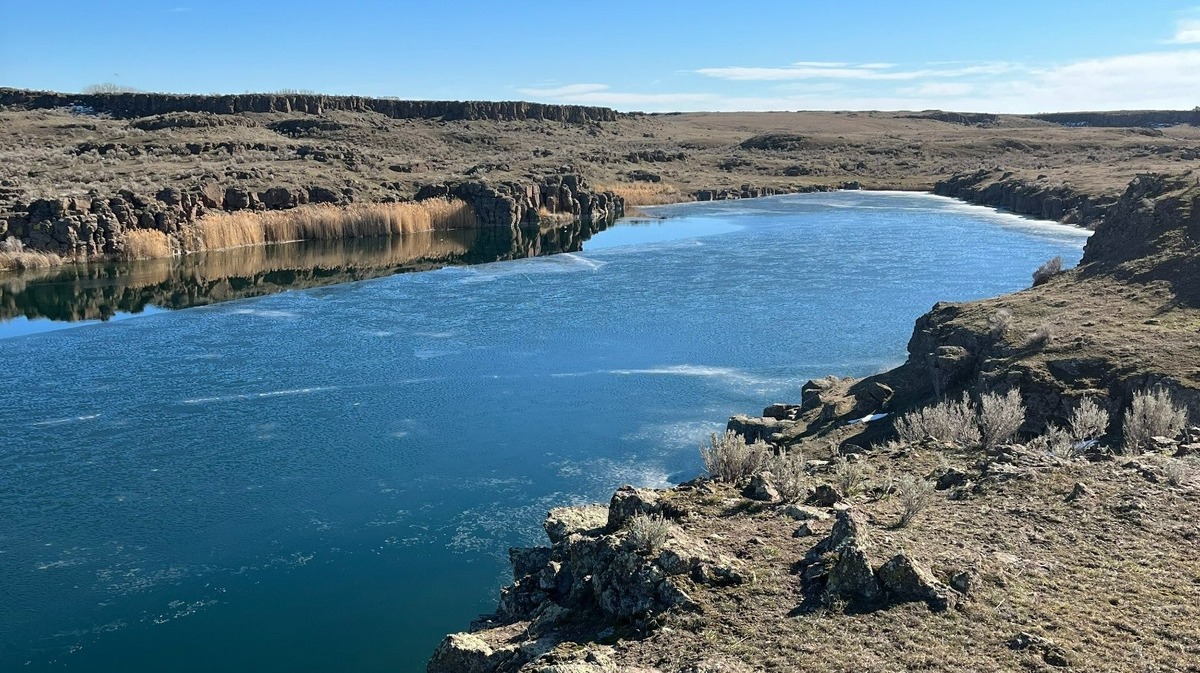
It’s a blue- sky day in early February. Three stir-crazy retirees head north to the Columbia National Wildlife Refuge to visit an area that Salish Indian tribes once used as a pathway to the Columbia River.
To a place where ancient floods carved out channeled scabland, leaving behind “a rugged jumble of cliffs, canyons, lakes, and remnants of lava flows.”
In the mid-20th century, O’Sullivan Dam raised the water table and once arid landscape transformed as irrigation water began to flow to Columbia Basin farmlands.
Over 50 lakes, sloughs, streams, and canals now occur in the refuge and surrounding area.
It’s a virtual waterfowl mecca with many bodies of water stocked with rainbow trout. Others host abundant bass and sunfishes.
Driving south from Potholes Reservoir on Seep Lakes Road, we pass bullet-hole riddled road signs and basalt formations splashed with lichen.
On one side of the washboard gravel road, patches of snow fill in gaps between big sage and rabbitbrush. The other side resembles a blackened moonscape.
But it’s the lakes accessible to a float tube – not desert scenery – that are on our minds.
One such lake on our list occurs on WDFW land adjacent to the refuge.
“Should be an easy hike,” Ken says. “Google satellite distance is only one and a quarter mile.”
Up-and-down terrain and a meandering cattle trail along basalt-face cliffs adds to the distance. We occasionally lose our bearings on an unfamiliar landscape until Ted reminds, “shadows point north at midday.”
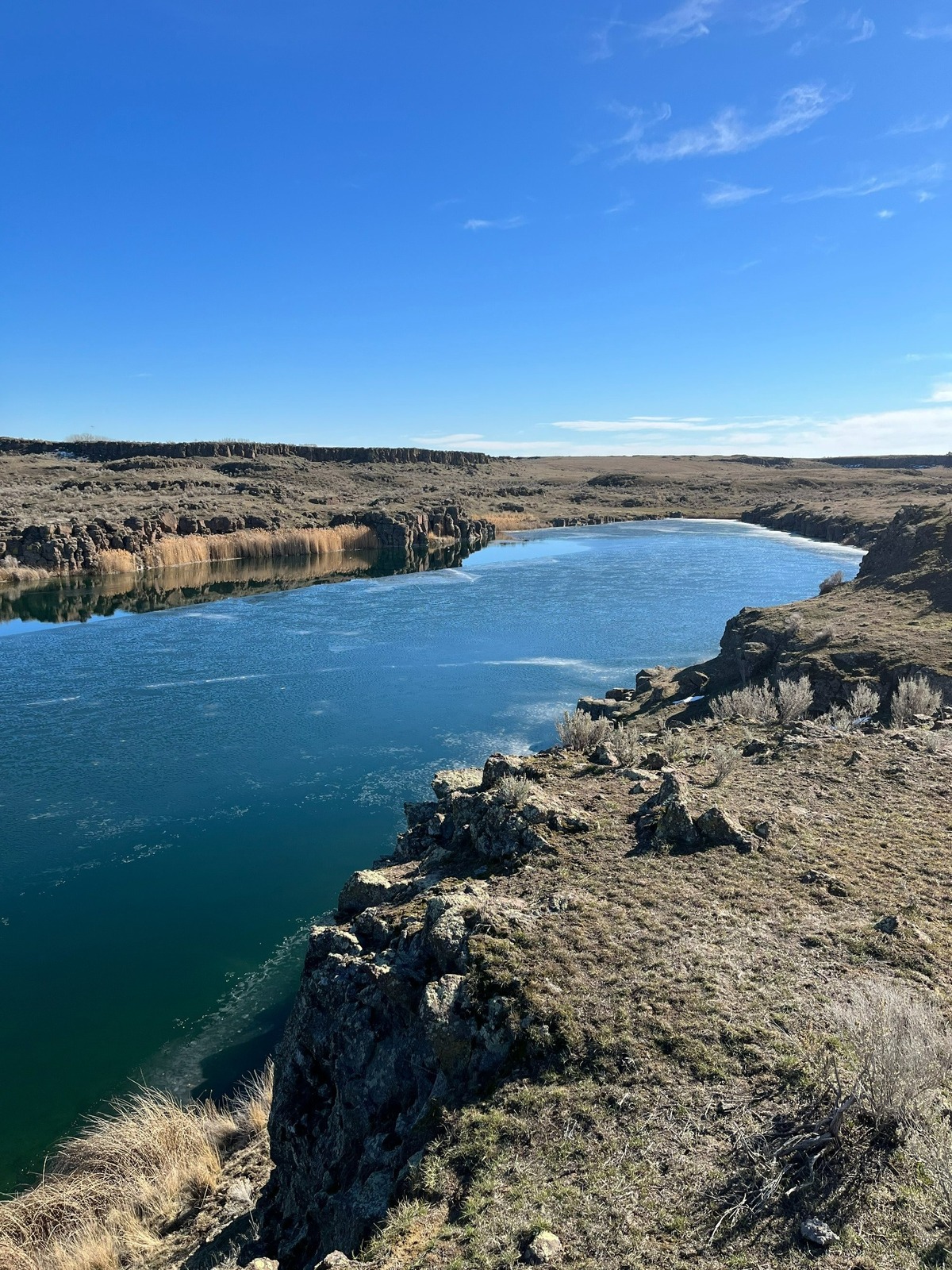
Our destination, 12-acre Virgin Lake, is partially iced over. A shoreline choked with reed grass, cattail, and bulrush suggests bank angling is a challenge.
Much to our surprise someone is setting up camp on a flat swale overlooking the north end of the lake.
“Took six trips to bring in 36 beers, camping equipment and firewood,” the man says. “Friends are showing up later for the long weekend.”
When we share plans to perhaps return with a float tube and fly rod, he warns, “Ticks are everywhere.”
A return trip to the refuge is put on the back burner after a quick review of WDFW Sport Fishing Rules tells most seep lakes don’t open up for fishing until the fourth Saturday in April.
One exception is Quail Lake, a favorite catch-and-release location for fly fishers. Lakes not listed in the pamphlet (and there are many) are subject to statewide fishing rules.
One month later I shake cobwebs from a float tube not pumped up since October and wait for relentless spring winds to cease. I have a new fly rod and am anxious to try my luck.
My interest peaks following the March 1 opening for Nunnally Lake, a small waterbody located in a chain of seep lakes further down the Crab Creek drainage from our February sojourn.
“Several 19-inchers were caught by all,” one friend texts. “Smallest were around 12 inches. Also had multiple hits where we lost the fish.”
Knowing all fisherman are liars, I ask for pictures. “Sorry, no evidence,” he replied. “You’ll just have to believe us.”
The following week, after giving sore-mouth trout sufficient time to recover, finds me packing my float tube through an old burn area populated with noxious weeds and gopher mounds.
Ted and I weave our way around exposed basalt, traverse a steep cliff, and find an opening in fire-scarred Russian olive to launch. Water level has dropped 2 feet from the previous fall leaving a treacherous rim of mud along the shoreline.
The territorial call of redwing blackbirds, nervous twitter of quail, and paddle flush of coots greet, but no dimple of rising trout.
I work a deep drop-off along a bulrush-lined bank without so much as a bump, then let my line dangle to take a picture of a group of pelicans resting on a rock.
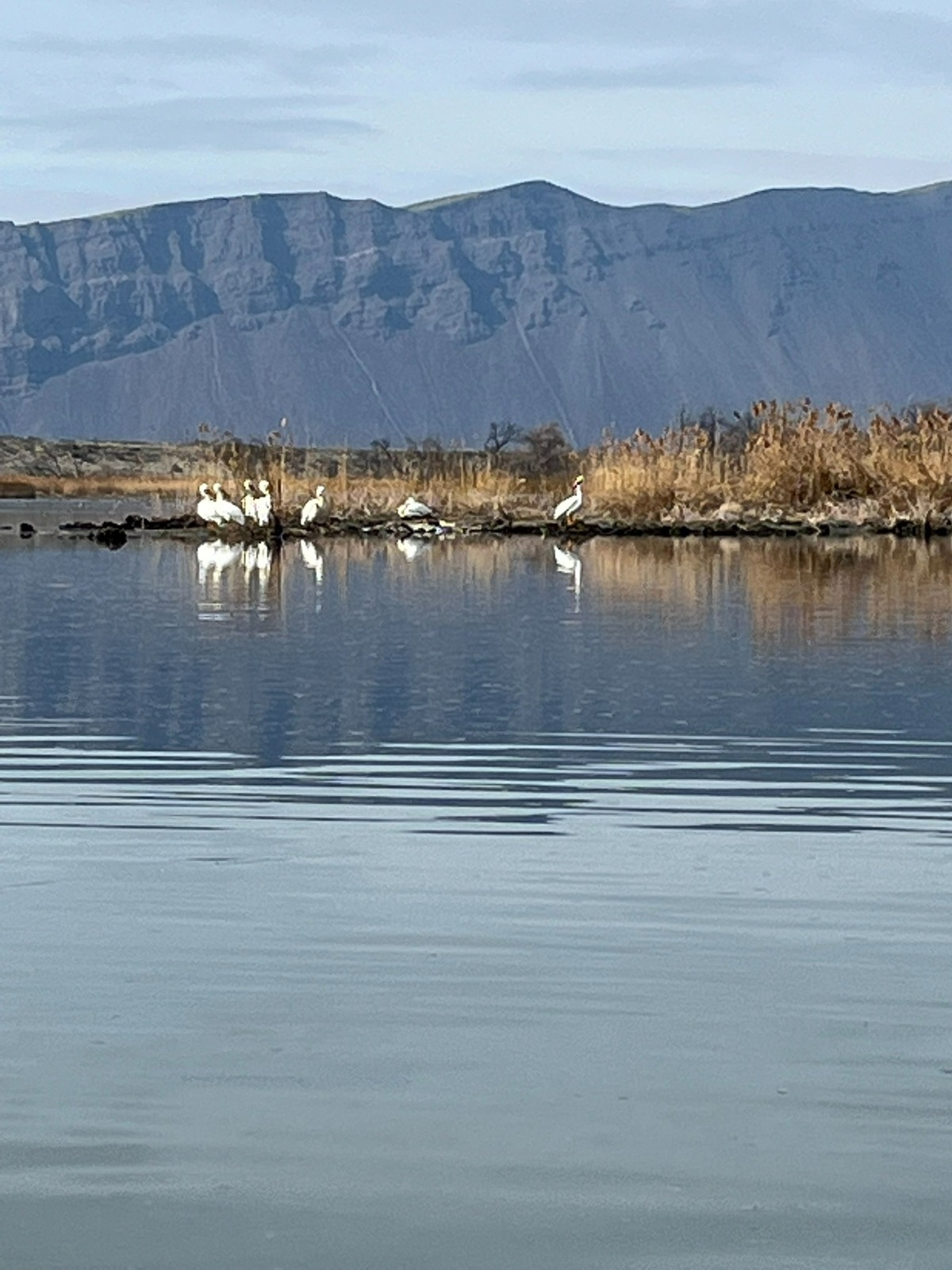
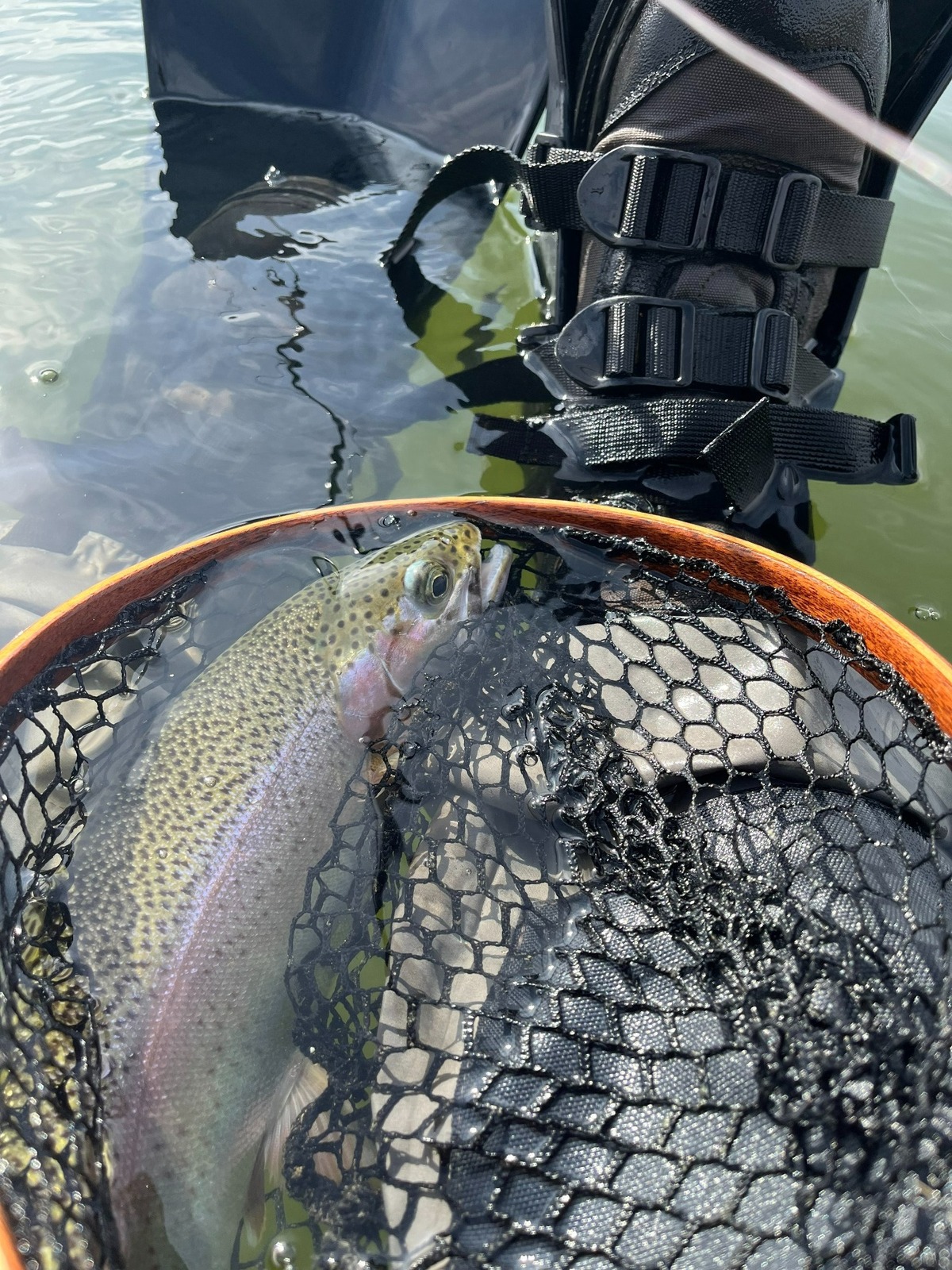
Retrieving loose line, I feel a tug and my reel sings with the pull of a nice fish. Testing theory now, a second trout strikes while I drag an orange-butt Wooly Bugger slowly across soft bottom.
Fish deep and slow, I tell myself. And, so it goes for the rest of the day with variable success. But then, after missing several strikes when I strip in line, I yearn for a faster sink tip.
One that keeps my offering lower in the water column when the sun rises high and trout go deep. I recall the wisdom of an flycaster friend who strapped three different fly rods to his float tube, reels spooled with a range of lines designed to fish the full depth of the water column.
So, here’s the key: offer a fly that looks like food to a location where fish reside and provide the kind of action that will trigger a strike. Then again, it’s not always easy to think like a trout.
Closer to home, several local areas were stocked with rainbow trout in early March: Hood Park Ponds, Dalton Lake, Quarry Pond and Fishhook Pond.
With snow now gone from lower elevation, many campgrounds are open, leaving the Tucannon Lake complex east of Dayton also worth a try.
Stocking dates and number/size of fish can be found on the WDFW website under “fishing and stocking reports.” Whether it’s fly fishing or PowerBait you prefer, don’t let another spring trout season pass you by.