
‘Botanical nightmare.’ How to spend more time fishing and less fighting aquatic weeds
Fall Chinook salmon are one of the most exciting fish an angler might hook. Reel-screeching runs typically follow a savage, pole-bending strike.
The phrase “out of control” comes to mind. Leading a salmon to the net can result in heartbreak because they rarely give up and roll on their side like a disobedient pup. Every successful landing leads to high fives, along with an excuse for libation.
Washington Department of Fish and Wildlife (WDFW) creel census reports show weekly catch rates in the Hanford Reach have ranged from about 15 to 25 hours per salmon and about one fish per boat since early September. Bank anglers at Ringold operate in the 50 hours per salmon range.
No matter how you slice it, most anglers return home disappointed.
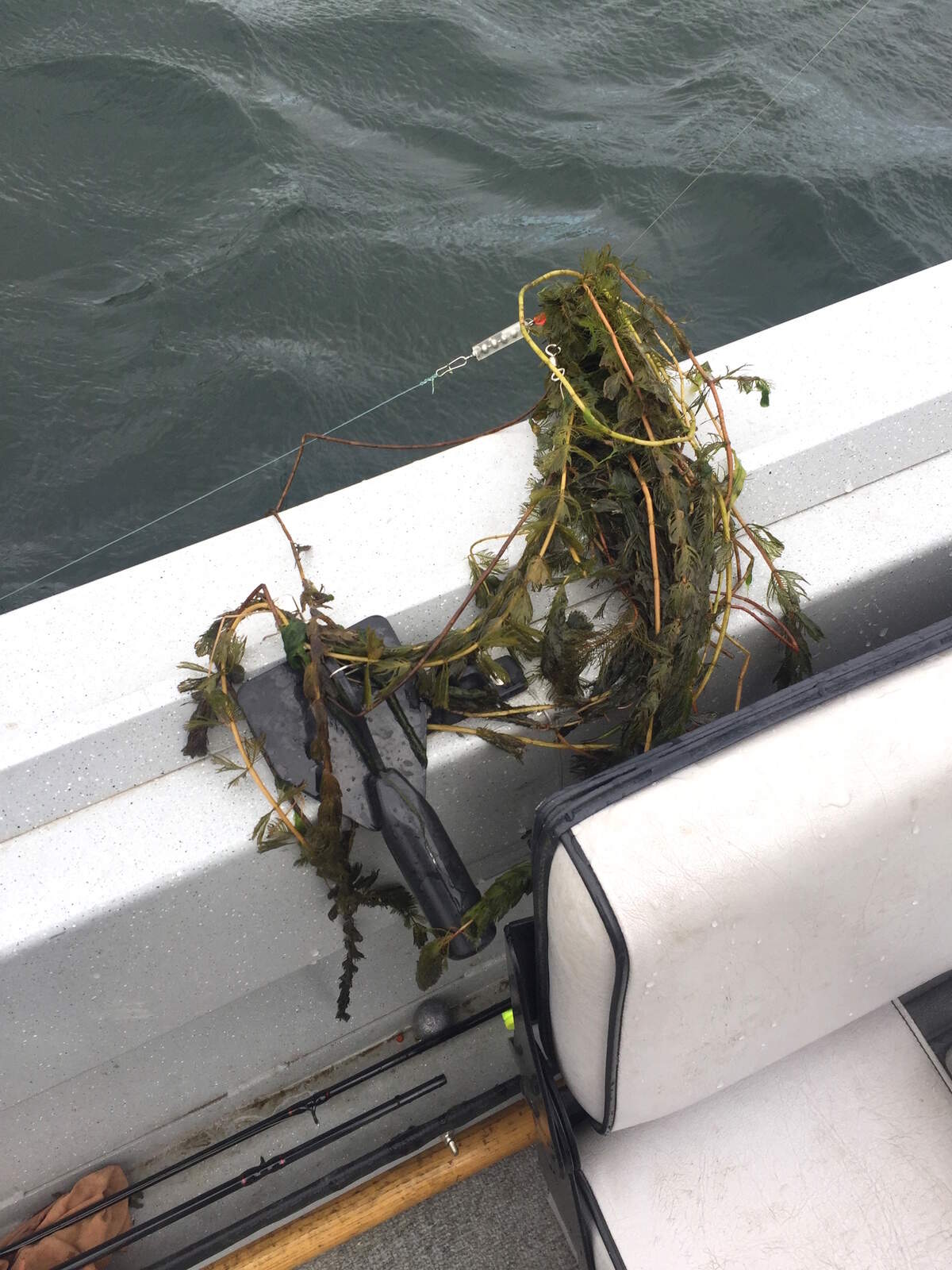
A major frustration continues to be the constant presence of so-called “seaweed” (mainly Eurasian milfoil and curled leaf pondweed).
Once detached from the river bottom, this duo of nuisance aquatic plants tangles fishing gear. If that’s not enough, a “mossy scum” (primarily filamentous green algae) that thrives in the water column coats fishing line and lures like green cotton candy.
Last week, when a fish checker at the Snyder Street launch asked, “How long did you fish?” I answered, “Five hours on the water, but put me down for an hour after you deduct the amount of time spent cleaning gear.”
What has caused the botanical nightmare?
The abundance of aquatic vegetation in the Columbia and Snake River has increased over time as silt is deposited and trapped in slow-moving reservoirs behind dams.
Aquatic plants, including native pondweed and invasive milfoil, have taken root and spread. Plant fragments break loose after the spring and summer growth period, float downstream, and fill the water column.
Before dams were built and current water storage practices that modulate river flow, spring floods moved silt and scoured gravel bars and cobble clean each spring. Aquatic vegetation was restricted to backwater sloughs and nearshore pockets of the Columbia River shoreline. Not so anymore.
Excess growth of green algae is triggered by warmer water conditions in combination with increased levels of nutrients fed to waterways from agricultural and domestic runoff.
Extended heat waves like those experienced the past few summers only add to the problem.
Mitigation techniques that include aeration and ultrasound are not practical over a large body of water such as the Columbia River.
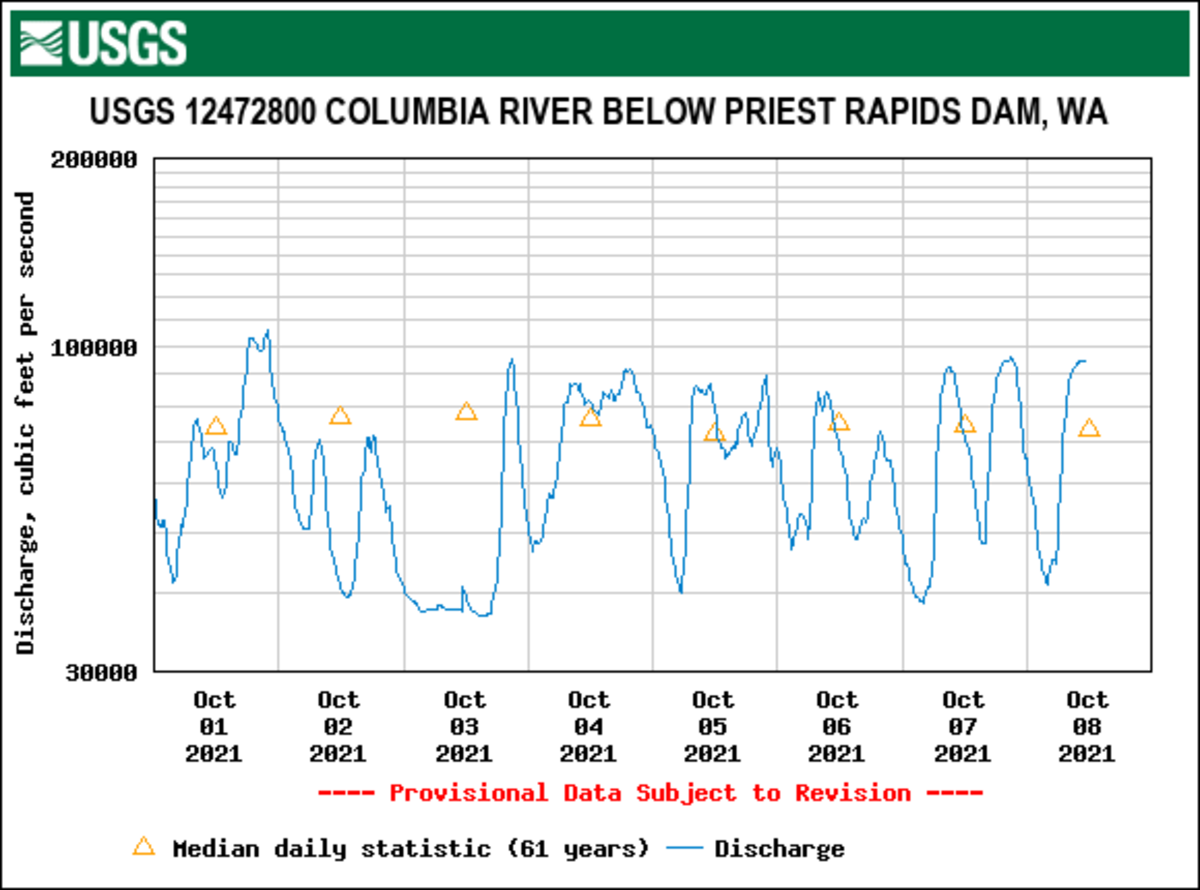
This season salmon anglers have experienced a parade of floating plants with every surge of water released from Priest Rapids Dam.
Only during extended periods of declining flow has nuisance vegetation begun to clear and settle out. Check the daily discharge patterns at USFS 12472800 (Columbia River below Priest Rapids Dam) to get an idea of what to expect when you venture out on the Reach.
One way to minimize “weeding up” when trolling for salmon is to deploy less gear. For example, a K14 Kwikfish or #5 Vibrax spinner fished off a downrigger will gather fewer weeds than a Pro-Troll flasher and lead ball setup with Superbait.
Jet divers tend to trap weeds; sometimes long enough for a trailing ball of roe to attract the strike of a small brain salmon.
Yakima River
Yakima River salmon anglers have their own set of challenges with invasive plant life.
Large mats of water star grass clog the shoreline and have raised the water surface elevation to levels that make wading dangerous. Rafts of floating weeds filled the channel after a recent flow pulse and made casting a spinner or floating a drift bobber from the bank an exercise in futility.
The good news is the Benton Conservation District recently purchased a custom-made aquatic plant harvester to battle water stargrass infestation in the Yakima River.
This machine operates like a combine, but has an innovative “roller bar” that grabs and pulls plants out by the roots rather than cutting them off at the stem.
Conservation District biologist Rachel Little says initial testing and monitoring will occur at four sites between Benton City and Columbia Point during the next in-water work window. Mechanical removal of stargrass will create increase nighttime dissolved oxygen levels in the lower river and open up gravel bars for salmon spawning.
Despite challenges with nuisance members of the plant kingdom, time spent fishing the Hanford Reach during the fall salmon season is special. Generally light winds, shirt-sleeve temperatures, golden glow of rabbitbrush bloom, and the serenade of southward-bound flocks of sandhill cranes make for pleasant days on the water.
The Yakima River and Hanford Reach upstream of the Old Hanford townsite will remain open for salmon through October 17. The lower Reach, upstream from the Highway 395 Bridge to the Old Hanford Townsite, is expected to stay open through October 31.
Admittedly, the odds of landing a quality fish lessens as spawning time nears. However, given a weedless hour or two, there is still opportunity to fill the smoker with a late-run Coho or Chinook salmon.