
Outdoors | Deep sea fishing off Oregon Coast doesn’t get better if you can handle the waves
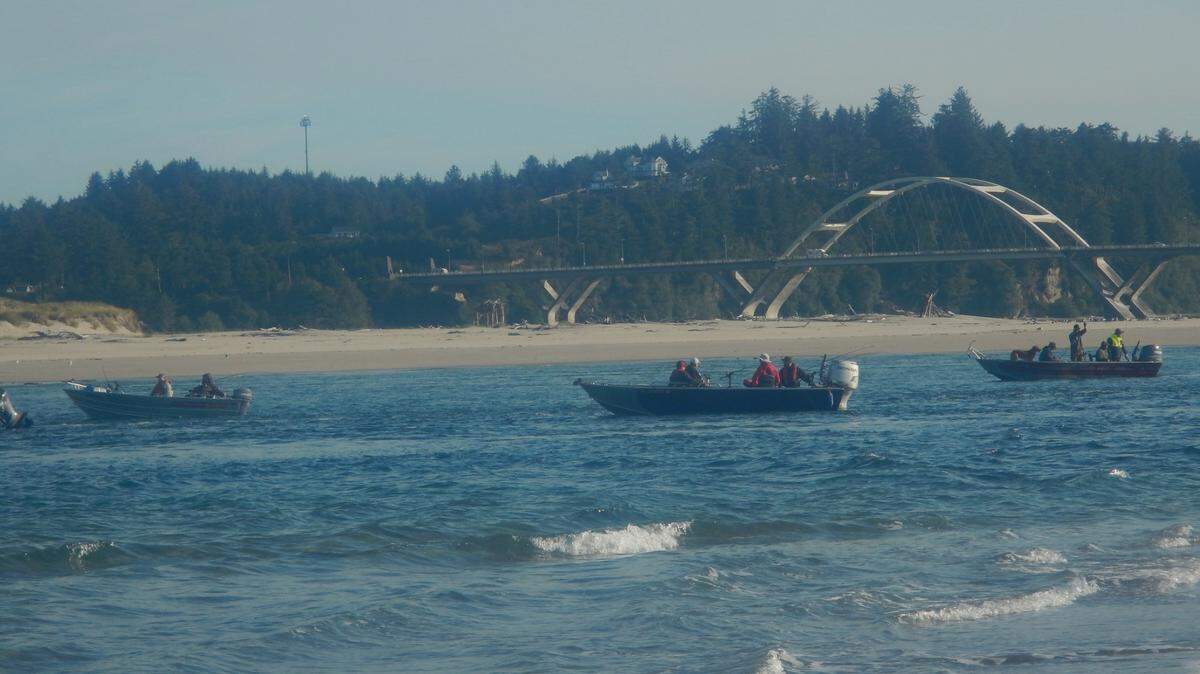
A wisp of fog clung to the 600-foot long bridge that spans Yaquina Bay. Sea lions barked and gulls hovered along a busy bayfront lined with tall mast sailing ships, commercial fishing vessels, and recreational fishing boats.
The odor of rotting kelp comingled with cool salt air.
No sooner did we leave the dock to drop crab pots — two in the protected bay and three in the ocean — when a familiar queasy feeling began to grow.
The possibility of seasickness should have been no surprise given the NOAA morning forecast of “4- to 5-foot swells at nine seconds with 2-foot wind waves.”
The seed for a coastal fishing trip was planted with an email from my friend Evan. “I’ve blocked out my Waldport house for Aug. 30 to Sept. 3,” he wrote. “Think about joining me. We’ll fish under a neap tide, when conditions over the bar will be moderate.”
First light on day one brought back vivid memories of crossing the Yaquina River Bar nearly five decades ago.
A hearty breakfast of sausage, eggs, and hash browns turned to chum after an hour’s exposure to diesel exhaust and giant waves.
As I recall, the prior evening’s entertainment included the music of Cat Stevens (now Yusaf Islam) and Boone’s Farm “Green Apple” wine. Some things you put out of your mind only to surface later.
The first two rockfish hooked at 20 fathoms depth distracted a slow growing acid burn in my gut. Tying on a new rig after losing a 4-ounce jig led to dizziness and a piercing headache.
Practice deep breathing and look at the horizon, I told myself. Eat a Ritz cracker. With luck the 5 mg dose of THC in the edible taken to combat nausea will settle you down.
Meanwhile, Evan and his neighbor Dan hauled in two legal-size ling cod that attacked a brown 6-inch curly tail “Gulp” soft bait dragged along the bottom. Vertical jigging is the preferred method for rockfish.
Our presentation resembled flatline trolling as waves built and boat control became difficult in the increasing tidal current. Visions of returning to port with a 5 fish limit faded from my mind like the early morning fog.
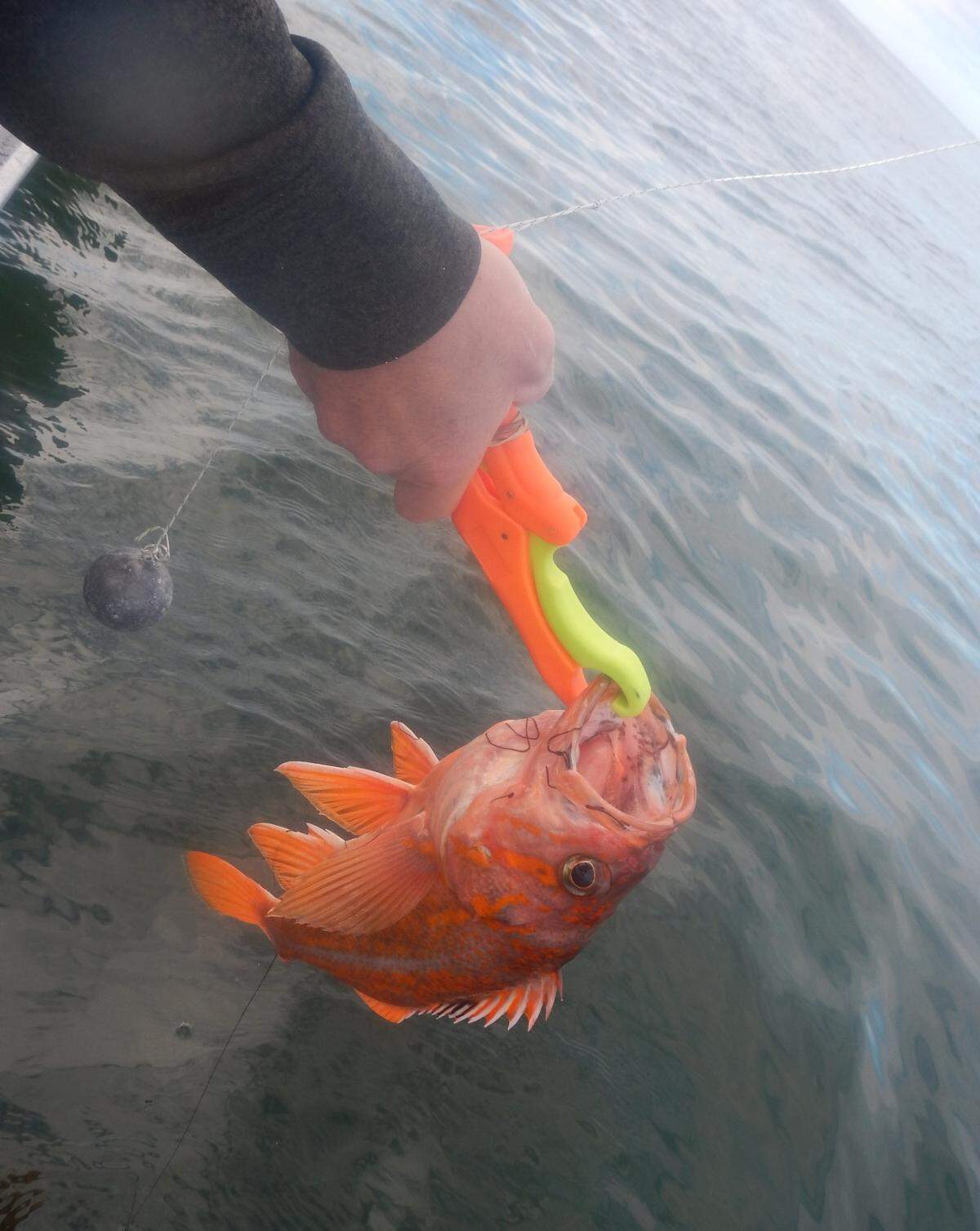
Me catching a 3-pound black rockfish led to a brief respite from whole-body malaise, as did landing a small yelloweye (a protected species along with china, quillback, and copper) that came to the net with an inflated air bladder. That one got sent back down with a descending device to improve its chance of survival.
Waves pounded the gunnel of Evan’s 20-foot Hewescraft “Sea Runner” when he pulled up a large orange rockfish we identified as a vermillion. That a fish checker later argued copper did not comport with the handy picture guide.
When I asked her to provide a differentiating characteristic, she replied, “vermillion have a rough patch on their underside of the jaw.”
Needless to say, she did not rub the fish’s chin before telling us to return it to the ocean for release. Be sure to check for updates on which sport groundfish you can keep and how many on myodfw.com/fishing/marine-zone before you go fishing.
More than 25 species of rockfish are commonly caught off the Oregon Coast.
As a group they are slow-growing and late-maturing. Older females continue to produce viable young into advanced age, which for some species, like yelloweye, could mean 150 years. Hence, a good reason for protecting species whose population status is uncertain.
Growing swells challenged retrieval of our trio of ocean-set crab pots, but we managed to haul them in without getting washed overboard.
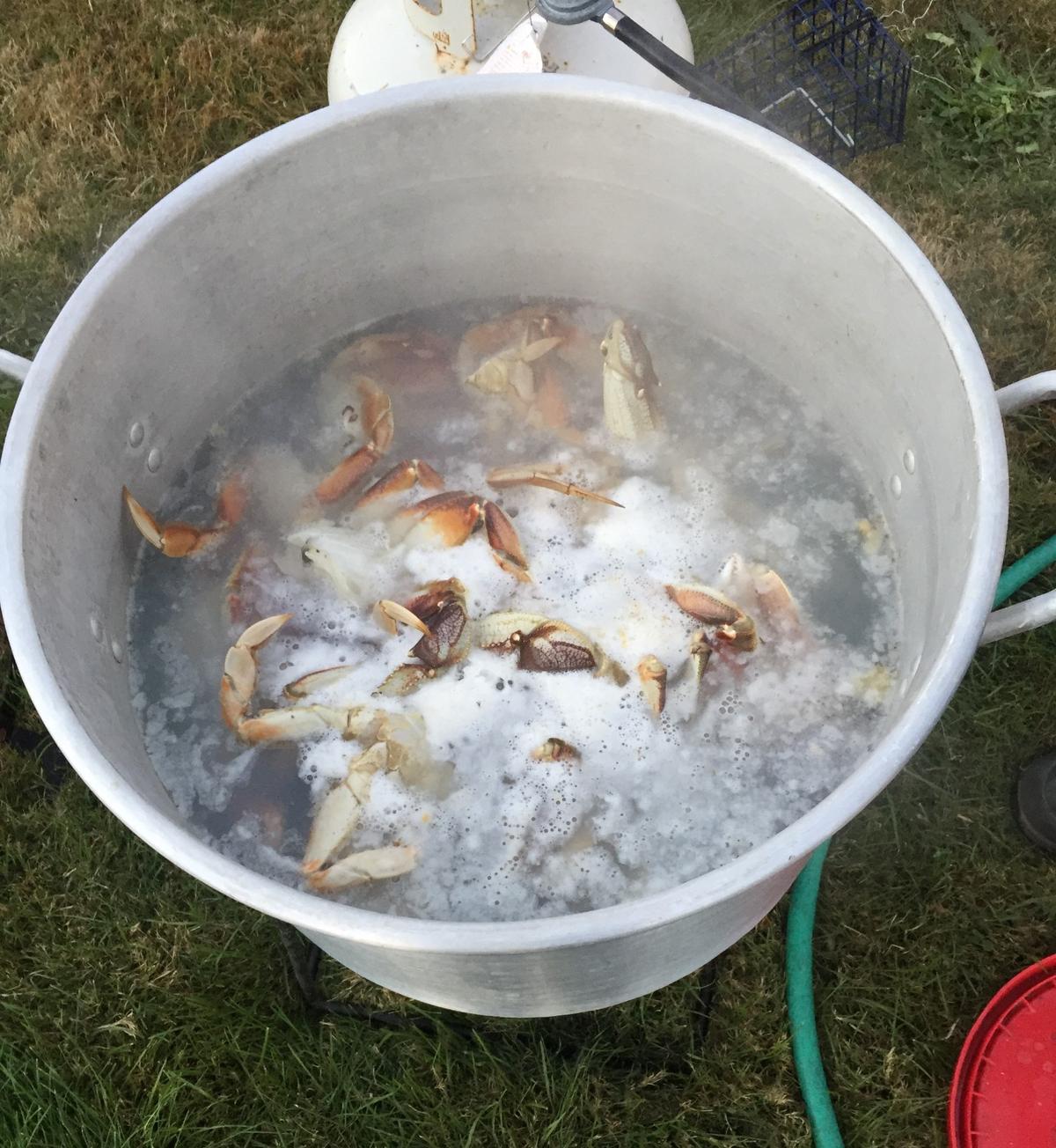
The Oregon limit for Dungeness crabs is more generous than Washington’s. Up to 12 males with a carapace width greater than 5 3/4 inches can be retained. One pot got damaged by a hungry sea lion, but the other four yielded 33 hard-shell crabs or more than enough sweet meat to gorge on.
Returning to port with a 20-knot northwest wind in our face led to more dry mouth and a feeling of vertigo. Blame my compromised condition on whitecaps that slammed the bow of the boat down like a scene from the movie “The Perfect Storm.” Or so it seemed at the time.
Day two on the big salt produced more of the same. We caught seven ling cod (only one legal) and a half-dozen large black rockfish before getting chased off the water at noon. Two small orangish-colored rockfish were released to limit arguments with a fish checker.
Evan relied on an ear patch whose active ingredient is delivered slowly over time, but said by some sources to lead to hallucination, lack of free will, and possibly amnesia.
As Evan explained, “Wearing the patch for two days made me feel funny, but at least I didn’t get seasick.”
A Scopolamine tablet taken with a little red Sudafed pill left over from an allergy prescription helped me combat motion sickness. The latter pill is kept behind pharmacy counters to limit the illicit manufacture of methamphetamines.
My read on seasick drugs is most work good enough to ensure you might consider going bottom fishing more than once. As for me, I prefer to fish with both feet on solid ground when the surf is up.
This story was originally published September 18, 2021 at 5:00 AM.