Recovery Center still can’t open. Legislators push WA to make it a priority
AI-generated summary reviewed by our newsroom.
- WA legislators asked state Health Secretary Dennis Worsham to help expedite licensure.
- Delay stems from an issue with the building address. Staff is ready to treat patients.
- Benton County is covering startup staff costs while the center awaits license..
Local lawmakers are asking the Washington state Secretary of Health to help speed up the process of licensing the Tri-City’s first public recovery center.
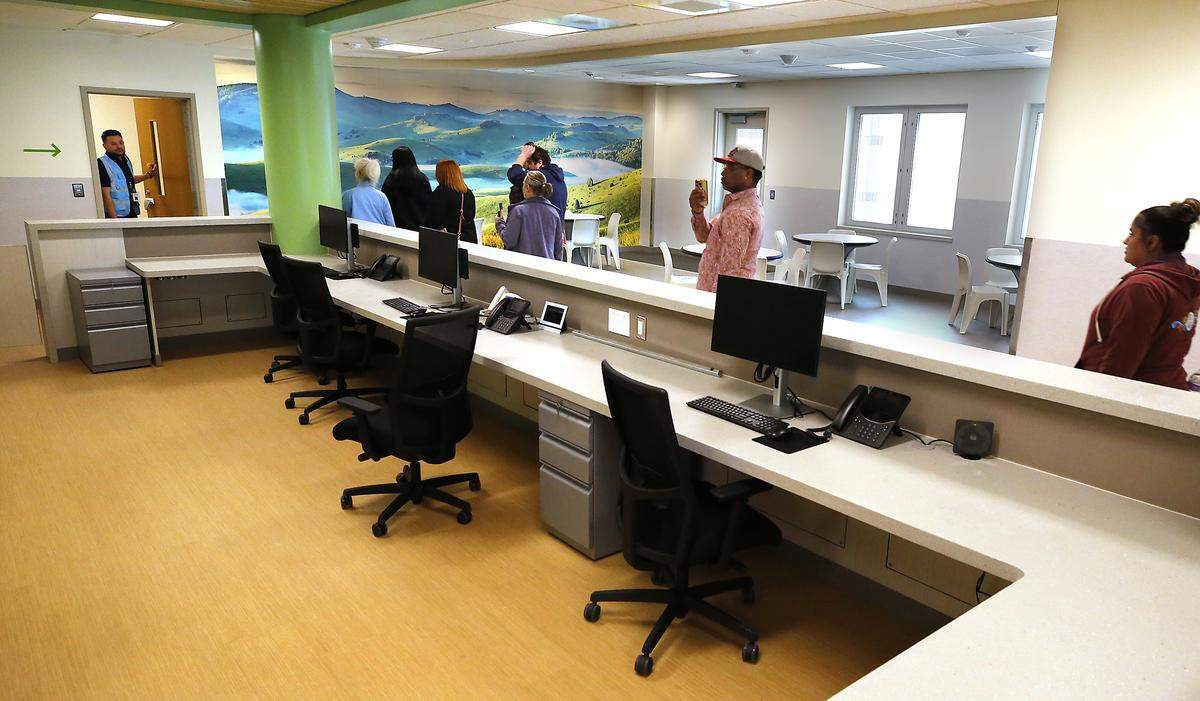
More than a month after the Columbia Valley Center for Recovery was expected to open, staff continues to train at the facility but aren’t allowed to take patients.
The Washington state Department of Health still has not approved the facility’s license to operate, due to an initial issue with the building’s address.
The original address of the old Kennewick General Hospital was put on Benton County’s applications, but as construction shifted the entrance away from Auburn Street, the facility was given a new address on 10th Avenue.
Delayed opening
Benton County Deputy Administrator Matt Rasmussen told the Tri-City Herald in an email Wednesday that they are continuing to work with the state and are now at the point where the state is reviewing Comprehensive Healthcare’s operating policies.
He is hopeful they’ll be able to open the center by mid-June.
That means the original tiered approach to ramping up services will be compressed to ensure it’s operating at full capacity in July.
In the meantime though, Benton County is covering the costs for those staff members under its “Start-up Agreement” with Comprehensive Healthcare.
The agreement allows the healthcare provider to get the facility up and running before switching to a standard operating contract once insurance and Medicaid reimbursements are being processed.
All six state representatives and senators from the 8th and 16th Legislative Districts co-signed a letter to Health Secretary Dennis Worsham and Gov. Bob Ferguson’s office on Wednesday, urging them to help expedite the process.
They point out that not only is Benton County taking on a larger burden covering costs for more than a month after reimbursements should have started, but Tri-City families in need of addiction and mental healthcare are left waiting for desperately needed services.
“We understand that the facility has completed substantial preparations for opening, including staffing, programming, and operational readiness. As the review timeline continues, maintaining that readiness becomes increasingly challenging, both financially and operationally,” the letter states.
“In addition, many individuals and families within the region are awaiting access to treatment services that this facility is expected to provide. As legislators, we have heard from community members who are eager to see these services become available and who have expressed concern regarding the uncertainty surrounding the remaining timeline.”
They’ve also asked the department to ensure any needed clarification or corrections are communicated in a timely manner.
“We recognize and appreciate the Department of Health’s responsibility to conduct thorough reviews and ensure that all licensing requirements are met prior to approval. We are not seeking to influence the Department’s licensing determination, but rather to express our interest in the timely completion of the review process and to better understand any remaining steps necessary to bring this application to resolution.”
About the recovery center
The Tri-Cities’ first public recovery center is designed to be a “no wrong door” treatment center.
That means they will serve anyone with a need, regardless of their insurance status or ability to pay.
This approach is critical for law enforcement intervention. It means people who actually need medical care will not be turned away and just sent to jail. It will allow officers to bring in someone in crisis without having to involve them in the criminal justice system.
Franklin County still needs to work out a third party contract with Comprehensive Healthcare to pay for reimbursements, but law enforcement officials are eager to begin the partnership.
It will offer four key services, opening in tiers over the course of summer. Rasmussen said Comprehensive Healthcare now plans to ramp up more quickly, after the delay in opening.
The residential wing will fully open as soon as the facility’s license is issued, along with half of the crisis stabilization beds and about half of the recliners used for short term/sobering care.
Then they’ll fully open the rest of the beds and recliners for crisis stabilization and short term/sobering care.
At that point, the plan is to open half of the withdrawal management beds, with the rest opened by the end of July.
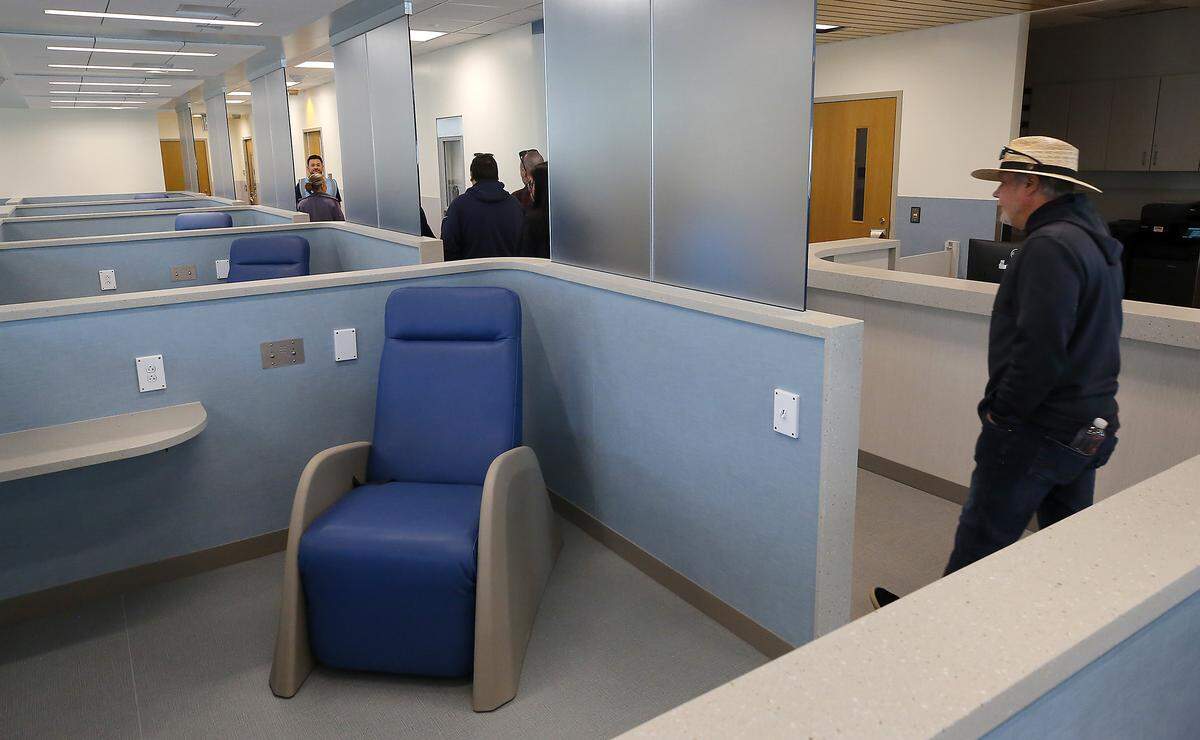
Short-Term/Sobering — A 23-hour observation unit that focuses on stabilization and sobering up. This unit will be structured like a living room setting with pods for recliners. Patients will be assessed here to determine longer care needs.
Crisis Stabilization — This unit is designed for clients whose primary diagnosis is mental illness related. Services will include assessment, diagnosis and treatment for those without the need for longer stays. Typically, they’ll spend five days or fewer here, but longer stays can happen voluntarily or by court order.
Withdrawal Management — This unit will provide secure withdrawal management and stabilization services. Patients will be assessed, stabilized and cared for while detoxing. There will be two levels of detox, one with monitoring and patient administered medication and the other with 24-hour medical care by nurses and doctors.
Co-occuring Residential Substance Use Treatment — This unit will be for longer-term substance use treatment, often for patients who also need some mental health treatment. The length of the stay will depend on ongoing assessments and progress toward treatment goals.
This story was originally published June 4, 2026 at 9:25 AM.