
These plutonium-contaminated structures at Hanford were at risk of collapsing
Two underground structures at the Hanford site that were at risk of collapsing and spreading highly radioactive contamination into the air have been stabilized.
“With this work completed, Hanford has ensured the stability of these structures and reduced risks to workers and the environment,” said Geoff Tyree, spokesman for the Department of Energy.
The partial collapse of a tunnel storing radioactive waste at the nuclear reservation in May 2017 prompted a study to discover what other underground, contaminated structures also were at a high risk to collapse.
It concluded in early 2020 that the highest risks were posed by a large settling tank and two cribs — also called trenches — where plutonium-contaminated liquids were poured into the ground for disposal.
All were used for waste from the Plutonium Finishing Plant in central Hanford, where workers turned plutonium that came into the plant in a liquid solution into buttons the size of hockey pucks for shipment to weapons plants.
The Hanford nuclear reservation in Eastern Washington was used from World War II through the Cold War to produce about two-thirds of the nation’s plutonium for its nuclear weapons program.
Both the waste tunnel that collapsed and a longer tunnel running parallel to it were filled with concrete-like grout to keep it from collapsing.
But the 2020 study found that the settling tank and cribs posed a higher risk of collapse than the second tunnel.

‘Monitoring will continue’
Work now has been completed to fill the settling tank and the larger crib with grout, just like the tunnels.
All three underground structures are now stable, said Scott Sax, president of Hanford contractor Central Plateau Cleanup Co., in a message to employees.
As more was learned about the smaller crib, it was determined that it was buried deeper than drawings showed.
The additional soil was found to be enough to fall into the trench during any collapse to cover radioactive material and prevent its release into the air.
In the partial collapse of the radioactive waste tunnel at the Hanford PUREX plant in 2017, the soil topping the tunnel fell into the breach, covering the waste and preventing the release of radioactive particles into the air.
“Routine monitoring will continue to ensure all three structures remain stable,” Sax said, at least until further environmental cleanup action is taken.
Pounds of plutonium
The largest of the structures most recently filled with grout was the Z-9 Crib, which operated from 1955 to 1962. It was estimated to be contaminated with 105 pounds of plutonium.
The crib is a 20-foot deep hole sloping to a 60-by-30-foot bottom, where about 1 million gallons of waste from the plant seeped into the soil. It has a concrete roof, supported with six concrete columns.
The other structure recently grouted was the Z-361 Settling Tank used from 1949 to 1973.
It is a reinforced concrete structure that is 28 feet long, 15 feet wide and up to 18 feet deep. Contaminated liquids were sent to the tank to allow solid waste to settle out.
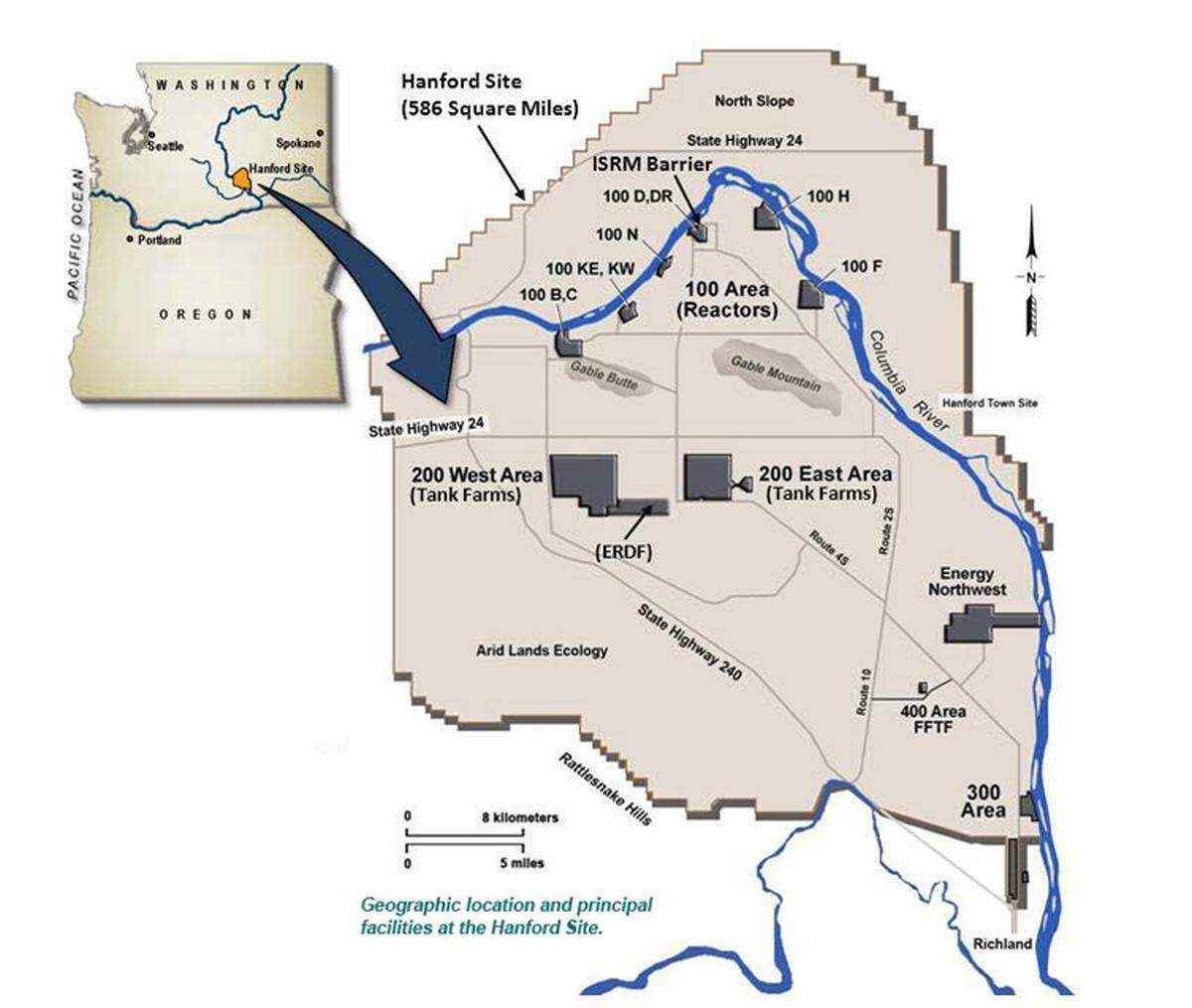
It was estimated to hold nearly 100 cubic yards of radioactive sludge with about 64 pounds of plutonium.
A video inspection in 1999 showed cracking in the interior roof of the tank, dissolving of the interior steel liner and deterioration of the concrete sidewall of the tank.
The Z-2 Crib, which also initially was planned to be grouted, is an open-bottomed box with 12-foot sides and 14-feet tall.
No final cleanup plans for the three structures have been made as DOE has focused recently on other high-priority projects.
They include 56 million gallons of radioactive waste held in underground tanks; a highly radioactive spill beneath the 324 Building just north of Richland; and capsules of radioactive cesium and strontium that are at risk of releasing contamination in the event of a severe earthquake.
About $2.5 billion a year is being spent to stabilize and cleanup up waste and contamination left at the 580-square-mile site.
A Governmental Accountability Office report released in 2020 looked at the larger of the two cribs and the settling tank, saying that the Z-9 crib might not be cleaned up until 2034 and the settling tank might not be cleaned up until 2028.
The grouting work was done under a contract originally valued at $3.9 million awarded to White Shield of Pasco.
This story was originally published April 20, 2021 at 5:00 AM.