‘A real need.’ Point in Time count on frigid night shows extent of Tri-Cities homelessness
On one of the coldest nights of winter, more than two dozen volunteers scoured the Tri-Cities to contact more than 100 people sleeping outside in the freezing weather.
The nearly 30 volunteers was a better turnout than expected for the annual Point in Time count, which helped identify and offer help to the unhoused with the most critical needs in the Tri-Cities area. The count takes place on the same day at the end of January in nearly every city in the nation.
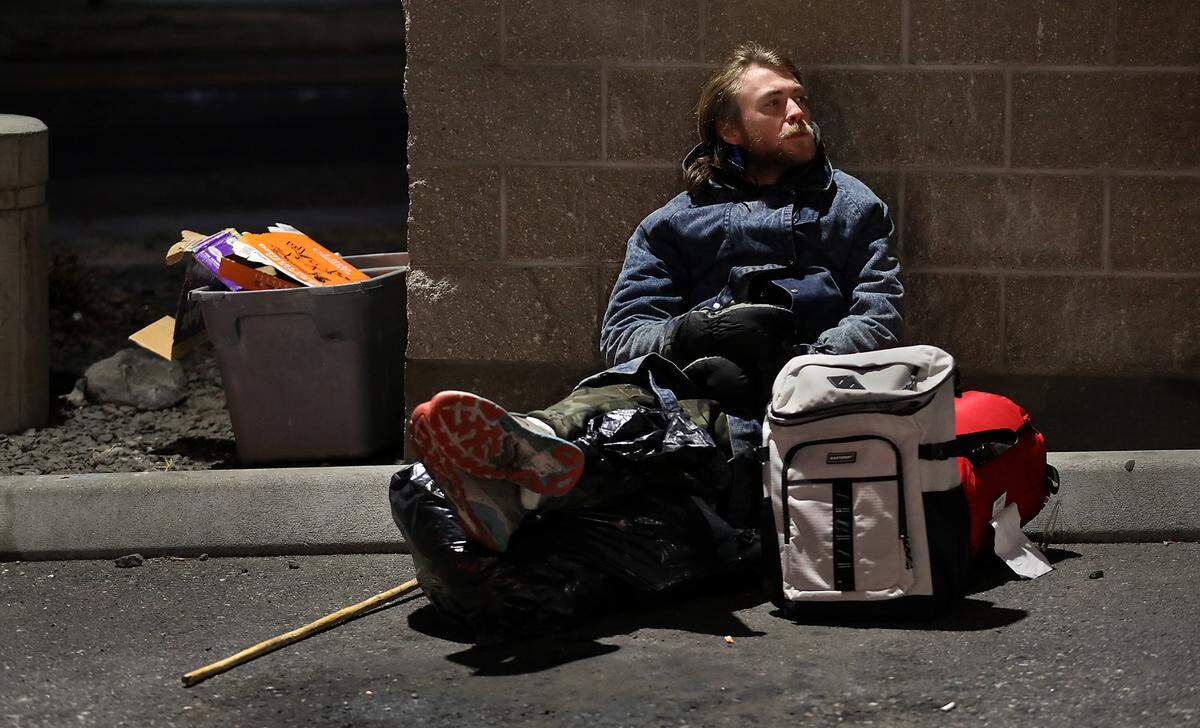
Ryan Williams was huddled by a Dumpster trying to stay warm when volunteers found him in Kennewick. He had lost his gloves, but said he has become accustomed to the cold. Nearby another young man said he had been walking around all night to keep warm.
They were just yards from a hotel. The volunteers knew both of them, but there just aren’t enough housing vouchers to go around.
It’s been an unusually warm winter, so only one church had announced its overnight shelter was open in addition to the area’s only permanent shelter, Tri-City Union Gospel Mission.
Identifying the need
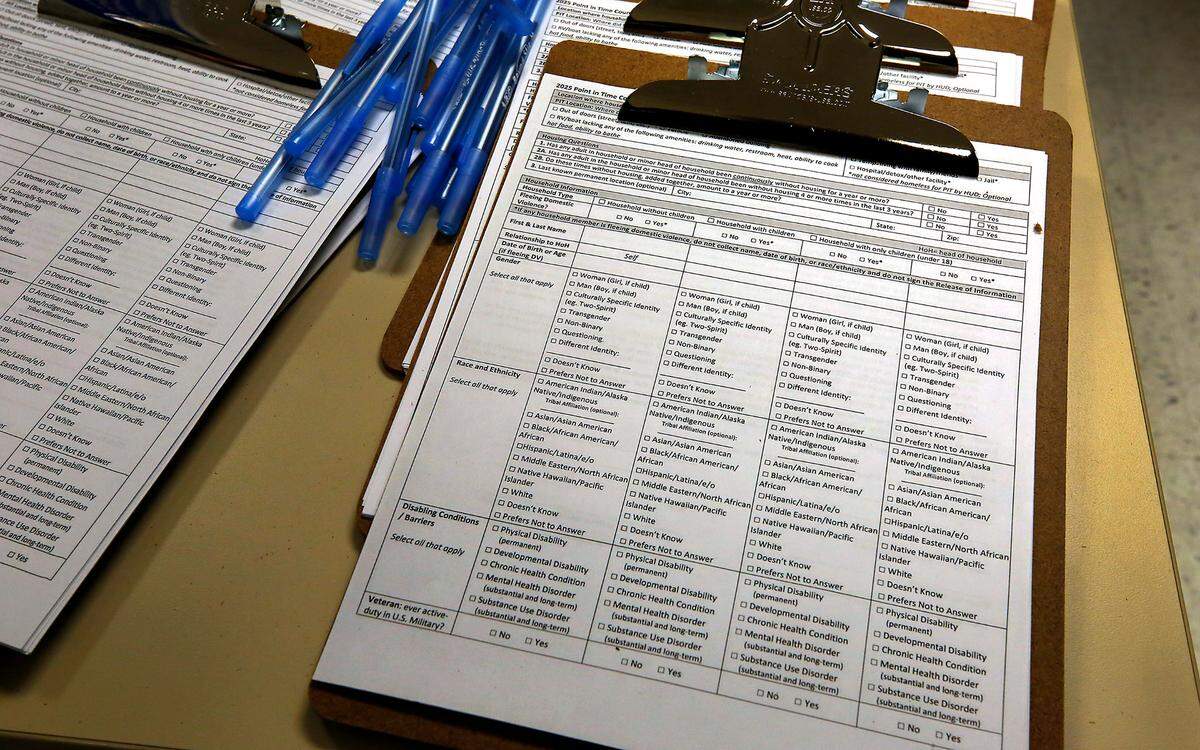
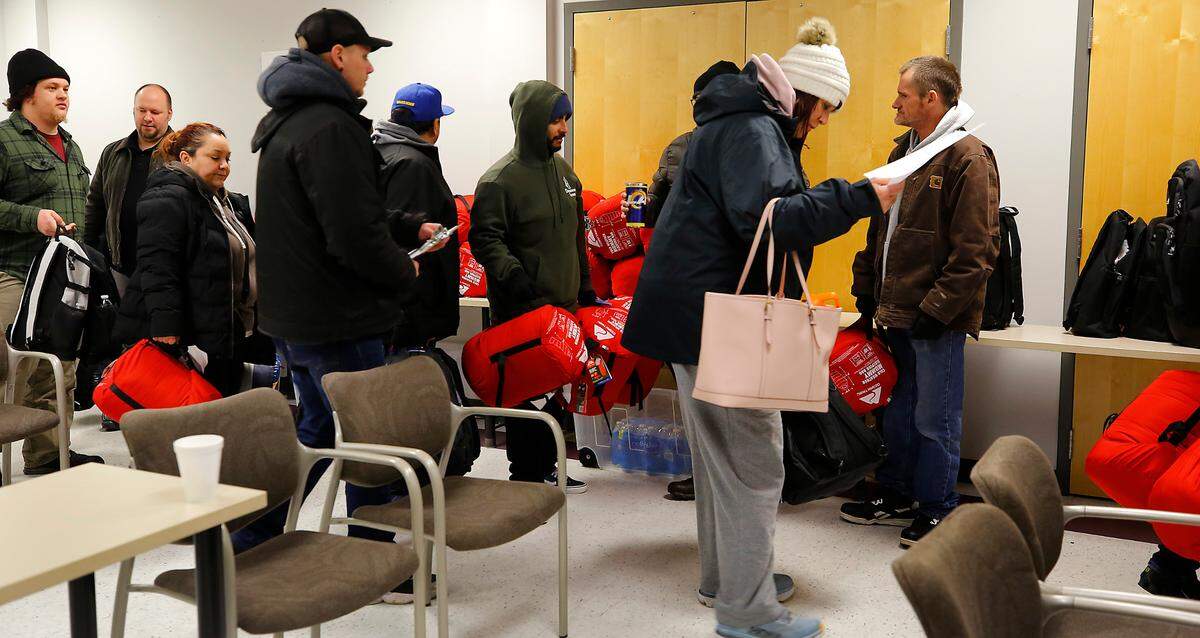
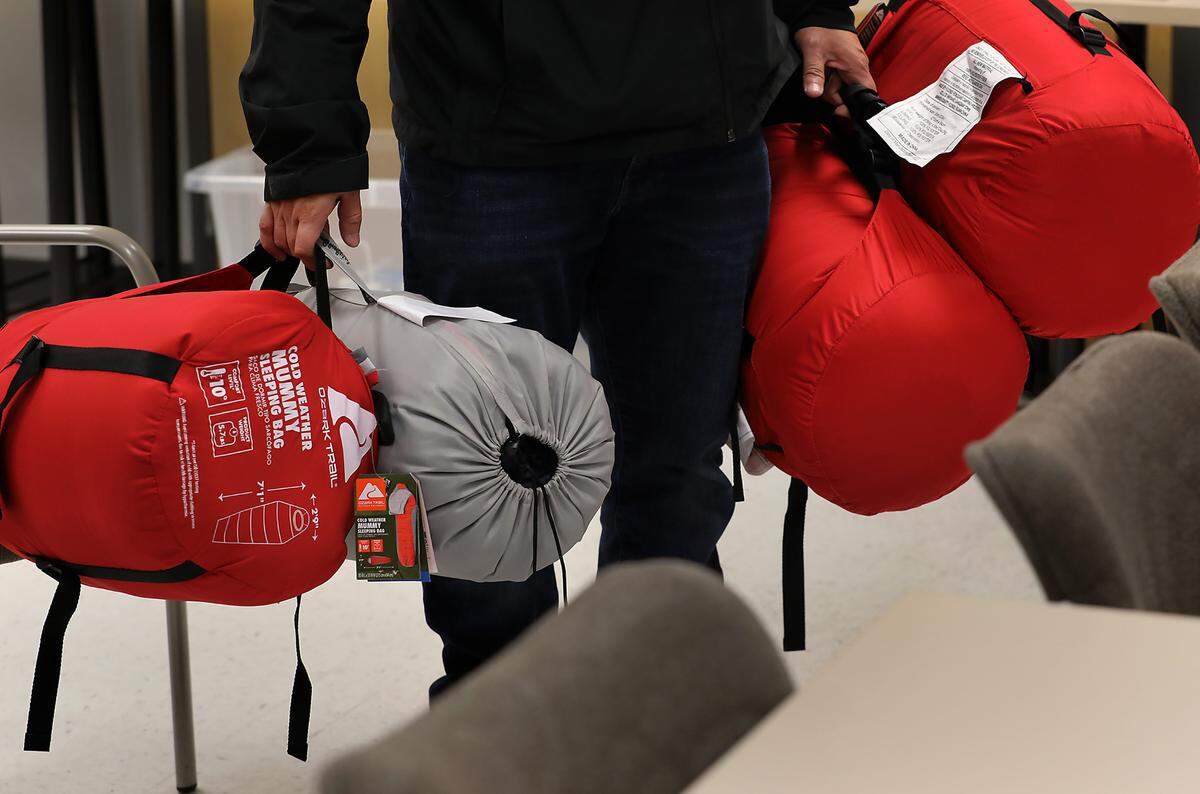
Volunteers armed with stacks of maps searched across the Tri-Cities trying to talk with people sleeping outside or in their vehicles. They asked them to fill out an optional census survey and gave them sleeping bags and backpacks full of supplies to help stay warm.
The volunteers also tried to connect them with services, but in many cases they were getting updates on where someone was in the process of getting help.
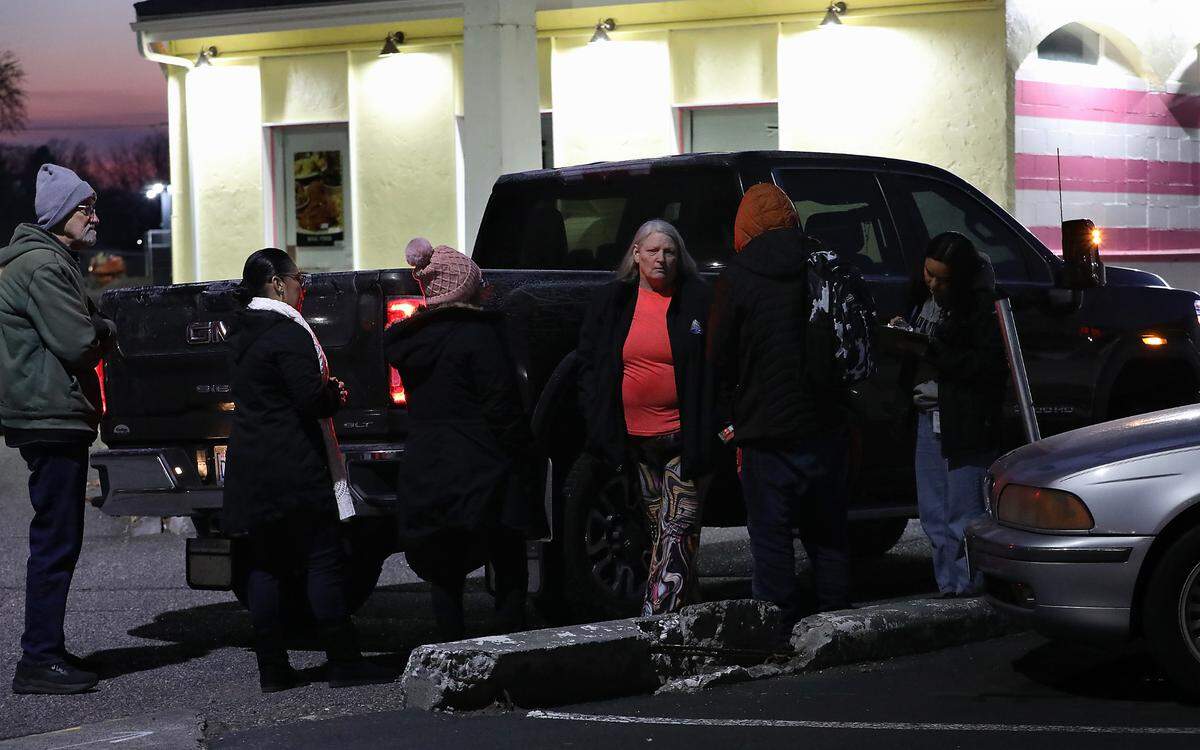
The maps, put together by outreach workers, show the most likely places to contact someone who might need help. Many of the volunteers work with people experiencing homelessness in some capacity and weren’t strangers to the people they found that morning.
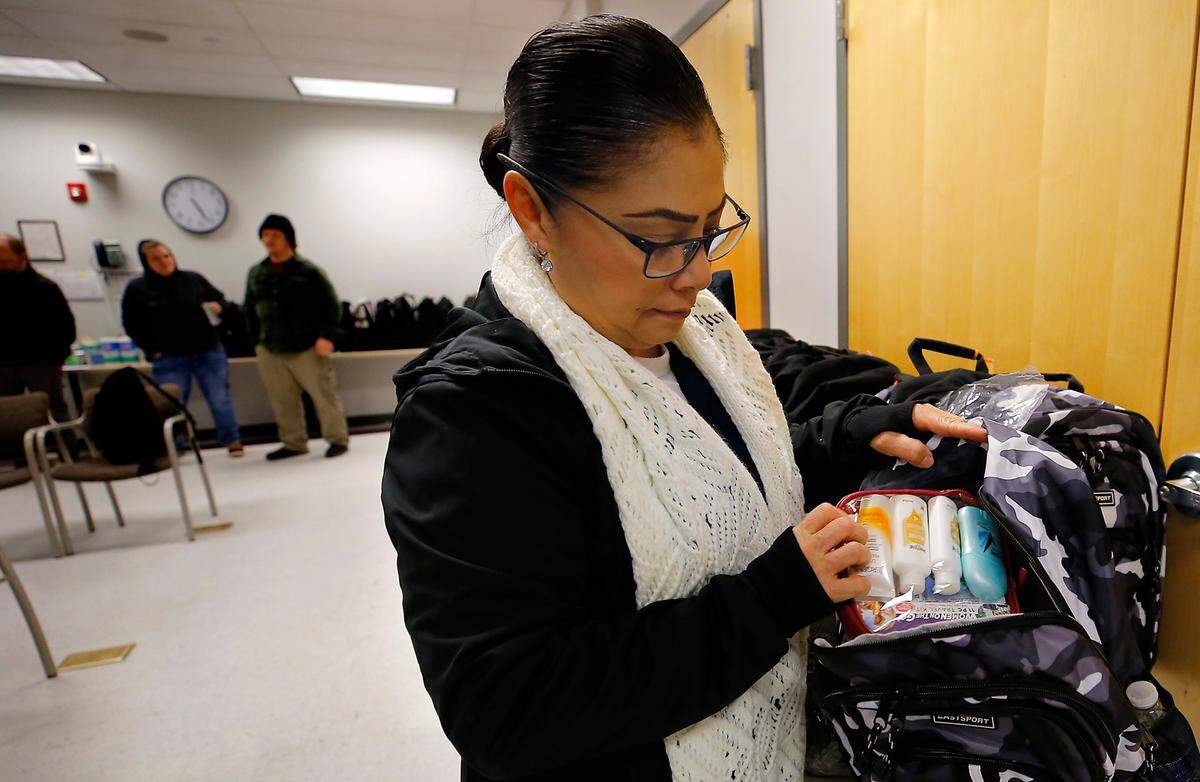
Niria Lucatero, Benton County’s human services outreach coordinator, said the key to a successful count is approaching everyone with kindness.
“It’s hard, it’s difficult to go home to a warm bed when you know there’s someone out here who doesn’t have that,” she said. “It doesn’t make it easy for us, especially when we don’t have the funding to put everyone in a room.”
While there is criticism of the count, which tends to represent only a small portion of the people experiencing homelessness in a community, the volunteers use it as an opportunity to actively engage and help the people they speak to.
Lucatero also goes out weekly with a group of volunteers and city and county employees to speak with people. She expected to find that most of the people they would encounter during the count would already be engaged in homelessness services.
Checking in
Lucatero was familiar with the area that they found Williams, near a hotel off Highway 395 that the county partners with for emergency housing.
“I’ve been worse, I can’t really complain,” Williams told the Herald.
He was glad to see Lucatero, and they spoke about getting him a bus ticket to Hermiston where he might be able to stay with family.
Williams said people struggling like he is would be much worse off without volunteers and caseworkers who cared enough to check in on him.
“Without them 90% of the people out here wouldn’t have access to any resources,” he said.
He hopes that other people in the community will see that compassion and take a different view of those in his situation.
“Homeless people have a bad rap as dirty, beggars and thieves. What would you do if you had nowhere to go in the cold with no blanket?” he said. They don’t realize what I’m going through. They can’t.”
The volunteers then checked in on a client they were concerned about at the nearby hotel, before circling the block to find someone else.
The second young man was struggling with addiction. He is in the process of trying to get into in-patient treatment, but wasn’t sure how long that could take.
He spent the entire night walking around to stay warm because he didn’t have a tent or sleeping bag.

Lack of housing
Toni Lehman, who runs the Tri-Cities HOME Consortium, said that they don’t have the funding to help everyone who applies. Lehman was there as a volunteer, hoping to connect and see what resources they could offer.
“Affordable housing is a challenge,” she said. “We have a lack of affordable housing, we run out of funding to help people with rental assistance. We have the one shelter, Union Gospel Mission, but we don’t necessarily have shelter capacity year round in each of the cities.”
She hopes that when the Columbia Valley Center for Recovery opens next January, it can make a difference for people struggling with mental health and addiction issues.
“Trying to get them services they need in one location would be great because right now if you need an inpatient treatment facility you’re having to travel outside of the Tri-Cities,” Lehman said.
Benton County is in the process of applying for grants to turn some of the hospital rooms at the old Kennewick General Hospital into recovery housing for patients transitioning out of treatment.
Lehman said that the need in the community is great, but there are also people who can help.
“There is a real need out there, there are services available,” she said. “We have a lot of people that do care and have services available if they need help and they want the help.”
Homelessness in the Tri-Cities
Homelessness and the number of people at risk of becoming homeless in the Tri-Cities is up significantly over the past five years.
Point in Time count data is based on the surveys and typically released in late summer. For the past two years Tri-Cities volunteers have contacted about 150 people annually during the count.
The count is mandated by the Department of Housing and Urban Development for every municipality that receives federal funding. The PiT count doesn’t necessarily determine funding for agencies, but the number is often used in various applications for money.
Because the Point in Time count is used to identify people with the most critical needs, it is not considered a total of all the unhoused people in a given city.
The Washington Department of Commerce tracks people experiencing homelessness through its Homelessness Management Information System, or HMIS. Their data is broken down into “unsheltered or unsuitably sheltered” and “at risk.”
They use data from various benefit programs to create a more comprehensive snapshot twice each year.
The most recent data from the July 2024 snapshot shows 5,349 are either unsheltered or at risk of becoming unhoused in the Tri-Cities.
That system shows 3,482 people in the Tri-Cities lack suitable shelter.
That’s a year-over-year increase of about 300 people considered at risk of becoming homeless, while the number of unsheltered people was roughly the same.
Unsheltered means living outside or in a place unsuitable for human habitation, living in a vehicle or couch surfing. It also includes people who list their primary address as a homeless shelter, a P.O. Box.
At risk means the person has recently engaged in homelessness prevention programs, such as rental assistance, temporary housing or eviction prevention services.
Over the past five years the number of people at risk in the Tri-Cities has risen by more than 1,500, or 41%, while the population of people unsheltered has increased by 775, or 29%.
Those increases are compared to the July 2019 Snapshot before the COVID-19 pandemic.
Both of those numbers spiked in 2022 as federal pandemic aid began drying up, leaving state governments scrambling to try and replace funds that had helped keep people from becoming homeless.
Editor’s Note: This article has been updated to clarify that Tri-City Union Gospel Mission had room at its Pasco shelter.
This story was originally published February 7, 2025 at 5:00 AM.