‘Nowhere to go.’ What’s behind the recent crackdown on the homeless in Tri-Cities parks
As temperatures in the Tri-Cities drop to freezing, community advocates are becoming increasingly frustrated with Richland’s lack of an apparent plan for long-term solutions to homelessness after closing parks to push out illegal campers.
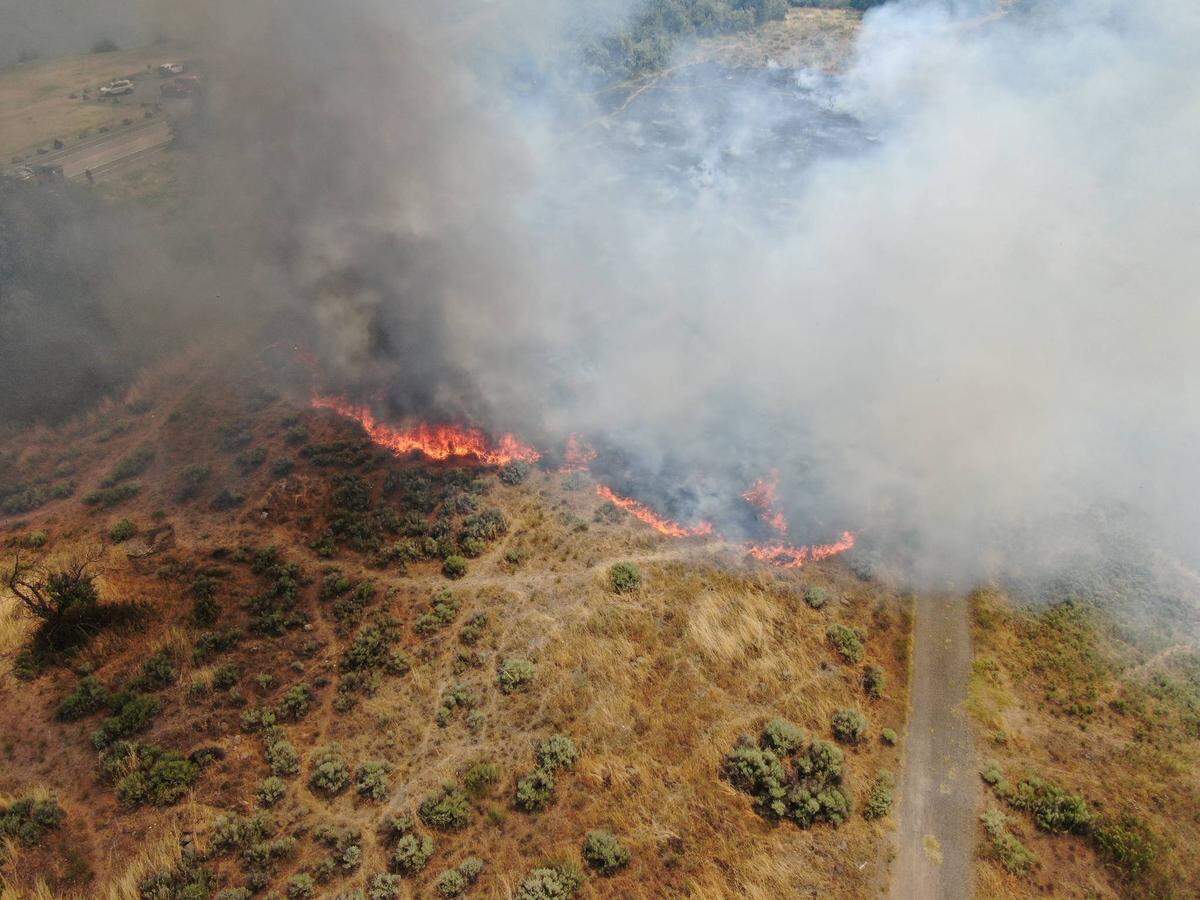
City leaders say a jump in fires and damage centered around homeless campsites at Columbia Park played a role in the recent decision to close portions of two parks.
Now community members who are trying to help the people impacted say they are concerned the cities don’t have a plan to address homelessness in the Tri-Cities and there is no organized group or nonprofit offering those direct services to the people who can’t stay at the Tri-Cities’ only shelter.
“We are feeling hopeless, we’re also really angry,” one volunteer told the Tri-City Herald. “What they’ve done without having a solution is just careless.”
“They’ve kicked them out of every place. It doesn’t matter where they go, they give them 24 hours and kick them out to the next,” she said. “There’s nowhere to go, but they wont let them stay anywhere.”
Richland city officials have declined to talk with the Herald about any long-term vision other than to say closing the parks was an urgent decision in response to what they are describing as “destruction to our natural resources, vandalism as well as safety needs.”
They pointed to a growing number of fires, cut down trees, debris and destruction of natural areas by illegal campers.
“The city is aware of the complexities faced by vulnerable populations, including mental health and addiction issues. We encourage collaboration with service providers to explore solutions for these individuals,” Hollie Alexander, Richland’s communications and marketing director, told the Herald in an email.
Kennewick Police Chief Chris Guerrero told the Herald that recent park rules enforcement efforts became more urgent for both cities as fires at the park reached an unprecedented level this summer. The 450-acre park stretches 4.5 miles along the Columbia River in Kennewick and Richland.
Guerrero said this year they’ve seen 22 fires at the park, compared to 5 in 2023 and 6 in 2022. He said that while most were not large fires, the growing frequency and severity of the fires has caused concern.
The most notable fire this year was in April in the long-closed campground on the west end. It’s believed to have been started by people illegally camping there, and burned several acres.
Most of the park is in Kennewick, but Richland has a 50-acre span called Columbia Park West, which was recently closed off to visitors. The city also closed the Wye Park, which is about 3 acres on the other side of the Bateman Island causeway near where Columbia Center Boulevard dead ends at the river.
Bateman Island and the Marina at Columbia Park West are still open, and Kennewick has not closed any portion of its parks.
Sudden park closures
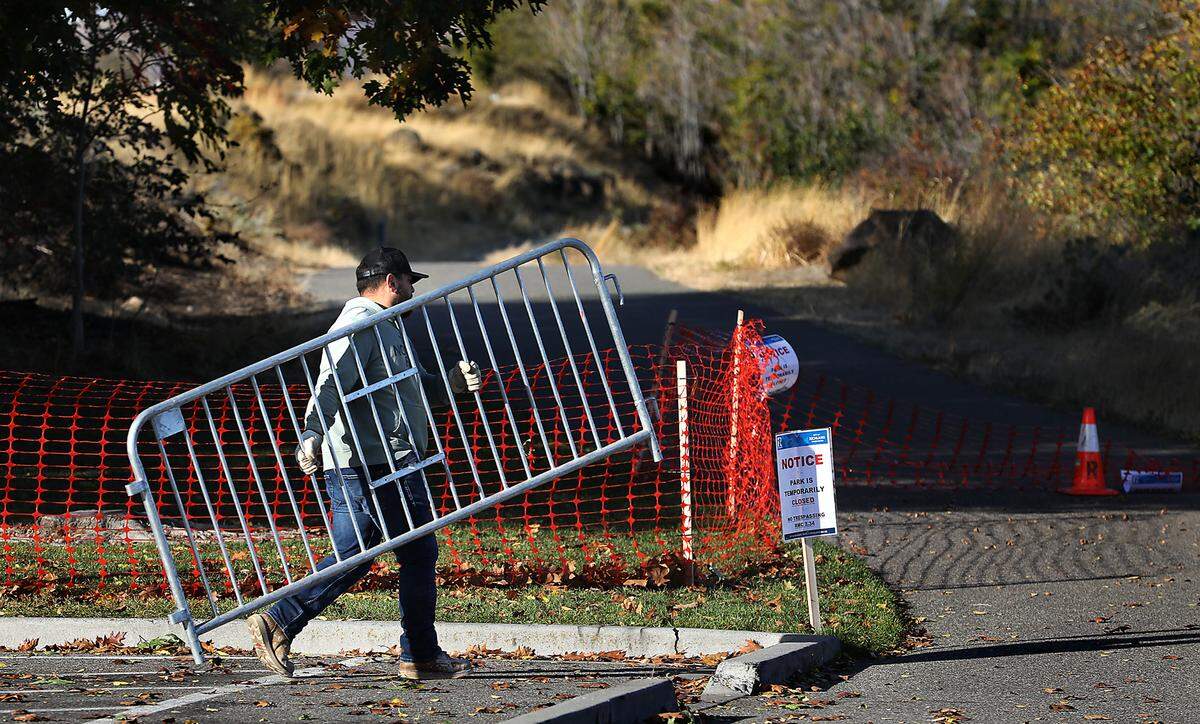
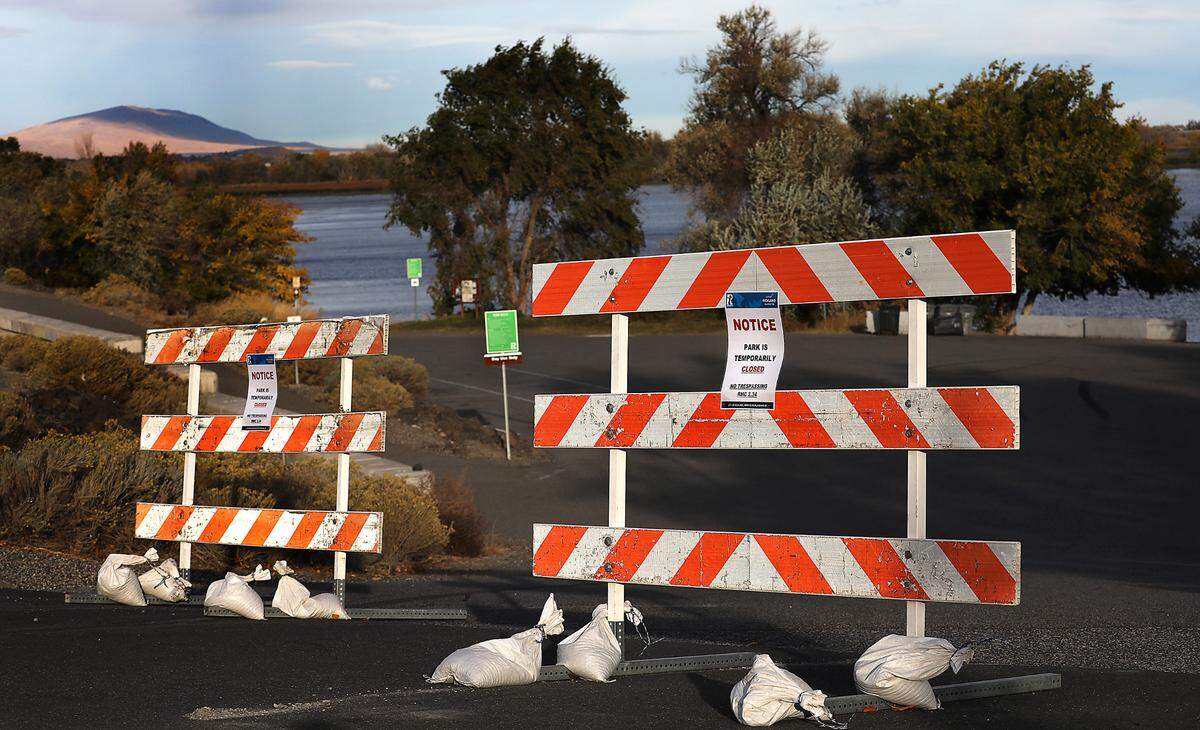
In late October, Richland closed Wye Park and Columbia Park West, near the Columbia Park Marina. Barriers, no trespassing signs and orange temporary fencing were put up.
Volunteers feeding the homeless told the Herald that they had been asked to move their services to the area near the Wye after the city received complaints about a meal service near a park at Columbia Point earlier this year. The city council discussed the issue in a March meeting.
The community members currently helping were given no warning about the closure a few weeks ago and were not asked to help as people were displaced.
Richland officials told the city council earlier this year that they also have been dealing with growing campsites causing destruction in the Chamna Natural Preserve, a nature area with hiking trails along the Yakima River.
They shared images of damage to the preserve from illegal camping. Last month, staff also showed the council photos of at least two small camps at the closed parks showing damage to the area, discarded needles and debris.
The sudden response, which included at least one arrest, shocked volunteers and community members trying to help. The Herald has been able to confirm other rumored arrests during the sweep of the parks and over the following weekend.
The homeless volunteers told the Herald they’re doing everything they can to help, but it’s difficult when the Tri-Cities area lacks critical services. Currently, there is no organized group or nonprofit offering those direct services, just community members.
The majority are mothers and grandmothers looking to lend a hand. They’ve asked not to be named because they’re now worried about retaliation.
Their concern comes after the Benton Franklin Health District stopped one group from serving hot meals, as well as a much heavier police presence since the parks were closed.
“In the past, the city had contact with the health district regarding food safety when groups began providing meal services to the unhoused, but has not had any recent coordination,” Alexander told the Herald.
The 2024 Point in Time Count, which looks to identify the most critically vulnerable people experiencing homelessness in communities across the country, found about 140 people unhoused in Benton and Franklin counties.
That number was steady from the year before, but the number considered unstably housed or at risk of becoming homeless has continued to grow, to more than 5,000 people in the Tri-Cities area.
That includes people living in their cars, couch surfing, sleeping in shelters or receiving housing assistance.
Now the community members, largely just individuals using their own time and money to try and help, are desperately trying to find displaced people who they haven’t been able to connect with.
One community member told the Herald that many of the people who were camping in Columbia Park were forced to move so quickly that they lost many of their supplies, such as tents or blankets.
They’re afraid they’ll be arrested if they try to go back and collect any items they might have left behind.
“We are just really in dire need for a place that is safe for these people to go,” she said. “We need the churches to step up, we need help.”
The volunteers told the Herald that nearly everyone they’ve helped has been from the Tri-Cities. There is no evidence that Seattle officials are busing homeless people to other areas, that is an urban legend likely fed by programs meant to help people get back to their hometowns to be closer to family and friends who can help them.
One man who was displaced by the park closures told the Herald that he had been offered a bus ticket to other areas with more services. He said he was born and raised in the Tri-Cities.
Right now many of the older and disabled people impacted are using their only income on hotels or to buy new supplies to keep warm, a volunteer told the Herald.
That money won’t last very long, and she’s concerned about what will happen as low temperatures dip below freezing this week.
Safety concerns
Richland officials told the Herald the decision to close the parks was a coordinated effort among city leadership, its parks department and police and fire officials.
Volunteers have been critical about the lack of communication, telling the Herald they could have helped the city with the closures in a more compassionate way. They also pointed out that Richland’s parks director canceled a meeting with volunteers the day before the closures, with no explanation.
The community members said they have been trying to maintain a working relationship with the city’s parks department.
Alexander told the Herald in an email after the closures that the city will continue to try and work with volunteers and other community organizations.
“The cancellation was a logistical decision based on the urgency of the situation. While we value the input of volunteers and community partners, the need for immediate action took precedence,” Alexander said.
“The city recognizes the importance of dialogue with community groups, and we regret any confusion regarding the meal relocations. Ongoing discussions will be necessary with private entities to ensure all parties are aligned.”
Volunteers who had been working with the parks department said they still have not been contacted to reschedule.
Alexander said Richland’s focus is on ensuring safety, not criminalization, and that the city will be working with the county’s human services office rather than just making arrests when someone is trespassing or sleeping in parks.
“We recognize that the situation is challenging, and discussions about coordinated regional responses are ongoing. We are committed to continuing to work with Benton County Human Services and look to guide our community on comprehensive solutions.”
Lack of shelters
Some people who had been sleeping in the park previously told the Herald they couldn’t stay at the Tri-Cities’ one shelter for various reasons, and that many of the people sleeping outside had serious mental health concerns.
One man said he and his wife ended up at the park because Pasco’s sit-lie ordinance pushed people across the river. He wasn’t sure where they would go now, but was concerned that some people would end up trying to camp on private property.
Guerrero doesn’t think that will become a problem. He said officers are typically able to make contact and the people agree to move on.
Richland’s plan going forward is unclear, though.
While the city has said it plans to focus on remediation efforts, they’ve offered little in the way of information about how they’re going to address ongoing concerns for the homeless community.
“The goal of the closures is to create safer public spaces. We believe that by managing park environments, we can enhance overall safety for all community members,” Alexander said.
“The immediate plan is to coordinate with the U.S. Army Corps of Engineers to address the remediation of the damage that has been done to our parks so that we can once again make them available to all citizens.”
Richland Parks Director Chris Waites told the city council at its most recent meeting that the city plans to apply for a permit from the Corps to clear brush away from the shoreline to prevent damaging activity, such as camping and drug use.
The council supported the decision, but did not discuss addressing the needs of the homeless trying to live there.

Recovery center
Guerrero said that addressing the safety of the homeless community is an ongoing effort in Kennewick.
His department has been coordinating with the other cities, so the closures did not come as a surprise to his department. Instead he said his officers will be focused on contacting unhoused people and offering services.
Kennewick has a group of officers, volunteers and service providers who go out once a week to contact people experiencing homelessness, and see if they can connect them with services.
In the first year of that program, the group has made more than 925 contacts.
Guerrero said housing usually isn’t at the top of the list of what people are needing. Most are first needing help with addiction or mental health treatment.
The vast majority are people they’ve previously spoken to.
“I think the recovery center coming soon will be huge,” he said. “Holistically, housing is a piece to it, but we’ve seen in our outreach efforts, it’s rarely utilized when offered. What is their need at that time? Is it housing? Is it mental health?”
The Columbia Valley Center for Recovery is expected to be complete in late 2025 and open to the public in 2026. It will first offer addiction and mental health services. It could eventually include housing for people in recovery, if the county is able to secure grant funding.
A groundbreaking ceremony for the recovery center is set for Nov. 12.
Guerrero said that local courts also are stepping up to help, adding more pretrial diversion options and pathways to treatment.
He’s optimistic that once the recovery center is open and people have somewhere local to go for ongoing treatment and inpatient care, they’ll be able to really make a dent in the number of people who will accept housing help.
This story was originally published November 9, 2024 at 5:00 AM.