
Richland reconsiders police body cameras after another officer-involved shooting
Richland police are once again considering the use of body cameras after this month’s officer-involved shooting of a suspect near the bypass highway.
Mayor Ryan Lukson and council members Sandra Kent and Bob Thompson have called for re-examining the issue.
“I can tell you from my experience having real time information on a video camera that officers wear solves a lot of problems, so I’m going to support our efforts to do that,” said Thompson, who also is a criminal defense attorney.
Randy Slovic, a Richland resident and former council candidate, raised the issue the day after the Feb. 1 wounding of Charlie Suarez, 32, on a walking trail near the Highway 240 bypass.
“Bob Thompson and I don’t agree on much, but one thing we do agree on is the need to have dashboard cameras and body cameras for our police officers,” she said in a written comment during last week’s council meeting.
And Kent and Lukson also agreed it’s time to take another look at body cameras, including the benefits and the costs
Last summer, Lukson said he talked with Richland Police Chief John Bruce about it during national and local Black Lives Matter protests spurred by the death of George Floyd.
Bruce’s previous department in Frisco, Texas, had been equipped with body cameras but he couldn’t be reached last week by the Herald on his thoughts on the issue.
“Obviously, there is a lot ... on pros and cons on that issue — maintenance, cost, sometimes it doesn’t give a full picture,” Lukson said. “Hopefully we can get more information on that so we can educate ourselves.”
The council plans a workshop session on the issue but no date was set.
In the Tri-Cities, the Washington State Patrol equips its patrol cars with dash cameras but only Pasco police officers use body cameras and dash cameras.
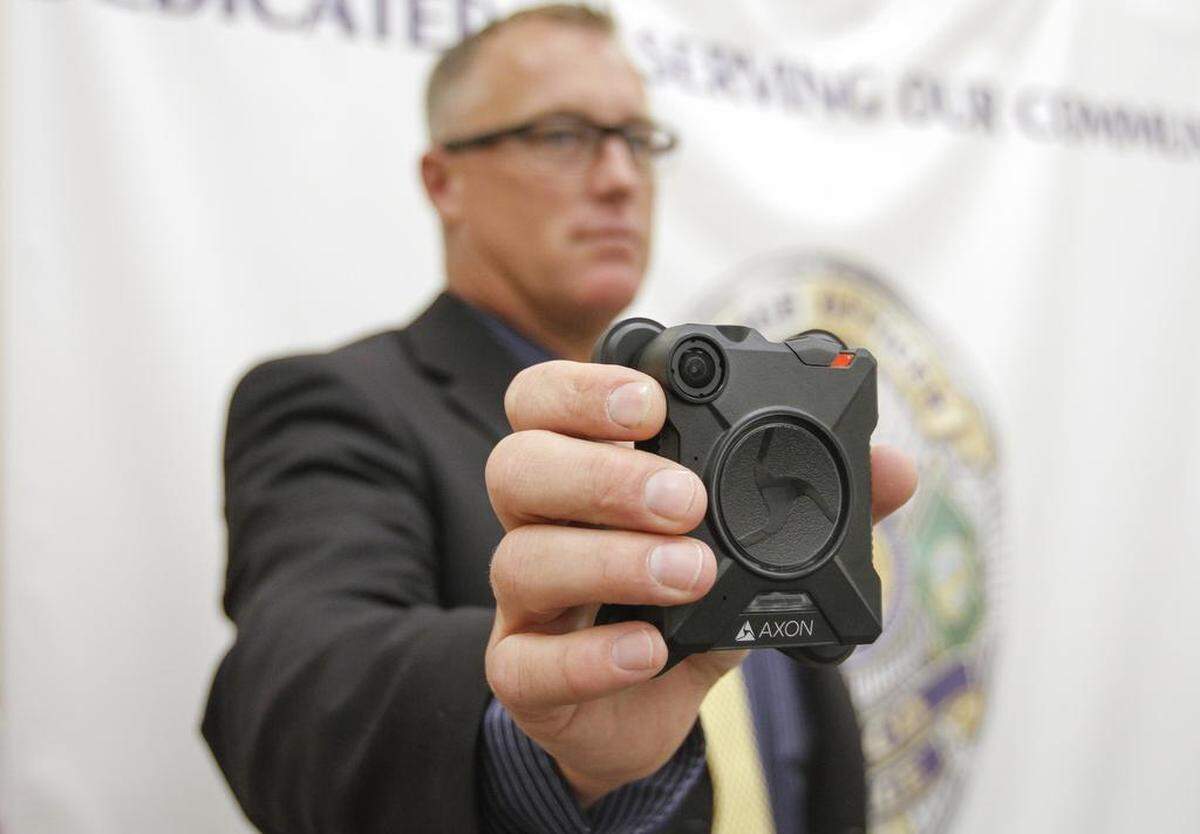
Other departments, including Richland, have shied away from them citing the expense to contract for the equipment and to manage the public records aspect of the videos.
Officer-involved shooting
The most recent officer-involved shooting came when officers were looking for Suarez after finding a flipped car near Highway 240 about 7 p.m. Feb. 1. Witnesses saw Suarez running away, and Richland Officer Christian Jabri saw him on the walking/biking path and gave chase.
Details about what happened next have not been released, but moments later Suarez was shot twice in a thigh and a hip.
He was treated at the hospital and later released and has not been arrested or charged.
In following with state law, Chief Bruce asked the Regional Special Investigations Unit, which looks into officer-involved deaths and injures in Benton and Franklin counties, to take over the investigation.
Kennewick Commander Randy Maynard with the SIU unit said while most of the investigation is done, detectives are still finishing reports to prepare a case file to submit to prosecutors for review.
Mixed opinions
Nationwide, opinions on the effectiveness of body cameras are mixed.
A 2017 National Institute of Justice study in Las Vegas found that officers wearing the cameras had fewer complaints and used less force than their counterparts without the cameras.
However, a Washington, D.C., study from the same year found body cameras made no difference in when or how force was used.
Pasco started using body cameras in 2019, and last year approved a new five-year contract that incorporates its Taser system, along with the dash cams and body cameras. The city will pay $1.2 million over five years.
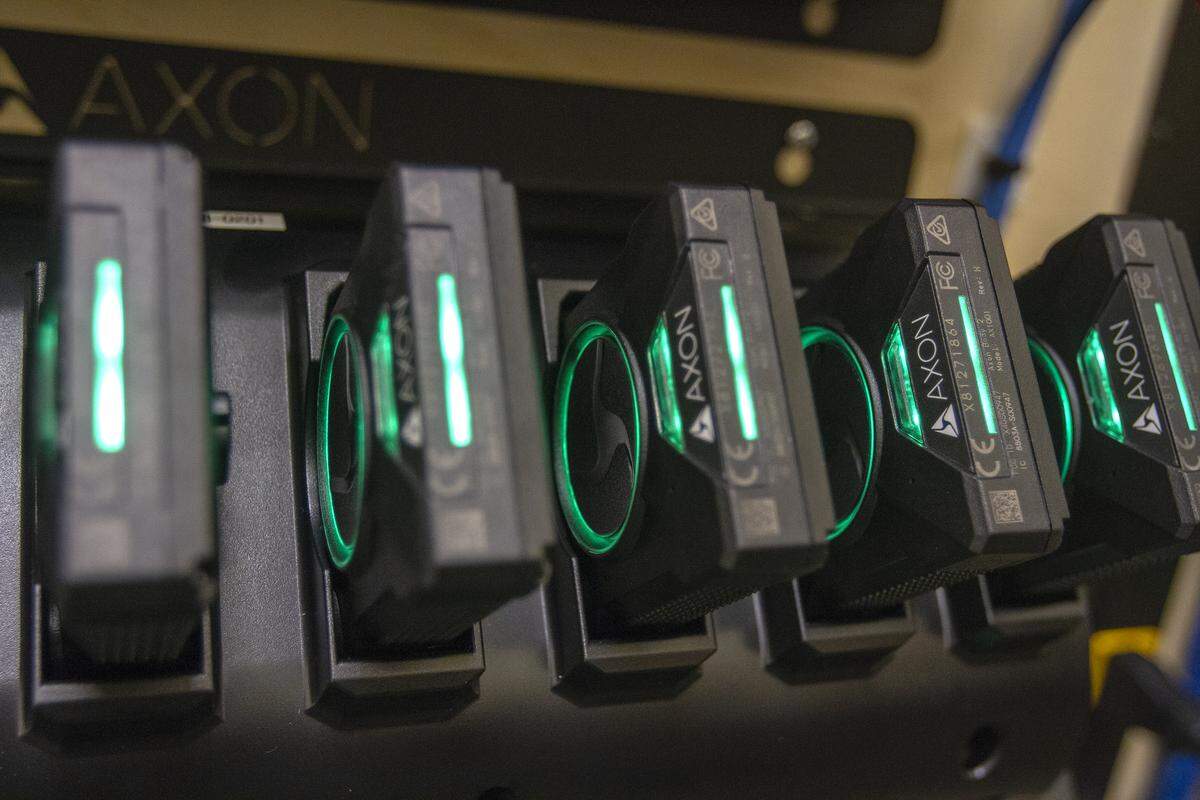
Under the new deal, the city plans to take the human element out of when the cameras get activated, said Pasco Capt. Bill Parramore. The cameras will automatically turn on whenever a patrol car’s emergency lights come on, an officer’s holster is opened or they activate their Tasers.
“The use of the camera system has proven to be a valuable tool not only in evidence collection but departmental transparency to the public,” Police Chief Ken Roske has said.
The contract also will gives them unlimited video storage, something that is necessary since they had nearly run out of electronic archive space. And the contract will include video cameras for police interview rooms and for training.
Costly investment
Not all law enforcement leaders are convinced the cost is worth the investment.
“I don’t want to minimize body cameras,” said Kennewick Police Chief Ken Hohenberg. “It’s not the highest priority. ... My priority is making sure we have enough police officers and detectives on the street.”
The time and money needed to maintain the records, the cost of the cameras and the training is competing with increasing jail costs, paying officers and other expenses.
He pointed out people are constantly under surveillance by cameras at businesses and homes so, it hasn’t been difficult for detectives to find footage of officer-involved shootings, such as the shooting of Gordon Whitaker in Kennewick a year ago.
And Hohenberg said his department has at least three sergeants monitoring officers each shift, and the department has focused on hiring the right people and having good policies and procedures in place.
Overall the department sees fewer than two dozen complaints a year, compared to 250 to 300 public compliments, he said.
“I really believe that it is incumbent on us to treat people with dignity, respect and fairness,” Hohenberg said.
West Richland Ben Majetich supports having body cameras, but the estimated $100,000-plus cost of the equipment and storage in addition the expense for fulfilling public records requests makes them prohibitive for his small agency.
“I am an advocate for them and would love to have them,” he said. “Current law permits a wide variety of people and entities to make requests for video but also requires editing of certain content that is privacy related.”
Not only would this increase the time to process requests, it would mean hiring a part-time employee to handle the workload, he said.