
Body cameras now standard gear for Pasco cops. But not in rest of Tri-Cities
When an upset Pasco citizen raised complaints about a police officer recently, it didn’t take long to get some quick answers.
Capt. Jeff Harpster said they turned to the video of the incident saved from the officer’s body camera.
“They pulled up the body-worn camera footage, and found out that person wasn’t at the event, and the event didn’t take place as that person had relayed to the sergeant,” Harpster explained last week to the Pasco City Council.
It turned out the officer followed all of the procedures and was exonerated.
The nearly immediate ability to review disputed interactions between officers and the public is just one benefit the agency found after its first year using the pricey program.
Newly chosen Police Chief Ken Roske has said the cameras were always intended to make the public’s interaction with police easier.
The city has a $60,000 contract with Axon, formerly known as Taser International, one of the major suppliers of body cameras, as well as a top manufacturer of stun guns.
In a year’s time, the Pasco department has recorded 13 terabytes of video.
While it’s unclear how many hours of work that represents, a single terabyte can store up to 500 hours worth of movies.
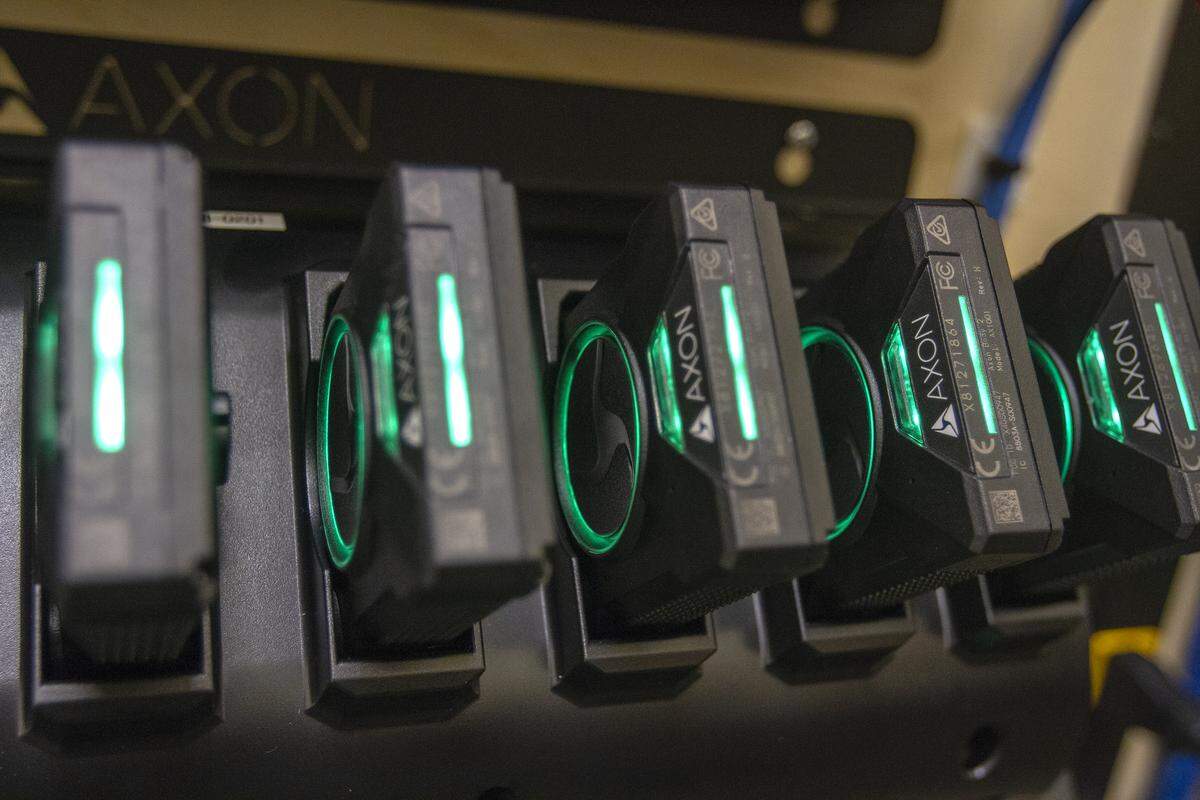
The body cameras turn on any time an officer responds to a call, including automatically when the emergency lights and sirens are flipped on or Tasers are activated.
Pasco already had been using dashboard-mounted cameras in patrol cars when it began looking into adding the body cams.
“The policies around the body-worn cameras are very extensive, including when to turn it on, when to turn it off, those type of things,” City Manager Dave Zabell explained to the council.
“Those are policies that we went over fairly extensively with the community group we worked with for a couple of years, including representatives from ACLU.”
Benefits of body cams
Harpster said the footage is not only helpful when looking into officer complaints but also in helping prosecute crimes and improving officer training.
“It adds weight to a written report. It adds one more element for the courts to be able to use,” Harpster said, pointing to recorded field sobriety tests during DUI investigations.
And when a video from a body cam is added to dash cam footage, officers get a fuller picture of an incident and can evaluate what could have been handled better.
“Defense tactics instructors can review incidents to enhance learning points in future lesson plans,” Harpster said.
And some officers are using the video to do their own review of how they handled a situation.
“They’ll go back and look over an event to see how it played out and actually see their performance wasn’t meeting their personal standards, and it gives them the opportunity to make changes in their behavior,” he said.
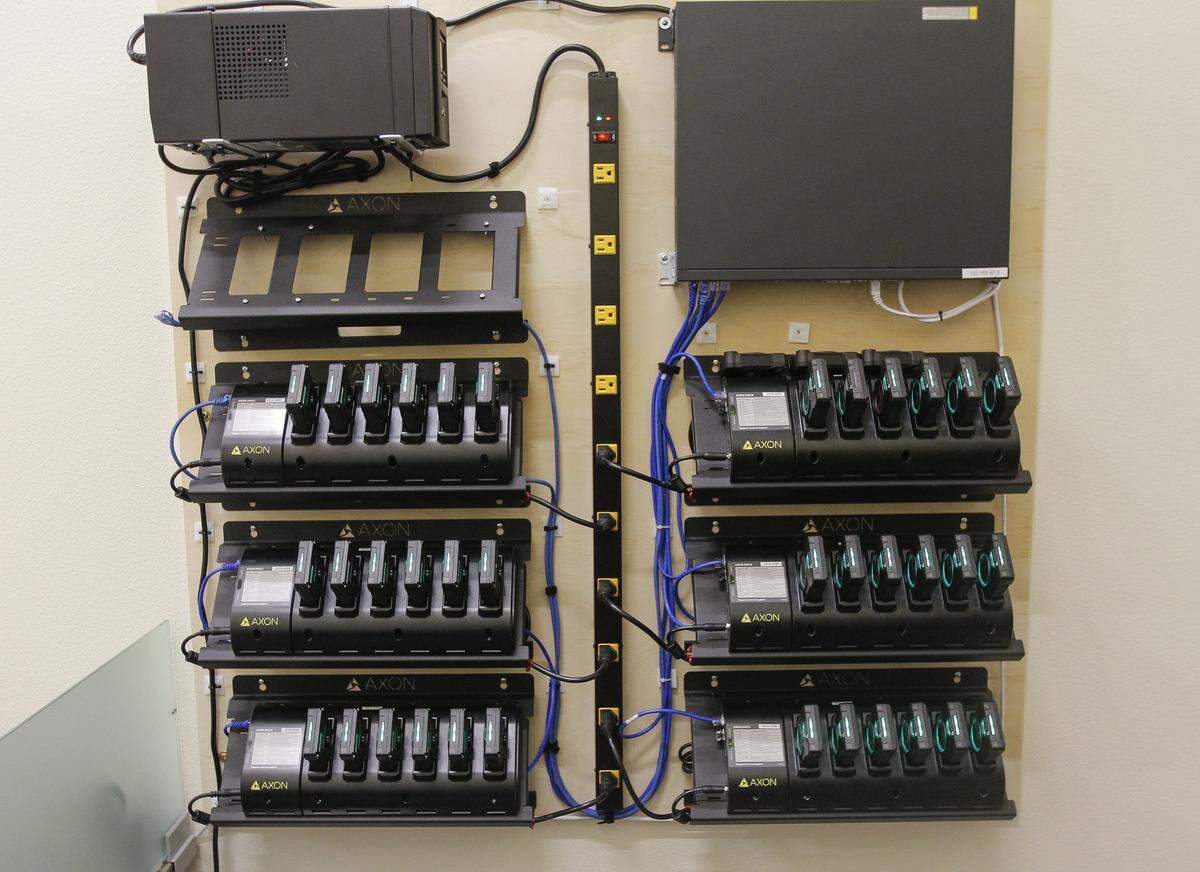
The cameras also help officers save time with reports and evidence by sending the video to Axon for archive storage using the officer’s department-issued cellphone, along with evidence photos taken with the phone.
Pasco isn’t alone in finding the body cameras useful.
A 2017 National Institute of Justice study in Las Vegas was one of the latest to find that officers wearing the cameras had fewer complaints and used force less than their counterparts without the cameras.
It’s one of the latest in a continuing series of studies that have found mixed results, however. A Washington, D.C., study from the same year found body cameras made no difference in incidents when force was used.
Cameras costs
While the cameras have proven beneficial for Pasco, they do come with costs.
Every time an officer turns on the camera they create a new record that needs to be available to the public, including to defendants.
So far the city received 47 requests for video and the clerk reviewed about 72 hours of video to make sure it didn’t need to be redacted to comply with public records laws.
That can include the identity of children or sensitive data on an officer’s computer terminal in a patrol car. The average time spent blurring out these items is about 1.5 hours per request, said city officials.
Just over half of the 47 public records requests this year came from the same family, and three of the requests came from law firms, said Jon Funfar, the city’s communications program manager.
The reviews cost the city about $10,886 in staff wages.
The public records costs are one reason Kennewick, Richland and other area law enforcement agencies have not bought body or dashboard cameras.
Pasco is the only agency with body cameras and only one of two in the area with dash cameras.
The cost of maintaining the records has led some agencies to dump their programs, especially in smaller and more rural departments, according to The Washington Post.
Kennewick police Chief Ken Hohenberg said the hundreds of thousands of dollars to buy the cameras, and the additional people to review the video and process requests is not a reasonable cost at this point.
The city used to have dash cameras until it came time to replace them, and it was a choice between upgrading the cameras or upgrading the radios in 2003, he said.
Also, he argues, “Trust is not built on technology. It starts with the people that you hire and having the right supervisors.”
While he can see the need for some departments to use the cameras, he doesn’t see the need in Kennewick, noting Kennewick officers generated nine complaints last year and 216 compliments.
He also believes the cameras don’t give the public a good sense of what an officer sees in the crush of the moment.
The public can review footage after the fact and multiple times when an officer must make a judgment call within nanoseconds.
The Washington State Patrol uses dash cameras in trooper cars but doesn’t use body cameras. Benton and Franklin county sheriff’s deputies use neither.
In Richland, there are no plans to institute body cameras, but Capt. Chris Lee said they continue to evaluate their usefulness.
New Police Chief John Bruce was hired from Frisco, Texas, where officers are equipped with body cameras.
Lee said the Richland department’s command staff is always looking at changes in the laws and equipment vendors to keep up with the issue.
“We review those on a case-by-case basis and have those different discussions,” Lee said.