
Outdoors | Bass whipping: Fishing season starts with a trouncing from a friend
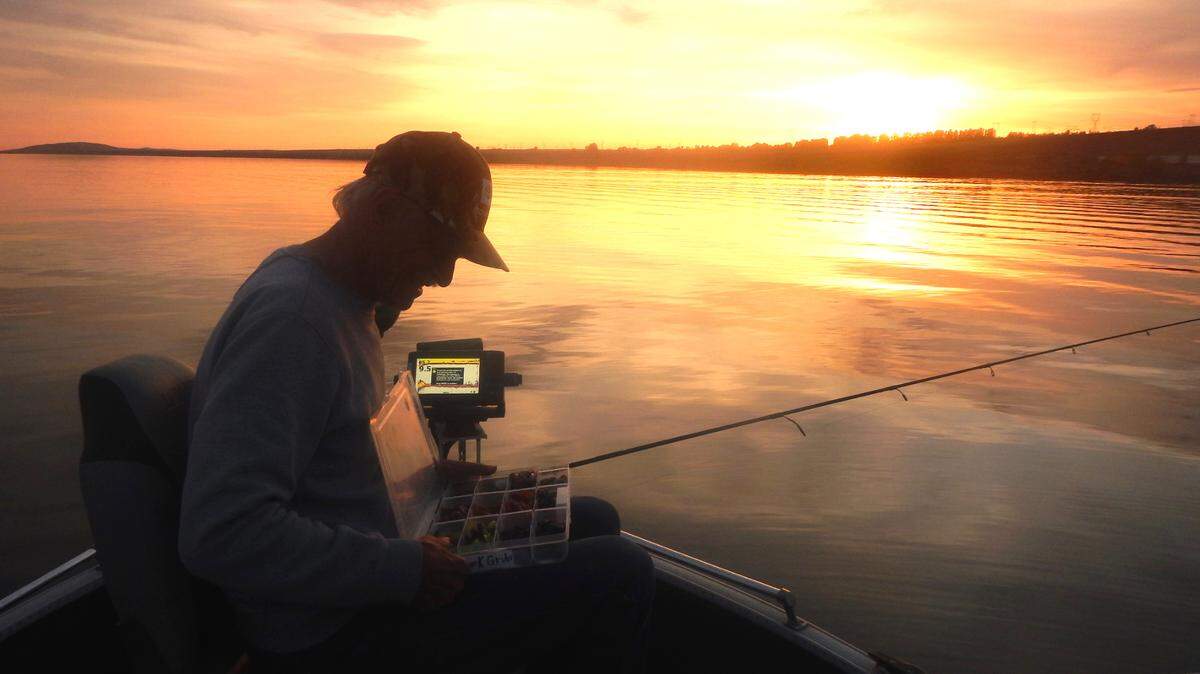
I grew up at the hand of a willow switch. Getting chased by one, that is. More often than not, I ran off before Mom could lash out.
When you are 5 foot and weigh 105 pounds soaking wet, and have five youngsters to manage, a willow switch helps keep them in line. In my case, being at the tail end of the pack, it took more than an idle threat to modify my behavior.
An occasional swat continued through grade school. Back then, rowdy behavior was part of the growing up experience, a way for hormone-damaged adolescents to test the boundaries of social norms.
One memorable “bend over and grab your ankle” encounter resulted from me chewing garlic on the school bus with half a dozen other ruffians. Several whacks to the backside from a leather strap delivered by the right hand of the school principal helped mold our character.
This aside leads to recent punishment doled out by a fishing buddy. What I call a bass whipping. I’ve written about how Wayne (Heinz)’s religious zeal for bass exceeds the faith of the orneriest backwoods preacher.
How he fishes past sundown because the best bite of the day occurs at dusk. That he continues to fish when the evening bite doesn’t happen – because it might. And if and when the evening bite occurs, he wants to be on the water, not parked at the launch with an hour of daylight left, wishing he had stayed longer.
I am used to Wayne catching more bass than me. Relentless pursuit and ingrained knowledge generally trumps beginners luck.
Every boulder pile, channel edge, and gravel patch where bass take shelter or spawn within 50 miles of the Tri-Cities is marked on his GPS or committed to memory. He knows the month, day, and hour when bass arrive on each spot and when they leave.
On a recent trip to a well-known backwater location in John Day Pool, Wayne flipped a 5-inch “Rootbeer” curly tail jig at a rocky point and assumed a relaxed pose, right leg crossed over his left knee.
The swivel seat on the bow is Wayne’s easy chair and the river is the dial on his big screen TV. I took position in the aft and cast in all directions of the compass hoping the secret of how to catch a bass would soon be revealed.
“Missed another one of these little devils,” Wayne chuckled, as he retrieved his jig and cast back to the same location. “Probably a half-pounder. They sure hit hard though.”
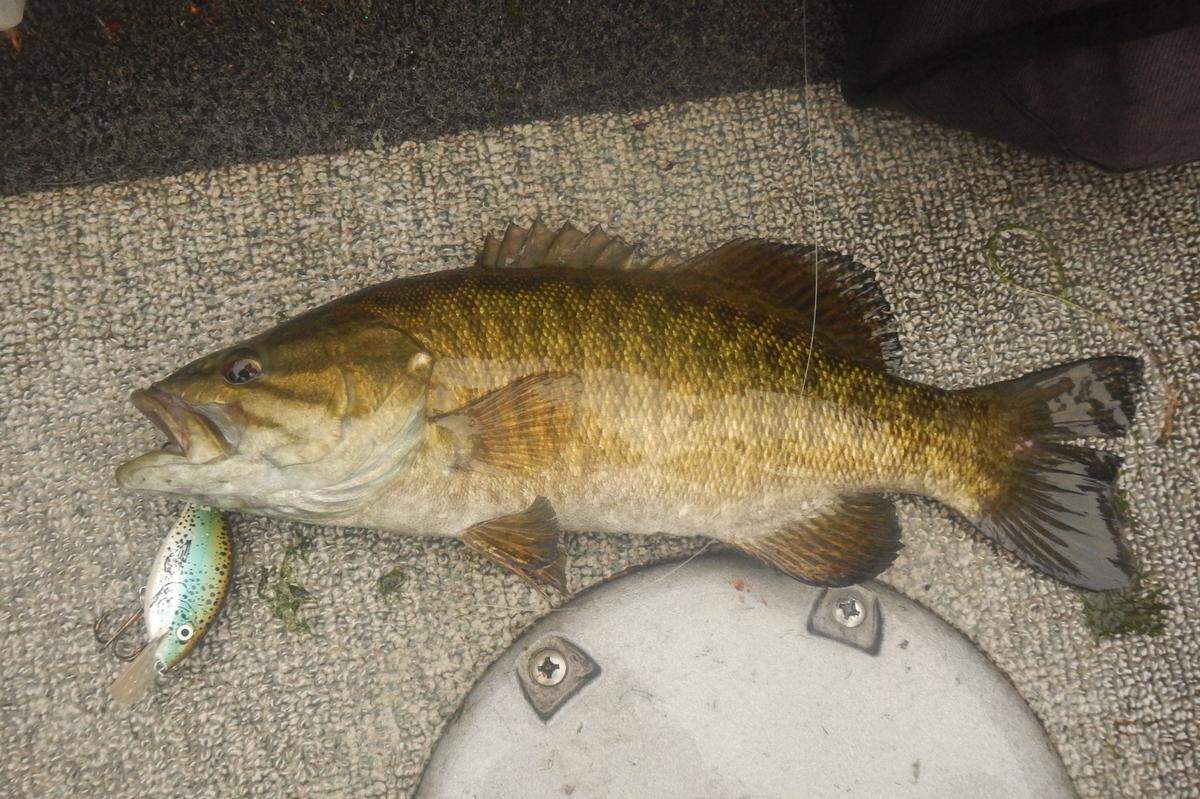
It’s not all fun and games with Wayne. “Get the net,” he demands, whenever a large “smallie” puts a deep bow in his rod. Losing a big bass is not an option with Wayne.
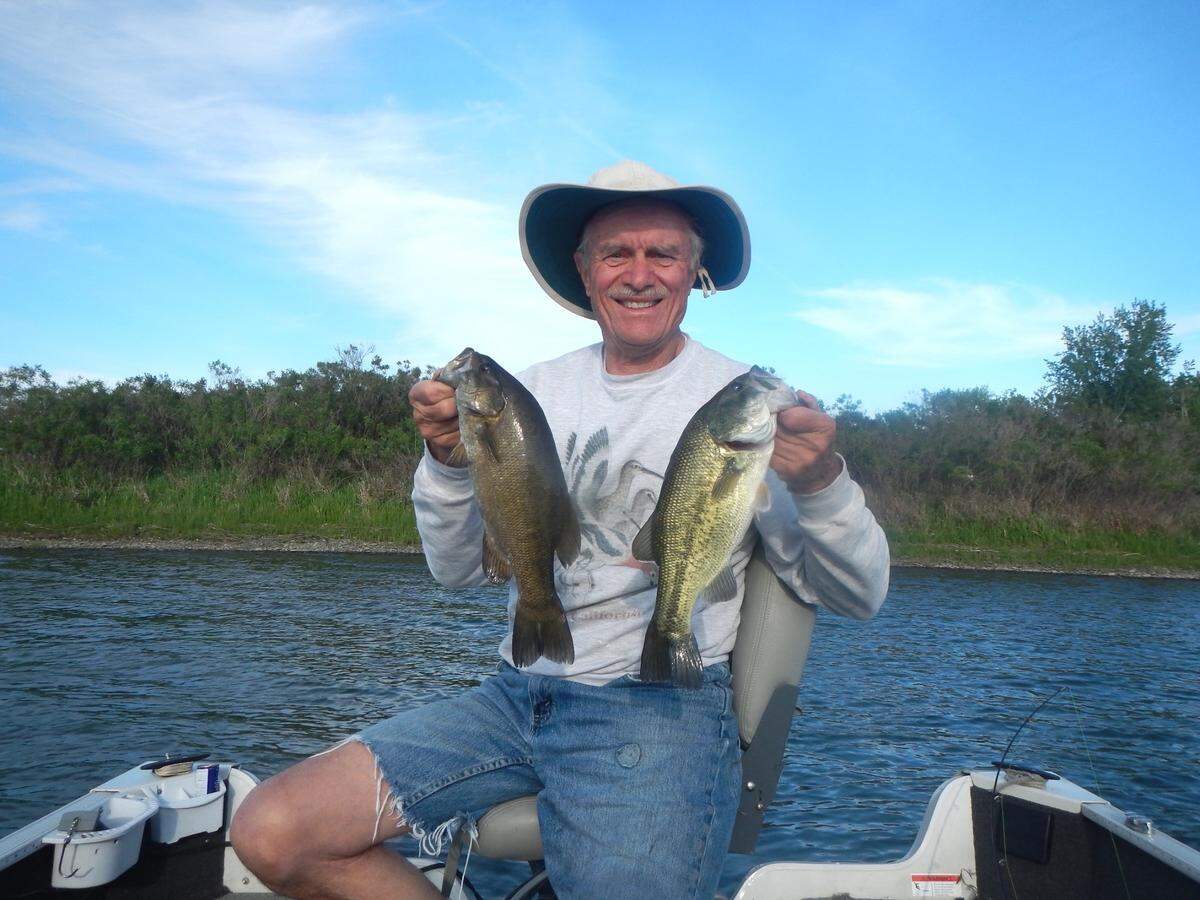
The length and weight of all landed fish are carefully documented, along with the lure, time of day, water temperature, weather condition, and location. Lost bass are lost data. You can never have too much data when it comes to bass fishing if your name is Wayne.
I rarely track the number of bass I hook and land after the first half dozen. Attention deficit disorder kicks in for me after a few hours on the water, no matter how good the fishing.
Listening to the territorial call of redwing blackbirds and watching the majestic soar of osprey fill in empty moments. Meanwhile, Wayne chalks up our respective totals, recording the particulars every half hour or so in a little spiral-bound notebook.
“It wasn’t the best day,” Wayne said, after a setting sun dropped below the Horse Heaven hills and a relentless southwest wind stilled. “I bet I missed three times more bass than I hooked.”
“I feel pretty good except for a bad patch when I went three hours without landing a bass,” I replied.
“I ended up with 23,” Wayne said, scanning his notebook with the aid of a LED flashlight.
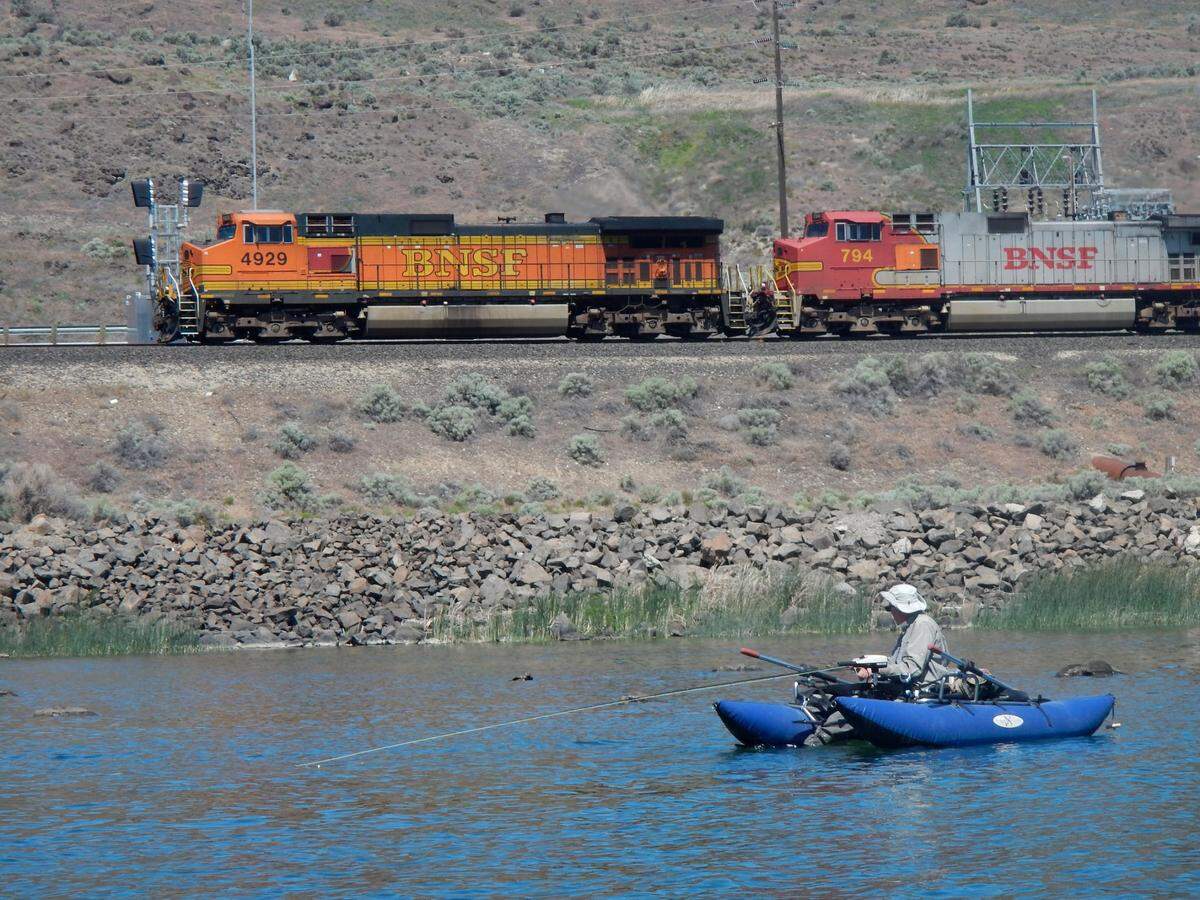
Mercifully, he didn’t mention my paltry total. Thinking about it, I couldn’t remember getting whipped that bad since I chewed garlic on the school bus decades ago.
Fishing should pick up as the lower Snake River and Hanford Reach warm and bass move in to backwater to spawn.
Action also gets hot at the confluence of the Yakima and Columbia rivers in early June, when salmon smolts chance the gauntlet of predators that gather.
Paterson Slough and Crow Butte will continue to fish well until growth of aquatic vegetation chokes the shallows.
More specific data is no doubt present in one of Wayne’s many notebooks.