Trump spending cuts will slam Tri-Cities worse than most of WA. Here’s how
AI-generated summary reviewed by our newsroom.
- Medicaid funding cuts threaten healthcare access for 70% of Tri-Cities children
- Housing, food aid and education programs face elimination or deep funding cuts
- Health insurance losses, hospital strain and higher premiums expected by 2034
The “Big Beautiful Bill” has passed and is heading to the White House for President Donald Trump to sign it into law.
Washington’s 4th Congressional District, which includes the Tri-Cities and much of Central Washington, will be hit harder than most areas of the state.
The massive bill is guided by spending requests from the White House. It will extend the 2017 Trump tax cuts, while cutting billions of dollars in social program funding. It’s been described as the largest cuts to social welfare programs since at least the 1990s, and according to some experts the most severe in modern history.
Funding for many congressionally appropriated grant programs was already eliminated by the Department of Government Efficiency and the new spending bill does not renew them for the 2026 Fiscal Year. Some examples of eliminations the bill makes official include USAID and AmeriCorps.
The most recent Congressional Budget Office estimate puts the total cost of the Big, Beautiful Bill at $3.3 trillion and leave 11.8 million more Americans without health insurance by 2034.
Some Affordable Care Act tax credits that were not extended in the bill will fall off later this year and add another 5.1 million people to the tally, resulting in nearly 17 million more Americans being uninsured over the next 10 years.
The analysis also shows that many low income people will actually pay more in taxes, while the highest income earners are expected to see huge savings.
Medicaid
Cuts to Medicaid will hit Central Washington harder than any other part of Washington, say state officials.
In the 4th Congressional District, 70% of all children are on Medicaid, which is called Apple Health in the state.
That includes 70% of children in Franklin County 55% of kids in Benton County, 80% of kids in Yakima County and 90% of kids in Adams County.
In the state, three in five nursing home residents and three in eight people with disabilities rely on Medicaid, and it is the largest payer for opioid use disorder treatment, Gov. Bob Ferguson said during a recent Tri-Cities visit.
Nonprofits in the Tri-Cities that help seniors continue living independently or with caretakers at home will also be devastated.
Senior Life Resources is 95% funded by Medicaid and helps provide quality of life services to help seniors continue living on their own. Adult Day Services of Tri-Cities is 90% funded by Medicaid and helps disabled adults, veterans and seniors continue living at home with either family or a qualified caretaker.
If their patients lost Medicaid funding, they are likely to end up in the hospital more frequently due to lack of routine and preventative care, and could be forced into skilled nursing facilities.
Meanwhile those facilities are already strained due to rising costs and don’t have the capacity to handle an influx of new patients.
Hospitals and medical insurance
Experts say cuts to Medicaid will impact the entire medical system, not just the program itself.
Emergency room waits will increase and specialists could be overwhelmed.
The increased burden on hospitals and healthcare facilities will likely lead to private insurance premiums spiking. Sen. Maria Cantwell, D-Wash., said people with employment-based insurance could see an additional cost increase of $282 to $485 a year.
Washington State Hospital Association President Cassie Sauer said in a news release that the bill is a disaster for Washington state hospitals.
She anticipates increased costs and loss of insurance will lead to the closure of some rural hospitals. Prosser Memorial Health and Lourdes in Pasco are designated as rural Critical Access Hospitals.
Sauer also said it will lead to services being scaled back and layoffs at healthcare facilities.
Medicare
Cuts to Medicare are estimated to total about $500 billion over 10 years, according to the Congressional Budget Office estimate.
About 1.4 million who are eligible for both Medicaid and Medicare would lose access to cost-sharing assistance. Programs that help pay Medicare premiums would also be cut.
Many of the cuts to Medicare would impact people who have not yet turned 65, but will in the next 10 years.
Tax credits expected to be used by an estimated 20 million people for help with paying for Medicare would be allowed to expire. Some programs meant to help low-income seniors with affordability also would be impacted.
Most lawful immigrants in good standing would also lose access to Medicare.
Food stamps
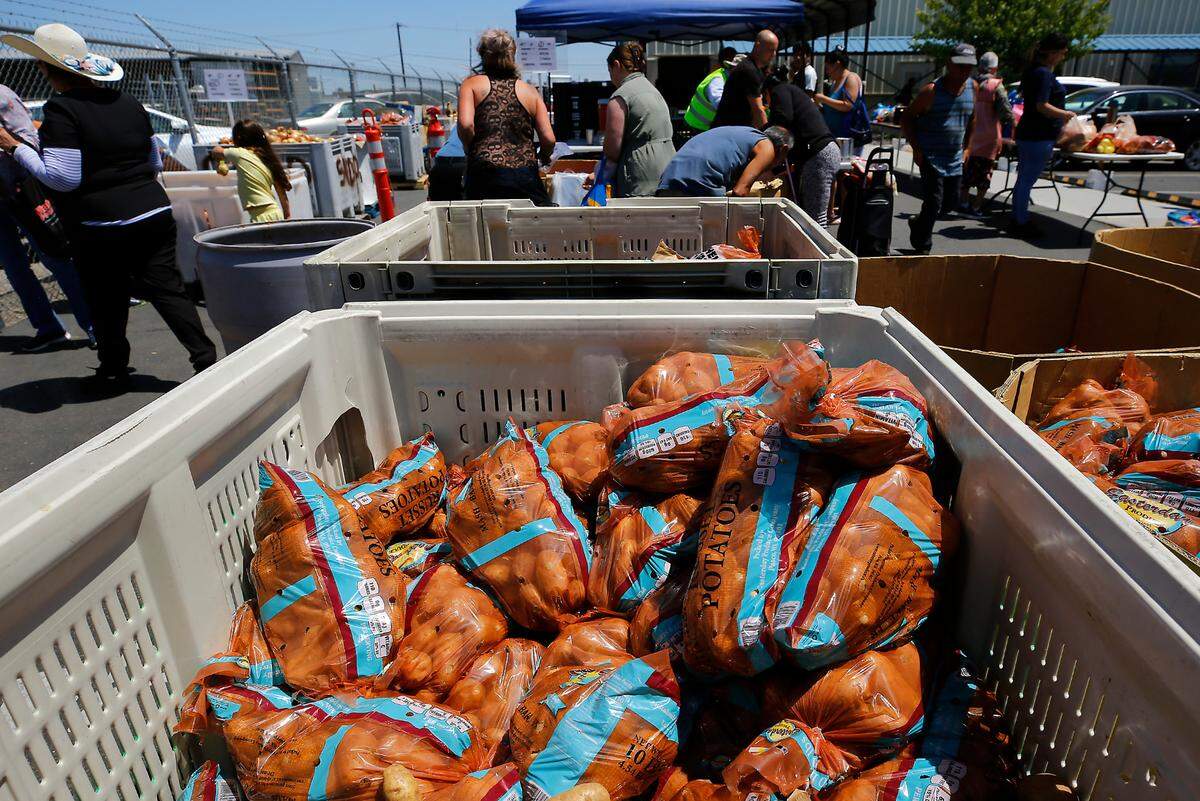
One in every six Tri-Cities households receive SNAP benefits, according to USDA data. That’s nearly 17,000 Tri-Cities families that could be impacted by cuts to the food stamp program.
Franklin County has the second highest rate of recipients in Washington state, while Benton ranks 12th out of 36.
More than 1-in-4 Tri-Cities households on the program include an elderly person and about 60% of the recipients have children.
The average family of four is expected to see a drop of about 15% to 20%, or $56 per month out of their $330 in benefits, according to the most recent estimates.
And expanded work requirements risk kicking nearly 200,000 Washington residents off the program entirely.
Food banks
Resources that provide Tri-Citians with food assistance are already struggling after DOGE cuts froze funding for various programs and the U.S. Department of Agriculture began scaling back food deliveries.
Food banks across the nation lost about $1 billion in funding earlier this year, which does not appear to be renewed in any way for the 2026 fiscal year.
Those direct food deliveries were largely partnerships with farmers and manufacturers.
Thousands of families in the Tri-Cities rely on food banks, such as St. Vincent de Paul and Tri-Cities Food Bank.
Housing
In addition to emergency housing money cut earlier this year, the Big Beautiful Bill also eliminates Continuum of Care programs entirely. The CoC helps pay for services such as permanent and supportive housing funding.
The FEMA Emergency Food and Shelter Program was partially used to fund vouchers that helped keep people from being evicted or to move out of dangerous situations, including through domestic violence shelters.
The Department of Housing and Urban Development has slashed its budget by about 44%, through cuts that eliminate Community Development Block Grants and cut homelessness and affordable housing programs nearly in half.
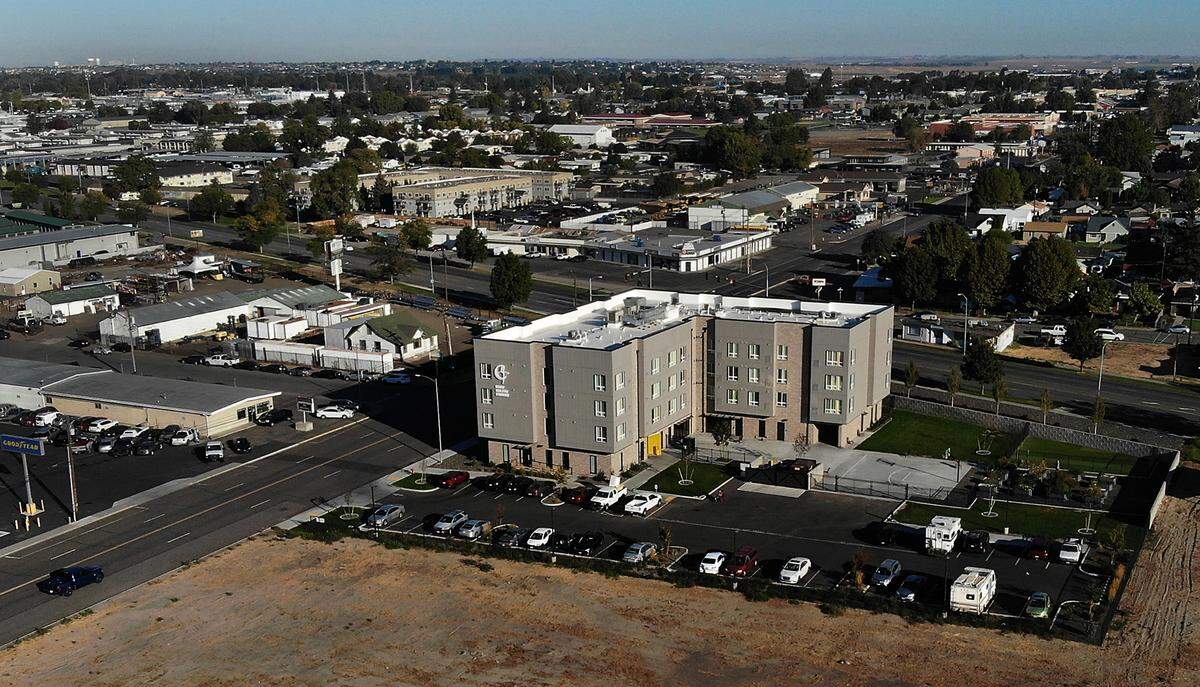
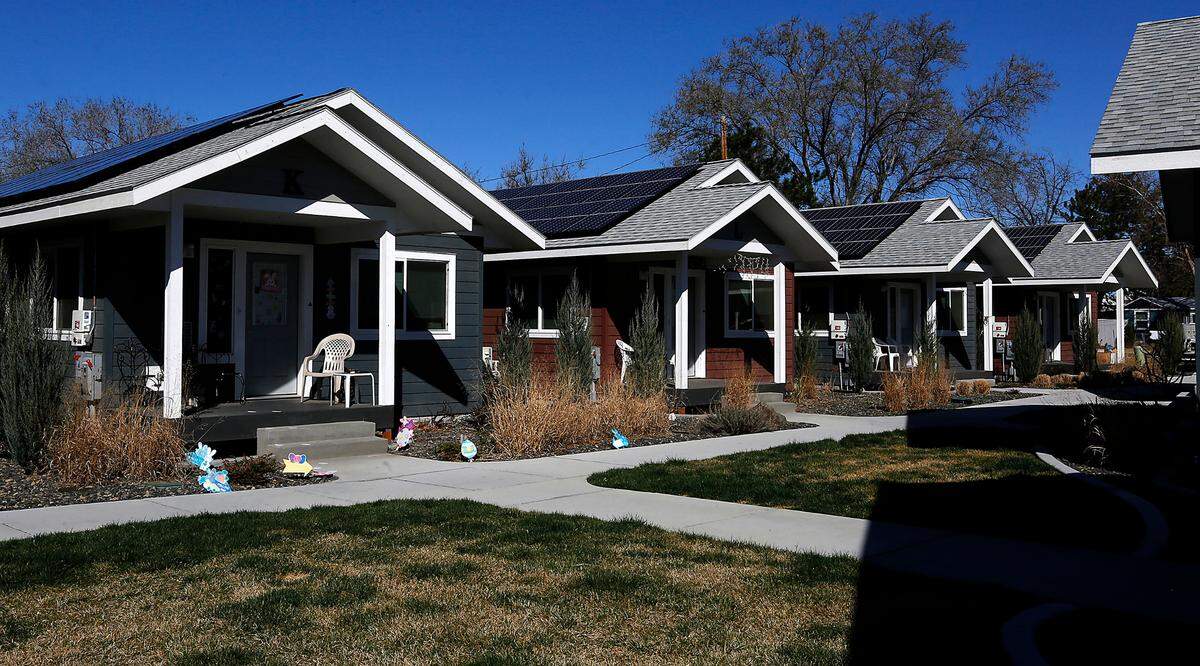
Supportive housing projects in the Tri-Cities includes Catholic Charities’ Bishop Skylstad Commons in Pasco and apartments and a tiny home community in Kennewick. Both of those programs serve many veterans and adults with disabilities.
The funding typically helps residents pay for rent, which is income based.
This year Community Development Block Grants in the Tri-Cities helped fund nonprofits such as Elijah Family Homes and Arc of Tri-Cities, as well as organizations that provide services for seniors and families escaping domestic violence.
Continuum of Care and FEMA funding are also critical for helping people displaced by natural disasters.
Planned Parenthood
The bill also includes an attempt to “defund” Planned Parenthood and other certain other healthcare providers, according to Washington Senator Patty Murray’s office.
It would do so through a provision that would prevent federal Medicaid funding from going to Planned Parenthood and other similar clinics. The provision was pushed through as a one-year change in order to skirt rules on policy changes in budgeting.
Murray’s office estimates it puts at least 200 health centers across the country at risk of closure.
About 90 percent of those clinics are in states where abortion is legal. It would cost taxpayers about $52 million over 10 years and 1.1 million Americans would lose healthcare.
The provision notably does not just bar abortion funding. It would also take away access to reproductive care and cancer screening services that many Americans use through Planned Parenthood by blocking all funding to clinics that provide abortions.
County health district
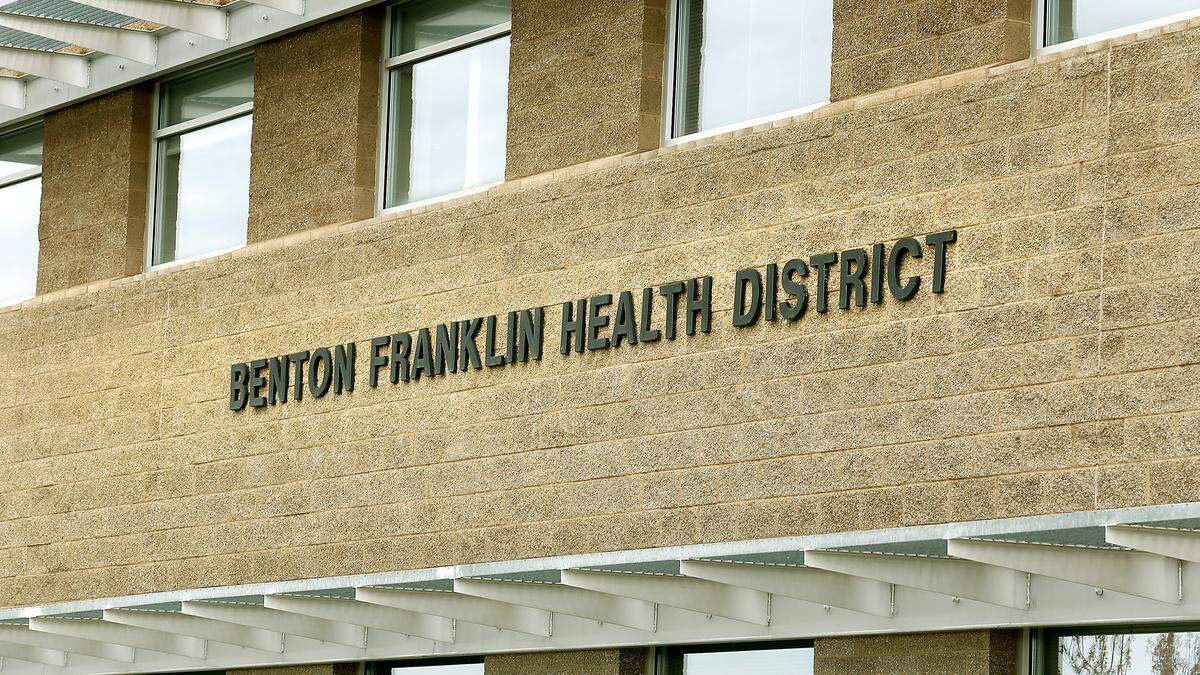
The bicounty Benton Franklin Health District lost $500,000 in preventative disease funding earlier this year.
The state also is expected to lose $160 million in funding for health districts for funding basic services, such as sustaining public health operations, assessments, emergency preparedness and more, according to the Kitsap Sun.
A variety of other public health programs are expected to see reduced funding as programs are restructured and several divisions are closed.

Energy funding
Major cuts to green energy funding could impact the Tri-Cities area.
Several major wind and solar projects are proposed in the region, but the spending bill all but eliminates incentives for wind, solar and other clean energy projects.
It’s unclear if any projects currently being developed will be impacted by these cuts, but they’re sure to factor into any future considerations for similar energy initiatives in the area.
Tax credits for buying electric vehicles and residential solar panels also are eliminated.
Rep. Dan Newhouse, R-Sunnyside, saved some tax credits for energy projects that were set to be cut. The credits are highly sought after by companies looking to build small modular nuclear reactors in the Tri-Cities area. Loss of these credits could have cost the region billions of dollars in projects to power data centers.
National Weather Service
The National Weather Service office covering the Tri-Cities area already has been impacted by DOGE cuts. Earlier this year the office had to eliminate overnight staffing due to job cuts and a federal hiring freeze.
The office in Pendleton, Ore., serves one of the largest areas outside of Alaska. Its Washington state service area includes Benton, Franklin, Walla Walla, Yakima, Columbia, Kittitas and Klickitat counties. It also covers 11 counties in Eastern Oregon, including Umatilla and Morrow counties.
The office will still have limited staffing during emergencies.
At the end of the month the National Oceanic and Atmospheric Administration (NOAA), which oversees the NWS, will lose access to the Department of Defense satellites that enable it to track real time atmospheric conditions. This data is key to NWS hurricane forecasting, say officials.
Weather balloon launches, another tool in tracking real time weather conditions, have also been cut back at several locations. NASA has a balloon launch site in the Pacific Northwest in Burns, Ore., about 5 hours south of the Tri-Cities.
While the NWS has acknowledged earlier job cuts went too far, it is expected to fill just 126 of the estimated 600 positions cut nationwide.

LIGO observatory
National Science Foundation cuts could close one of the nation’s two LIGO sites.
The Laser Interferometer Gravitational-wave Observatories, LIGO Hanford, is about 10 miles from Richland on unused Hanford nuclear site land, and its twin, LIGO Livingston is in Louisiana.
The two observatories work in tandem to study gravitational waves. Confirming findings at each site is key to their research.
The Trump proposal calls for not only closing one of the two U.S. observatories in fiscal 2026 but also reducing LIGO spending for technology development. Their total budget would be reduced by 40% from $48 million in fiscal 2024 to $29 million in fiscal 2026.
It’s unclear what that means for planned upgrades slated for 2026, or which site is being considered for closure.

Hanford nuclear site
While the budget at the Hanford site isn’t being cut, state lawmakers say the funding is inadequate to achieve cleanup goals.
The Washington state Department of Ecology, a Hanford regulator, estimated in 2024 that a budget of almost $4.7 billion would be needed in fiscal 2026 to meet legal deadlines for environmental cleanup of the site.
The proposal for fiscal year 2026 would provide just under $3.1 billion for environmental cleanup work at the nuclear site in Eastern Washington, where about 13,000 are employed.

Scientific research grants
The Pacific Northwest National Laboratory employs more than 6,000 scientists, engineers and other professionals engaged in cutting edge research.
Research at the laboratory covers a wide array of disciplines with work on everything from hazardous waste cleanup to national security technology and medical advances.
While it’s unclear what research projects at PNNL could be at risk, the spending bill will result in significant cuts to research grants — especially those related to health and medicine.
The National Institutes of Health already canceled or delayed thousands of grant projects.
The most recent round of NSF grant cuts included will lead to less opportunity for women and minorities in STEM. An analysis by the Hechinger Report listed cuts of:
- $28 million to biological science research
- $45 million for computer and information science and engineering
- $36 million for geosciences
- $61 million for technology, innovation and partnerships.
- More than $773 million in grants for STEM education were also cut.
The analysis said these cuts largely focused on efforts to increase participation of women and Black and Hispanic students in STEM fields.
Total cuts to science and education grants could reach as high as 50%, according to the University of California. Such drastic cuts would see China overtaking the United States in total research and development funding by 2027.
College and career
The average Pell Grant will shrink by about 23%, or $1,700, in the 2026-27 academic year.
Experts say this will force more students to take out loans and could force low-income students to drop out of college.
Pell Grant eligibility changes will also disproportionately harm disabled students who cannot attend school full time.
Workforce development programs would see a 29% reduction in funding nationwide. The bill also completely eliminates programs such as Job Corps, Senior Community Service Employment Program and Adult Education funding.
K-12 education
Proposed K-12 federal funding cuts could take millions of dollars away from Tri-Cities school districts at a time when they are already struggling with increased costs and a state budget crunch.
Cuts by district
- Kennewick - $3.5 million
- Pasco - $4.4 million
- Richland - $700,000
- North Franklin - $770,000
- Ki-Be - $530,000
- Prosser - $860,000
- Finley - $106,000
Cuts to Headstart are estimated to come in at more than $700 million, leading to 80,000 less spots in the program nationally. While the program won’t be entirely eliminated, it has already seen significant cuts.
More than 400 children in Eastern Washington already lost access to the program when a Sunnyside nonprofit was forced to close earlier this year due to funding freezes.
Murray’s office estimates that about $150 million of frozen, appropriated K-12 funds for Washington schools still have not been released. These funds are part of programs that are slated for elimination.
Some of these funds help pay for student support, teacher training, adult literacy, before and after school programs and more.
Programs already defunded
Most of the programs already defunded by DOGE are set to be eliminated or kept to reduced funding and staffing levels.
Thousands of nonprofits nationwide will be directly impacted by the sudden elimination of grant programs.
Refugee resettlement programs have been all but eliminated. Those cuts have already led to staffing cuts at organizations in the Tri-Cities, such as World Relief.
AmeriCorps has been entirely eliminated. Hundreds of volunteers in the Tri-Cities, Walla Walla and Yakima have been let go, and programs that paired students with mentors and tutors for reading and math may have to close.
The Dolly Parton Imagination Library, which provides free books for children survived federal budget cuts, thanks to state intervention. Washington Superintendent of Public Schools Chris Reykdal hopes they can convince federal lawmakers to bring back funding for the program next year.
Justice Department grants for anti-crime initiatives have been cut by $500 million. These grants covered with building cases against fentanyl dealers, community based policing initiatives and more.
National Park Service also has seen significant cuts to staffing. Locally though, it’s cuts to staffing at U.S. Army Corps of Engineers outdoor recreation areas that are putting a damper on Tri-Citians’ summer plans.
Closures include Levey Park on the Snake River in Franklin County, Fishhook Park on the Snake River in Walla Walla County and the Illia Dunes Recreation Area, which is popular with college students.
Cuts to the National Endowments for the Humanities threaten more than $10 million worth of grants in Washington state. Those cuts will impact Prime Time Family Reading programs at local libraries. They will also cut funding for speakers bureau events at the Richland Public Library, East Benton County Historical Society, Columbia Basin College and more.
Annette Cary contributed to this report.
This story was originally published July 4, 2025 at 5:00 AM.