Trump’s food stamp cuts could ‘devastate’ 17,000 struggling Tri-Cities families
AI-generated summary reviewed by our newsroom.
- Nearly 17,000 Tri-Cities families could see reduced SNAP food benefits.
- State could face $455M funding gap due to federal cost-share increases.
- Food banks report rising demand and shrinking supply amid vanishing grant support.
The harder David Paslay works, the harder it is to get ahead.
That’s because every dollar he makes impacts his disability and food assistance benefits.
He and his wife Shelley are down to just $30 each per month in SNAP food assistance, and they’re worried federal funding cuts could reduce that even further.
At the same time, food banks across the Tri-Cities say they’re seeing more families struggling as their once stable funding sources are disappearing because of federal cuts and a state budget crunch.
The most recent estimates for food stamp cuts come directly from the White House. A budget proposal with detailed funding requests and cuts from President Donald Trump was sent to the United States Senate recently after the House passed their version of his “Big Beautiful Bill.”
The Senate has not yet scheduled a vote, but one is expected before July 4. Their version would then be sent back to the house to be reconciled.
One in every six Tri-Cities households receive SNAP benefits, according to USDA data. That’s nearly 17,000 Tri-Cities families that could be impacted by cuts to the food stamp program.
That’s a big concern for Paslay, who has worked at the Richland Safeway for 13 years. He is a Columbia Ability Alliance success story, and like many of their clients who are learning life and job skills, these seismic program shifts would have an outsized impact on their lives.
“It’s hard,” he told the Herald. “I don’t know why they keep trying to take (more) from us.”
Paslay said they already have to carefully plan their meals for the day, and they don’t know how they’d make up any loss in food benefits. Despite doing their best to meet every requirement thrown at them, they feel like there’s always another setback.
“We need the food, it’s not fair,” he said. “My concern is, why are they doing it?”
He said that the $30 they receive is enough for “just about nothing.”
That leaves David and Shelley looking elsewhere for help, but food banks are now struggling to meet demand in the face of federal cuts that have all but eliminated many of the grants the organizations rely on.
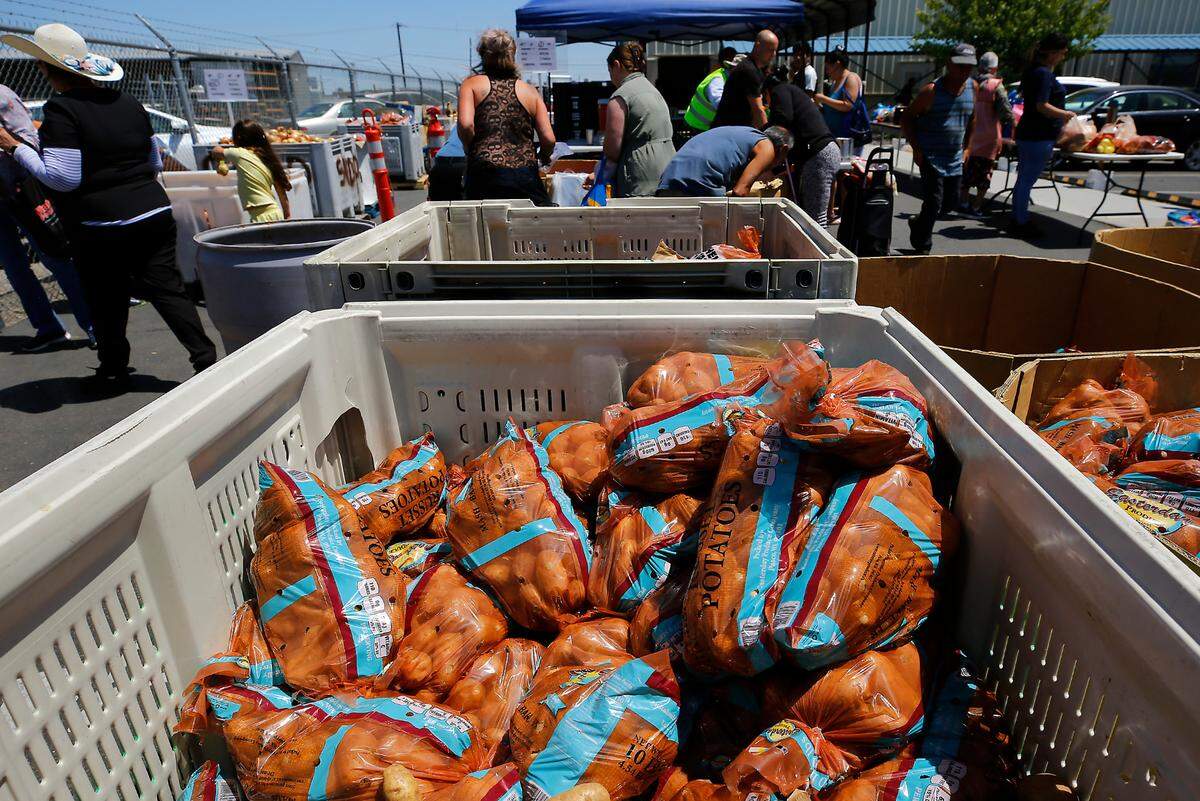
Every week St. Vincent de Paul’s Pasco food bank, serves more than 1,600 Tri-Cities families.
Despite being open only for a few hours on Wednesdays, the nonprofit is distributing more than 100,000 pounds of food each week.
The nonprofit’s leaders told the Herald that demand has continued to climb in recent years.
SNAP cuts
Washington’s 4th Congressional District, which includes the Tri-Cities, has the highest rate of SNAP recipients in the state, according to the U.S. Department of Agriculture.
Franklin County has the second highest rate of recipients in Washington state, Benton ranks 12th out of 36.
More than 1-in-4 Tri-Cities households on the program include an elderly person and about 60% have children.
An adult in the Tri-Cities spends an estimated average of $4,300 each year on groceries, according to the The MIT Living Wage Calculator.
The average family of four is expected to see a decrease of about 15% to 20%, or $56 per month out of $330 in benefits, according to the most recent estimates.
And an expanded work requirements risk kicking nearly 200,000 Washington residents off the program entirely.
The latest funding proposal for SNAP, or Supplemental Nutrition Assistance Program, details cuts that could not only go further than previously anticipated, but leave states unable to predict how much they’d need to fund each year.
That’s because the plan to shift part of the funding to states isn’t on a fixed scale. It would rely on the most recent year’s error rate, and could shift hundreds of millions of dollars more in costs each year on short notice.
The error rate is based on unintentional mistakes, not fraud, by either households or the program, according to the Center on Policy and Budget Priorities.
Washington state initially anticipated having to shoulder about $95 million, or 5%, of food costs, but that number is now based on an error rate of under 6% — only one state met that threshold last year.
The average error rate would triple the state’s burden, making Washington state need to come up with $286 million. If the error rate shifted above 8%, the state would be on the hook for another $95 million with little notice.
That’s on top of a huge increase in the share of administrative costs that states already pay, going from 25% to 75%.
A spokesperson for the Washington Department of Social and Health Services estimates the state could be looking at having to backfill $455 million in lost funding. That doesn’t include impacts to other programs from new requirements included in the changes, such as loss of funding for internet and utility allowances.
At the same time, food banks are also seeing a reduction to the quality and overall supply of food aid coming in from the federal government, and FEMA’s emergency housing and food assistance grants have been eliminated.
Those grants were administered locally by the United Way of Benton and Franklin Counties, and helped local nonprofits keep food pantries up and running.
Washington Gov. Bob Ferguson said the cuts would likely hit Central Washington the hardest.
“These cuts are going to hit folks in Central Washington hard, especially compared to the rest of the state,” Ferguson said in a statement to the Herald. “Central Washington has the highest percentage SNAP recipients. If the Senate approves this legislation, it will take food away from Central Washington families.”
Line out the door
During a lull in traffic at St. Vincent de Paul on Wednesday the line was out the door and cars were parked all along the street.
The nonprofit expected to serve more than 1,600 Tri-Cities families, with each family taking about 100 pounds of food. Each box they set up is intended for 3.5 people, with larger families needing two boxes.
President Lindy Styer said the nonprofit doesn’t turn anyone away.
“If you need help, we’ll help you,” she said. “If you ask for it, we’ll do the best we can.”
In addition to food, the organization also has a clothing section and offers what household necessities they can. They prepare “baby boxes” for expecting mothers and purchase diapers with any extra funding they might have.
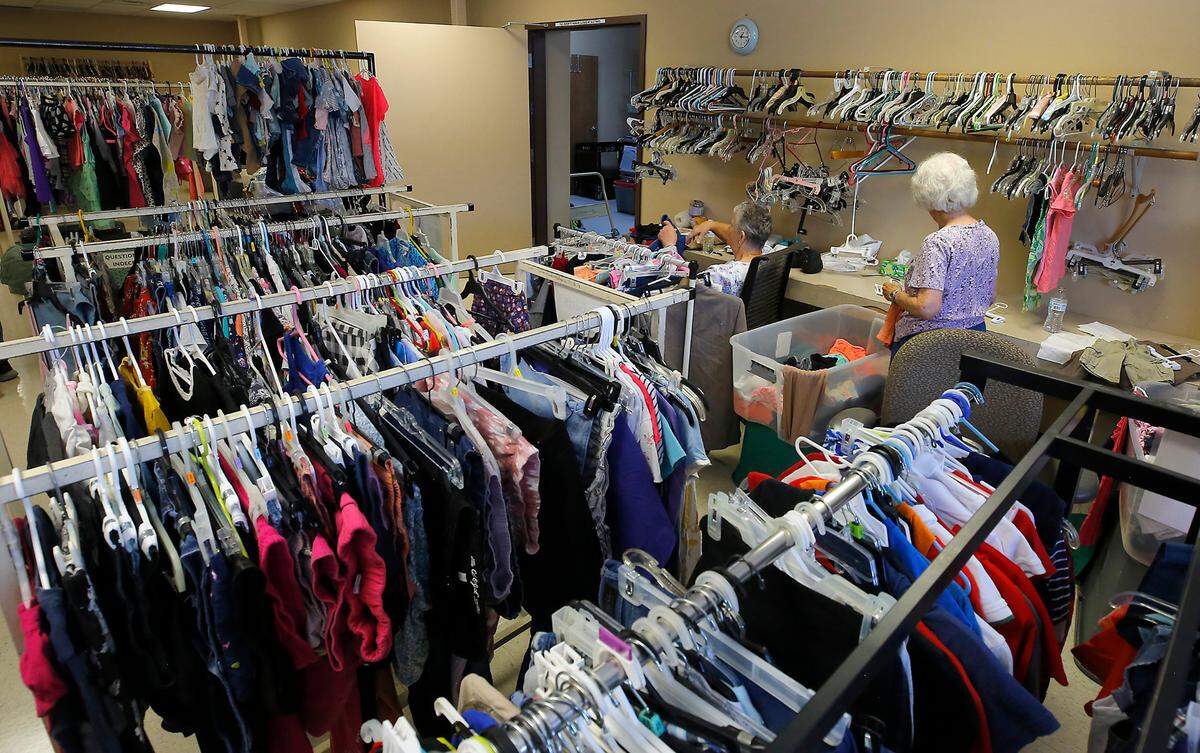
“This is part of how they make their family work,” Styer said. “If there’s a cut in food (assistance), what are they going to have to supplement?”
Styer said it isn’t discretionary funds the family will have to dip into, it will be deciding if they can afford gas to get to work or to pay the bills.
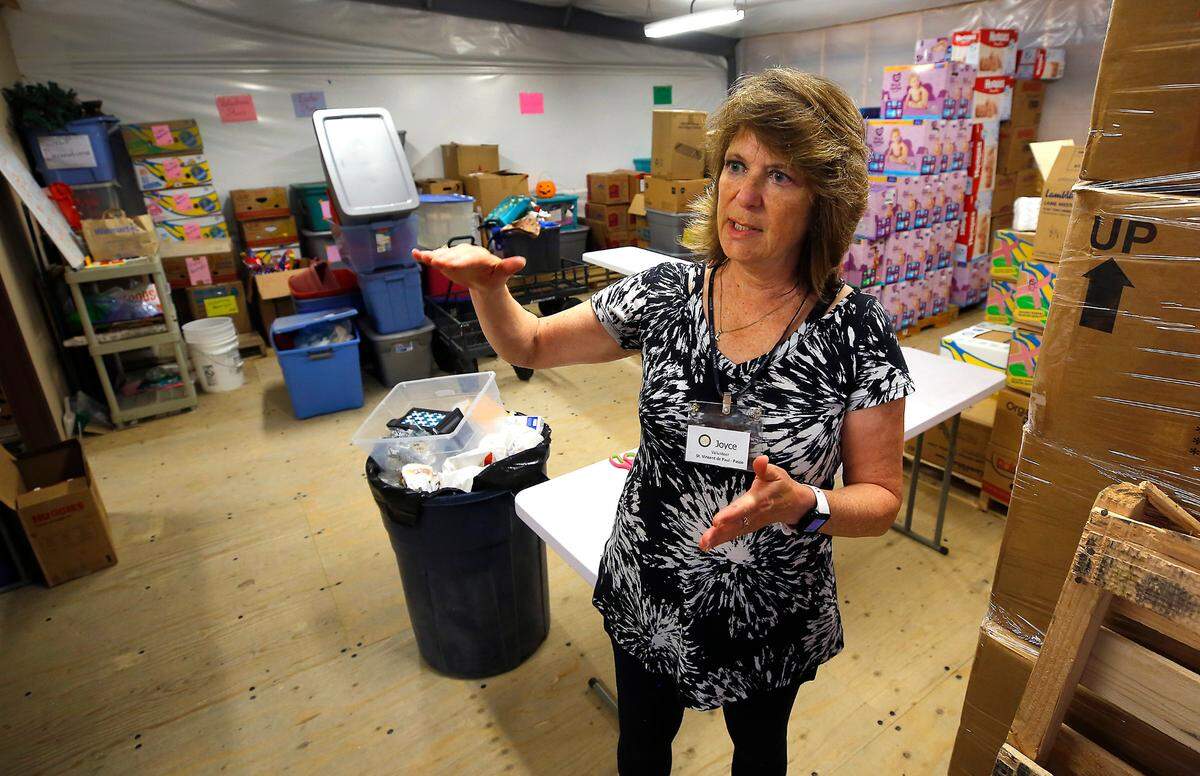
Charitable giving manager Joyce Gilbert said the food bank has seen demand for their services grow since the end of the COVID pandemic.
Now, not only are families struggling with economic uncertainty and inflation, but nonprofits are seeing funding disappear.
Most of the funding cuts for grants that keep many food pantries in business are not reallocated in the proposed 2026 federal budget.
At the same time, Gilbert said they’ve had no word on state grants that are set to renew at the end of June.
The larger food deliveries have become worryingly sparse. They’re currently reaching out directly to smaller farms to see if individual growers are able to help.
“There’s a lot of unstable activity going on,” Gilbert said. “ Food is our number one priority, we may have to rob Peter to pay Paul.”
That means if funding continues to decrease, they may have to cut back on some of the other ways they help families.
Styer said that $56 per month might not seem like much, but it would be “devastating” for families already struggling.
“I think it’s notable that the need is increasing while the supply is decreasing,” Styer said.
Ways to help
St. Vincent de Paul relies on volunteers, with only one paid staff member and up to 100 others giving their time every week. They’re open to the public on Wednesdays, but volunteers work all week to prepare.
Clothing, toiletries and diaper donations can be dropped off during the week as well. The food bank is at 215 S. 6th Ave. in Pasco.
For more information on how to help, visit facebook.com/svdppasco.org/
Because nearly every nonprofit dealing with food insecurity relies on some federally funded grants or food deliveries, other organizations across the Tri-Cities, such as the Tri-Cities Food Bank and 2nd Harvest, also will be in need of more community help.