
Trump science cuts may close WA LIGO observatory that confirmed theory of relativity
AI-generated summary reviewed by our newsroom.
- Trump budget proposal seeks to close one of two U.S. LIGO observatories by 2026.
- LIGO facilities detected first gravitational waves and advanced multi-messenger astronomy.
- Proposed closure risks halting upgrades, losing expertise, and ceding global leadership.
The Trump administration wants to close one of the nation’s two cutting-edge observatories — one of them in the Tri-Cities — that made scientific history and launched a new way to study the universe.
It’s part of a $5.2 billion, or 57% cut, proposed Friday for the National Science Foundation and could result in the permanent closure of one of the special observatories, threatening the U.S.’s scientific leadership in such research.
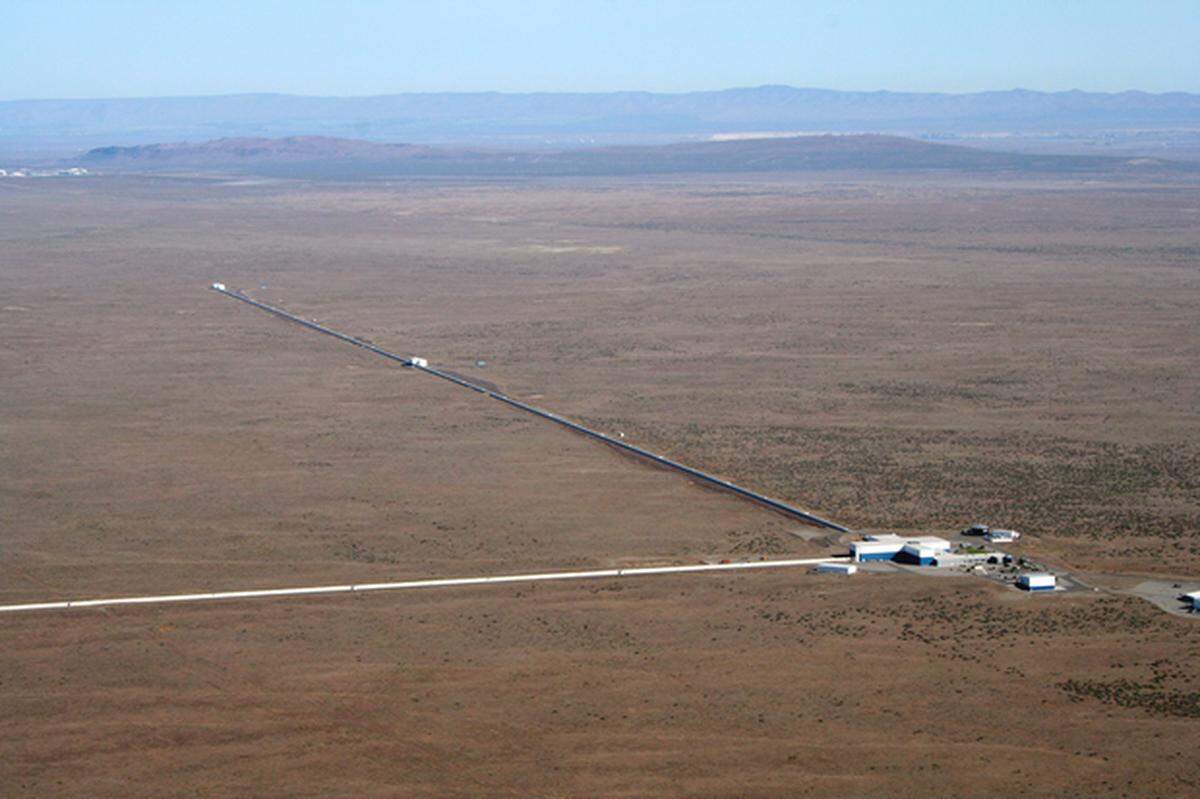
The National Science Foundation funds two Laser Interferometer Gravitational-wave Observatories, LIGO Hanford, which is about 10 miles from Richland on unused Hanford nuclear site land, and its twin, LIGO Livingston in Louisiana.
In 2015 the two LIGOs detected gravitational waves from outer space passing through the Earth for the first time, nearly 100 years after Albert Einstein predicted their existence.
The detection of matching vibrations at both sites confirmed that the infinitesimal movement detected was from gravitational waves reaching Earth from a violent event in space. In the first detection it was from the collision of two black holes 1.3 billion years ago.
The finding led to a Nobel Prize in Physics for the work by three U.S. professors emeritus to design and build the two observatories.
Since the two U.S. LIGOs came online, gravitational wave observatories have begun operating in Italy and Japan, but the United States remains the leader in the field with the most advanced and sensitive equipment.
Proposed LIGO budget cut
Fiscal 2026 budget documents released late Friday by the Trump administration proposed reducing the overall budget for the two LIGOs by 40% from $48 million in fiscal 2024 to $29 million in fiscal 2026.
The current fiscal budget signed into law in March has not yet had program-specific spending plans released to compare to the fiscal 2026 proposal.
The document released Friday is the Trump administration’s recommendation for fiscal 2026, which Congress will use as a guide as it sets the budget amount.
The Trump proposal calls for not only closing one of the two U.S. observatories in fiscal 2026 but also reducing LIGO spending for technology development.
The two LIGOs were planned to be in an upgrade phase in 2026, with technology improvements being made to both.
The Trump administration has not said which LIGO it would favor shutting down or why both would not be kept open with limited operations.
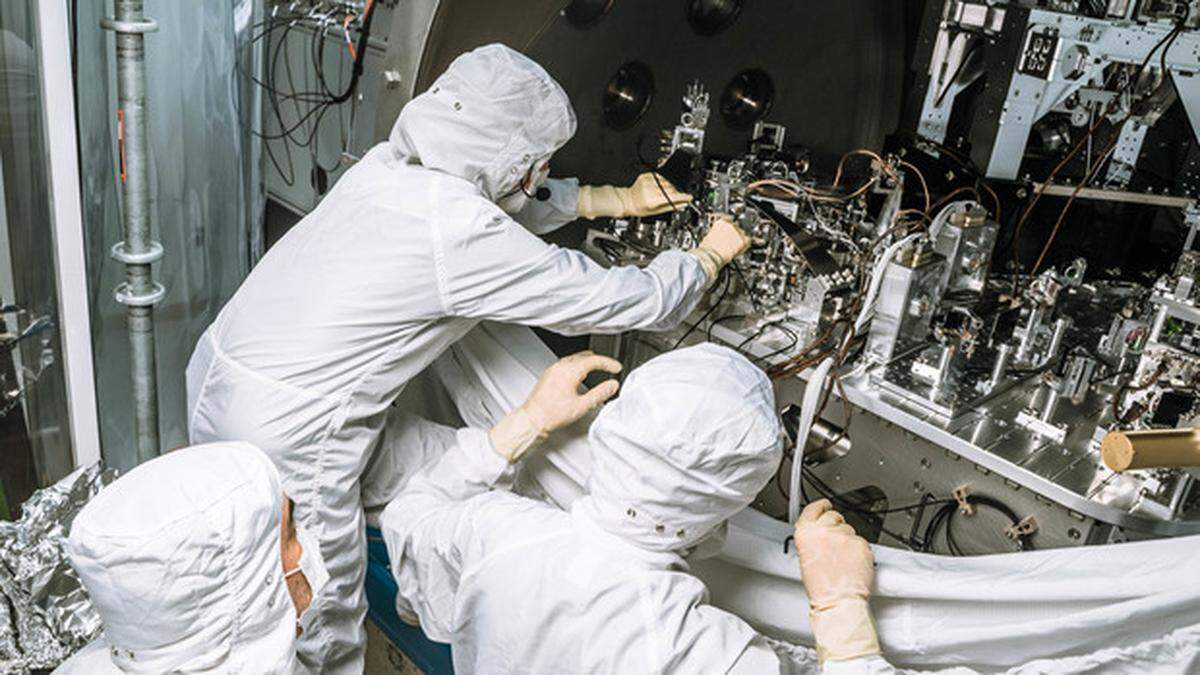
If one of the two LIGOs were closed for a year, rehiring their highly specialized scientists to resume operating the next year could be very difficult, say officials.
Louisiana Gov. Jeff Landry has been a frequent visitor to the White House in Trump’s second term, as reported by the Shreveport Times, while Washington state is led by a Democrat governor and has filed numerous lawsuits against the Trump administration.
On Wednesday, Washington state Attorney General Nick Brown joined a coalition of 15 other attorneys general to file a lawsuit against the Trump administrations attempts to cut National Science Foundation programs that it said helped maintain the United States’ position as a global leader in science, technology, engineering and math.
LIGOs lead world science
The “National Science Foundation FY 2026 Budget Request to Congress” calls the LIGO system “the most sensitive detector of gravitational waves ever built” and the leader in “the worldwide effort to study the structure and evolution of the universe through gravitational radiation.”
Since the initial detection of gravitational waves passing through Earth in 2015 through early spring of this year, the two LIGOs have detected 290 possible gravitational wave events from mergers of black holes and neutron stars, with more detections being made as scientific equipment has been upgraded and improved.
The most recent improvements were made with the goal of improved detection and more advanced data analysis methods to allow scientists to extract more information from detections and increase their understanding of black holes and neutron stars.
With improvements in sensitivity also comes new opportunities to detect signals from sources other than mergers, such as the continuous gravitational-wave signals that are generated by rapidly rotating neutron stars in our Galaxy, according to LIGO officials.
At LIGO Hanford vacuum tubes extend for 2.5 miles at right angles across previously unused Hanford site shrub steppe land near the Tri-Cities. At the end of each tube, a mirror is suspended on glass fibers.
A high-power laser beam is split to go down each tube, bouncing off the mirrors at each end. If the beam is undisturbed, it will bounce back and recombine perfectly.
But if a gravitational wave is pulsing through the Earth, making one of the tubes repeatedly infinitesimally longer and the other infinitesimally shorter, the beam will not recombine as expected.
LIGO Hanford and its Louisiana twin now can measure the stretching and the squeezing of the fabric of space-time on scales 10 thousand trillion times smaller than a human hair.
LIGO advances astronomy
Having multiple gravitational-wave observatories can allow scientist to localize the region of the sky from which the signal emerged and alert astronomers using more traditional telescopes, as well as neutrino detectors, to make observations.
LIGO’s most important finding to date may have been the detection of the fiery collision of two neutron stars in August 2017, opening up a new field of astronomy.
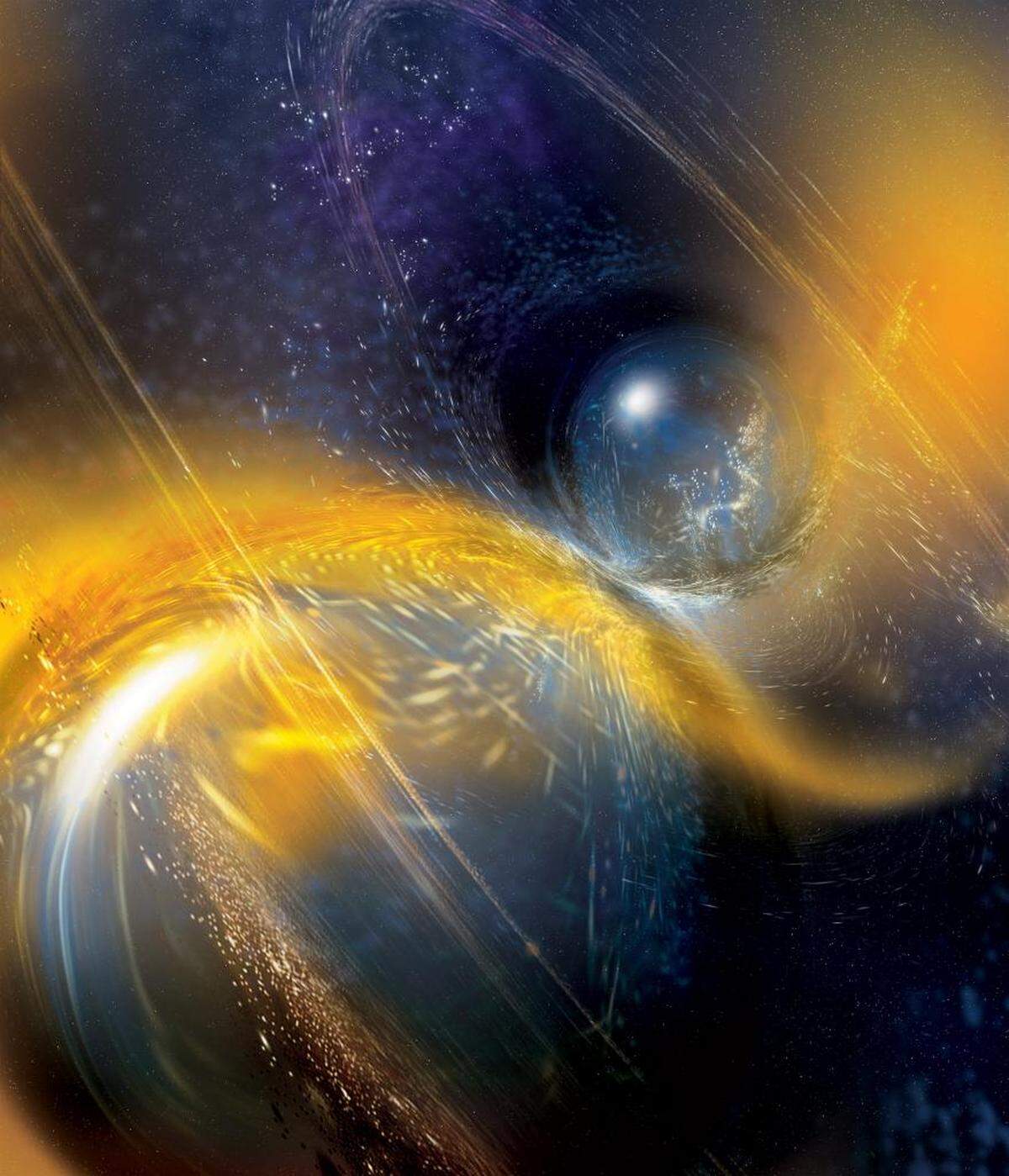
The crash of the neutron stars — the collapsed cores of large stars — spewed material that radioactively decayed, creating heavy metals like gold and platinum.
Unlike black holes, colliding neutron stars emit a flash of light in the form of gamma rays. It allows the event to be captured both by LIGO and by observatories that observe forms of light, including X-ray, ultraviolet, infrared and radiowaves.
It was the first time that a cosmic event had been viewed in both gravitational waves and light, giving scientists a new way of learning about the universe through “multi-messenger astronomy.”
Within months, about a quarter of the world’s professional astronomers have been involved in the follow-up of the initial discovery.
This story was originally published May 31, 2025 at 5:00 AM.