WA nuclear facility is 75, but still the ‘backbone’ of nation’s most complex cleanup
AI-generated summary reviewed by our newsroom.
- The 222-S Laboratory at Hanford marks its 75th year as the site's analytic backbone.
- Navarro-ATL has operated the lab under DOE contract since early 2021.
- Upgrades, scientific innovation have dramatically shortened the time needed for analyses.
The 222-S Laboratory at the Hanford nuclear site is turning 75, but it continues to play as vital a role at Hanford as it did when it opened during the early years of the Cold War.
DOE calls it the “analytic backbone” of the site, relying on it to provide the data that guides critical decisions as the nation spends more than $3 billion a year on environmental cleanup of the Eastern Washington site.
It’s one of the few laboratories in the nation with the capabilities to analyze high-level radioactive waste, giving it likely decades more work to support environmental cleanup at Hanford.
It may be one of the last facilities to operate at the nuclear site before cleanup is completed, said Ricky Bang, the Department of Energy Hanford deputy assistant manager for tank waste operations, at a celebration of the lab’s 75th anniversary.
“At the 222-S Laboratory, Navarro-ATL employees provide the trusted data that informs cleanup decisions, supports waste treatment operations and helps ensure the safe management of some of the nation’s most complex environmental challenges,” said Mark Hughey, Navarro-ATL president, in a message to employees Wednesday about DOE’s vision for accelerated Hanford environmental cleanup.
“Every sample analyzed, every procedure executed, and every result delivered contributes to the broader cleanup mission,” he said.
Hanford, adjacent to Richland, produced nearly two-thirds of the plutonium for the nation’s nuclear weapons program from World War II through the Cold War.
The work left behind contaminated groundwater and soil and 56 million gallons of radioactive and hazardous chemical waste stored in underground tanks, some since WWII.
222-S Lab once analyzed plutonium
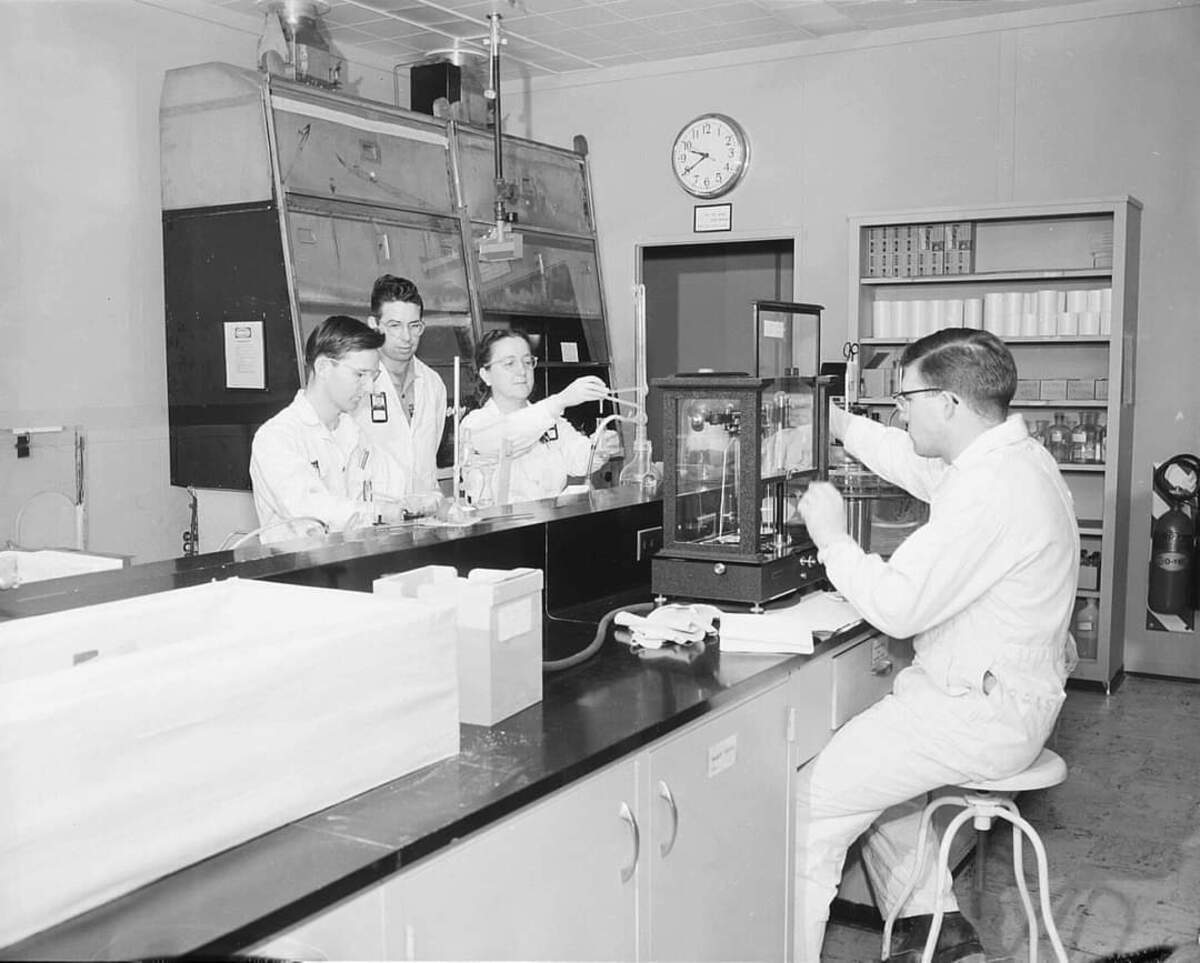
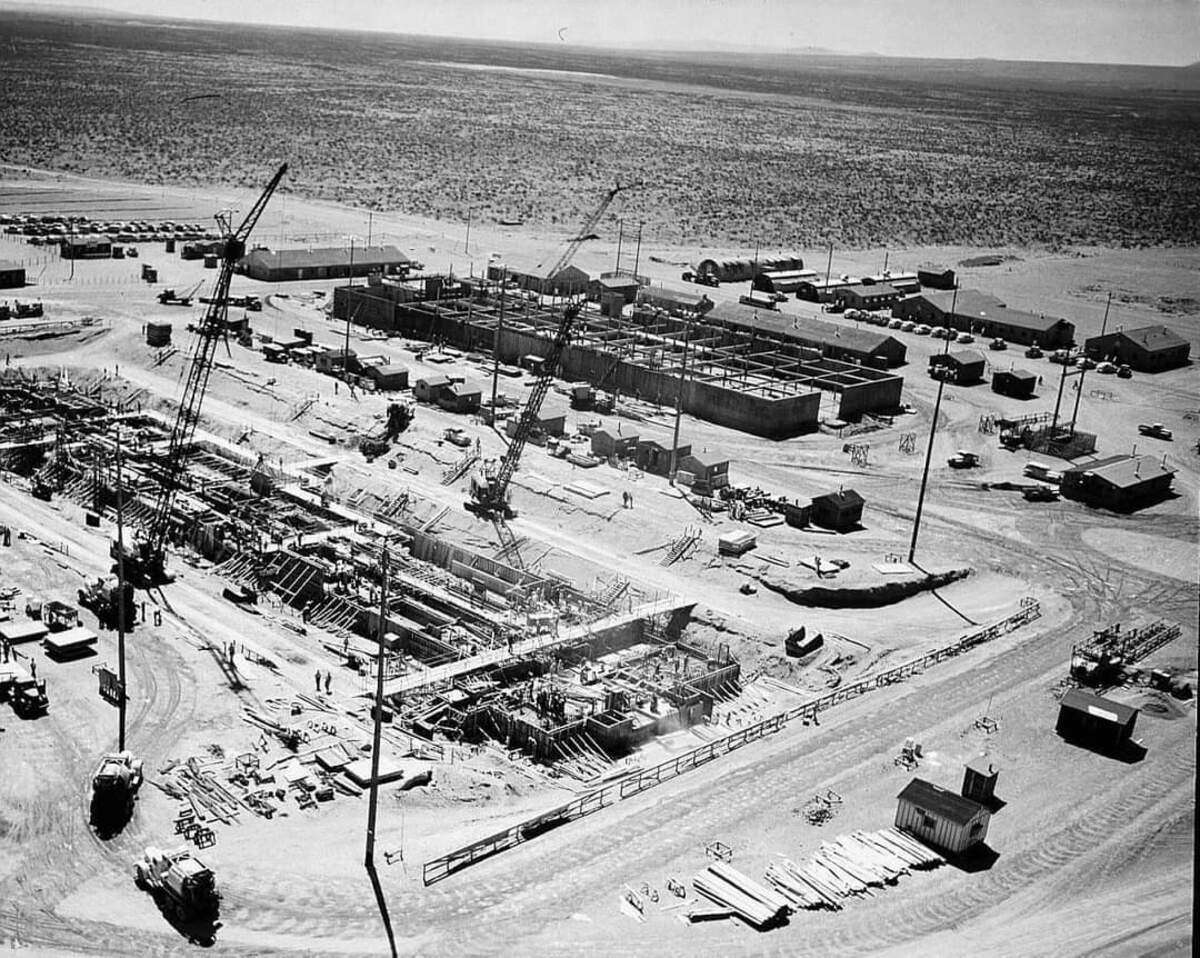
When the 222-S Laboratory was built in 1951, it was intended to support Hanford’s new and more efficient chemical separations plant as the nation built its supply of plutonium amidst Cold War tensions.
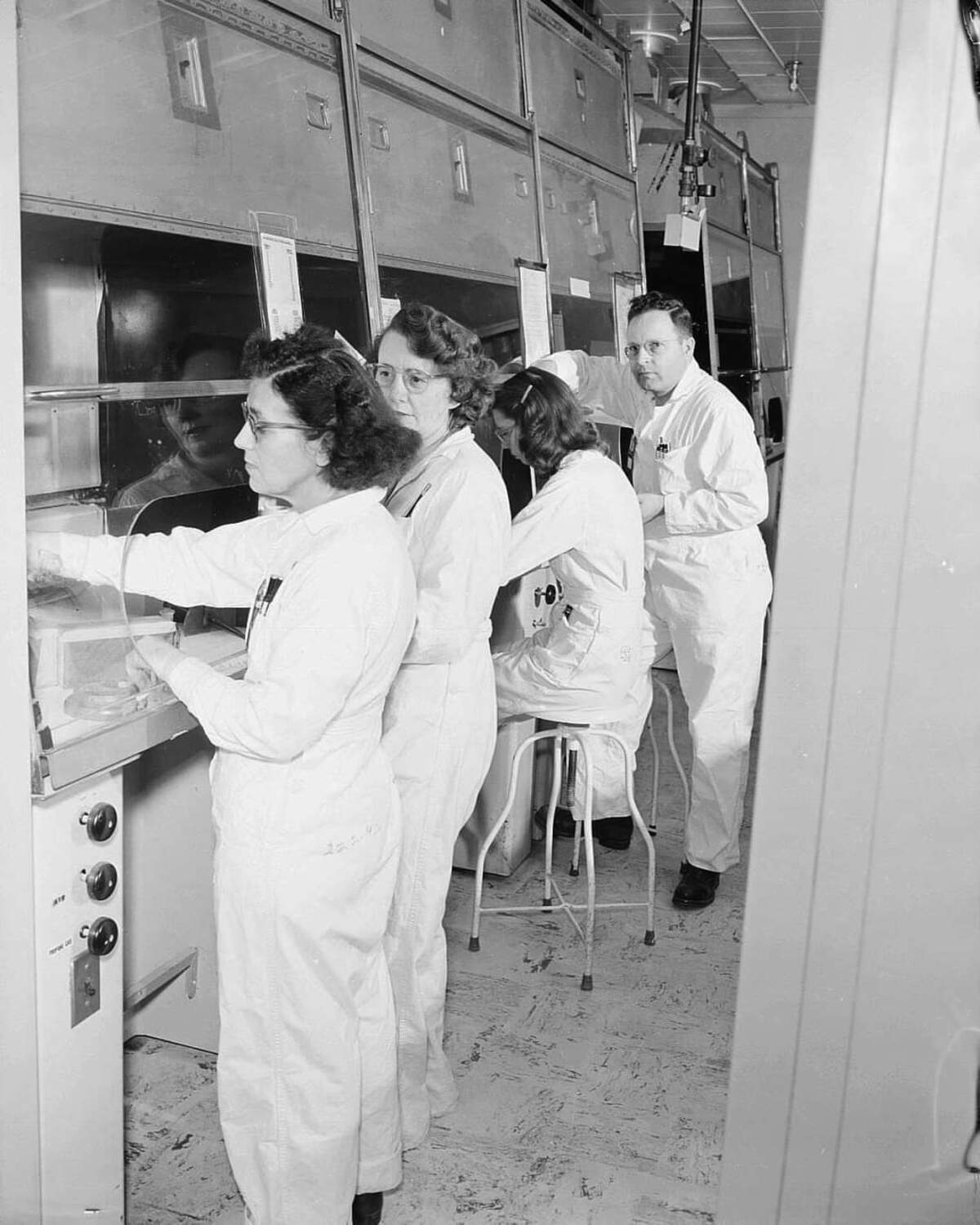
As the Reduction-Oxidation Plant, better known as REDOX, processed up to 12 tons of uranium each day to chemically remove plutonium for the nation’s nuclear weapon’s program, the 222-S Laboratory performed high-precision chemical analyses on radioactive samples to ensure the purity of extracted plutonium and also uranium produced as a byproduct.
As the Cold War ended and Hanford faced new federal environmental regulations, the 222-S Lab was tasked with the characterization of the stew of waste in the site’s underground storage tanks.
That’s evolved to the current mission that includes also supporting DOE’s most complex cleanup task to date, turning much of the 56 million gallons of waste stored in underground tanks, many of them prone to leaking, into glass for permanent disposal.
Before waste can be sent to Hanford’s vitrification plant, which began turning tank waste into a stable glass form in October, it must be analyzed to make sure it is suitable for pretreatment to prepare batches of waste for glassification.
The lab also is expected to perform similar analyses as DOE plans to turn some of the tank waste into a concrete-like grout for disposal out of state, in addition to vitrifying waste. DOE is proposing expanding the amount of waste grouted, if it can get approval from the Washington state Department of Ecology, a Hanford regulator.
“Regardless of the treatment technologies ultimately deployed, success depends on accurate characterization, reliable analytical data, technical expertise, and sound scientific decision-making,” Hughey said.
The tanks contain a stew of waste with different chemical compositions because of the multiple chemical methods used through the years to extract plutonium from irradiated uranium fuel.
The 222-S Lab also performs analyses to help safely manage the tank waste as waste is emptied from leak-prone single-shell tanks and added to larger double-shell tanks for storage until it can be treated.
Hanford lab upgrades
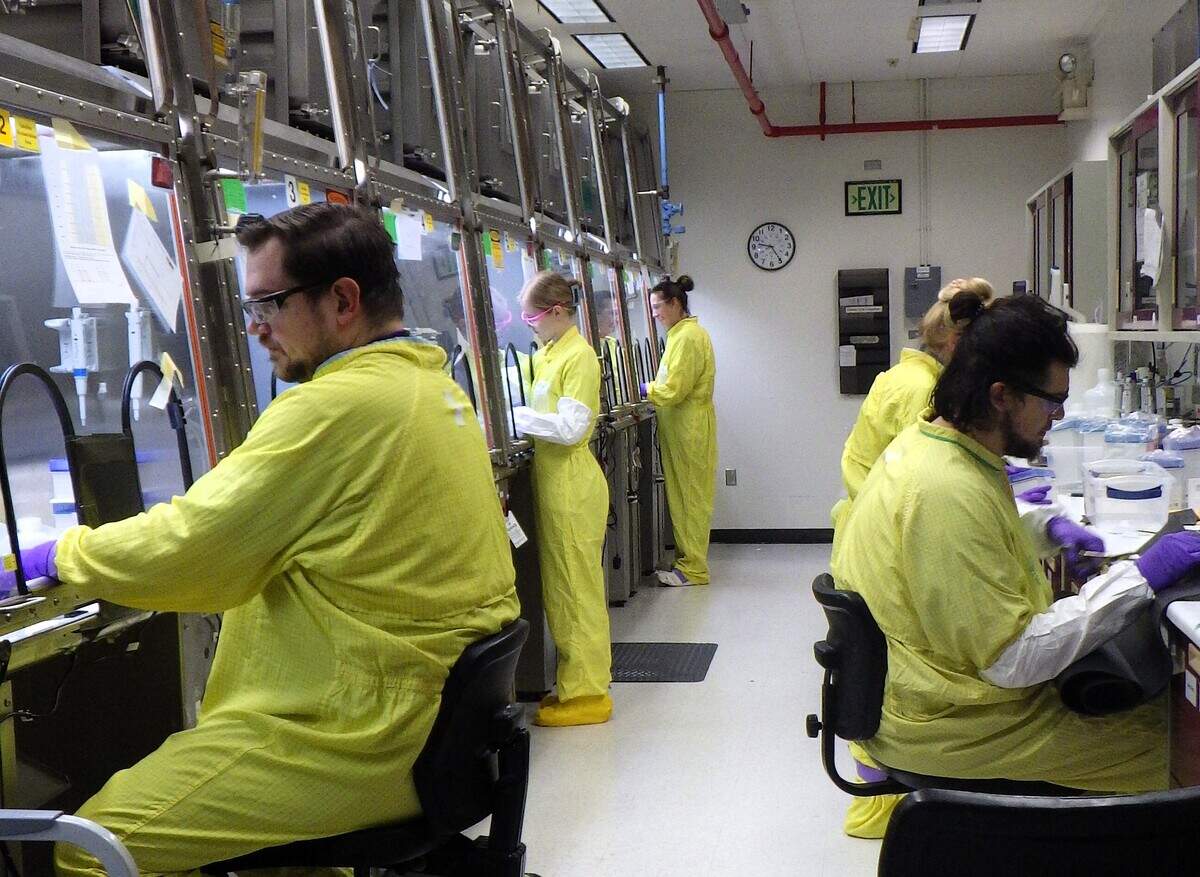
The 70,000-square-foot lab in the center of Hanford has 11 hot cells, where workers for DOE contractor Navarro-ATL operate remote-handling equipment from outside the cells and look through thick, leaded glass to work with radioactive waste samples within the hot cell.
It also has 156 fume hoods and 100 pieces of analytical equipment.
Organic, inorganic and radio-chemistry analyses also are performed on a wide variety of air, liquid, soil and biological samples to support cleanup efforts across the site.
Since Navarro-ATL took over operation of the lab under a DOE contract in early 2021, it has performed about 77,000 analyses and now has about 400 employees.
The lab has had multiple upgrades, including an 18-month project completed in 2024 to replace the Cold War hot cell windows with new windows weighing up to five tons each to improve worker visibility.
.jpg "kimfetrow2022_DSC_2163 (1).jpg")
That project also included renovating outdated laboratory rooms and replacing aging analytical equipment and hot cell manipulator arms to prepare for the start of support for vitrifying tank waste and a four-fold increase in the lab’s workload in 2025.
But not all the improvements are to infrastructure. ATL-Navarro staff also are finding new methods to analyze waste.
”These upgrades aren’t just technical improvements — they deliver more capacity, better precision and greater confidence for decisions that reduce risk,” Hughey said last month.
Science improves, speeds analysis
A major advancement came with the Washington State Department of Ecology’s approval of the “Twister Stir Bar” method.
It uses a magnetic stir bar to absorb organic compounds from liquid waste samples, which are then analyzed to determine which chemicals are present and in what amounts.
Developed by Navarro-ATL chemists, the technique provides more precise identification of complex organic compounds and cuts the time required to separate targeted compounds from a sample from two to three days to just three hours.
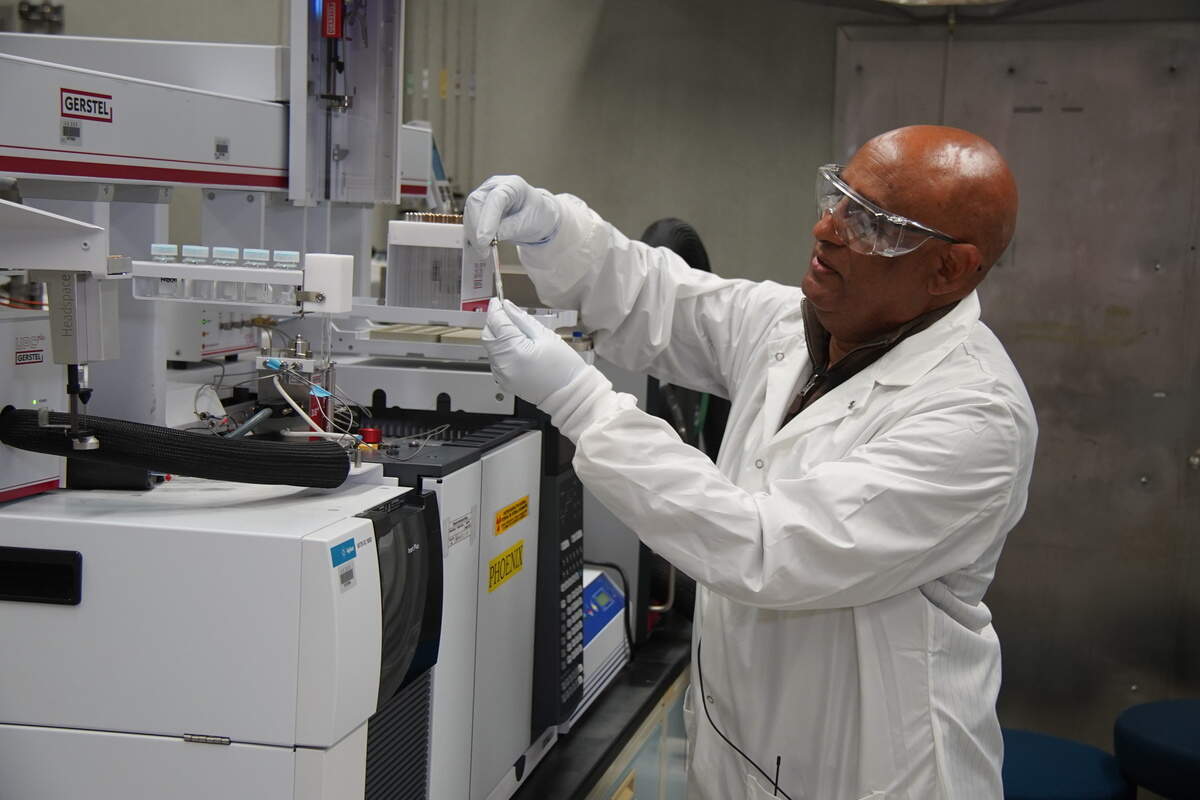
It also reduces the risk of worker radiation exposure and produces less laboratory waste.
“Innovative lab methods like this give our teams greater confidence in the data guiding our fieldwork,” Bang said when the state Department of Ecology approved the method in 2025.
The upgrades and scientific innovation have helped the workforce keep up with the increase in demand for analyses. It also has helped shorten the time from when the lab receives a sample to when it delivers its analytical results by 50% over the past five years, according to DOE.
The average turnaround time for analytical data has been reduced from 180 days to less than 90 days, DOE said.
“You are saving years off the Hanford cleanup mission and billions of dollars for the Hanford cleanup,” Bang told ATL-Navarro employees at the 75th anniversary celebration.