Class sizes would balloon, sports programs gutted without $200M levy, Richland warns
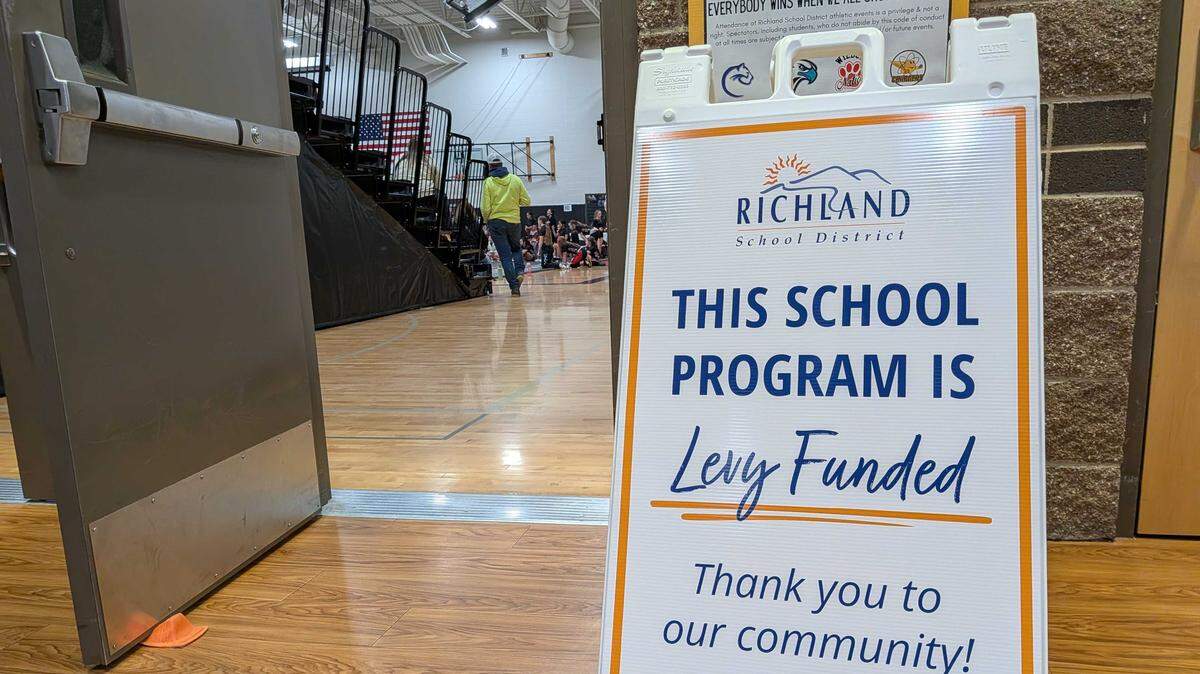
AI-generated summary reviewed by our newsroom.
- Facebook rumors prompted parents to attend Richland levy town halls and ask questions
- District outlined the $203M operations levy and $41M technology levy on Feb. 10 ballot
- Failure of levies would cut about 150 teachers and 160 classified positions
There was a lot of rumor and speculation circulating online about Richland School District’s operations levy, so Tyson Slusarenko decided to get to the bottom of it.
The father of two elementary students drove to Leona Libby Middle School on a school night last week to hear administrators explain how the local tax plays a crucial role in paying for public education.
At the end of a 30-minute presentation, the picture Slusarenko, 40, walked away with was far different from the one he had after reading threads on Facebook.
“I feel like there’s a lot of misinforming and assumptions,” he told the Tri-City Herald. “Because it seems like (the district’s) got their finances under control better, from what it looks like.”
Slusarenko applauded the district for being transparent about its budget woes, and for explaining how variables, such as inflation, have pummeled its finances in recent years.
It’s a high-stakes election for the Tri-Cities school district serving 14,500 students.
Without a levy, the district would have to eliminate about 150 teaching positions, which means class sizes in Richland would grow by five students per class on average. Elementary classrooms would likely see an even larger impact.
The district would also have to make cuts to most school programs.
District-funded athletics and extracurricular activities would be eliminated altogether, after-school clubs would have to be self-sustaining, and student support and instructional staff unfunded by state funding would be eliminated.
Supplies for hands-on learning would also be reduced in exchange for a greater reliance on screen-based education. Field trips and out-of-district travel would be eliminated.
Student electives would be reduced and graduation-required courses would take priority. The district would also freeze adoption of new curriculum.
In addition to teacher reductions, a lack of levy would also require the district to eliminate at least 160 paraeducators, office professionals and other classified positions.
Elimination of several other positions, including assistant principals, athletic directors, security and school resource officers, would also be likely, leading to “less student supervision, less instructional support and less discipline/behavioral support resources,” according to school board documents.
Richland district plans levy town halls
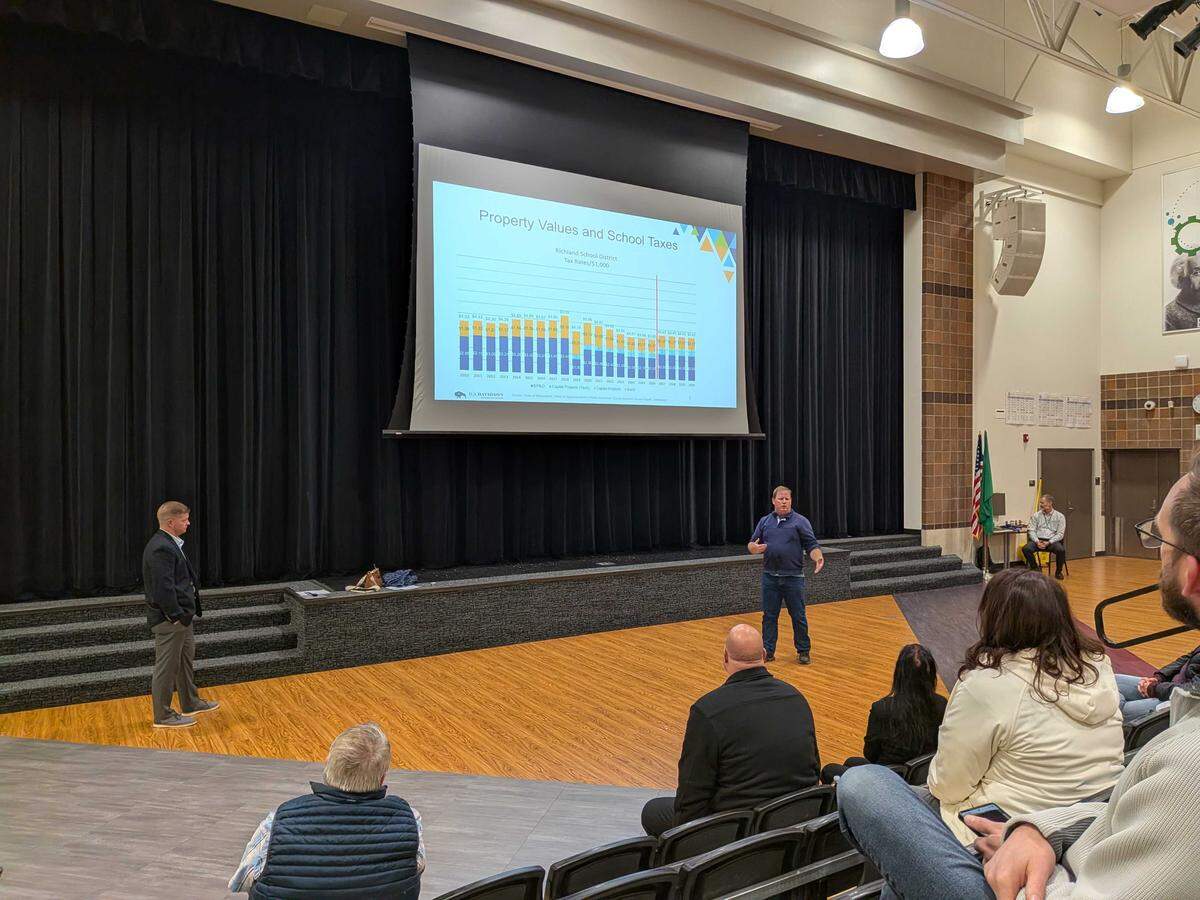
District administrators and school board members are urging Richland and West Richland community members to come out to one of several levy town halls starting next month to learn more.
Dec. 2 was a kickoff for the series of events, which will allow voters to ask questions and get engaged on the issue. Fewer than one-third of registered voters in Benton County turned out for Richland’s last levy vote in 2022.
Town halls will be 6:30 to 8 p.m.
- Monday, Jan. 12, at Orchard Elementary School
- Wednesday, Jan. 21, at Hanford High School
- Thursday, Jan. 29, at Three Rivers HomeLink
- Tuesday, Feb. 3, at Enterprise Middle School
The district hopes to continue to provide quality education to small classes, robust sporting programs and extracurricular activities, and smooth operations with the passage of a four-year, $203 million operations levy on Feb. 10.
It’s also asking voters to pass a separate four-year, $41 million technology improvement levy. Neither measure is a new tax.
Richland’s ‘Mercedes’ education at risk
Pasco and Kennewick school districts also will ask voters to renew operations levies on the February ballot.
While districts are focusing on what these local taxes pay for, Richland has taken an approach to be explicit about what they will have to cut if voters don’t pass it.
Richland board President Katrina Waters said their students receive a “Mercedes” level education compared to what other schools across Washington state offer, but Richland can only continue that with community support.
“Reading, writing and arithmetic is not why kids go to school. Kids go to school because of the AP classes, because of art, because of band, because of sports,” Waters told a sparse room of a dozen community members at the Dec. 2 event.
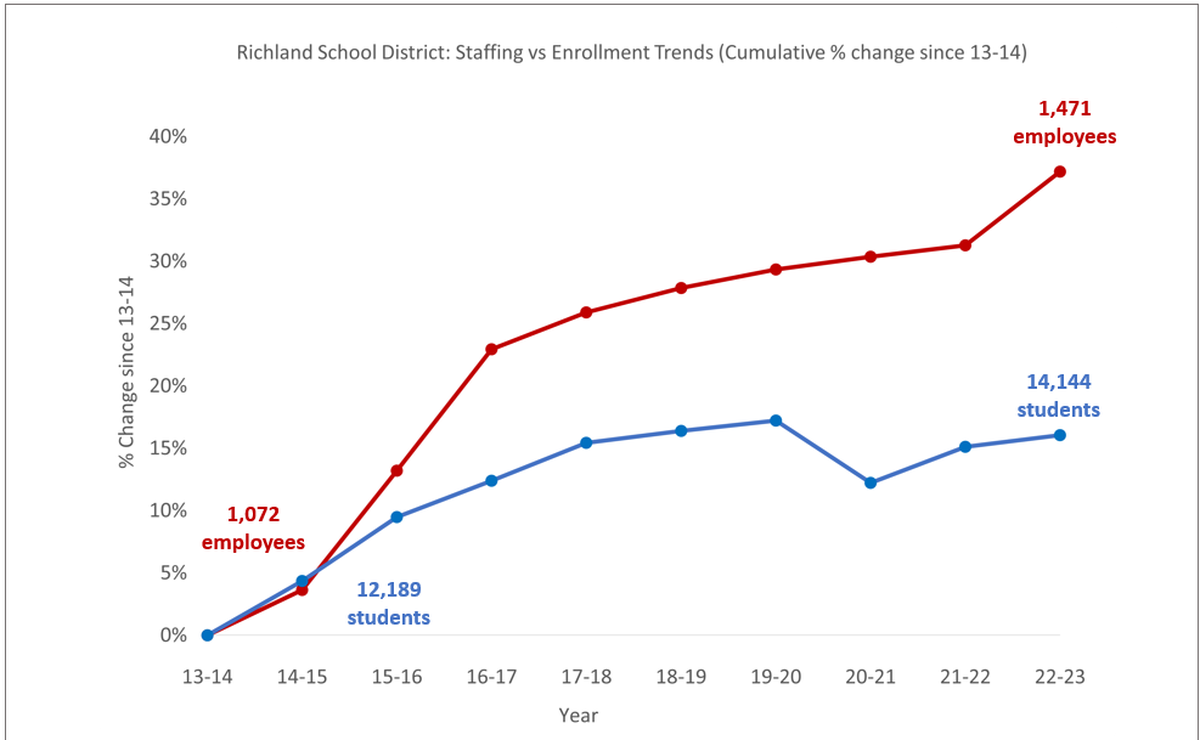
The district serves students in a dozen elementary schools, four middle schools, two high schools and five choice schools. Richland also employs nearly 1,600 full-time classified and teaching positions.
The levy renewal comes at a time when Richland is already tightening its belt on spending.
The school district has trimmed millions from its operations budget in recent school years. That includes a giant restructuring of paraeducators; cuts to administrative positions, nurses and librarians; transportation reductions and cuts to supplies.
This is the first school year in a while that Richland School District is operating in the black. Actual expenditures exceeded revenues by $6.5 million in 2022-23, and again by $1.5 million in 2023-24.
Year-to-date, the district is spending about $5 million less than it was last school year, and about $4 million less than the 2023-24 school year. That equates to a reduction of about $250-320 per student.
Spending came to a head after Richland declined to reduce staffing during the COVID pandemic, when droves of students left the district or delayed public schooling.
Waters said the district will be forced to make some “really, really hard decisions” if the levy fails. Those would pale by comparison to what been cut so far.
“Earlier this year, we had to cut $2.5-3 million and that was painful, because that’s all the extra stuff we want our kids to have. Imagine $38 million in cuts — it’s just devastating for the kids,” she said.
Teachers will also be burdened with more students and fewer available substitutes. Research shows that often leads to higher teacher turnover, more burnout and more experienced teachers leaving the professional altogether.
Washington state only funds up to about $89,000 on the salaries of 550 teachers in Richland schools, said Travis Belisle, the district’s director of financial services. The gap to cover the salaries of senior teachers is filled with levy dollars.
Slusarenko said he’s heard concerns about the levy from community members who have already graduated their children out of Richland schools.
“They had their opportunities, but then why take those opportunities away from the next generation coming through? If we can give them opportunities, you might as well give them a good learning environment,” he said.