Schools aim to convince Tri-Cities voters levies are ‘critical’ for 52,000 kids
AI-generated summary reviewed by our newsroom.
- Tri-City districts seek $568 million in levy renewals to benefit 52,000 students.
- Richland warns of $30 million annual cuts and 310 positions lost if levy fails.
- Voters decide Feb. 10, 2026 special election; levies comes with state matches.
School districts in Kennewick, Pasco and Richland are gearing up to convince voters in February of the urgent need to pass their funding levies.
None are new taxes but, instead, are renewals that benefit more than 52,000 students.
In Richland, school officials weren’t pulling any punches Wednesday night.
“It’s a catastrophic situation for the Richland School District if this levy does not pass,” said School Board Vice President Jill Oldson. “This isn’t a hypothetical situation. This is very, very real.”
Richland schools would be forced to cut about $30 million in annual funding, including nearly 310 teaching and classified positions.
This week, Tri-Cities school officials set the stage for five tax proposals that total a combined half-billion dollars — about $568 million between 2027 and 2030 — that pay for crucial education, technology, athletics and safety services.
In Pasco, even with renewal of the operations levy, the district expects to continue its spending reductions over the coming years.
And Richland’s new levy will not reverse the sweeping cuts it’s needed to implement over the past year.
Still, school board members underscored at meetings this week the value of passing the measures in order to continue providing quality education, athletics programs and smooth operation. They argued they are frugal, fair requests.
In general, levies pay for the gap between what Washington state pays public schools in per-pupil apportionment and other programs, and what they actually need to provide students a holistic education.
Tri-City school district officials say they have been reeling from the impacts of inflation, higher material costs and labor costs, ballooned insurance premiums and stagnant state revenue.
Richland schools
In Richland, state matching dollars associated with the levy will help to rebuild the district’s slimmed-down budget reserves.
The cuts outline at this week’s meeting would result in laying off 150 teachers, administrators and other certificated positions, as well as up to 160 paraeducators, office staff and other classified positions.
Richland is more dependent on local taxes because it receives less state and federal revenue than its larger Tri-City neighbors, explained Superintendent Shelley Redinger.
“This ensures students can continue to access educational experiences, activities, and supports that our community expects. We remain focused on strengthening our systems and practices to support financial stability and that we are committed to transparency with our community about the use of levy dollars,” she said.
Board member Rick Jansons went a bit further, saying the state is not fully funding public education. Their district, as well as most around the state, shelters the burden of paying millions of dollars in programs the state requires but does not pay for.
“They’re failing in their constitutional duty... So we have to rely on our local communities,” Jansons said.
Pasco schools
The Pasco School Board chose to run a $154 million request that will not curb a multi-year plan to cut vacant positions and spend more of its general fund reserves.
The board considered asking for a higher amount, but declined.
“These are dollars that we need to maintain the programs we have. This isn’t about adding new programs or expanding programs, this is really just about maintaining what we have,” said Pasco Superintendent Michelle Whitney.
She called the levy “critical funding.”
Its levy and state match account for about 10% of Pasco’s general budget and pays for nearly 300 full-time equivalent staff, including teachers, that are not funded by the state.
Overall, the levy pays for a portion of most teachers’ salaries in the district.
Pasco School Board member John Kennedy called their ask a “very reasonable, sustainable approach” that “respects the taxpayers while also providing the funds necessary to provide the highest quality of instruction for our students.”
Kennewick schools
Kennewick Superintendent Lance Hansen said levies help them maintain “the strong foundation our community has built for Kennewick students.”
“They ensure we can continue providing the programs, safety measures, and technology our schools depend on every day. Levies bridge the gap in state funding and directly invest in student success. With the continued support of our community, we can ensure Kennewick schools remain safe and graduate students well-prepared for success in post-secondary education, work, and life,” Hansen said in a provided statement.
Kennewick voters dealt their school district a double levy failure in 2023, and it was forced to go without local levy money the following year.
School districts by law only have two shots in a calendar year to pass a levy. If they fail to do so, then schools go without local funding.
Still, Kennewick’s finances have remained in solid shape. The district was able to weather the gap with one-time COVID dollars and its general fund savings.
Feb. 10 election
It’s the first time since 2022 that all three Tri-City districts have had measures run during the same election.
Both Pasco and Richland had to curb millions of dollars worth of spending last school year in order to avoid budget crises. Both have plans to right the ship on spending, and levy renewals are a key factor in being able to do that.
Tri-City districts have been discussing levy renewals on and off for about a year now. Their current levies will expire at the end of 2026.
Pasco and Kennewick approved their ballot language and levy amounts on Wednesday. Richland approved its amount in September, but Wednesday’s meeting focused on the impacts if there is a double failure.
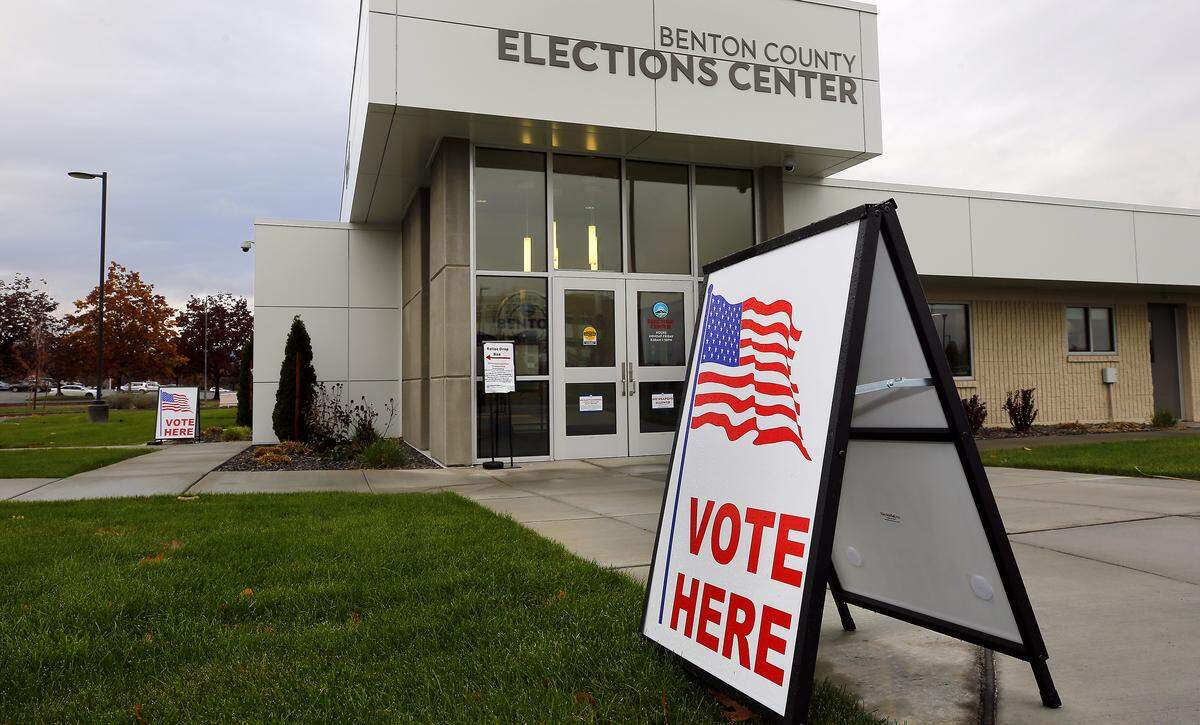
Dec. 12 is the deadline for school districts to submit their language for measures to the auditor’s office for the Feb. 10 ballot.
Ballots for that special election will be mailed out to all registered voters by Jan. 23. School district administrators are already out in the community giving presentations.
How much are Tri-City districts asking for?
In addition to these figures, Washington state will also contribute millions to Tri-City schools through the Local Effort Assistance state match program, though the exact amount is unclear.
Kennewick will ask for:
- A four-year, $128.5 million education programs and operations levy for student learning and staffing, operations and maintenance, security, health and safety, transportation operations, instructional supports, sports and extracurriculars. The estimated tax rate is about $1.71 to $1.74 per $1,000 of assessed property value.
- A four-year, $42.1 million safety, security and technology levy for safety and security improvements, instructional technology, computer and software upgrades, and training. The estimated tax rate is about 50 cents to 61 cents per $1,000 assessed value.
Pasco will ask for:
- A four-year, $153.7 million education programs and operations levy for technology, curricula, athletics, extracurricular activities, music, counselors, nurses, transportation and school resource officers. The estimated tax rate is about $2.17 per $1,000 of assessed value.
Richland will ask for:
- A four-year, $203.3 million education programs and operations levy for student learning, Advanced Placement classes, arts, electives, small classes, athletics, extracurricular activities, field trips, new curricula and school operations. The estimated tax rate is about $2.50 per $1,000 of assessed value.
- A four-year, $40.6 million technology improvement levy for online curricula and instructional tools, Chromebook replacements, classroom technology, online attendance and student progress monitoring, security systems and internet access. The estimated tax rate is about 50 cents per $1,000 of assessed value.