Could putting more low-income Pasco students in one high school harm their learning?
Plans to increase the density of low-income students at Pasco High School could lead to lower test scores, more behavioral struggles, higher dropout rates and more stigma over poverty, shows national research.
Decades of research points to better academic and social outcomes for poorer students when they attend schools with less concentrations of poverty and more diversity.
Last week the Pasco School Board unveiled three options to redraw its high school attendance boundaries.
Two of those plans would increase the number of students who come from low-income families by 10 points up to 86%.
Ary Amerikaner, the co-founder and executive director of Brown’s Promise, an initiative to combat racial segregation and resource inequities in schools, said she found low-income students are two- to three-times more likely to be proficient in math and reading when they attended more affluent suburban schools.
“A low-income student benefits from being in a less-poor school,” Amerikaner said at the annual Education Writers Association National Seminar in Las Vegas.
Pasco school boundaries
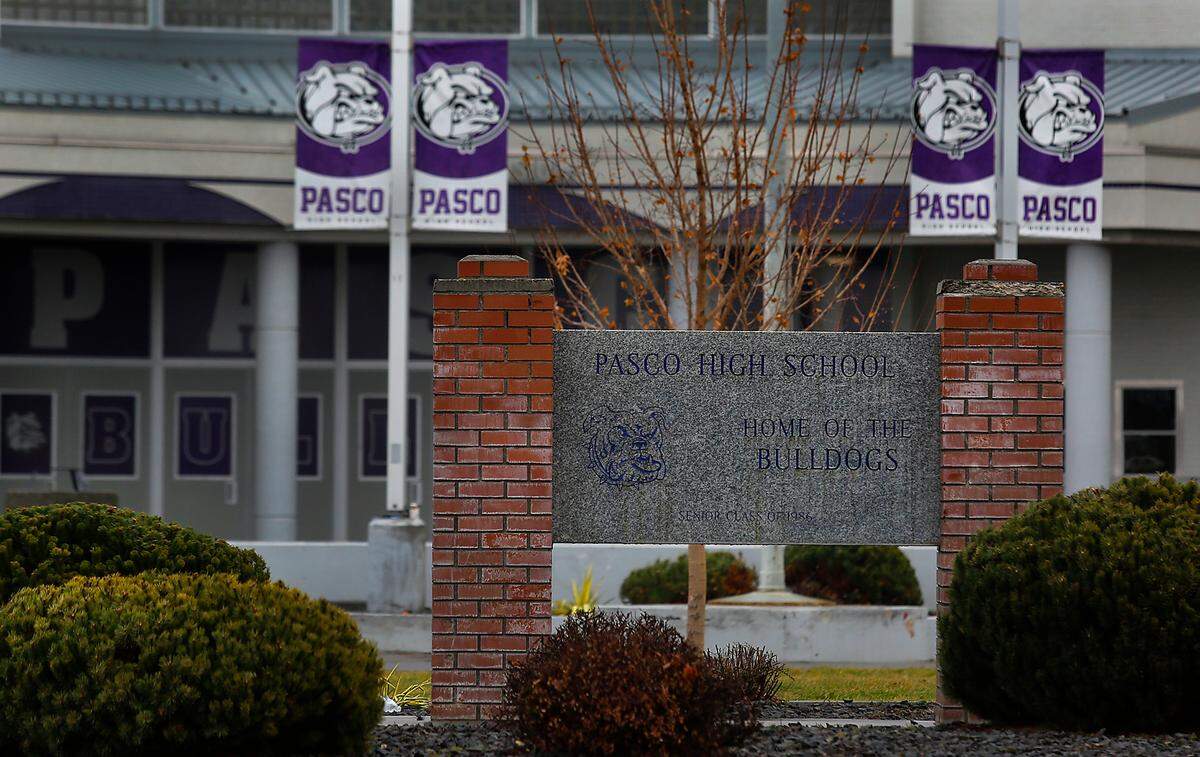
The Pasco School Board will decide later this month how to redraw high school attendance lines to include its third comprehensive high school.
Sageview High School, under construction at 6091 Burns Road, will open to students in fall 2025.
It will join Pasco High School and Chiawana High School, the state’s seventh and first largest schools by enrollment, in serving the district’s 6,200 high school students.
A look at leading research by the Tri-City Herald shows adjusting the boundaries is a decision that can have ramifications on students and families — both positive and negative.
Chiawana opened to students and teachers in fall 2009, but the district’s work to redraw the boundaries started several years earlier.
It formed a boundary review committee, similar in scope to the one currently determining the Sageview boundaries, to establish guiding principles, gather community input, study maps and make revisions.
The committee that finalized the Chiawana-Pasco boundaries in 2007 was mostly interested in creating two schools of similar sizes, demographics and poverty levels, said Sarah Thornton, the district’s assistant superintendent of legal services.
They also wanted to ensure both schools had room to grow.
Busing students
At that time, parents and families were less concerned about living too far from the high school and how long it would take to travel to school than they were interested in ensuring both schools were as equal as possible with class offerings, extracurricular programs and similar learning outcomes.
For 15 years, students living in poorer neighborhoods in east Pasco, as well as south of West Lewis Street, have been bused across town to attend Chiawana on the west side of the city.
Thornton said families today are much more cognizant of and concerned about high school travel times, and some school board members worry about opportunities for students who live miles away from their school. More families are supporting living closer to their school.
Back in the 2000s, the cost and time difference to bus students from east Pasco to Chiawana, as opposed to Pasco High, was so minuscule that proximity wasn’t a concern when drafting the new high school boundaries. Highway 12 will provide easy access to Road 68 and the new high school.
But several challenges — including more population growth and a COVID-caused bus driver shortage — have made sustaining those routes more difficult.
The district’s boundary input team for Sageview has used several guiding principles — including proximity, demographics, feeder schools, enrollment size, safety and transportation — to lead its work in drafting and revising scenario maps.
Three final options were presented at the May 28 school board meeting: Modified Scenario A, Scenario D and Scenario F.
About a dozen Pasco High School families and students spoke out at the meeting against Scenarios A and D, and also urged the school board to adopt Scenario F, the option that would keep the school’s racial makeup and share of low-income students about the same as it already is.
Here is what the racial makeup of each school would look like under the three proposals.
Pasco High School
- Modified Scenario A: 95% Hispanic, 3% White, 2% other. Low income: 86%.
- Scenario D: 93% Hispanic, 3% White, 4% other. Low income: 86%.
- Scenario F: 85% Hispanic, 11% White, 4% other. Low income: 75%.
Chiawana High School
- Modified Scenario A: 68% Hispanic, 25% White, 7% other. Low income: 57%.
- Scenario D: 63% Hispanic, 30% White, 7% other. Low income: 51%.
- Scenario F: 72% Hispanic, 21% White, 7% other. Low income: 61%.
Sageview High School
- Modified Scenario A: 56% Hispanic, 35% White, 9% other. Low income: 49%.
- Scenario D: 62% Hispanic, 31% White, 7% other. Low income: 54%.
- Scenario F: 62% Hispanic, 31% White, 7% other. Low income: 54%.
Economically integrated schools
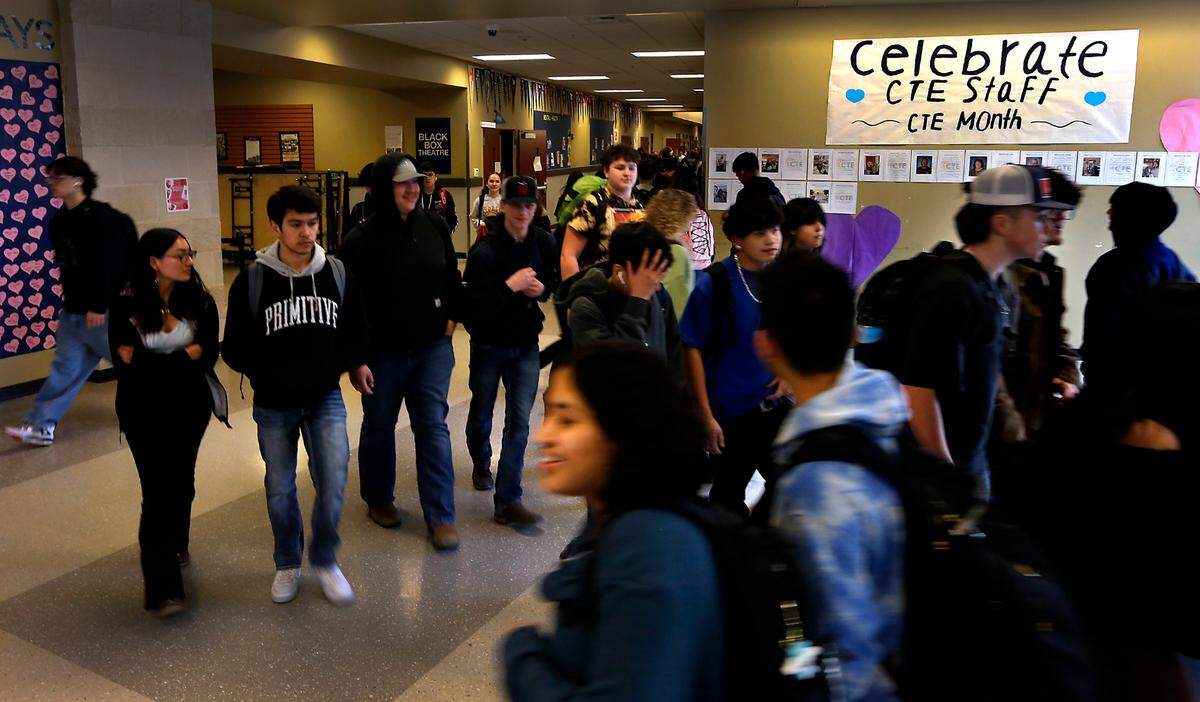
Schools across the U.S. remain more segregated than they have been in the previous two decades due to high income disparities.
Rising poverty since the early 2000s has partly reversed desegregation efforts at the cornerstone of the 1980s and 1990s in the wake of the historic U.S. Supreme Court case on segregation, Brown v. Board of Education.
As a result more than one-third of all Black and Latino students attend schools that are more than 90% non-white, according to The Century Foundation, a nonpartisan progressive think tank.
Only about 10% — or more than 4 million — students in the U.S. are enrolled in school districts or charter schools that have intentionally integrated.
Substantial disparities in math and reading outcomes exist among some of the nation’s richest and poorest schools, but researchers in recent years — since the COVID pandemic and Great Recession — haven’t come to a consensus on whether that gap is closing or widening.
The Alliance for Resource Equity, a national nonprofit that partners with school districts to improve resource availability for students, says school diversity is associated with improved critical thinking, problem solving and creativity among students.
Fourth-grade students from low-income families attending affluent schools scored about two years of learning ahead of their peers in high-poverty schools, data from the 2011 National Assessment of Educational Progress shows.
Similarly, poor students in mixed-income schools showed 30% more growth in test scores over their four years in high school than peers in schools with concentrated poverty, according to The Century Foundation.
Students in integrated income schools are also more likely to enroll in college, less likely to drop out and are more likely to have a high level of intellectual self-confidence.
“Children who attended integrated schools had higher earnings as adults, had improved health outcomes and were less likely to be incarcerated,” says a report by The Century Foundation.
Anjani Kapadia, a graduate of John Hopkins University, wrote in a 2017 research review for the Gettysburg Social Sciences Review that low-income students attending affluent schools benefit from a more experienced teacher workforce and a more actively engaged learning environment.
And while higher-income students don’t on average see the academic gains low-income students do, they make up for it by developing greater cultural awareness.
“Students in socioeconomically homogeneous schools miss out on opportunities to further develop critical thinking skills, empathy and a sense of civic engagement that is essential in today’s diversifying work force and globalizing economy,” she writes.
Impoverished schools are also subject to more contacts with police, according to studies for the National Institute of Justice.