
Verdict reached in brutal murder of beloved driver on a Pasco school bus
A jury found a 38-year-old Richland man was sane when he stabbed and killed a Pasco bus driver outside a school four years ago.
It took the jurors about a day to return the guilty verdict on one count of first-degree murder for Joshua D. Davis.
They also determined that he used a deadly weapon, displayed deliberate cruelty and affected the children on the bus with his actions.
Davis had pleaded innocent to the charge by reason of insanity to killing Richard “Dick” Lenhart, 72, on the bus outside Longfellow Elementary School on Sept. 24, 2021.
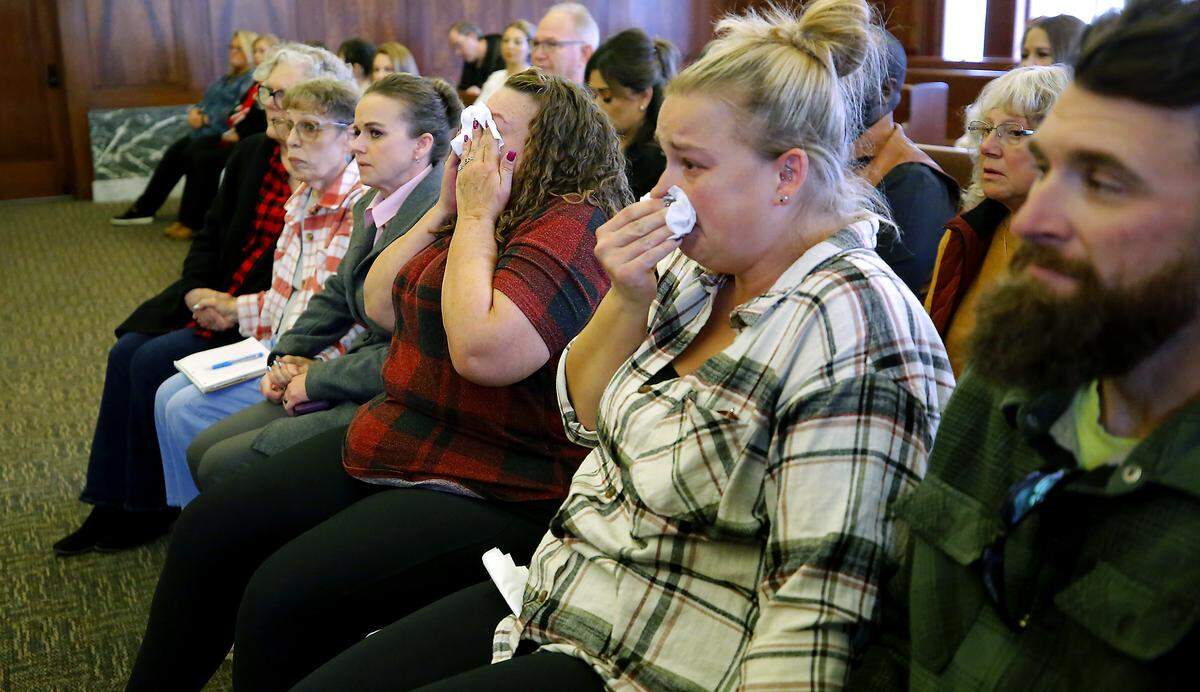
Lenhart’s widow, who has attended every day of the three-week trial with her daughters, watched and mouthed the word, “Yes” as the jurors were asked if that was their verdict.
“I’m just grateful the jury was able to find the right verdict — murder in the first degree,” she told the Tri-City Herald while her family clung to each other and cried.
His defense team promised to appeal the verdict.
A sentencing hearing has not been set yet. The normal sentencing range in this case would be 20 to 26 years in prison. It’s not clear whether any aggravating circumstances will impact that range.
The more than three-week long trial revolved around the opinions of two psychologists — prosecution expert Richard Yocum and Alexander Patterson for the defense. They agreed that Davis suffered from schizophrenia, but had different opinions about the impact on him at the time of the murder.
Yocum told jurors that Davis’s actions immediately before and after the stabbing showed a man who understood what he was doing and that it was wrong.
Patterson argued that years of undiagnosed schizophrenia left Davis unable to tell the difference between wrong and right.
Murder on the bus
Franklin County Prosecutor Shawn Sant told the jurors that the videos taken before, during and after the stabbing show a man who planned on murdering someone.
Sometime before Davis left his home to go to the school, he left a note for his roommate which started, “If you are reading this, then I’ve murdered children.”
But Sant argued even more importantly, the note provided instructions for taking care of the two kittens he left behind.
“It was a clear indication that he wasn’t planning on coming back,” Sant said.
The afternoon of the murder, Davis drove the 12 miles to the school he had once worked at in his roommate’s Nissan pickup. While he brought his phone and wallet with him, he left them behind when he got out of the truck.
He took a surgical-type mask and a knife with him when he approached the bus. Sant showed jurors the moments before and after the murder where Davis got on board the bus, and asked if it was going to Road 100. Then he paused and turned away before taking the knife from his pocket.
Then after the brutal stabbing, the bus started moving, and Davis jumped off before it ended up in some bushes and against a tree.
Once he was outside, he told a crossing guard that he was the “assailant.”
His conversations with police were organized, and he appeared to understand what he did would be viewed badly by other people.
“You’ve got figure out what was going through the mind of the defendant,” Sant said. “So Dr. Yocum says, ‘You’ve got to look at the video. You’ve got to look at the available witness interactions.’”
Lengthy Mental Illness
Defense attorney Sheri Oertel argued that Davis’ lengthy mental illness made it impossible for him to understand right from wrong.
“What happened was a tragedy in two ways. First for Mr. Lenhart whose tragic death is awful and shouldn’t have occurred, and secondly for our client Joshua Davis, who starting at a younger age started having symptoms that nobody recognized as mental health problems.”
Davis remained undiagnosed and unmedicated for years, which left him susceptible to believe his delusions were true, she said.
Patterson had testified that the longer schizophrenia continues to be untreated, the harder it is to get people to accept that they have the condition.
Oertel argued the moments of clarity during and after the attack on the bus were because Davis was suppressing his symptoms.
She also argued that prosecutors didn’t prove that Davis premeditated the murder, though she said he did kill Lenhart. She said there was no piece of evidence showing that he targeted the driver, or that he had the plan before he got on the bus.
This story was originally published November 20, 2025 at 1:57 PM.