
Richland WinCo shooter who pleaded insanity will be allowed unsupervised daytrips
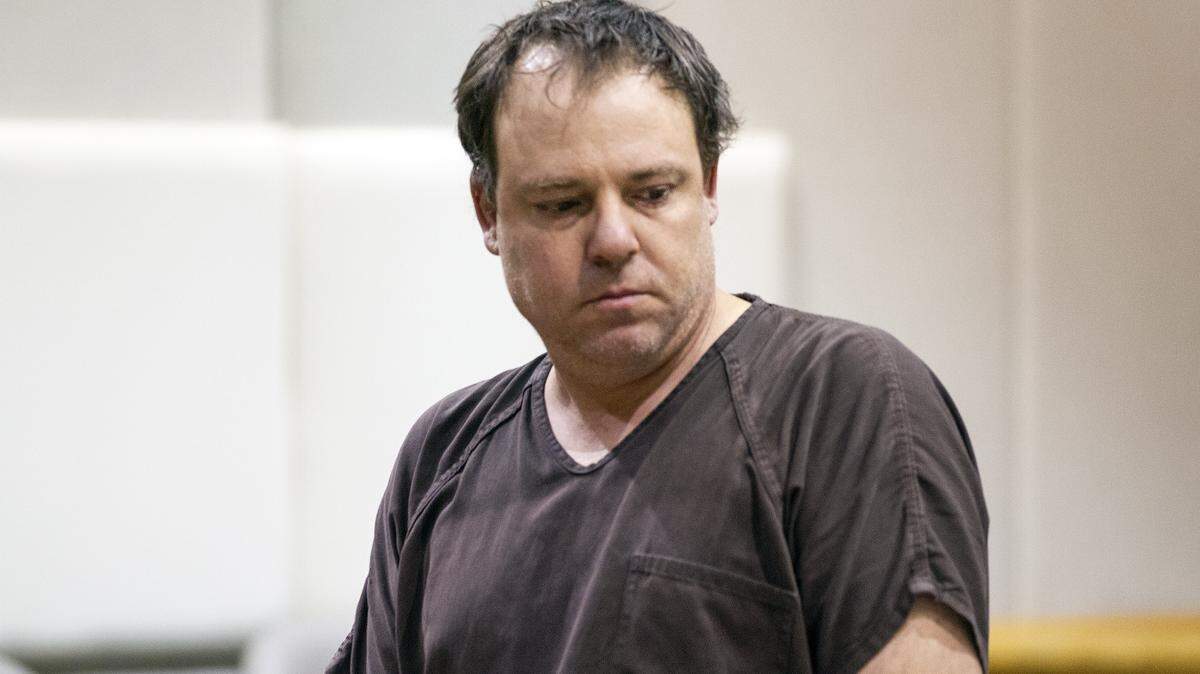
Five years ago, Matthew McQuin walked into a Richland grocery store, put a gun to the head of a woman he didn’t know and pulled the trigger twice.
The now 50-year-old thought the stranger — a veterinarian who stopped at the store — looked guilty of trying to poison him.
Miraculously she survived.
McQuin, who’d suffered from schizophrenia for years was found not guilty of attempted murder by reason of insanity. The verdict could have left him in a Washington state psychiatric hospital for the rest of his life.
Instead, after three years of therapy and medications, state mental health officials believe it’s safe for McQuin to start making his first unsupervised trips out of Eastern State Hospital.
Psychologists say McQuin has successfully managed his mental illness during trips outside with staff. Now, officials believe he can use those skills for solo ventures from the hospital to get treatment at other Spokane-area facilities.
His day trips could be the first steps before going to a group home and eventually his full release.
Benton County Superior Court Commissioner Bronson Brown signed off recently on allowing McQuin to make the trips outside the facility. His decision was based on a 23-page Eastern Hospital report obtained by the Herald.
Conditional release
Tyler Hemstreet with the Department of Social and Health Services said he isn’t able to speak specifically about McQuin’s case but explained that state hospitals can’t keep patients in custody based just on what they did.
“The law protects persons with mental illness by requiring that the person be released when they no longer meet the commitment criteria,” he told the Herald.
“This means they must be released when they have reached a level of stability where they are able to meet their health and safety needs, have cognitive and volitional control, and can remain safe toward others at the current level of stability,” he said.
Benton County Deputy Prosecutor Terry Bloor told the Herald that any release from a Washington state mental hospital tends to follow a series of steps.
Normally, it starts with escorted trips around the grounds of the facility. Then they can be by themselves on the hospital grounds.
Eventually, patients can take escorted trips into the community, then unsupervised ventures into a community.
Finally, they move into monitored settings, like group homes. This is normally the last step before full release.
A judge must sign off on each level and requires a full report by the state, including recommendations by state hospital psychologists.
All steps are reviewed by a board of professional staff, called the Risk Review Board, to determine whether the patient can safely transition to the next step, Hemstreet said.
Before WinCo
Before his attack at WinCo, McQuin had suffered from schizophrenia for years. He was prescribed an anti-psychotic medication and a mood stabilizer by the Walla Walla Veterans Affairs facility, according to a 2019 report from R. Cory Fanto.
But McQuin believed his condition had improved and he’d stopped taking his medication for about six months.
He later told evaluators he was fine until two days before the shooting.
That’s when he saw a “criminal woman” that he had been set up with at a Walmart. He couldn’t sleep that night and the next day kept hearing rocks hitting the side of his trailer in Hermiston.
“He felt that he was breathing in some type of chemical administered by his persecutors,” he told the evaluator. “He knew he had been exposed to a chemical because he was tired and anxious.”
He drove to the Tri-Cities and stayed in a Motel 6 because he was nervous, but found he wasn’t able to sleep. He told the evaluator that he continued to notice others ‘messing with me,’ by making noises or walking past his hotel door.
He went back home the next morning and straight to the Hermiston police station, and told them that something was wrong and then returned home.
His paranoia continued. He later told the evaluator he saw the same car twice, saying he “knows those people.” He saw another persecutor on a motorcycle.
“He was splashed by a car in Umatilla, guessing he may have been splashed with something to ‘calm me down.’ He wrote 911 on his body in case he was found dead.
After staying at home for a while, he returned to the Tri-Cities to spend another night.
That time he stopped by the Richland Police Department and told them he had been poisoned. He was told to go to a hospital, but didn’t go into Kadlec Regional Medical Center because he believed he saw the man with the motorcycle from earlier.
That’s when he went to the WinCo store a mile from the police station to be around other people.
WinCo shooting
Jenna Kline didn’t know McQuin, when she went to the Richland grocery store. The veterinarian had just returned home from a business trip, when she went shopping on the evening of July 30, 2018.
She wandered around the store for about 15 minutes before McQuin came in, according to security video from the store.
He walked around without a shopping cart or anything in his hands. He stopped just once in the liquor section. The two cross paths a couple of times, but neither of them pay attention to the other one.
After a few minutes, he leaves without buying anything. He pauses in front of the store, then walks back inside seconds later, according to the video. This time they cross paths as she walks by the bakery tables, and McQuin focuses on her.
She didn’t seem to notice him when he stopped.
He told state psychologists that once he was inside the store he was “hit” with more chemicals and could hardly stand up. At that point, he looked at Kline and said, “You look guilty.”
He tried to shoot her once, but the gun didn’t work. His second attempt worked but then the gun jammed on the third shot.
Kline escaped the shooting in miraculous fashion, according to doctors at the time. The bulled wedged between her skin and skull.
According to public records, she stayed in the Tri-Cities following the shooting.
Managing his illness
After years of treatment, McQuin is learning how to control his delusions of persecution, according to the Eastern State Hospital report. The Risk Review Board found that the daily outings would not present a danger to him or the community.
He still believes he has been persecuted in the past, but they aren’t impacting his ability to function, according the Eastern State Hospital Report. He doesn’t seem to be creating new delusions.
The risk for McQuin is that he might not recognize his paranoid or delusional thinking. He also might be afraid that admitting to those beliefs might signal a setback.
The report calls on treatment staff to monitor him closely, and question him about his thoughts and feelings.
“A mitigating strategy for risk will be to allow contact with the community in a gradual and step-wise fashion,” the report said. “The recurrence of psychosis remains of concern as Mr. McQuin gains increased privileges and returns to the community.”
As part of his treatment, he’s gone on trips out of the facility while accompanied by staff. On those trips, he’s dealt with people who could potentially cause him stress and to relapse into delusions. He’s been able to recognize that and address it, according to the report.
The state psychologists have also said McQuin needs to expand his social support.
According to plans he’s developed with the help of Eastern State Hospital staff, he wants to attend substance use treatment at a Spokane facility, explore going to therapy groups offered through Veterans Affairs and take part in some recreational activities.
McQuin is an army veteran, but his mental illness has not been considered service related.
Safeguards
While McQuin is being allowed to make unaccompanied trips out of the facility, there are a lot of requirements he needs to meet, according to the court order authorizing the day trips.
He has to fully participate in treatment, as well as come up with a written form explaining what he will be doing once he leaves the hospital. Hospital staff need to sign off on them.
Police agencies will be alerted to him leaving the hospital 30 days before any of the trips. In addition, his treatment team and charge nurse will assess him three days before any of the trips.
He also can’t have any alcohol or drugs, go into a bar, leave the state or drive a car.
In addition, if the prosecutor, secretary of social and health services or a judge feels that he is not following the terms, a hearing can be scheduled to revoke the permission to leave.
This story was originally published October 9, 2023 at 2:16 PM.