
Eastern WA dam spill for salmon could increase NW blackout risk this summer
AI-generated summary reviewed by our newsroom.
- Public Power Council says increased river spill raises blackout risk this summer.
- Council joins lawsuit’s federal defendants to ask for a stay.
- The last serious threat of blackouts in the Tri-Cities was during a June 2021 heatwave.
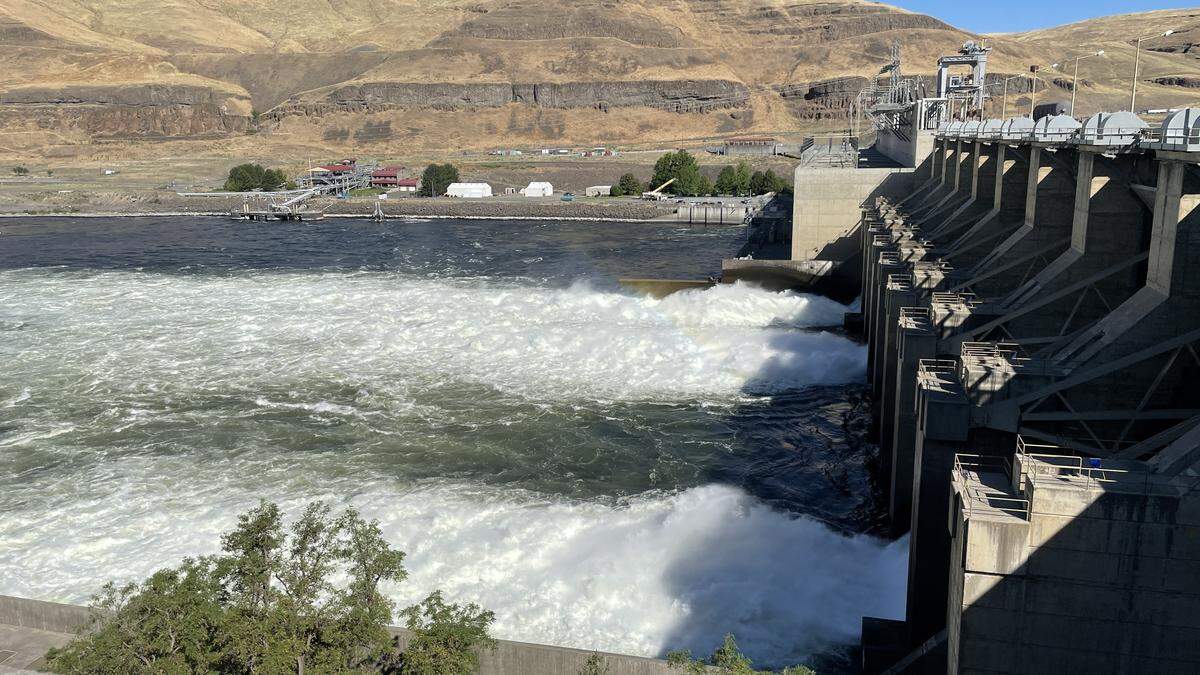
The risk of power blackouts this summer is increased as more spill has been ordered over federal Columbia and Snake river dams, according to the Public Power Council.
It has joined federal defendants in a decades-long lawsuit to challenge the approval of a federal court injunction ordering more water be spilled over federal Columbia and Snake river dams rather than being used to spin hydropower turbines to produce electricity.
The increased spill is intended to help endangered salmon and steelhead as the lawsuit continues.
But the ruling increases the risk of power blackouts while providing negligible benefits for salmon survival during the hottest part of the summer, says the Public Power Council in a filing with the 9th Circuit Court of Appeals.
The Public Power Council represents more than 100 consumer-owned, non-profit electric utilities in Washington, Oregon, Idaho and parts of Montana, Wyoming and Nevada.
“We are setting ourselves up for a summer of close calls — and that’s in a best-case scenario,” said Scott Simms, executive director of the Public Power Council.
The council points out that the mountain snowpack that melts and feeds rivers is far below normal this spring and that a hotter than usual summer is forecast.
Low snowpacks will reduce the water supply for hydro generation and an anticipated hotter than usual summer could drive up electricity demand for cooling, according to the council.
It is calling for the ruling to be halted or “stayed.”
“Put more starkly, the injunction risks more people dying from air conditioning being cut off when needed, from essential medical devices shutting down due to the power going out, from serious traffic accidents when stoplights stop working — all clearly irreparable but distinctly avoidable if the preliminary injunction is stayed,” according to the court document.
August dam spill at issue
August is a particularly risky month as electricity demand is high and the water reservoirs are often depleted, said the court document.
At the same time, fish passage is low so impacts to power from increased spill would be significant, but impacts to fish would be insignificant, the court document said.
It also made the point that the Resilient Columbia Basin Agreement negotiated by the Biden administration with plaintiffs in the lawsuit agreed to allow the hydroelectric dams to operate in August with reduce spill levels for the next decade.
However, the Trump administration withdrew from the agreement and plaintiffs now want the August spill, according to a court document.
The August spill is “an example of why the preliminary injunction is not necessary to protect threatened fish species, and a stay is appropriate,” the Public Power Council argued in a court document.
The Tri-Cities came under the threat of rolling blackouts during a heat wave in late June 2021 that caused record demand for electricity in the Northwest. Local utilities warned customers to be prepared for them.
The power supply remained online in the Tri-Cities, but thousands of Spokane-area customers of Avista utilities lost power periodically over two days.
The Public Power Council said that while it is calling for a halt to the spill ruling, it is committed to working toward solutions that support both fish recovery and a reliable and affordable power system.
This story was originally published April 21, 2026 at 4:59 PM.