Property assessments are out. Why some Tri-Cities homeowners are surprised
AI-generated summary reviewed by our newsroom.
- Tri-Cities enters buyer’s market after decade-long seller dominance ends
- Changes on this year’s mailers reflect 2024 sales trends
- Homeowners can appeal assessments; accurate evidence boosts appeal success
Many Tri-Cities homeowners got a bit of a shock when they received their change of value cards in the mail recently.
Unlike in recent years when home values have seen uncomfortably large jumps, many home values in the area actually went down.
It’s a welcome change for tax bills after seeing property values spike since the COVID-19 pandemic.
One south Kennewick home went from an assessed value of $395,000 to $437,000 last year, but this year’s card showed their value slide to $416,000.
The 2025 assessment changes are based on home values through the end of 2024. Current market trends would be reflected on next year’s assessment.
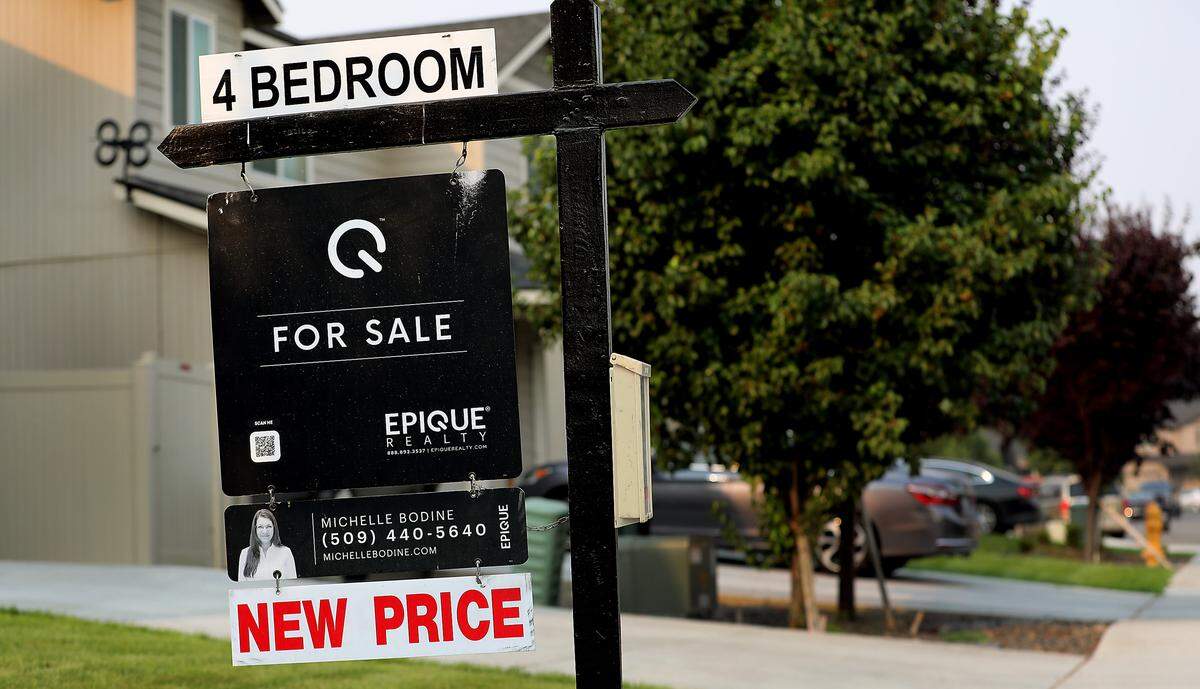
The reason many homeowners are seeing some relief is that the Tri-Cities has begun to move into a buyer’s market after more than a decade in a market that favored sellers.
Matt Heuer, government affairs director for the Tri-City Association of Realtors, told the Herald in an email that their data shows that the local housing market has finally shifted.
It’s now entered a buyer’s market after a 10-year run that favored sellers, which was kicked into high gear by low interest rates in 2022.
That doesn’t mean every home has dropped in value, though.
“A typical seller’s market lasts three to five years. We entered one around 2014 and it built gradually, with inventory tightening and prices climbing,” Heuer said. “The pandemic supercharged it as remote work and demand for more space pushed prices sharply higher. The 2024 assessments reflected the tail end of that unusually long seller’s market.”
Housing inventory in the Tri-Cities climbed above 1,000 units on the market in June 2025 for the first time since 2014.
Currently, there are 1,224 active listings. About 37% are under contract, indicating buyers are holding more power in negotiations.
A variety of factors has led to the market shift.

Builders often cite 1,200 units on the market as the level needed to achieve a balanced market. While they’ve reached that lofty number, factors outside of their control also are having an impact.
“Now, higher interest rates, tariffs, state tax changes, layoffs, and general economic uncertainty are cooling buyer demand,” Heuer said.
“Sellers are offering concessions or lowering price expectations to get contracts signed. The result is a clear pivot toward buyers. Assessments are beginning to step down, not because of any mistake on the county’s part, but because the lagging measurement is finally catching up to a shifting market cycle,” he said.
It’s important to note that a change in assessed value does not mean your property tax will go up or down by that percentage.

How do the counties find a number?
Differences in the home type, neighborhoods, and other factors can impact which way a home’s change of value is trending. Often, when homeowners are comparing assessments, they aren’t considering those differences.
The biggest factor in determining the assessed value of a home is the market rate, meaning the value it could sell for based on what homes in your area have sold for.
Your home can increase in value through remodeling and renovation or drop in value if damaged in a fire or natural disaster.
Changes in growth in your area also can cause your assessed value to grow or decrease. If your neighborhood suddenly finds itself next to a hot new development, you might expect to see it lift your property’s value as well.
In Washington, counties are divided into zones, and one zone per year will have physical assessments done by county employees.
All zones receive updated assessments every year, but the one in-cycle will have records such as photos updated.
Updates in the zone physically inspected each year do not impact other zones. An area is considered “conforming” to the Department of Revenue’s Real Property Ratio if assessed values fall between 90% and 110% of prior year market values.
It’s important to remember that assessed values trail actual sales because of a Jan. 1 cutoff, and may not always reflect current trends happening with market values.
So while interest rates have come down since hitting a recent peak of nearly 8% in late 2023, they haven’t shifted much since. They’re still sitting at about 6.5%, according to recent estimates.

Benton County Chief Appraiser Chris Plummer illustrated how a change in assessed value might come about.
“For a basic example, let’s assume you own a 1,400-square-foot home in Kennewick and you’re surrounded by other 1,400-square-foot homes. If everyone’s value is at $375,000 but they begin to sell at $450,000, that tells us that our ratio of assessed value to sale price is 83.3%; which is below that RCW requirement of 100%,” Plummer said.
“If we then used that information to trend everyone’s homes up 20%, that would bring the assessed values to $450,000, or 100% of the market value according to our sales analysis. The inverse of this would be true as well: if property values were at $450,000 and homes were selling for $375,000, we’d perform a negative adjustment to lower their values in line with the market,” he explained.
Heuer encouraged homeowners to appeal if they think their value is off.
He said real estate agents typically look at shorter periods, closer to a 3- to 6-month window, when determining a comparative market analysis of a home’s value.
Plummer said this is where homeowners need to be sure they’re comparing like values. You can’t compare a single-story home with your neighbor’s two-story home.
While assessments can vary from one neighborhood to the next, Plummer said that if homeowners disagree with their new value, they should reach out to the county. He said their staff works hard to be fair, while following the state’s guidelines.
“I’ve seen on several online forums over the last few years that people seem to argue there is ‘no point’ to petitioning, and I want to clarify that it is absolutely your right as a taxpayer in this county to appeal your value. That alone is enough of a point,” Plummer said.
“But, appealing does not mean the Assessor’s Office will not work with you and take another look to make sure we’re being equitable and accurate in our appraisal. But if you’re concerned there’s something off or wrong with your property, we would love to talk with you about it to correct it. Again, we don’t want to ‘win,’ we want to be fair,” he said.
Calling the assessor’s office during the 30-day window ensures they have a chance to work with homeowners to make sure the county has the most accurate information about the property.
If the homeowner isn’t able to reach a resolution by speaking to the assessor’s office, they can file a formal appeal to their county board of equalization within that 30-day period.
To prepare for a board of equalization hearing, homeowners will want to put together evidence to make their case.
Examples of acceptable evidence include:
- Comparable sales
- Contractor estimates of certain repair costs
- Letters and documents from government agencies or experts about development limitations
- Deeds describing impact of easements
- Appraisals
- Excise documents of property sale
- Photos and maps
Arguments about the amount of tax, assessed value of other properties, percentage of assessment increase, personal hardship and matters unrelated to market value aren’t evidence the board can consider, according to the Benton County Board of Equalization’s website.

Are my taxes going down?
While it’s easy to guess that if your home value shoots up, so will your property taxes, that isn’t always the case.
“While your assessed value plays a large role in the overall calculation of your taxes, it is not a direct translation on how taxes will increase or decrease over a given year,” Plummer said.
Your tax bill is made up of about a dozen individual levies ranging from city and county to schools, fire districts and in some areas even a cemetery district.
Those bodies have the option to ask for levy lid lifts or go to voters for a capital bond. They can also increase their collection amount 1% over the previous year, though that is often offset by the addition of new construction.
So if your home’s value drops by 10% but voters approved a capital projects levy for a new high school or to give local firefighters and emergency services more money, you might see your taxes go up.
For more information on how to appeal a change of value notice, visit your county assessor’s website or call their office.
Benton County - 509-735-2394
Franklin County - 509-545-3506