Will landmark Voting Rights ruling erase Latino gains in WA?
AI-generated summary reviewed by our newsroom.
- New U.S. Supreme Court decision substantially weakens the Voting Rights Act.
- Washington’s 2024 LD map aimed to strengthen Latino representation in Yakima Valley.
- WA Republicans consider legal action to overturn the court‑imposed Yakima Valley map.
A landmark U.S. Supreme Court decision Wednesday could reveal a possible Achilles’ heel in a federal court ruling that gave Latino voters a chance for stronger representation in Olympia.
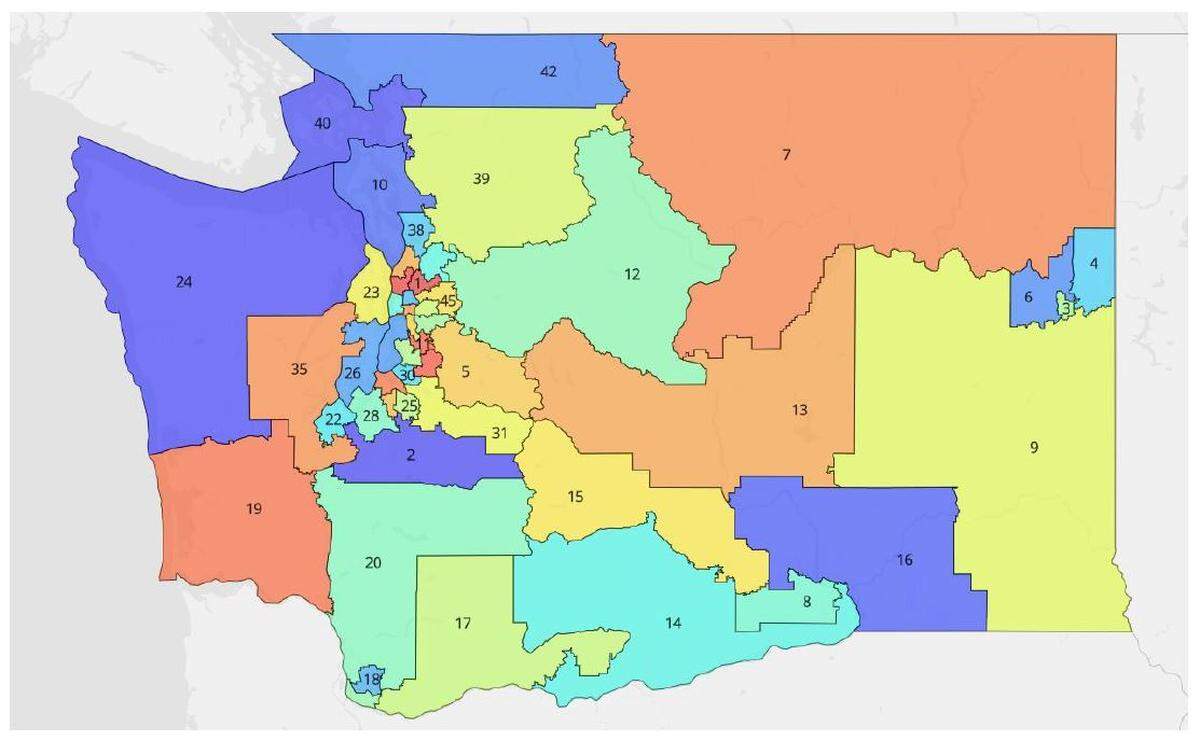
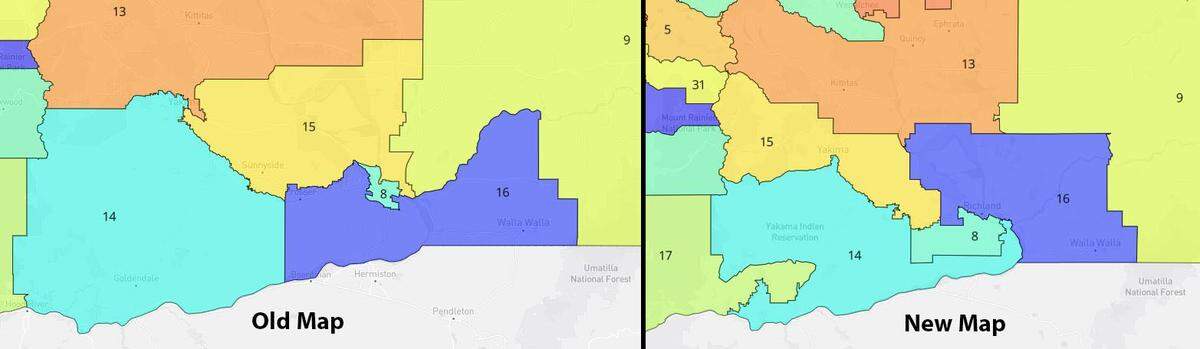
The Washington state legislative boundary changes were in response to a decision in U.S. District Court that found the 2021 state redistricting commission had illegally “cracked” apart the region’s communities by watering down dense Latino communities with white voters.
It changed the boundaries of 13 legislative districts, including substantial alterations to the 14th and 15th legislative districts in the Yakima Valley.
A panel of judges in the U.S. Court of Appeals for the Ninth Circuit last year affirmed the District Court’s decision.
The U.S. Supreme Court ruling that critics say gutted the 1965 Voting Rights Act will not automatically reinstate Washington’s old legislative district map, said Sonni Waknin, senior staff attorney for the UCLA Voting Rights Project, which led the state court challenge.
“Even under this heightened standard, the map that the Washington Redistricting Commission adopted is not legal. If necessary, we will defend the court-imposed remedial map and will win,” she said in a statement to the Tri-City Herald.
Wednesday’s decision in Louisana v. Callais substantially weakens Section 2 of the federal Voting Rights Act, the main avenue to “challenge racially discriminatory election practices,” according to The Associated Press.
Critics of the Tri-Cities’ elections systems have used the law several times in recent years to enforce reforms they say have helped Hispanic voters elect candidates that better represent them, including in the city of Pasco.
The Port of Pasco, the Franklin PUD and Franklin County commissioners also switched to district-based elections.
The U.S. Supreme Court case centered on a U.S. representative’s Louisiana congressional district, which the court found to be an unconstitutional racial gerrymander. Justices wrote that Section 2 is limited to instances of deliberate discrimination.
Reaction Wednesday mostly fell along party lines, with Republicans praising the conservative court’s decision and Democrats denouncing the ruling.
The decision will likely make it harder for minority communities in the future to challenge maps that dilute their voting power. The impacts will likely be seen in congressional races as early as the 2028 elections.
It won’t have any impact on upcoming 2026 midterm elections here in Washington and across the country, though.
Next week is filing week for candidates seeking office this year in the Evergreen State.
Washington Republican Party Chairman Jim Walsh said they are weighing their options, including possibly filing an injunction to overturn the map in the Yakima Valley case, Palmer v. Hobbs.
“That opinion and the arguments made in the relevant lawsuit refer to Section 2 of the Voting Rights Act in exactly the manner rebuked by the U.S. Supreme Court in Callais,” Walsh told the Herald.
Washington Democratic Party Chair Shasti Conrad called it “obscene” that the nation’s highest court would “eviscerate” Section 2 and set the stage for the “largest reduction in minority representation since Reconstruction.”
“Through legislation, litigation, and the combined efforts of grassroots activists across the country, we refuse to allow this conservative-captured Supreme Court to roll back the sacred right to vote that millions of Americans marched, protested, and gave their lives to secure for future generations,” Conrad said in a statement.
Some elected officials are now voicing support to overturn those changes. Franklin County Commissioner Clint Didier expressed hope at a public meeting Wednesday that the ruling could be used to bring back its old at-large voting system.
This story was originally published April 30, 2026 at 5:00 AM with the headline "Will landmark Voting Rights ruling erase Latino gains in WA?."