Surging West Pasco growth forces new council districts. What it means for voters
Seismic growth in West Pasco is driving an overhaul of Pasco’s city council districts.
The city has unveiled its plans to redraw all six districts after the 2020 U.S. Census revealed big shifts in its population.
Two listening sessions are planned for residents to chime in on the draft plan.
Both sessions are in the city council chambers at Pasco City Hall at 525 N. 3rd Ave.
- Wednesday, Nov. 2, at 6 p.m
- Monday, Nov. 7, at 7 p.m. as part of the regular Pasco City Council meeting.
The city council could adopt the plan at Monday’s meeting and it would go into effect next year.
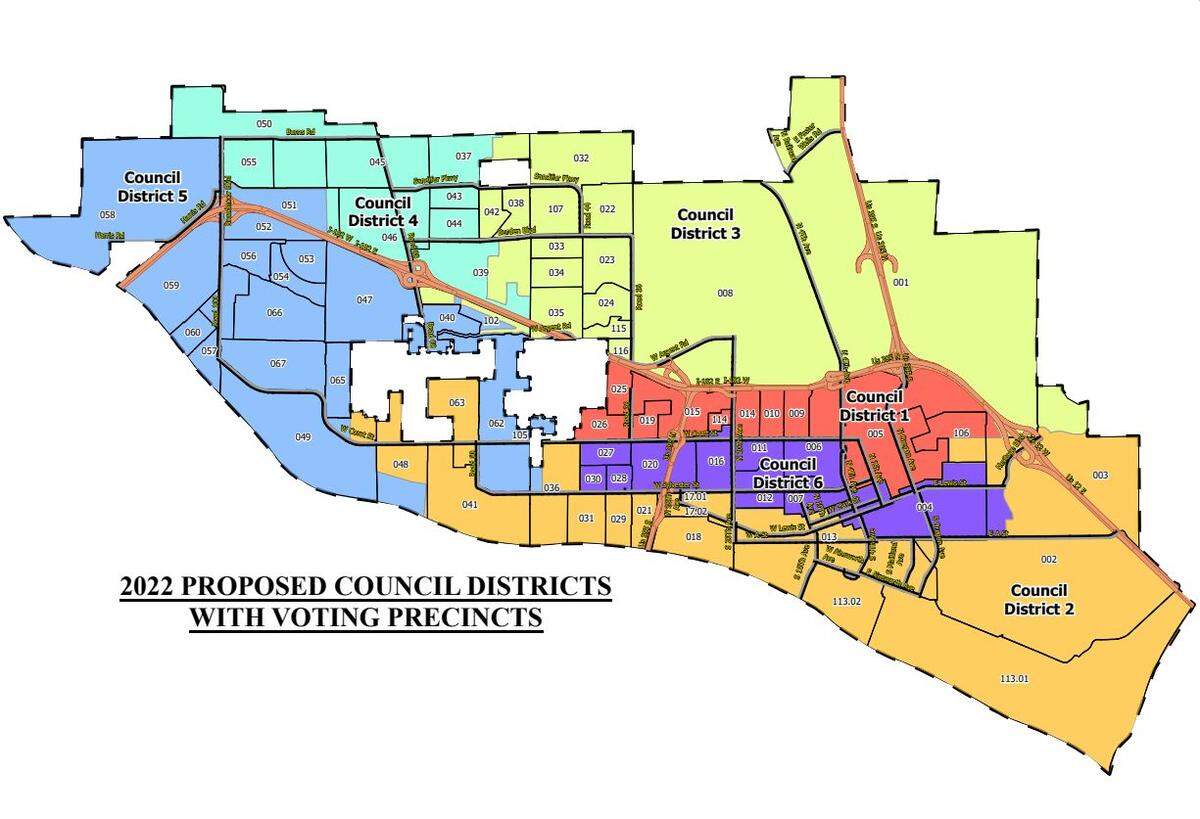
The plan keeps together three districts where a majority of the voting population is Hispanic. Those are District 1 (58.6% are Hispanic and of voting age), District 2 (51.6%) and District 6 (58.6%).
The redistricting plan “rebalances each district’s total population, strengthening Hispanics’ share of eligible voters in District 2, and maintains adherence to traditional districting criteria,” read the plan, drafted by Peter A. Morrison & Associates.
And it “avoids any dilution of Hispanics’ voting strength in compliance with state and federal requirements.”
Growing in West Pasco
“Our growth doesn’t all just happen equally across the entire city. We see a lot of growth out west, so it’s not surprising we see a lot of the districts in the east stretching to the west, and some of the districts out west getting a little bit more compacted,” City Manager Dave Zabell said at last week’s meeting.
As such, Pasco’s three Hispanic-majority voting districts will soon encompass more western portions of the city.
Under state law, Pasco’s new council districts must aim to be nearly equal in population, as compact as possible, consist of geographically contiguous areas, cannot favor any particular racial or political group and should preserve existing communities of related or mutual interest.
All six of the council districts aim to get as close to 12,851 people as possible.
Under the current proposal, all current council members will still be able to run for re-election in the same district they already represent.
Community advocate Felix Vargas said he hasn’t yet looked at the proposed plan but “has faith in this city council” to approve a fair map.
“I’m confident that they will do a good job in redrawing districts that reflect the demographic makeup of Pasco and that it won’t be the challenge that the (Franklin) county redistricting was,” he said.
Currently, Mayor Blanche Barajas represents District 1, Joseph Campos represents District 2, and Craig Maloney represents District 6.
Irving Brown Sr. represents District 3, Pete Serrano represents District 4 and David Milne represents District 5.
Zahra Roach is the seventh council member, representing the city at-large.
Voting rights violations
Pasco’s most recent map was approved by a federal court in 2017. Before that, the city had a different voting system that affected which candidates a voter could choose.
The Pasco City Council included seven elected officials selected by voters at-large — meaning across the entire city — in the general election. Five of the seven seats were chosen exclusively by council districts in the primary election.
Beginning in 2014, the city began a process to advocate changes in Washington state law that would allow “code” cities, like Pasco, the ability to shift to a district-based voting system that would allow only voters within their respective district to select their council member.
The goal was to create a system that didn’t “limit the impact” of a growing base of Latino and Hispanic voters. About 56% of Pasco residents are Hispanic or Latino, according to 2020 U.S. Census data.
The ACLU of Washington got involved in 2016, warning the city that its elections system was likely violating the federal Voting Rights Act.
The two entities proposed a “partial consent decree” to negotiate a solution to bring the city into compliance with the federal law.
In early 2017, federal Judge Lonny Suko supported a Pasco plan that led to the election system the city currently has today. The plan resulted in five new city council candidates elected to office that year.
Earlier this year, the City of Pasco began work to redraw its council districts in accordance with the 2020 U.S. Census data, the release of which was delayed due to the COVID pandemic.
Governments are required to redraw their representative districts every 10 years in accordance with the most recent U.S. decennial census data. Between 2010 and 2020, Pasco’s population grew by about 29%.
Serrano declines to participate
At the Oct. 24 city council study session, where city staff introduced and discussed the new council district map, Councilman Serrano excused himself from the conversation, saying he has “personal qualms” with the Voters Right Act and didn’t want there to be a perceived conflict of interest.
Serrano works as director and lead lawyer for the conservative nonprofit Silent Majority Foundation, which aims to protect “God given constitutional rights.” Founded last year, the group has filed legal challenges to the governor’s COVID-19 emergency orders, vaccine mandates and firearms legislation.
Serrano later told the Tri-City Herald that he is not currently involved in any legal challenges involving Pasco and the Voting Rights Act.
Maloney at the meeting said the quick and quiet nature of the redistricting effort was “horribly offensive” and “very, very frustrating” for people who pay attention to these issues.
“This is really important. This is the sort of thing that defines who we are going to be for the next decade,” he said.
He urged community members with questions or concerns about the plan to weigh in.
This story was originally published November 1, 2022 at 6:24 PM.
CORRECTION: This story has been updated to correct the percentages of Hispanic voter-age constituents in three proposed Pasco City Council districts. The correct percentages are 58.6% in District 1 and District 6, and 51.6% in District 2.