‘Whole new ballgame.’ Habitat for Humanity project could add 250 new Tri-City homes
Tri-County Partners Habitat for Humanity is embarking on a massive new housing initiative in the Tri-Cities, thanks to a partnership with the Washington Department of Natural Resources.
The organization entered into a feasibility agreement with DNR to begin the process of planning a community on land leased that could bring up to 250 affordable homes to be sold to low-income Tri-Cities families.
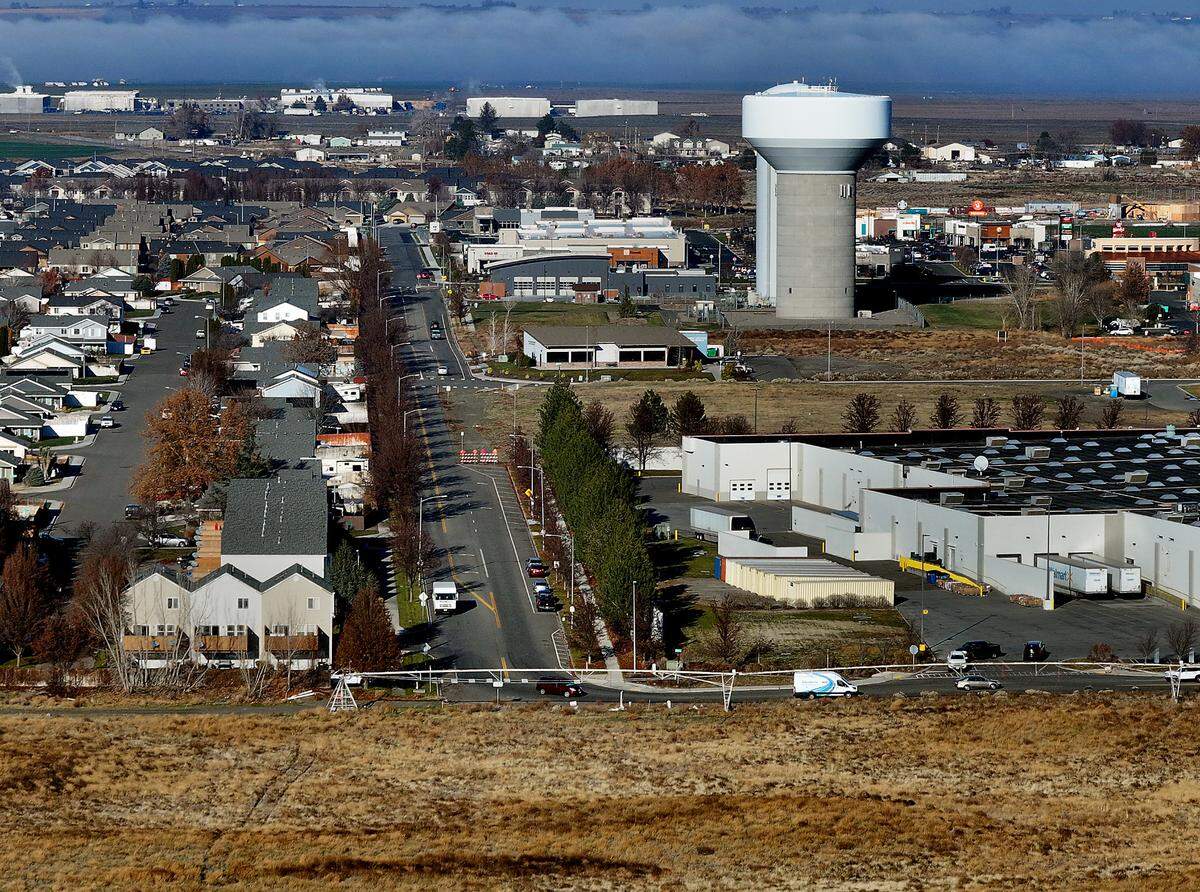
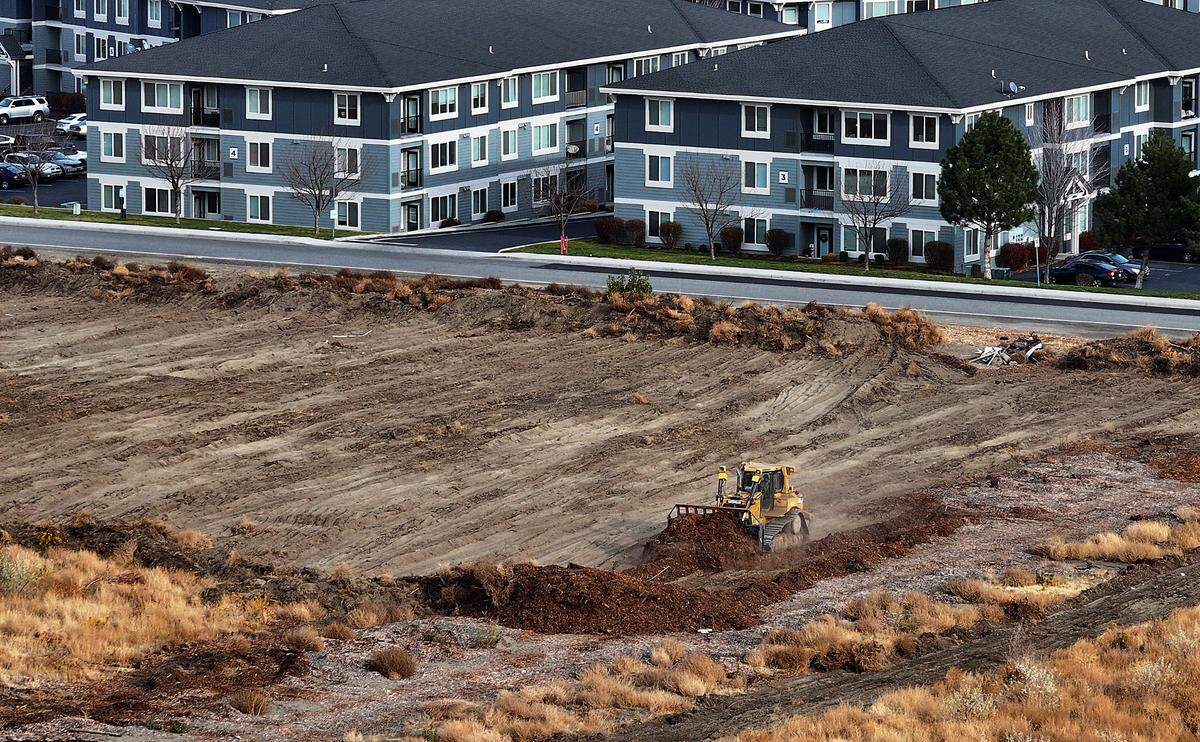
The 16-acre parcel is in Pasco, between Walmart on Road 68 and Interstate 182. The proposed Road 76 overpass could eventually pass through the neighborhood.
The idea is part of a pilot program involving five Habitat offices across the state, after changes to state law last year to help address the ongoing housing shortage seen in nearly every community in Washington.
It will take advantage of DNR’s “transition land” across the state that is in and around cities, but does not generate revenue.
Public land partnerships
Tri-County Habitat director Jet Richardson said the idea is to help fill in “missing middle” housing, with 200 to 250 townhouses, duplexes and triplex units aimed at lower income families and seniors.
He said the initiative is possible thanks to a bipartisan bill championed by Kennewick state Rep. April Connors and Mari Leavitt, a Democrat from the Fort Lewis area.
Tri-County Partners helps make home ownership possible for low income families in Benton, Franklin and Walla Walla counties.
The new properties will be a land-lease, with residents owning the homes but leasing the dirt from DNR.
It’s not yet clear how that arrangement will work. It could come in the form of lot payments or something closer to Home Owners Association dues.
The number of units planned should help drastically reduce the individual land costs as well, with a dozen or more homes per acre. The lease also means Habitat isn’t spending millions of dollars on land upfront. They don’t have a cost estimate for the lease at this point though.
The department may also be able to help with certain infrastructure costs, they asked the Legislature for money last year to help pay for sewer lines on a Thurston County project for South Puget Sound Habitat for Humanity.
Costco recently entered into a land-lease with DNR for its new Richland location. The Costco lease payments will put money back into the state’s Common School Trust fund, which supports the construction of new schools across the state.
It’s not clear whether the potential Habitat lease would feed into that fund or go back into expanding housing initiatives. The affordable housing initiative leases are exempt from the state’s 12.84% leasehold excise tax on public lands.
The design portion of the project is still probably a year or more out, with the current focus on due diligence to ensure the feasibility of the project. Those steps will include a land survey, zoning change considerations, traffic impact study, environmental assessments, geotechnical studies and more.
Building a community
Richardson said a project of this scope will likely mean construction will need to be done in phases, and look a bit different than a typical Habitat build.
Habitat doesn’t give away houses, they make them more affordable for lower-income families through a partnership with Yakima Federal Savings and Loan for mortgages, as well as grants, down payment assistance and other donations.
As the cost of homes continues to rise, that work is more important than ever. The median single-family home in the Tri-Cities is now $430,000, according to the most recent data from the Tri-City Association of Realtors.
Habitat works to keep total housing costs to 30% of the buyer’s income. Those buyers need to make 30% to 80% of HUD’s median area income estimate and have a credit score of at least 640.
For a single person household, that annual income caps at $55,950 and goes up to $79,900 for a family of four.
The buyer is also responsible for closing costs, which average $9,000, according to Habitat’s guidelines.
They also have to attend a first-time home buyer’s class to qualify for down payment assistance and put in 500 hours of “sweat equity.”
Sweat equity is volunteer time every Habitat family has to give, either toward helping build Habitat homes or, if not physically able, assisting in their office or at their Richland store. Those hours are shared among the family, and buyers can bring in help.
“That’s a huge amount of sweat equity considering they have to have a full-time job and stable income. If one person was doing that on Saturdays, it would take them 68 weeks to complete,” Richardson said. “The spirit of sweat equity is really about building community, families working alongside each other.”
“So before a family moves into their home they’ve already built friendships and relationships with their neighbors, but it’s also an opportunity for families to lean on their extended network for their friends and relatives to come and support them in that 500 hours.”
Richardson said there’s a lot of education that comes with entering the Habitat program, and because of the differences that come with a land-lease they’ll have to spend some time teaching new buyers about the nuances.
This all leads to a cycle where new buyers help build not only their home, but those of future neighbors and their mortgage also helps put money back into the organization to help build more homes.
“The driving force and foundation of what habitat is trying to do is impact lives and change the trajectory of families,” Richardson said. “Our mission is seeking to put God’s love into action. Habitat for Humanity brings people together to build homes, community and hope. What I see in each home dedication is really a stepping into that hope and that community.”
Scaling up
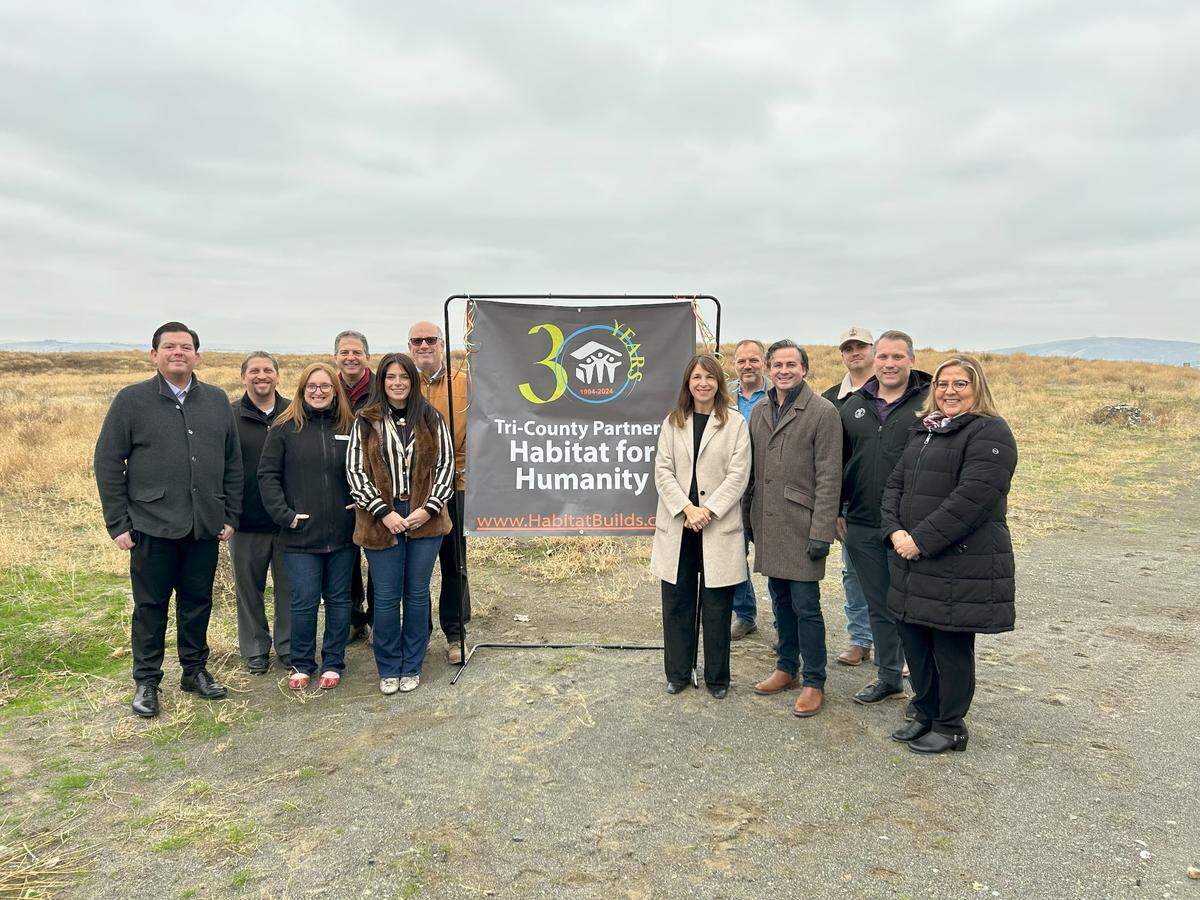
Tri-County Habitat for Humanity broke ground on their 164th and 165th homes in the Tri-Cities on Friday. The new project would create more new units than they’ve built in their entire 30 years of operation.
Richardson said that means they’re going to have to look at how they approach building communities in order to embark on a project of this size.
“This scale is a whole new ballgame, there is an opportunity here to really address and change some of the stigma and stereotypes around affordable housing,” he said.
“That is where we need partnerships, where we want partnerships. I would love for habitat to work itself out of a job and accomplish the mission of everyone having a decent place to live.”
Habitat is always in need of more volunteers and community help to keep building costs down. But a project of this magnitude means they’re going to need more people with experience to help lead those volunteers.
The homes will be more complex than a traditional single-family detached home. Building townhouses, duplexes and triplexes will be more complicated and if they choose to go with two-story homes, safety concerns will increase as well.
“As we scale up, we have to shift how we approach that. We need volunteers who have construction backgrounds to lead crews and support the general construction effort through a lens of expertise, and who are people who like to teach and work with underskilled volunteers,” Richardson said.
Growing partnerships
They’re also hoping to find more community partners, pointing to the success they’ve seen in Kennewick building relationships with the Boys and Girls Club and B5 Learning Center.
Richardson said that for their families, becoming a homeowner is really about setting their children up for a better life.
“Families that are buyer ready and have this opportunity are looking at long-term solutions for their family, they want stability for their children,” he said. “They’re looking at the next 18 to 20 years. They want that stability for their children to thrive academically.”
“That’s probably one of the biggest ripple effects that we get to see, is when a child has a stable home life and isn’t moving from a rental apartment to another rental apartment because rent keeps changing and going up, when we can stabilize that variable it has a direct correlation to children’s success in school academically,” Richardson said.
The feasibility study should give them a better idea of what can be built on the parcel, and if something like a community center would be possible. The goal is building a community.
“When you’re talking about putting in 200-250 units, you have to think holistically, you can’t just assume it’s going to be a blanket all residential without thinking about what makes a community livable and desirable,” he said.
“Just because it’s low income doesn’t mean it has to be neglected. We would certainly want to partner where it makes the most sense and it benefits the residents of this area.”
Anyone interested in partnering with Habitat or donating, can reach out at Habitatbuilds.com