
Feds make decision on spending $13.2M to remove access to a popular Richland island
The Army Corps of Engineers is ready to move forward with removing the causeway to Bateman Island in Richland to restore freeflowing water in the Yakima River delta.
On Monday the Corps’ Walla Walla District released the final version of a feasibility study and environmental assessment that concluded removing the causeway, the only land access to the island, would be the best option.
There are no plans to replace the causeway with a bridge or other structure to provide Tri-Cities area hikers, mountain bike riders, birdwatchers and anglers access to the south side of the island off Columbia Park Trail at the Wye Park.
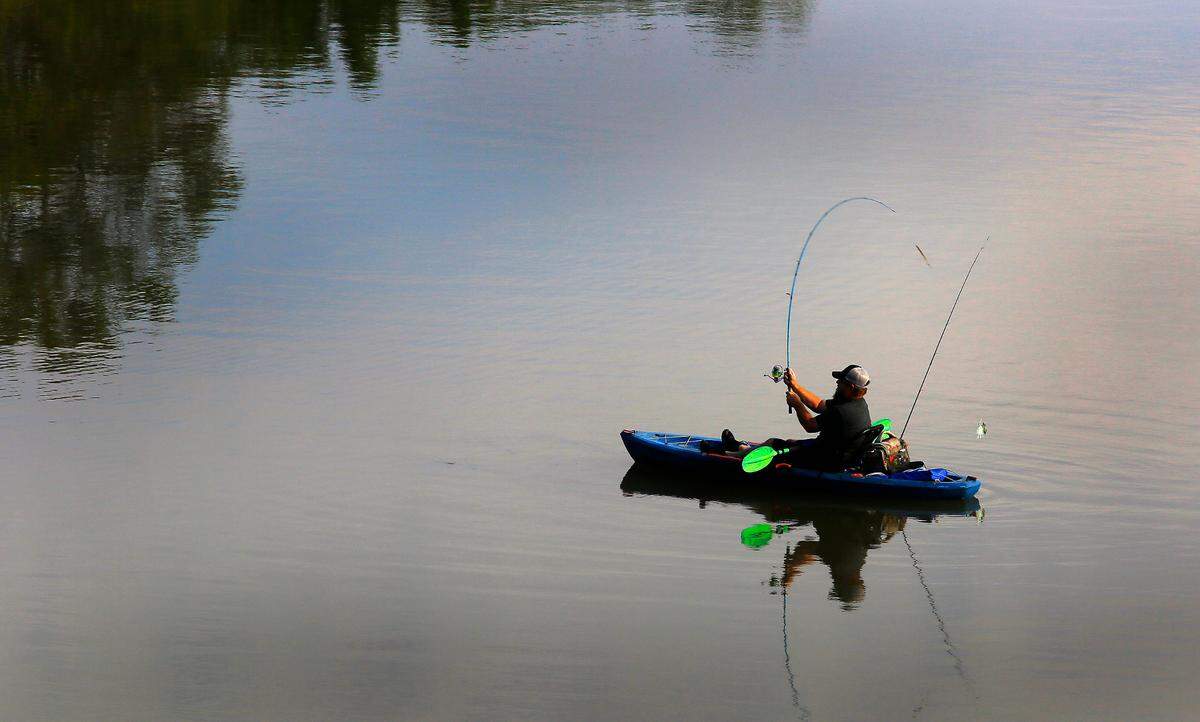
The island and its 2.8-mile trail could still be reached by boat, floating or swimming.
Other similar habitat with birdwatching opportunities is available nearby that can be reached on foot, the Corps said.
The study concluded that it is not necessary to add riparian habitat along the shoreline around Bateman Island, which could benefit wildlife.
Removing the causeway, from design work through completion, is estimated to cost $13.2 million.
The Corps would be responsible for $10 million of the cost. The Washington state Department of Fish and Wildlife responsible for the remaining $3.2 million with the help of $2.5 million in grants obtained by the Yakama Nation.
The next step will be design work for the project, followed by solicitation of bids.
No schedule for removing the causeway has been announced, but the study indicates that the start of removal of the causeway should be done in the winter when few, if any, juvenile salmon are present.
Causeway impact on salmon
The causeway, which is 500 feet long and 40 feet wide, was built of earth in the 1940s for agricultural access. Rock riprap has been added since then.
Issues it created in the Yakima River delta were compounded when the McNary Dam downstream on the Columbia River was completed in 1957.
Now the causeway blocks water flow south of the island, leading to water temperatures as warm as 86 degrees for sustained periods on the south and west side of the island and peak temperatures of about 90 degrees.
Several salmon stocks have recently been reintroduced upriver in the Yakima, including coho, spring chinook, summer chinook and sockeye, but they must navigate the delta on their journey to and from the Pacific Ocean.
The warm water near the causeway provides ideal conditions for nonnative fish, such as smallmouth bass, to prey on young salmon migrating toward the ocean in the spring.
The warm water and blocked flow also may prevent adult salmon from entering the Yakima River to spawn until later in the fall when water temperatures drop. Or they might continue up the Columbia River to overwinter, with just a few still entering the Yakima River the following spring, according to the environmental assessment.
Removing the causeway also could improve habitat and migration conditions for lamprey as the Confederated Tribes of the Umatilla Indian Reservation work to restore the species as a culturally important food.
The stagnant and shallow backwater south of Bateman Island also encourage algal blooms and stargrass, which causes daily fluctuations of dissolved oxygen. Salmon are more sensitive to oxygen concentrations that warmer water predatory fish.
Reaction to causeway decision
“Over the years of its existence, the causeway at the river delta has caused numerous harms to tribal people through losses to the tribe’s reserved treaty natural and cultural resources,” said Jeremy Takala of the Yakama Nation Tribal Council.
Removing the causeway is crucial to restore salmon and steelhead runs, he said.
Washington state Department of Fish and Wildlife also supports removal of the causeway. It will “improve the environment for the fish, wildlife, and people who depend on a healthy Yakima River delta,” said Mike Livingston, the agency’s south central region director.
Richland has had concerns about removal of the causeway, although it does support the goal of improving water access.
A 2004 study by the Corps with the city of Richland proposed providing a bridge to replace the causeway, but federal and state officials said that would be expensive and there were concerns that digging to build the structure could interfere with Native American cultural resources.
Native Americans have used the island since at least 16,000 years ago, according to the feasibility study. The Lewis and Clark Expedition of 1805 documents that the island was used then by Native Americans for drying fish.
Richland also has questioned how it can fight fires on the island without land access. Fires have burned parts of Bateman Island about every five years.
Bateman Island is considered a high risk for fire due to the type and amount of vegetation, and assuring that there are no people on the island will be difficult, causing fires to be fought as if there was a risk to human life rather than letting it burn.
Richland would remain responsible for land-based law enforcement on the island, but it does not have a law enforcement boat, the city said last year.
The city also has been concerned about increased river water current flows that could be harmful for the downstream marina and public boat launch.
This story was originally published October 29, 2024 at 5:00 AM.