
‘Not being served.’ Food banks worry about feeding hungry Tri-Citians if fed help ends
The Tri-Cities Food Bank has served more than 140,000 people in need of food during the COVID pandemic.
But many state and federal government emergency funding for food assistance programs are coming to end, and local agencies are worried what that will mean for hungry families.
“I have never seen numbers fluctuate like they have since COVID,” said VJ Meadows, executive director of the Tri-Cities Food Bank.
Meadows said that while there was a slight decline in those seeking food in recent months compared to the onset of the pandemic, she is starting to see an uptick.
And it will grow as colder weather forces layoffs in industries such as construction.
There’s also concern some elderly residents are slipping through the cracks and may be facing malnourishment.
One recent study showed hunger in Benton and Franklin counties is predicted to increase by 11,000 people, with 6,150 more children facing hunger since 2018.
Food insecurity is the U.S. Department of Agriculture’s measure of lack of access to enough food for an active, healthy life for all household members.
Adding to the problem is the continuing economic stresses of the pandemic and uncertainty over the extension of some government programs.
Meadows said the food bank is working to get ahead of the looming deluge to ensure those who need assistance receive it. However, she said, the agency’s money is not stretching as far as it used to.
“I’m having to spend $10,000 on turkeys,” she said. “The price is double what it was last year.”
Looking ahead, Meadows told the Herald that all donations are welcome, but monetary donations are the most critical for operations now.
“I can buy more food for the dollar (than individuals can), and be able to use it right away,” she explained.
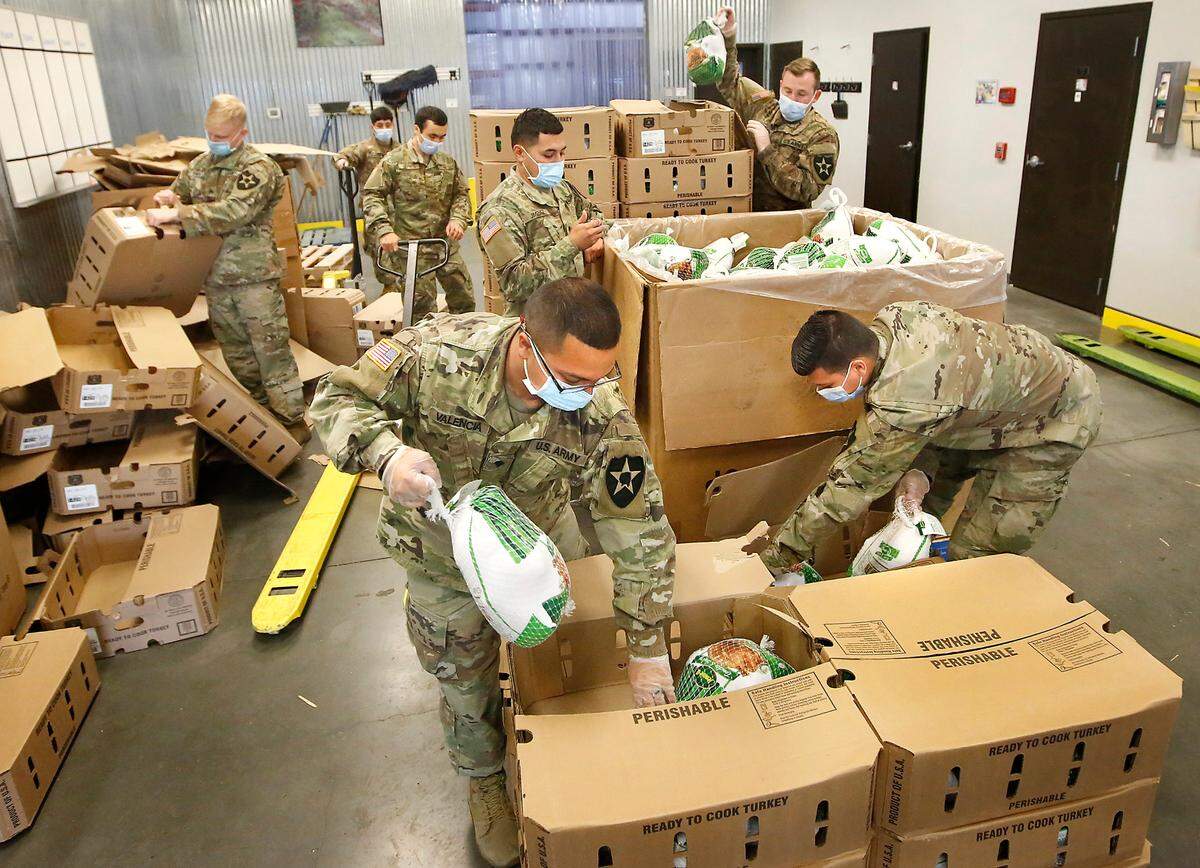
All food donations are quarantined because of COVID. That creates a storage problem, as well as the inability to immediately get donated food into the hands of those in need.
Monetary donations also will allow more flexibility, said Howard Rickard, president of the Tri-Cities Food Bank’s board of directors.
Funding
Rickard said that usually after presidential elections, federal government enters a dead period of government funding while there is a change in administration and policies.
Several COVID-related state and federal programs are coming to and end, and Rickard said the food bank expects to see more customers who used programs that soon will be stopped if funding is not extended.
“I don’t expect to see anything happen quickly,” he said.
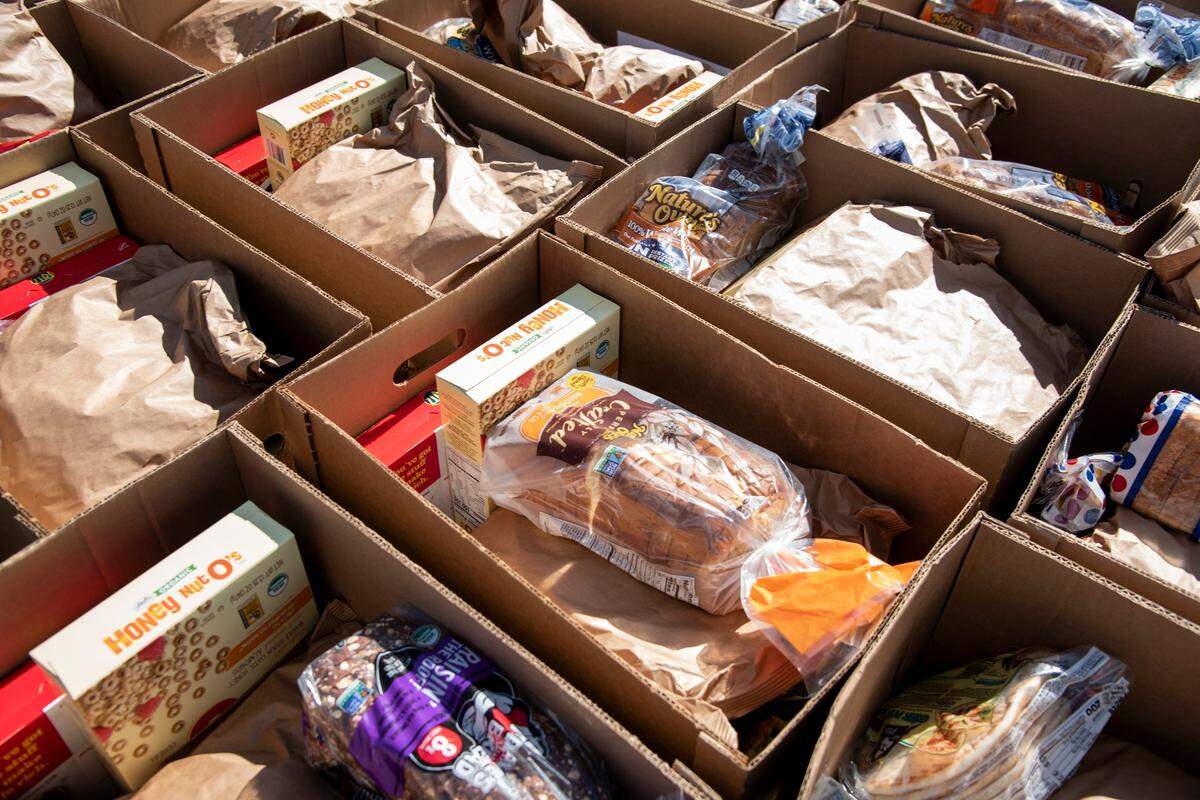
Eric Williams, the community partnerships director for 2nd Harvest, noted funding for the Coronavirus Food Assistance Program’s USDA Farmers to Families Food Box distribution is being approved only through Dec. 31.
In this program, the USDA buys fresh produce, dairy and meat from growers and puts it in the hands of consumers.
“Second Harvest has been stockpiling in anticipating of the programs sunsetting at the end of the year,” Williams said. “Our Pasco warehouse is full.”
Donations
When nonprofits receive financial donations instead of produce and other food, administrators also can determine what is needed the most.
Rickard added that food the Tri-Cities Food Bank buys from warehouses such as 2nd Harvest or through commercial outlets such as stores can be distributed immediately instead of food items from individuals that must be isolated for 14 days.
Both Rickard and Meadows said it is unclear what the need will be at the food banks going into winter.
Rickard believes that larger food distributions may offset the need at the local food banks because people may choose the anonymity and accessibility of the drive-thru food giveaways that have been held throughout Tri-Cities.
Williams said that according to Feeding America, food insecurity in Benton County is projected to increase by 34 percent or 7,460 people. Child food insecurity is predicted to increase by 42 percent, or 3,880 children.
In Franklin County, food insecurity is estimated to increase by 37 percent, or 3,540 people. While about 2,270 children, of 46 percent, are expected to suffer from food insecurity, showed their estimates.
“We know there is a population not being served — many who are sheltering in place,” Rickard said. “We suspect they are out there, but they are an elusive target.”
Specifically, Rickard is concerned with elderly individuals who live on a fixed income and have limited mobility.
“We talk to the hospitals, and they are coming in often underweight and dehydrated,” he said.
Logistics
Those same COVID risk factors of age also has reduced the volunteer staff at the food bank’s three locations in Kennewick, Richland and Benton City.
“Of our estimated 200 volunteers, 40 percent have chosen to not risk exposure,” Rickard said. “We’ve reduced staff and reduced hours.”
A majority of the Tri-Cities Food Bank’s volunteers are those who are retired or without pressing daily obligations — often putting them in the risk group of being older than 65 with pre-existing conditions.
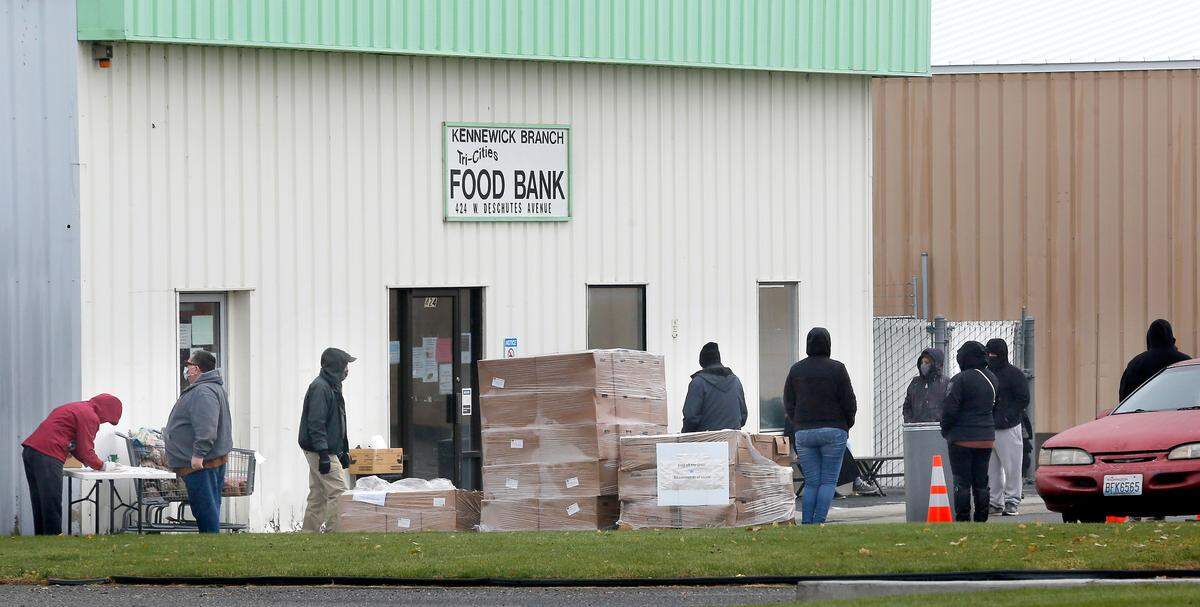
Touchless systems have been implemented at all the Tri-Cities Food Bank facilities to hand off boxes of food packaged according to the number of people in a family.
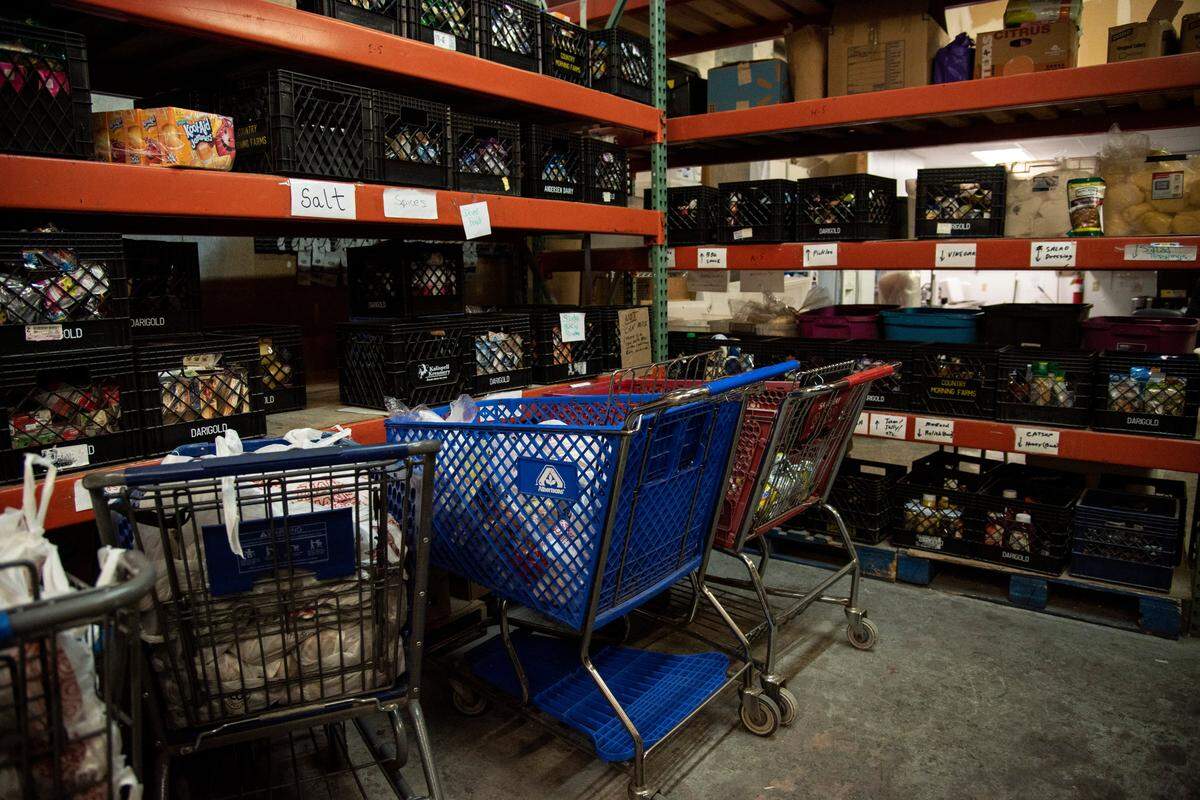
Before COVID, customers could shop inventory themselves. Volunteers also can take food to load in cars of those who will not or cannot wear a mask.
But the weather that Meadows predicts will increase food needs with seasonal layoffs, also could decrease volunteers’ abilities.
The food bank has had to plan for permanent modifications on their facilities — such as overhangs — that will allow protection from weather while continuing to keep customers out of the building for the safety of volunteers with social distancing.
“We can’t send volunteers out in inclement weather,” she said, “I have incredible volunteers and I must keep them safe.”
For those who wish to donate goods instead of money, Rickard said that protein is always imperative, and often is in short supply. Canned meats, peanut butter, beans and legumes are among shelf-stable items that Rickard says often are lacking in diets of income-restricted homes.
Thanksgiving box giveaway
Second Harvest Tri-Cities will be distributing holiday box meals the week of Thanksgiving.
Boxes will include a turkey and ingredients for side dishes. They will be given out from 11 a.m. to 2 p.m. Tuesday, Nov. 24 at Toyota Center, 7000 W. Grandridge Blvd. in Kennewick.
The giveaway is limited to one box per household and 1,000 boxes will be available. Recipients can pick up to two additional boxes to distribute to others in addition to their own. No identification will be required.
This story was originally published November 13, 2020 at 5:00 AM.