
Some Tri-Citians still hungry. People turned away each week from food giveaways
As COVID-19 has continued its grip on Benton and Franklin counties, the number of people needing food assistance in the Tri-Cities has skyrocketed.
“Over half of our agencies have reported that they’ve had significant increases in the number of people they are serving,” said Drew Meuer, chief of staff of Second Harvest.
He said at a recent drive-thru food distribution that served more than 700 families about 40 percent told volunteers they were seeking help for the first time.
“We are definitely seeing distributions end and having to turn folks away in the Mid-Columbia,” he told the Herald.
Meuer said that demand exceeds supply at many of the drive-thru Mobile Markets held by Second Harvest Tri-Cities. In those cases, volunteers refer people to the next distribution event and other local resources.
“Our entire system is straining to cope with the surge in need,” Meuer said.
While Second Harvest aims to distribute enough food to feed a family of four for four to five days at each food giveaway event — Meuer’s concern is what is coming down the pipeline.
Future needs
When financial cushions during the pandemic from government programs run out, he’s worried that there will be an even greater need that will be difficult to meet.
“People who are vulnerable to those changes become increasingly food insecure as benefits expire,” Meuer said.
Additional unemployment aid under the CARES Act is set to expire July 31. And a state moratorium on evictions declared by Gov. Jay Inslee will end Aug. 1.
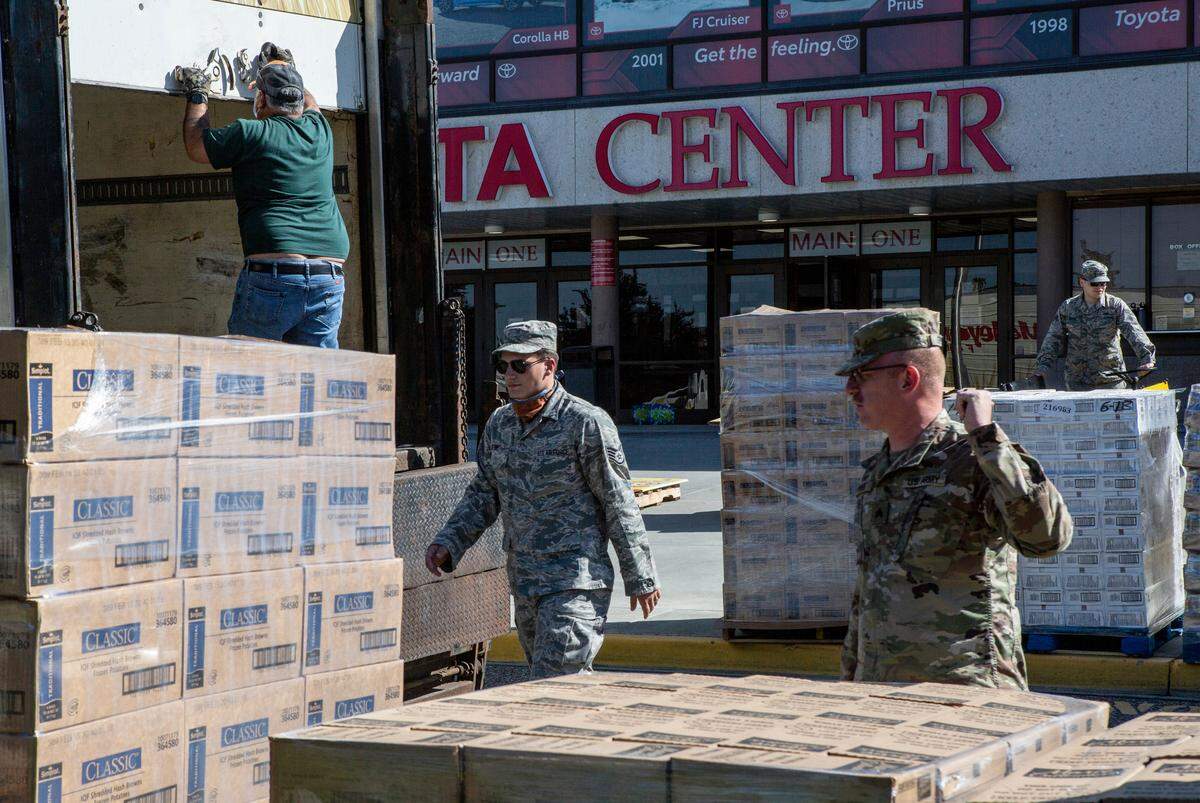
On May 25, the USDA gave Washington approval to join the Pandemic EBT program, an expanded benefit to SNAP participants that offsets the cost of children’s meals that they would have otherwise eaten at school — although Tri-Cities school districts have been distributing some meals to kids.
About 43 percent of all children in Washington schools, or 511,000 students, were eligible for free and reduced-price lunch, according to the USDA.
Food supplies
Early in the pandemic, Meuer said consumer buying patterns — or hoarding across the nation — disrupted the food supply, making it difficult for the agency to get food.
As supply lines have evened out he said the agencies has sufficient quantities for now.
Second Harvest Tri-Cities has received large donations of potatoes, onions and apples from area growers, he said. The nonprofit also had a plentiful supply of dried goods such as rice but is always in need of support.
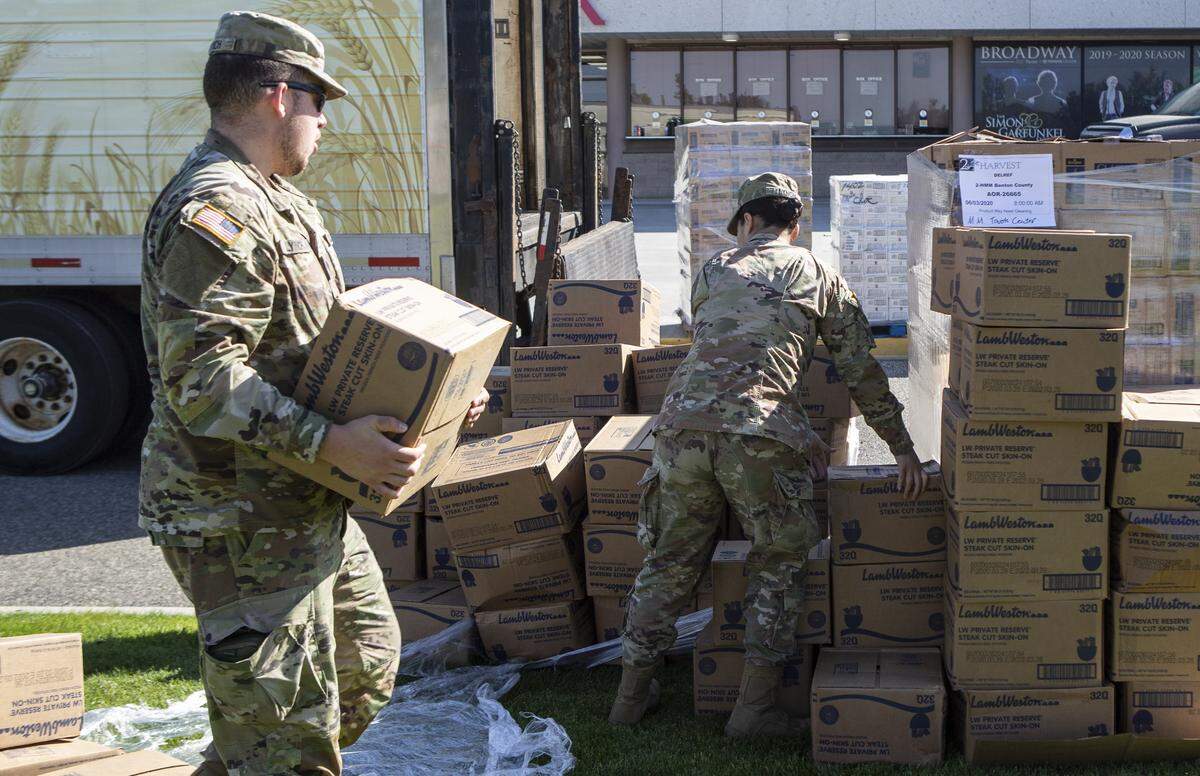
So, Second Harvest tapped into the Farmers to Families Food Box Program in which USDA buys food boxes from growers to help supplement local resources and donations.
The food boxes are prepacked at facilities in three categories — produce, dairy and precooked protein — then delivered to participating agencies for distribution.
Produce boxes come in 25 pounds of assorted items. Diary boxes contain milk, eggs, yogurt and cheese. The precooked protein boxes are packed with items such as precooked pork, chicken, cold cuts and a smaller portion of dairy and produce.
“These boxes are an acknowledgment that we’ve been hit by a triple whammy,” Meuer said. “We have a concern over community transmissions of the coronavirus rapidly declining donations and a loss of volunteers.”
“Our business model is transforming incredibly rapidly. But we are innovative, and responding every day with an amazing network of partners,” he said.
Meuer says Second Harvest is pursuing options to mitigate expected upcoming challenges.
He said that their refrigerator storage is being reviewed, they are talking to partners on possible off-site storage and trying to secure rolling grocery stock through an expanded network of supporters.
“We want to make sure people have enough access to food when they need it.”
Mobile Market distributions
June 8: 11 a.m. to 1 p.m. at Kennewick Clubhouse Boys and Girls Club, 910 W. Seventh Place in Kennewick. Drive-up boxes for 250 families.
June 9: 11 a.m. at Columbia Basin College, 2600 N. 20th in Pasco. Enter using Argent Road and Saraceno way with distribution in the H building parking lot for 300 cars.
June 9: 11 a.m. to 2 p.m. or until supplies run out. Ride bus or book with Ben Franklin Transit Connect to food distribution locations: Three Rivers Transit Center in Kennewick, 22nd Avenue Transit Center in Pasco or Knight Street Transit Center in Richland
This story was originally published June 7, 2020 at 2:19 PM.