
Coronavirus strains Tri-Cities food banks as surge in need expected in coming weeks
Mid-Columbia agencies that feed the hungry are bracing for a surge in demand for food as people lose jobs or are furloughed during the new coronavirus pandemic.
“We at the food banks have been told that over the next two to three weeks we will have a huge influx of huge amounts of people needing food,” said V. J. Meadows, executive director of Tri-Cities Food Bank. “And food supplies are running low.”
The COVID-19 pandemic has shuttered restaurants, schools and other businesses considered nonessential in Washington state and others companies have seen demand for their services drop during Gov. Jay Inslee’s stay-home order set to end May 4.
Unemployment has reached 15 percent, according to the Washington Employment Security Department. And its likely to increase.
“Think of this leveling off as the water receding slightly prior to a tsunami,” Suzi LeVine, the employment department commissioner told reporters during a recent media call. “We’re about to see a flood of demand.”
”We are preparing for a wave of newly vulnerable people as unemployment continues to climb,” said Drew Meuer, senior vice president of Second Harvest Tri-Cities during a recent Benton Franklin Health District news conference.
Second Harvest supplies food to food banks.
The nonprofit just teamed up with Food Lifeline and Northwest Harvest to create a statewide food access map.
It shows food banks and meal programs across the state, including addresses, phone numbers and hours of operation.
Help for Second Harvest
Emergency food systems across the country are strained, he said.
Holly Siler, senior vice president of projects for Second Harvest, said that food sourcing and distribution costs will increase by as much as 275 percent, or almost $600,000, during the new coronavirus pandemic.
The organization is projecting expenses of at least $763,000 in the next three months.
It received some help on Friday from Greater Columbia Accountable Community of Health, which serves nine Southeast Washington counties, including Benton and Franklin counties.
The group announced it was granting $300,000 to Second Harvest.
“The assistance will help struggling families re-allocate their limited resources to other pressing matters such as rent, utilities, medicine and transportation, said Brian Gibbons, board president of the local Accountable Community of Health and chief executive of Astria Sunnyside Hospital.
Food hoarding, waste
The demand placed on food banks comes as stores struggle to keep up with demand for staple foods, plus cleaning supplies and toilet paper.
“Due to the hoarding, the food supply chain has been disrupted across the country and especially here,” Meadows said. “We are trying to mitigate that as much as possible. As soon as any food is available, we need to be able to buy it.”
Meadows says it isn’t always available to buy, though.
The food bank is among many groups desperately searching for food while farmers are dumping it down drains or letting it rot in trucks in some parts of the country.
Shuttered restaurants, schools and other businesses usually buy truckloads of milk and food from farmers in Washington and across the U.S. Now, there is a limited market.
It is economically infeasible to process the food for other uses. For example turning the raw milk into cheese or butter and then throwing it away is more expensive.
Even donating surplus produce is unreasonable because food packaging and shipping can be expensive.
Instead, some growers are offloading their products. Cranney Farms in Idaho dumped a load of potatoes in a field and invited the public to fetch the free spuds.
The Tri-Cities Food Bank has been making sure it is in line to purchase food whenever it is available.
Meadows says while food donations are being taken at their Kennewick warehouse, money is needed more to buy food to help those in need.
“We don’t know how long this will last,” Meadows said of the coronavirus pandemic.
Food distribution
As part of planning for the future, Meuer said Second Harvest is distributing whatever food they have to agency partners like the Tri-Cities Food Bank as it is available.
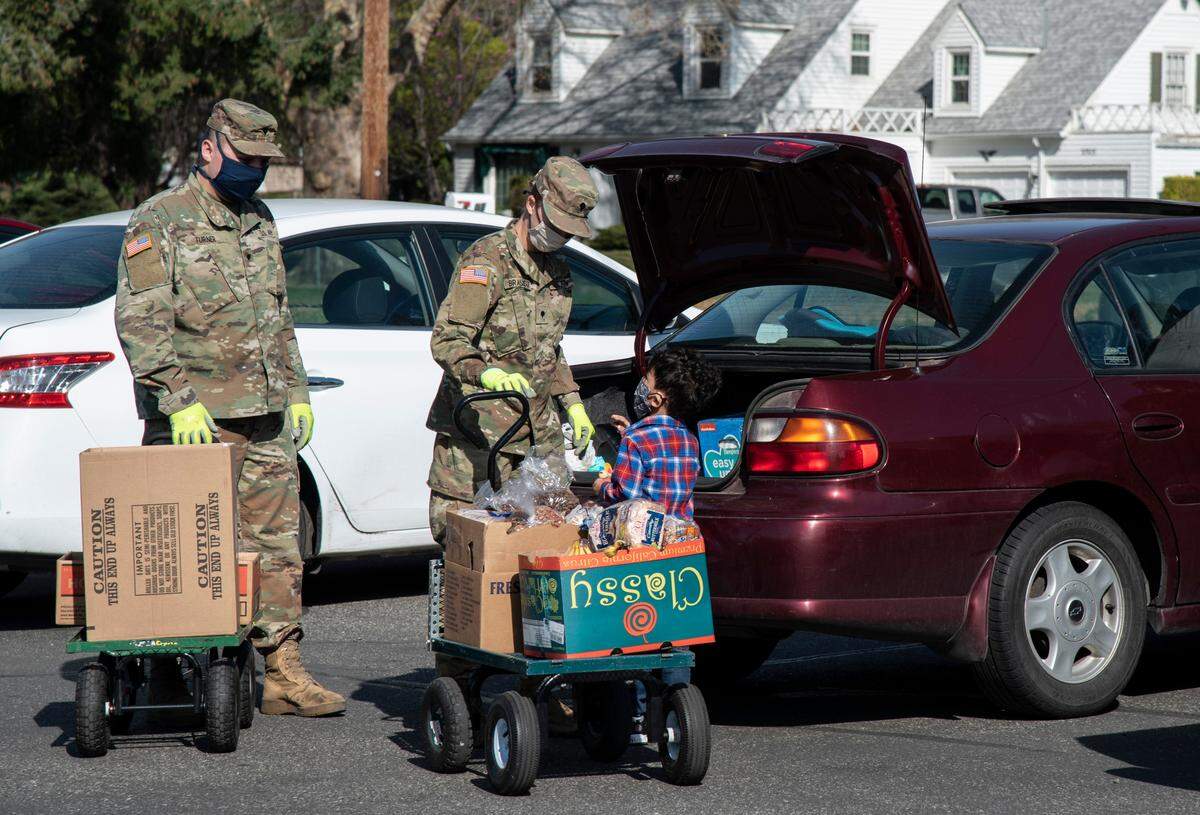
The National Guard has deployed 25 soldiers to its Pasco facility to help distribute the food.
“They are serving alongside staff procuring, sorting and packaging food,” Meuer said. “They are helping with transfers to help protect the public’s health and safety in social distancing, and allowing volunteers to stay home and stay safe.”
Meadows said 70 percent of food bank volunteers are in the at-risk group and volunteers still are needed to help in a new program with home deliveries and fill the gaps, as the National Guard has done at Second Harvest.
In addition, Meuer continues to look for shelf stable items, and into grocery and food delivery systems to purchase truckloads of food when possible to prepare for what’s ahead.
“Our community is resilient, but we want to ensure that needs are met in months to come,” Meuer said.
Katie Camero, a McClatchy National Real-Time reporter, contributed to this story.
This story was originally published April 20, 2020 at 5:00 AM.