
Outdoors | Finding the right Eastern WA fishing hole is part of the adventure
Funny, I don’t remember river cobble being this slick when I last cast a bright-colored feather fly along the Ringold Springs shoreline.
The studs on my wading boots must be worn down. Then again, my balance ain’t what it used to be.
An hour earlier, I drove north to Ringold on busy Road 68, windshield wipers flapping to the steady beat of Backhman Turner Overdrive. I passed crowded cattle in feedlots, orchards stripped of fruit, newly furrowed fields, haystacks covered with blue and white tarp, and field corn waiting for harvest. View of Rattlesnake Mountain was obscured by pelting rain.
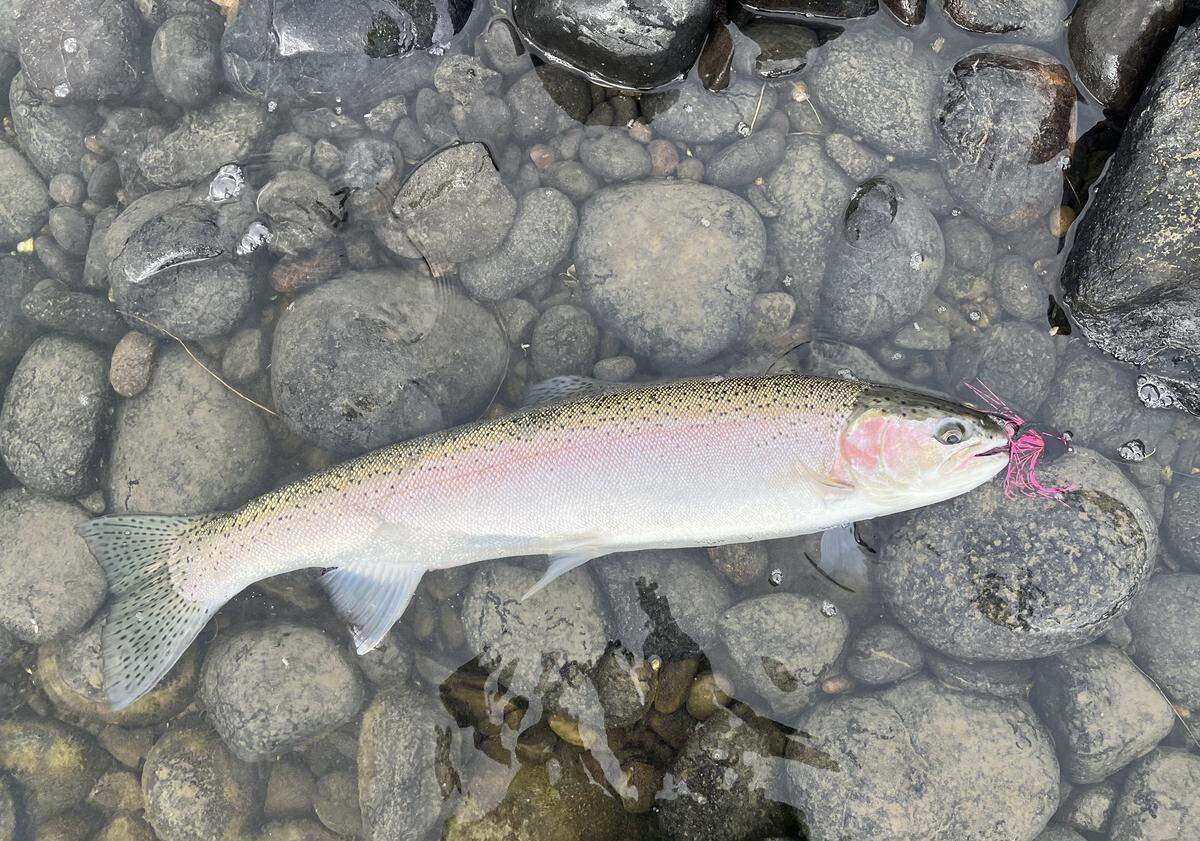
I hadn’t fished for steelhead in a month. Hence, a Spey rod, fly gear, waders, and a rain jacket rest in the rear seat of my truck. I opted not to bring spinning gear despite rumors of Coho salmon. Sometimes it’s better to focus on one thing and do it well rather than play both sides against the middle.
Ringold Springs provides a variety of harvest opportunity for bank anglers. Steelhead fishing opened October 1 for double-clip hatchery fish.
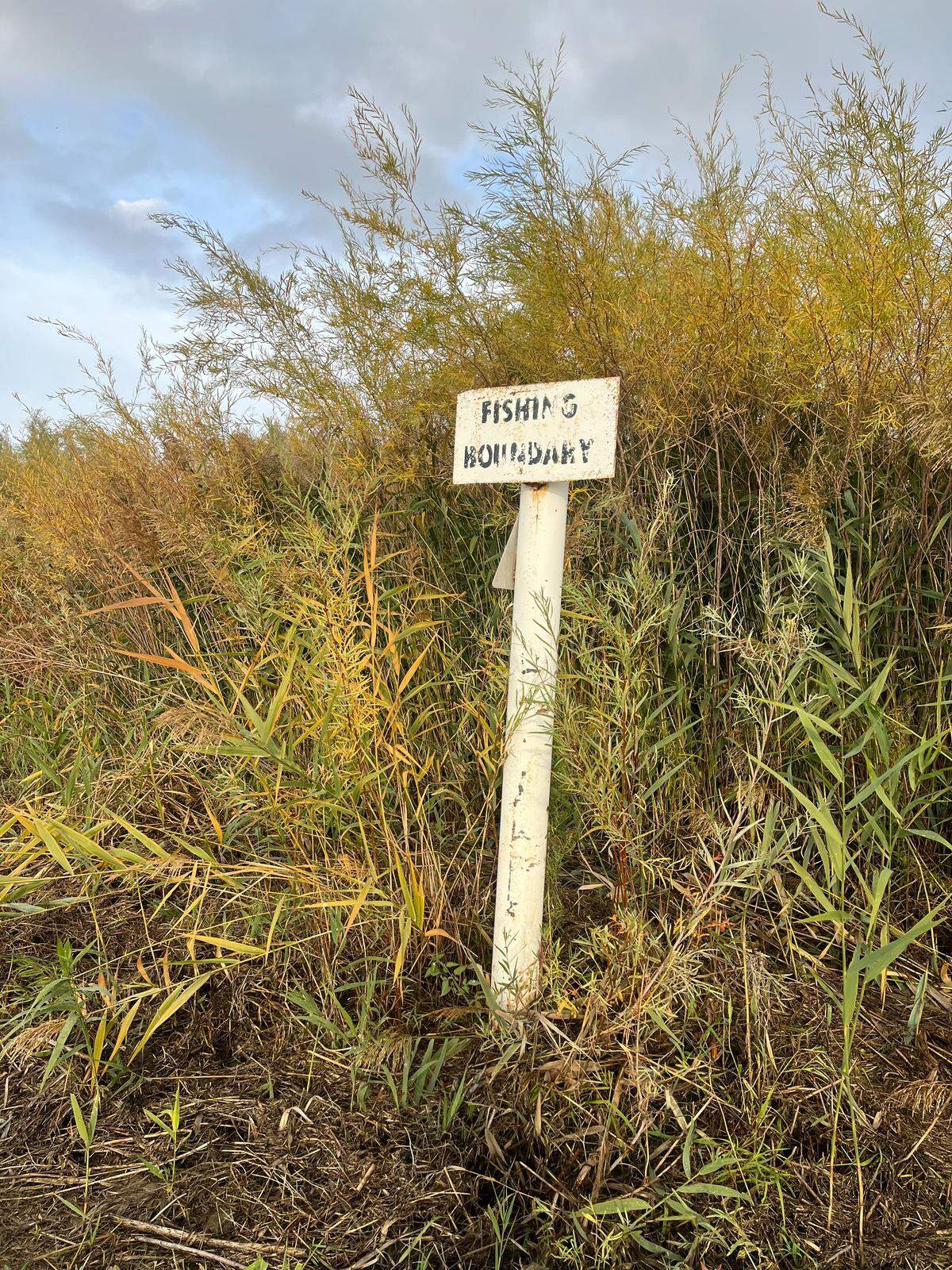
Coho salmon raised to help provide food for the southern killer whale population return to the hatchery in good numbers. So far, no whales have been reported in the vicinity. Added to the mix are late arrival fall Chinook salmon.
Mountain whitefish also lurk, scarfing up loose eggs from nearby Chinook salmon spawning grounds.
A flycaster pal reported finding an empty shoreline at Ringold last week.
No such luck today. A dozen vehicles are parked between Ringold Creek and the wastewater return ditch.
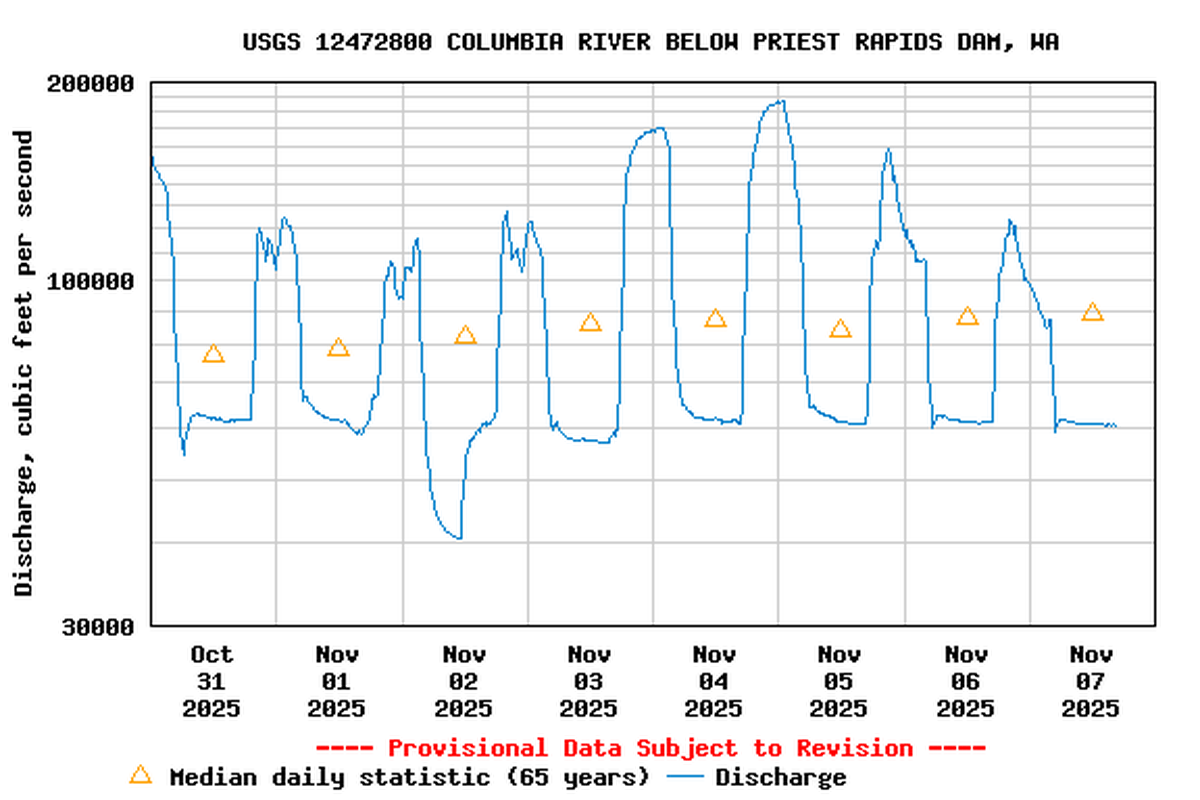
Flows that dropped from a high of 180,000 cubic-feet-per-sec around midnight expose a wetted shoreline where bundled-up anglers cast spinners and twitch multi-colored plastic jigs.
Grant County PUD operates Priest Rapids Dam on a reverse loading schedule when fall Chinook salmon spawn.
The goal is to keep daytime flows low to ensure eggs remain underwater during their over-winter incubation period. For my purposes, a noon arrival corresponds to a receding water stage. Higher flows that flood shoreline vegetation compete with errant backcasts.
The first angler I encounter reports no luck. Another guy shares he saw a Coho caught on a spinner “when flows covered the spot where your truck is parked.”
Bronze-back fall Chinook salmon roll and splash in closed waters off the mouth of Ringold Creek. I hunch down to navigate a tunnel of brush willow and head upriver.
Beaver paths and hidden boulders propagate the gently sloped shoreline. Thick mats of reed canary grass and bulrush bent parallel to flow do not make for an easy hike.
When my path is blocked by a deep trench, I secure a long thick willow branch and pole vault to the other side. The face plant that follows spooks a trio of Coho salmon that casually swim to deeper water.
Light rain sprinkles the water’s surface. Rattlesnake Mountain comes into view when sun peeks through layered storm clouds.
I select a fly that once caught a steelhead and doesn’t make an awkward splash when it lands. A crayfish pops out from its hiding place at my feet, flicks its tail, and swims backwards to safe depth.
Two-handed casting with a Spey rod is not intuitive. I’d prefer my rudimentary casting style (and my golf swing and downhill skiing form) are not captured on video.
Regardless, confidence is gained once I work downstream past divergent current and wind stills. One cast, three steps is the mantra unless I mess up a cast or the swing of my fly fails to please me.
Awakened from my reverie by subtle movement in my fly line, I raise my rod tip and feel nothing. The sage words of a friend I call the Zen Master rings in my ears, “Lower your rod tip if you sense a grab,” he would remind. “Lifting the tip pulls the fly out of a steelhead’s mouth.”
I lay my line out and let my fly swing seductively across turbulent current. When my line once more pauses at the end of the drift, I lower my rod tip and wait.
Only then do I sense my fly is hung up on the same sunken boulder that fooled me on the prior cast. Unfortunately, scraping a rock does not count as a grab. Awareness elevated, I vow to not make the same mistake unless another daydream permeates my thinking.
An upriver breeze chills my bones, so I reel up. Downstream of my truck, an angler drags a small dark Chinook salmon onto the bank, bonks it, and loads his prize in a cooler.
Across the river, between two islands, is a Chinook salmon spawning area where I drift faux eggs and red hackle flies for mountain whitefish.
A return trip with spinning gear to target Coho is another option. Then again, I’d hate to end the year without landing a steelhead on a fly.
Dauble is author of books about fish, fishing, and cabin life that can be purchased for holiday gifts via a link on his website, DennisDaubleBooks.com.
This story was originally published November 15, 2025 at 5:00 AM.