
Your guide to Columbia River 2025 spring fishing — by boat or from the bank
With the days getting longer and the warmer, people are gearing up for an exciting season of fishing all the way till the end of fall.
Tri-Cities offers an incredible number of places to go fishing whether it be in a boat or from the bank.
The Columbia River: The Fishing Heartbeat
The Columbia River hosts some of Washington’s best fisheries—big salmon and steelhead runs, impressive summertime Chinook, giant sturgeon, and abundant whitefish.
Equally notable are its non-native populations, including thriving smallmouth bass, walleye, shad, channel catfish, and panfish.
Reservoirs created by hydroelectric dams—such as the John Day and McNary pools (Lake Umatilla and Lake Wallula)—and the free-running Hanford Reach, where the Snake and Yakima rivers meet the Columbia, provide anglers with a wide range of opportunities.
Always check local regulations before fishing, especially for tightly managed species like salmon, steelhead, and sturgeon (many areas require catch-and-release).
The Washington Department of Fish and Wildlife (WDFW) stocked over a dozen ponds in Benton, Franklin and Grant Counties.
Local favorites include Columbia Park Pond, which received over 8,000 rainbow trout on March 25 and April 9, and Dalton Lake above Ice Harbor Dam in Franklin County was stocked with over 6,000 trout in mid to late March. Most of those fish weigh in at half a pound each, but some run up to 2 1/2 pounds.
Anglers can identify the stocked lakes and streams by County using the catchable trout plant report database search tool.
Anglers are also encouraged to download the free Fish Washington App which provide the most current and up-to-date fishing regulations for every lake, river or stream and marine area in the state. The interactive app also helps find fishing locations near them, locations of boat launches, and more.
Forecast for 2025
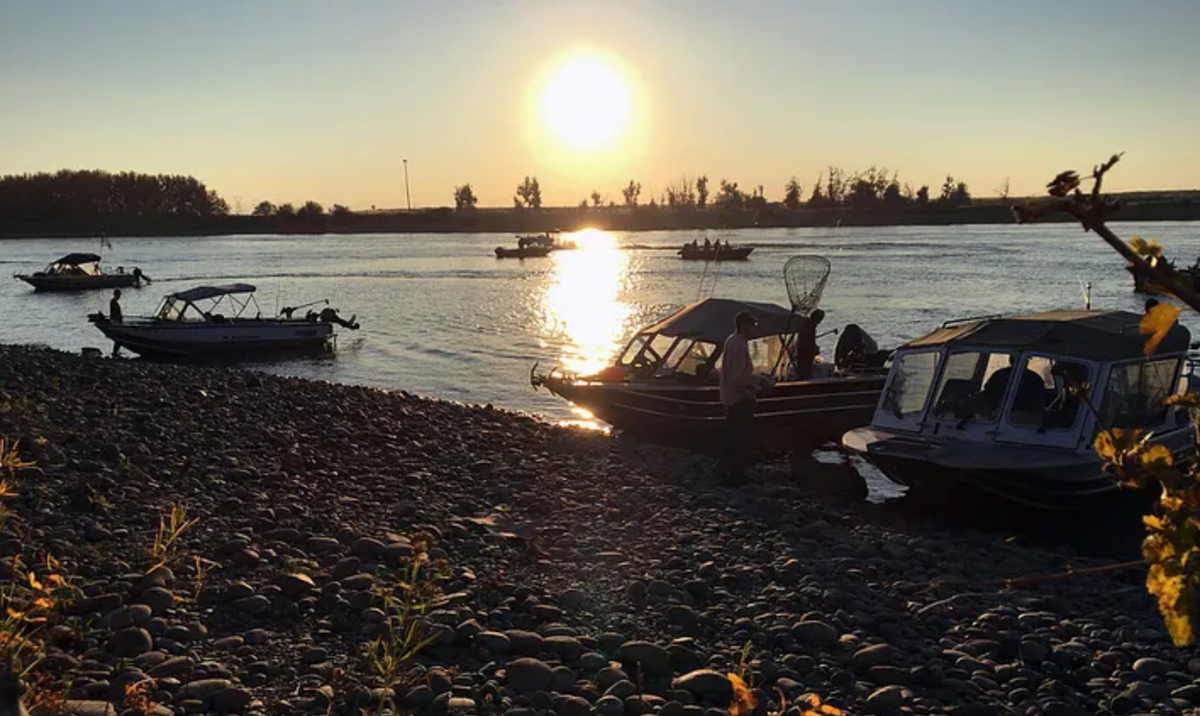
Anglers in Washington can expect similar salmon fishing opportunities in 2025-2026 compared to last season. Columbia River spring and summer salmon forecasts can be accessed at the WDFW forecast website.
The 2025 forecast for upriver spring Chinook is 122,500 fish, which is more than the 116,332 that returned to the Columbia River in 2024, but lower than the 10-year average of 139,676.
The WDFW Salmon Fishing Current blog offers recent posts and current news about fishing, a keeps anglers informed of any in-season fishing rule changes, emergency closures or other related developments in Puget Sound, the coast, and Columbia River.
Fishing requirements
For the stretches of the Columbia River upstream of Bonneville Dam to approx. 200’ above the fish ladder exit upstream to Hwy 730 at the Washington/Oregon border, the spring Chinook fishery remains open from April 1 through April 26, 2025.
Barbless hooks are required. Daily limit is 6, no more than 2 adults may be retained of which no more than 1 may be an adult Chinook. Release all salmon other than hatchery Chinook.
Summer Chinook salmon fisheries on the Columbia River are planned to be closed although some in-season changes could be made in upper sections.
Fall fisheries from Buoy 10 to the Highway 395 bridge in Pasco are planned for an Aug. 1 opener, with different dates by area for Chinook and coho. This includes steelhead restrictions throughout the river. The coho run size is expected to provide similar fishing opportunities. The Chinook run size is slightly improved upon last year’s return and expected to provide good fishing opportunities.
In waters downstream of Highway 395 Bridge in Pasco, sockeye will be allowed for retention from June 22 to July 6 with a daily limit of one sockeye and one hatchery- marked steelhead.
The 2025 Columbia River sockeye forecast of 350,200 is about half of last year’s record return, however this year’s forecast is slightly higher than the 10-year recent average return and predicted to be a good return.
The Columbia River sockeye fisheries on the mainstem at and above Hanford Reach and above Priest Rapids Dam will open with different dates this summer that are similar to past years with a four-sockeye daily limit.
Fishery biologists are watching the numbers closely. The numbers of returning spring chinook salmon coming into the Columbia River are running less than 50 percent of the 10-year average.
“Unfortunately, the springer season forecast is similar to last year,” said Todd Miller, District 4 Fish Biologist for Washington Department of Fish & Wildlife. “The present plan is to open Little Goose for two days/week starting the first week in May under an emergency rule, dependent on run timing.
The allocation for 2025 is 407 fish. The daily limit is 6 salmon, only one hatchery adult may be retained. Do not plan to open on weekends. The Yakima R. forecast is under what is needed to have a season. If the numbers show up, a special season may open under an Emergency Rule. Upper Columbia springer fishing will most likely be limited to the Icicle River as well.”
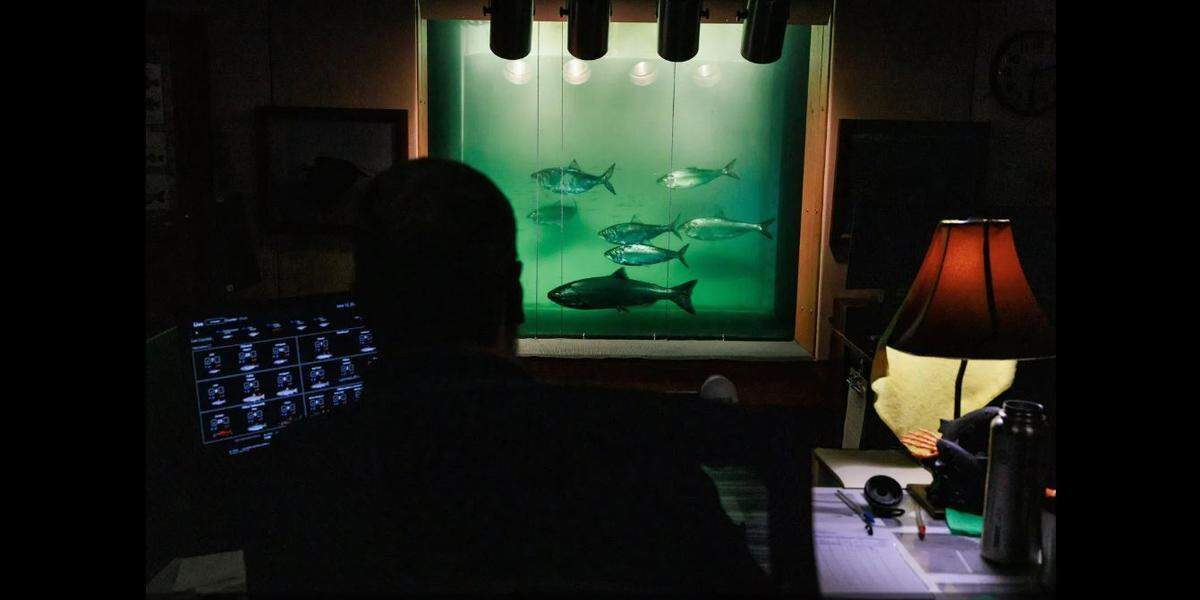
For the most recent counts over the Columbia River and Snake River dams, access the Columbia River DART (Data Access in Real Time) website.
Hidden gems and local ponds
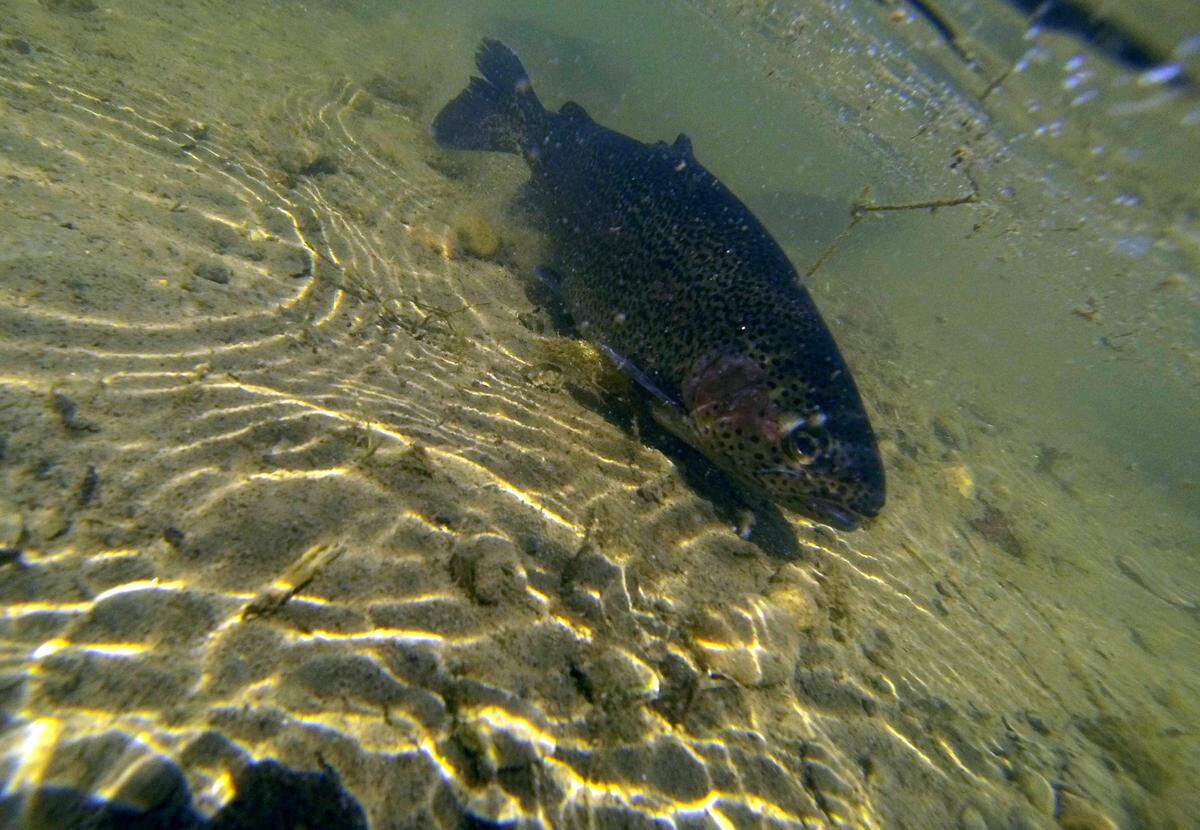
Smaller, diked ponds along railroad crossings on Benton County’s side of the river—such as Mitchell, Mount, Pit, Switch, and Yellepit—offer a small remote protected locations to fish for warmwater species.
Columbia Park Pond
This 7-acre pond in Kennewick is the only site in Benton County stocked exclusively with hatchery-reared trout. Open only to young anglers, seniors, and those with a designated harvester companion card, it sees about 10,000 rainbow trout planted each spring (March–April). After peak trout season, warm water species like bass, crappie, bluegill, and catfish take over. Conveniently located near the Kennewick end of the Highway 395 bridge, it’s a great spot for a family outing.
Dalton Lake
Located just east of Pasco, this 50-acre lake is stocked with roughly 16,000 catchable rainbow trout—and about 300 large triploid trout—from February to April. Once the trout season wanes, fishers can enjoy a year-round fishery featuring largemouth and smallmouth bass, yellow perch, black crappie, and bullhead catfish. Situated on the north side of the Snake River near Ice Harbor Dam, public access with a boat launch is available via Herman Road off Pasco-Kahlotus Road.
Marmes Pond
Diked from the lower Palouse River, this 9-acre pond is modestly stocked during late winter and early spring with approximately 1,500 catchable rainbow trout and several larger specimens. Accessible by boat from the Palouse River or via a short hike from Lyons Ferry State Park (located off State Route 261), this pond offers a quieter trout experience in eastern Franklin County.
Mesa Lake
Nearly 50 acres in size and fed by irrigation water, Mesa Lake is a warmwater fishery featuring bass, crappie, walleye, yellow perch, sunfish, and bullhead catfish. Just a half-hour drive north of Pasco, anglers can find access via Langford Road provided by the WDFW.
Palouse River
Forming the eastern boundary of Franklin County, this tributary of the Snake River is ideal for smallmouth bass, channel catfish, crappie, and other game fish. While hatchery steelhead fishing is technically open from August through mid-April, the lower river’s warmwater fishing is generally more reliable.
Powerline Lake
This 20-acre reservoir in northern Franklin County sees spring stocking of around 650 very large rainbow trout. With a two-fish daily limit (and a 14-inch minimum for trout), anglers can also catch largemouth bass, yellow perch, and black crappie. Located on the WDFW Windmill Ranch Unit—about eight miles northwest of Mesa—access is a 1.5-mile walk from the parking area at the end of Merion Road off Highway 17.
Scooteney Reservoir
Sprawling across almost 700 acres, Scooteney is a prime destination for warmwater species like walleye, yellow perch, bass, crappie, sunfish, catfish, and even lake whitefish. Open year-round—with ice fishing opportunities in winter—it is located in northern Franklin County, west of State Route 17 and just nine miles southeast of Othello. The U.S. Bureau of Reclamation offers a campground, boat launch, and dock facilities.
Snake River
Stretching from the mouth near Pasco to the Palouse River, this reach of the Snake is fished for both native coldwater and introduced warmwater species. With the river impounded by Ice Harbor and Lower Monumental dams, smallmouth bass and channel catfish are common targets.
Parting thoughts
Before heading out, it’s vital to pay close attention to the current fishing regulations, as well as the emergency fishing rule updates which reflect changes to the rules found in the Sportfishing Pamphlet.
Local guides and community fishing events often highlight these spots, so tapping into local fishing networks, fishing blogs, and social media can further enhance your trip planning.