
Once common in Eastern WA, monarch butterflies could be extinct in the West in 55 years
The U.S. Fish and Wildlife Service is proposing protections for monarch butterflies as future generations of children are at risk of never seeing one of the vivid orange and black creatures in the wild in Eastern Washington.
On Tuesday, the federal agency said it is proposing listing the once commonly seen monarch butterfly as a threatened species under the Endangered Species Act and is considering specific protections.
In 2017, research by Cheryl Schultz, a Washington State University professor, estimated an 86% risk that by 2067 there would not be enough monarchs migrating in the West to sustain populations.
U.S. Fish and Wildlife issued a more dire prediction Tuesday, putting the chance of extinction of the western population of monarchs at 99% by 2080.
Populations have declined in the West by more than 95% since the 1980s, it said.
The larger migratory populations east of the Rocky Mountains, which overwinter mostly in Mexico, are doing somewhat better. The chances they could be extinct by 2080 are 56% to 74%, according to U.S. Fish and Wildlife.
In the West, monarch butterflies migrate north mostly from overwintering grounds along the California coast to breeding areas as far north as British Columbia, Calif.
The tiny creatures may average 40 miles of travel a day, riding warm air currents a few thousand feet up in the air.
When they come out of the sky to land in the evening, they look for nectar then and again in the morning to fuel their continuing journey.
Monarchs in Tri-Cities area
Since many migrate along rivers, riverside parks like Leslie Groves in Richland, are good places to look for them starting in June in the spring, said David James, an associate professor at Washington State University’s Irrigated Agriculture Research and Extension Center in Prosser and a Northwest authority on the butterflies.
Some end their migration in southern Eastern Washington after finding plenty of their favored plant, milkweed, relying on the plants to host their eggs and their leaves to feed their caterpillars.
Interstate 82 from the Tri-Cities to Yakima is “milkweed alley,” where the Washington state Department of Transportation has allowed the plant to thrive and confines mowing to less vulnerable times for the butterflies, James said.
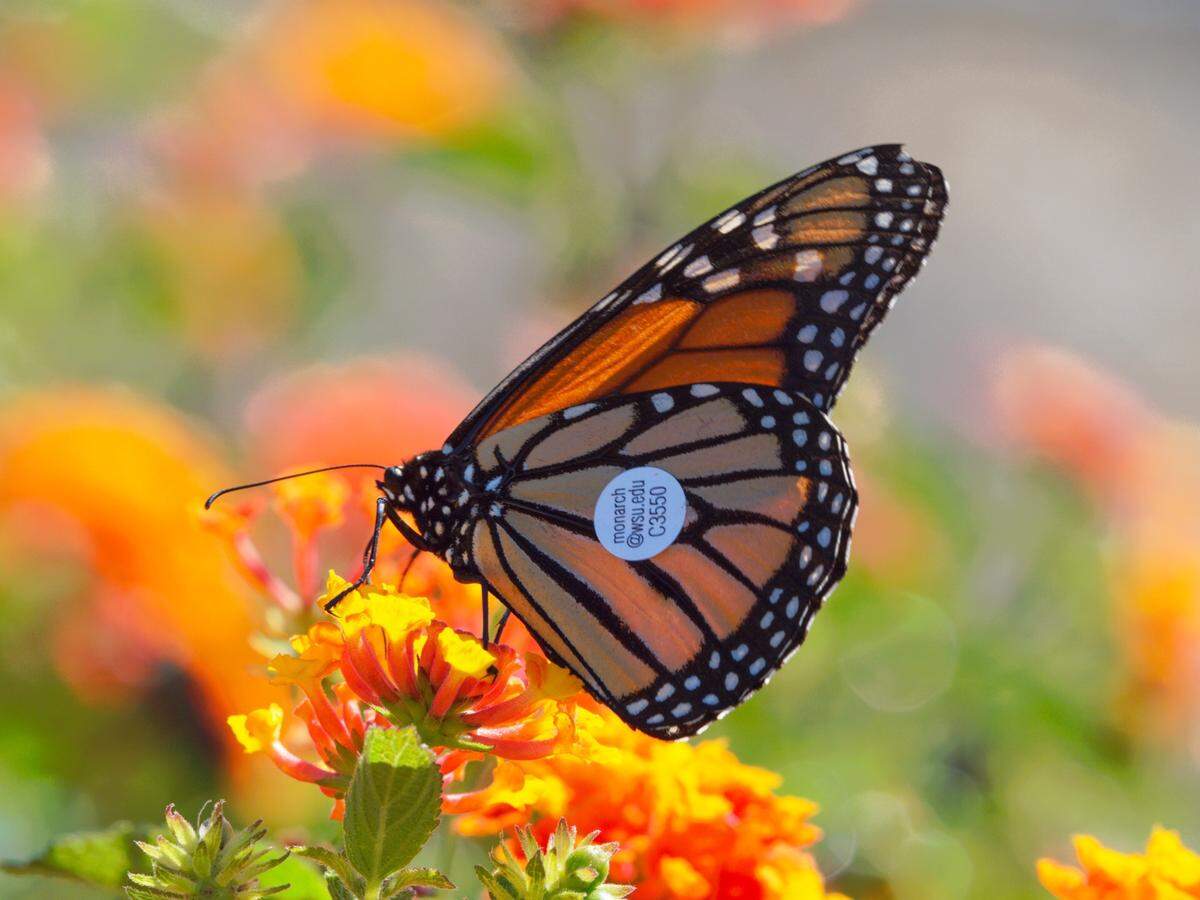
The butterflies migrate back to California from Eastern Washington in September and October.
Much of what is know about the migration of of monarch butterflies in the West comes from James’ program that tags monarch butterflies.
People who see a butterfly with a sticker attached to its wing are encouraged to take a photo and email the location to James.
From 2012-’18 inmates at Washington State Penitentiary in Walla Walla reared caterpillars for James’ tagging program, showing remarkable skill and care, James wrote in a review of monarch butterflies published in the journal “Insects” this year.
James’ tagging program now continues only in Oregon and Idaho because Washington and California now prohibit people from touching or raising monarchs.
Learning to love monarchs
It’s not a policy that James likes.
“Holding a monarch in your hands will make your heart beat faster and ignite a sense of wonder whether you are a child or a grown man,” he said in an email to the Tri-City Herald.
Children need to know monarchs in real life to know and love what they will be protected later in their lives, he said.
Since U.S. Fish and Wildlife raised the possibility of listing monarch butterflies a decade ago, an enormous amount of conservation work has been done, James said.
Listing the species as threatened could enable more funding for conservation, but it could also discourage some people from helping, he said.
Some people could fear liability issues if they create habitat for the butterflies should they be listed.
However, he is heartened that the proposed listing does not take away the right for people to touch and rear a few of the butterflies, he said.
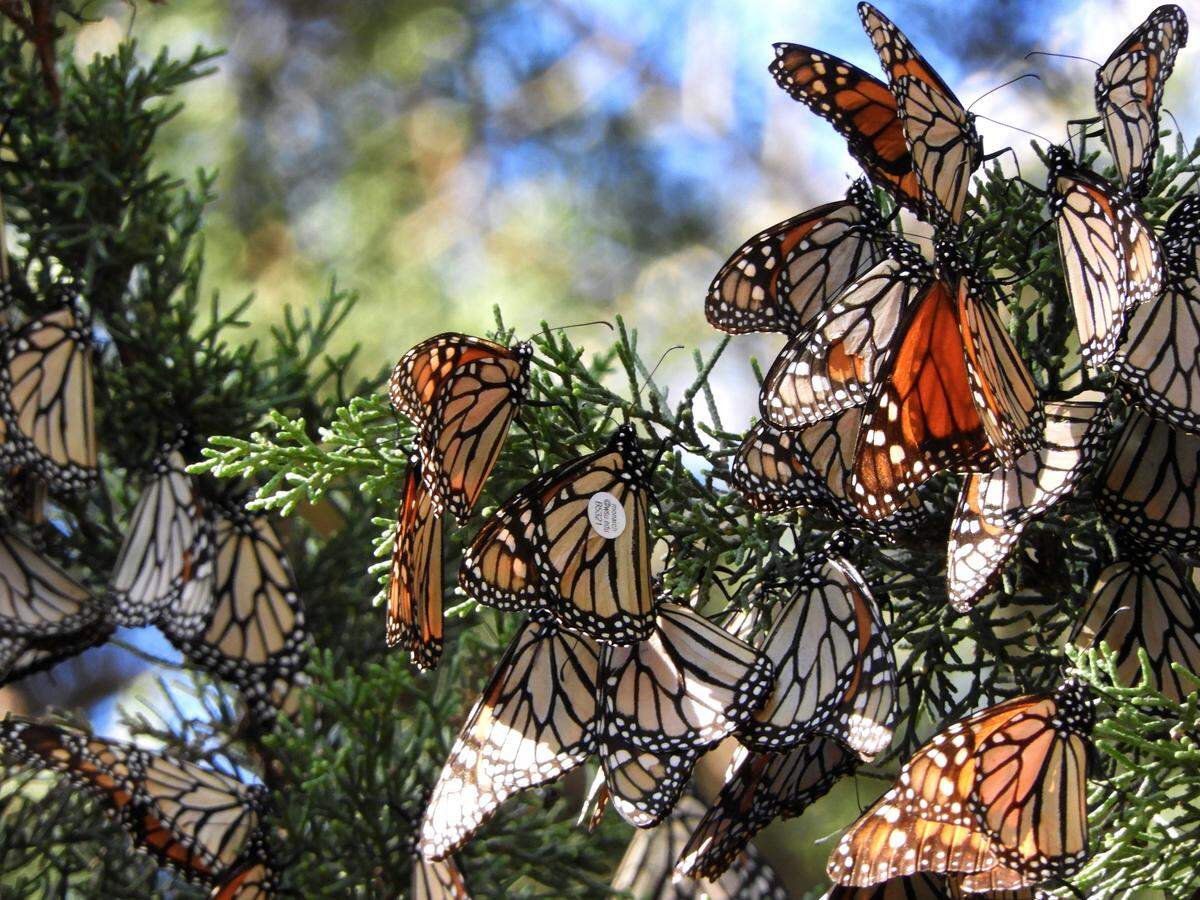
The proposed listing also proposes addressing the lack of overwintering habitat in coastal California needed to provide a resting place during the cold and help them prepare for breeding in the spring.
Nearly 4,400 acres of critical habitat are proposed. The critical habitat designation would impose no requirements on most state or private land, according to the U.S. Fish and Wildlife Service.
Monarchs called resilient
Threats to monarchs include loss and degradation of habitat for overwintering, migration and breeding, according to the agency.
Exposure to pesticides and the effects of climate change also have harmed monarch populations, it said.
The increasing use of pesticides in agriculture and urban areas, particularly the use of the new class of pesticides called neonicotinoids that emerged in the 1990s, has coincided with a 55% to 67% decline in the size of overwintering populations of monarchs from 1994 to 2011, James wrote in “Insects.”
But he also pointed out in the report that the butterflies have shown a capacity for resilience in recent years.
“It does bounce back from adversity and is a master of adaptation to changing circumstances,” he told the Herald. “It is doing that now by responding to climatic extremes.”
As the climate has warmed, some monarchs have reproduced in California overwintering areas, he said.
But the most important step to help protect the butterflies is “allowing people to experience the magic of monarchs up close and personal,” he said. “We have to love what we need to conserve.”
Residents of southern Eastern Washington who want to help monarch populations and have a chance to see them up close can plant milkweed in their gardens. Swamp, showy and narrow-leaf varieties are recommended.
This story was originally published December 11, 2024 at 5:00 AM.