
Outdoors | On the hunt for elusive spring Eastern WA mushrooms
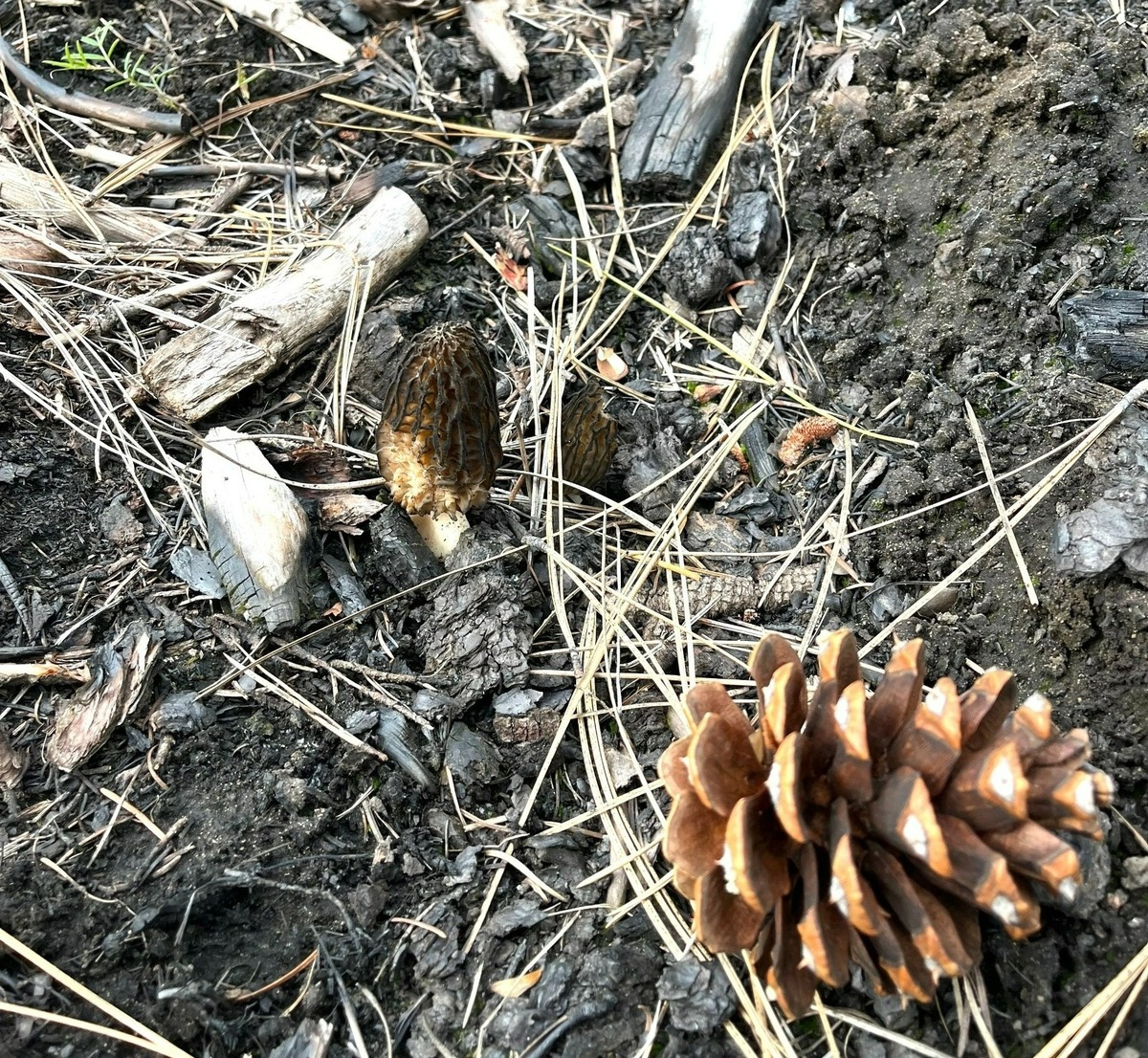
No sooner do I take three steps up the sunlit slope when I spot a distinctive brown cap sticking up like a sore thumb from a loose layer of Ponderosa pine needles.
Two days spent hiking wilderness trails, crawling through thorny bush, high-stepping downed logs, and bending at the waist finally led to reward.
When it comes to morels, some finds are best explained as serendipity.
Hunting mushrooms is much like collecting agates on a gravely beach. It’s not so much you look for something specific as you look for something different to show against a forest floor crowded with fir cones, dead leaves, rotted wood, and rock rubble.
It also helps if sunlight filters through conifers to impart a shine that directs your vision.
Past burn areas are favorite hunting grounds for mushroom hunters. One theory is fire leads to a flush of carbohydrates to the soil when trees die, stimulating the emergence of mushrooms.
A practical explanation is mushrooms are easier to spot against a fire-scarred landscape than one crowded with low-lying vegetation.
It’s best to hunt with a companion although doing so requires you eventually inform them of a finding.
On a breezy day in late May, when hop vines at Moxie began to climb supportive wire, two friends and I traveled to a burned landscape in the Naches River watershed.
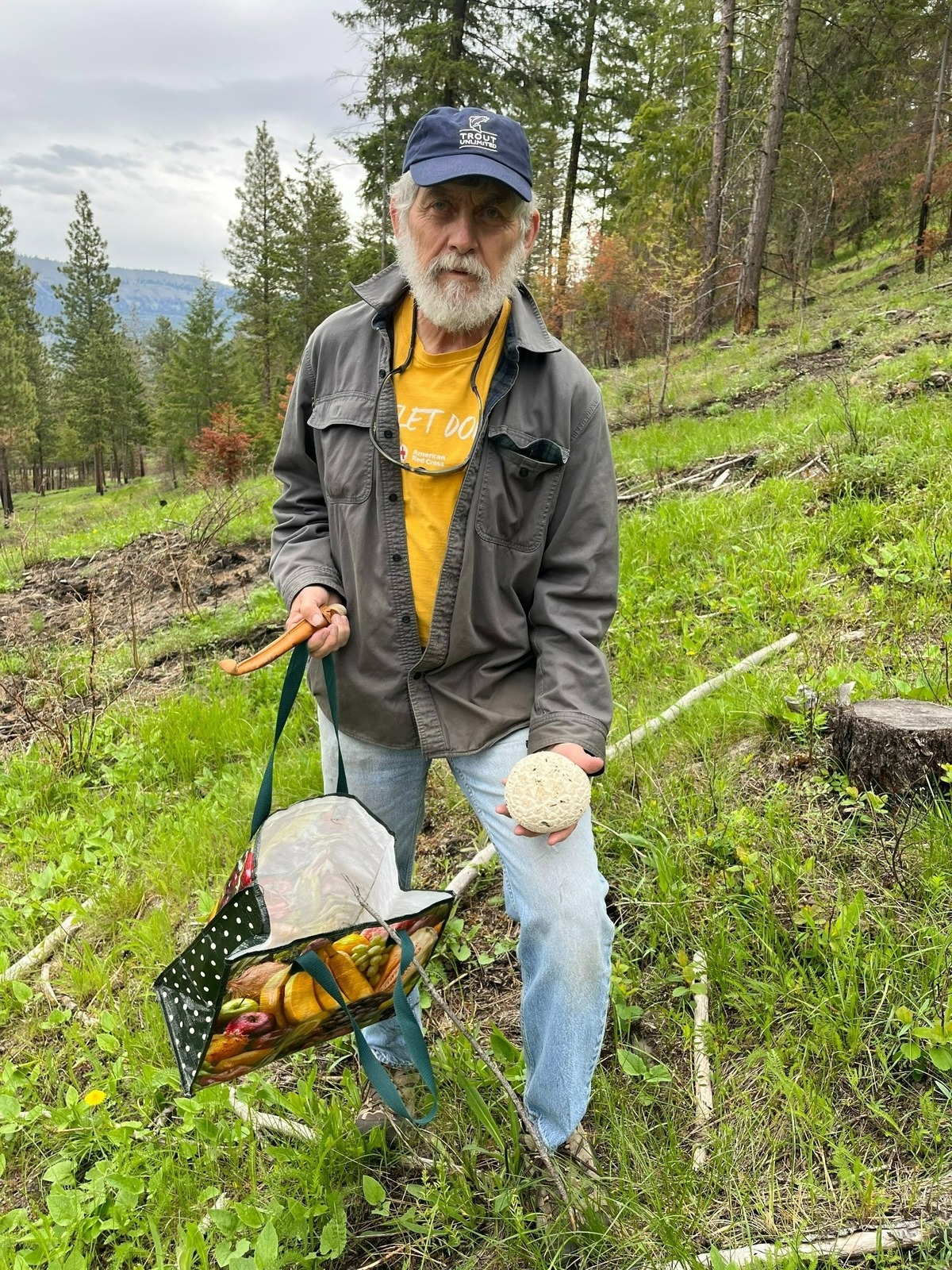
Our first search, a rock-lined ridge at 2,000-foot elevation, reminded, “never stop at the first fishing hole you encounter by the side of the trail because it will yield nothing.”
A gentle draw where fire burned hot across the base of living Ponderosa pines was next. Moist ground littered with footprints suggested others had ventured this way.
Ken’s keen eyesight quickly located a morel whose dark cap was difficult to distinguish against charcoal ground. I expanded the search zone to find half a dozen more.
Meanwhile, Ted harvested a roadside bolete and two large puffballs, the latter fungi whose cooked texture is likened to tofu. As he later shared, “Most any mushroom tastes good if you fry it in butter, garlic, and salt.”
An hour passed in relative silence before Ken announced he collected several more morels from a small patch near the road. “Why didn’t you tell us,” I said.
“I’m telling you now,” he replied, before calling over Ted who earlier lamented, “I need to see one so I know what I am looking for.”
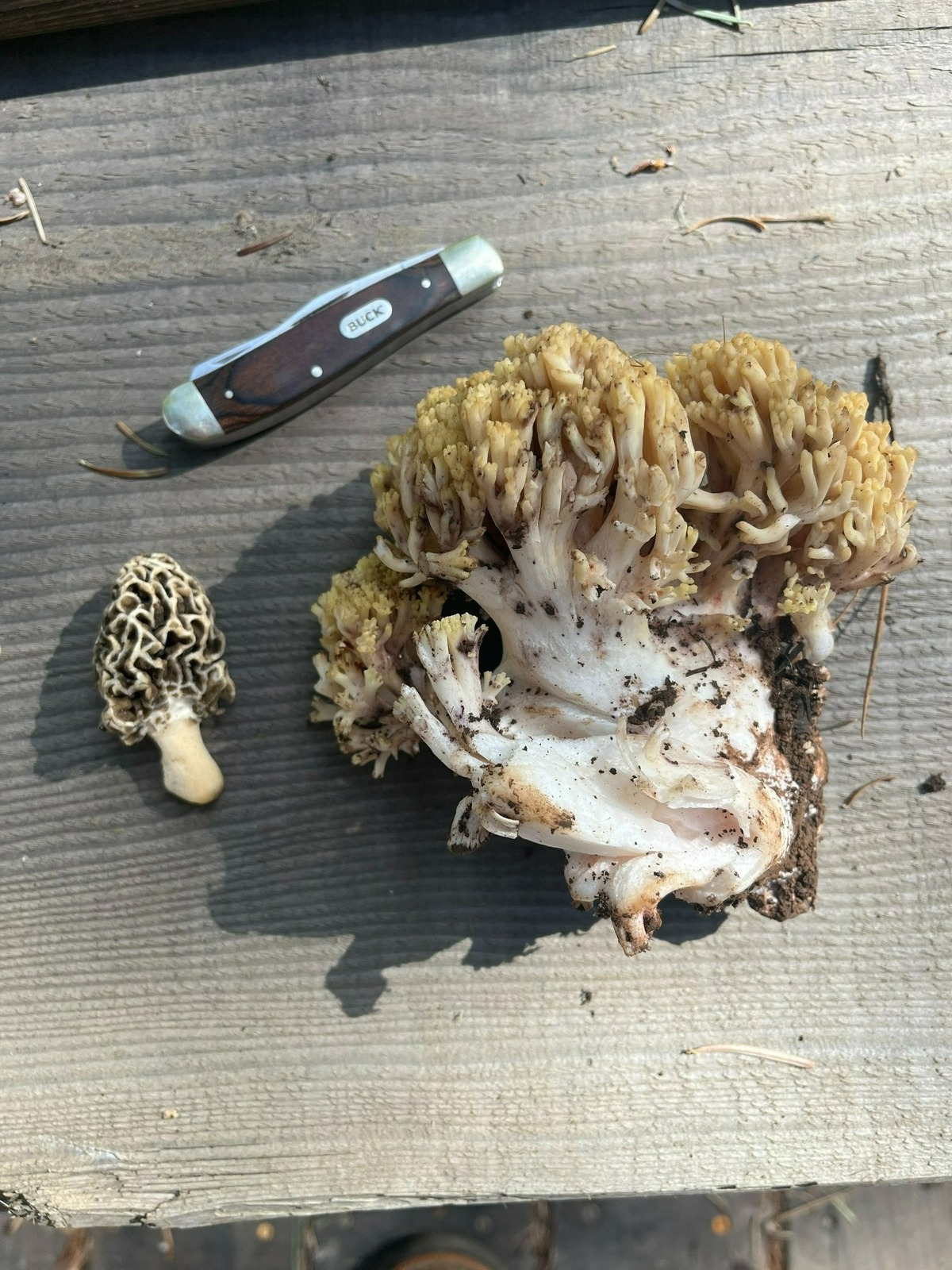
I focus my mushroom searches on three common edible species: morels, corals, and boletes. Morels have a dark brown or blonde pointed cap with deep pits and ridges attached along the length of a hollow stem.
Some mycologists say morels first show on the forest floor when soil temperature exceeds 50 degrees F. An extended period of warm weather following springtime rain often triggers them to emerge from their hiding place in the soil.
Coral mushrooms are found in similar overstory vegetation as morels. Their large size and creamy-color make them easy to spot when they emerge from thick forest duff.
Preparing this cauliflower-looking mushroom for the table requires cleaning dirt and conifer needles from their tangled fruiting body, but is well worth the effort.
The “Spring King” bolete or “porcini” is another prized mushroom. Boletes are easily recognized by a bulbous base and a reddish-brown cap that can spread up to a foot wide. A key distinguishing feature is the underside to a parasol-shaped cap consists of sponge-like pores (not gills).
Back in the Umatilla River canyon, I work my way up to a dense stand of grand fir to find the crown of a fist-sized coral emerging from loose soil. I scrape dark clay from its base and stuff it in a canvas bag.
Ten feet further up the slope are three more corals in their prime. Serendipity strikes again.
“Are you happy?” Nancy says when I burst through the front door of our cabin showcasing a big smile. She later admitted to hoping my bursting canvas bag was full of morels.
Past journal notes tell of 100-morel days, but I take what I get and make the best of it. Corals make up for any perceived lack of flavor in poundage.
Bushwhacking for shrooms requires donning a pair of sturdy jeans, a long-sleeved shirt and a hat to protect against insect bites and prickly vegetation.
I would be remiss if I didn’t also mention wood ticks. This year’s forays into the brush led to finding more than one of these beasty hitchhikers on a person. All were removed without the use of kerosene and flaming matches.
Unless lucky enough to find morels in an urban pile of bark mulch, (as my older sister did this year), plan to drive 100-miles or so to where huckleberries grow along a Blue Mountain or Cascade Mountain ridgetop.
This year’s late snowfall promises higher elevations will yield edible mushrooms for harvest through the first part of June. Use a good field guide to assure positive identification and test your digestive tolerance in small quantities.
This story was originally published June 6, 2022 at 5:00 AM.