
Fearsome new predator on the prowl in the Yakima River near Tri-Cities
A fierce new predator is on the prowl in the Yakima River.
And with its double rows of razor-like teeth in its bill-shaped jaws, it could pose a threat to salmon and other fish.
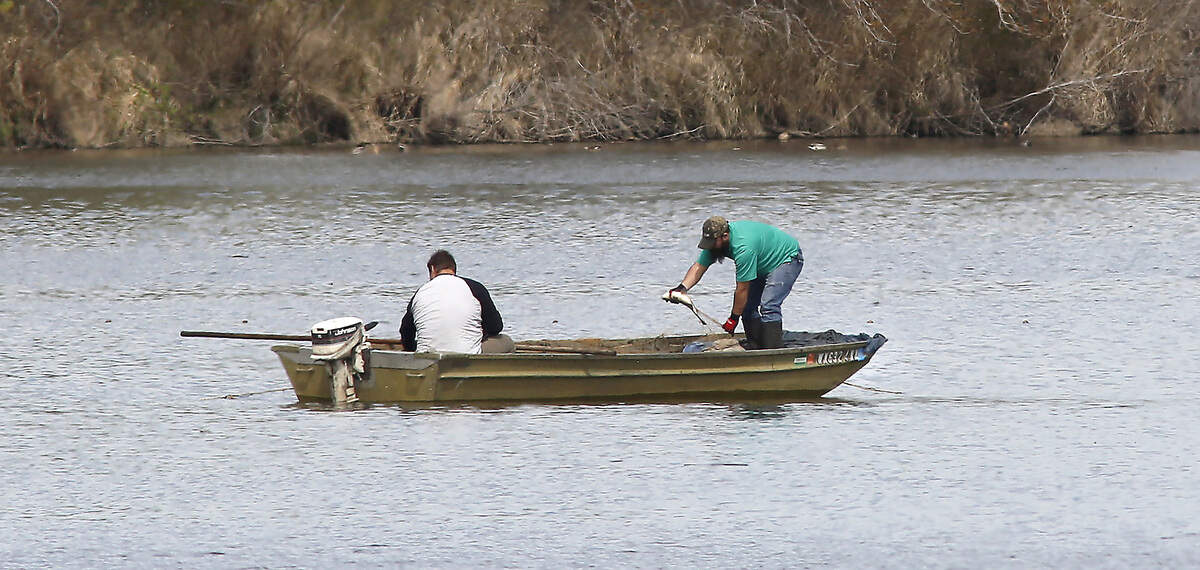
Two large alligator gar, about 24 and 36 inches long, were caught in the lower Yakima River near Richland’s Bateman Island by a team of commercial carp fishermen in early April.
Based on a review of a video, Solomon David, a fisheries expert from Nicholls State University in Louisiana, confirmed the identification.
Alligator gar, native to southern U.S. Cuba, Mexico and Central America, reach a great size — as big as a white sturgeon.
These air-breathing creatures have been known to reach up to 10 feet long and 300 pounds.
How these curious fish ended up in the Yakima near the Columbia River is anyone’s guess, although most likely a misguided aquaria enthusiast released them.
Before you get a similar idea, be aware alligator gar are classified as an aquatic invasive species.
As for other exotic fishes that include piranhas, blackskin catfish, and silver carp, their introduction to state of Washington waters is prohibited. Violators face a maximum penalty of 1 year in jail and a $5,000 fine.
Alligator gars, along with sturgeons, bowfin and paddlefish, belong to an ancient group of ray-finned fishes.
They possess several unusual features, including rectangular scales found only in primitive fishes and a gas bladder that can function like a lung.
All fish have air bladders, which they use to regulate their buoyancy, but the air bladder of a gar can extract oxygen from swallowed air. This feature allows them to survive in stagnant water.
Gar have no regulated harvest and can be taken by any means, including spears.
Rodeos are staged on some of Mississippi’s delta lakes with prizes awarded for the largest gar.
By other accounts, some fisherman find sport using a light springy wire formed into a loop to snag them around the elongated jaw.
Sporting fish
Considered a sporting fish to catch on tackle, the flesh of gar is edible, but not favored. Their eggs or roe, however, are poisonous to mammals (including humans) and birds.
Why all this fuss over a fish? Similar to the fearsome northern pike, gar first eat other fish when they reach a size of two inches long.
Both are apex predators and feed on any fish they might meet up with. Say goodbye to minnows, suckers, and salmon if either species gains a foothold in the region.
Despite their menacing appearance, swimming in the vicinity is not considered to be a risk to humans.
It’s possible these two alligator gar exhibited behavior similar to walleye and smallmouth bass and moved into the warm shallow waters of the lower Yakima River coincident with the spring freshet.
It’s less likely they entered to spawn, however.
Alligator gars mature slowly. In tropical waters, males are reported to reach maturity at age six and 40 inches in length. Females mature later at around 46 inches and 11 years of age.
During the spawning season, schools of gar can be readily detected by their peculiar habit of thrashing on the surface, at which time the female deposits the eggs.
Hopefully, these unwanted invaders would disappear from area waters before they exhibit thrashing behavior.
One thing for sure; when local anglers are allowed to launch their boat again, gars will be high on their list of fish to catch.
This story was originally published April 25, 2020 at 11:36 AM.