
Large data center proposals face power limits in the Tri-Cities | Opinion
Understandably, there has been a great deal of handwringing lately over the rapid development of large and mega-scale data centers across the United States.
Concerns about land, water, and electricity use have grown sharply, fueling a backlash that, in many communities, appears to be overshadowing the promised tax revenues and jobs that come with welcoming “Big Data” as a community partner.
The Tri-Cities and surrounding areas are no exception. Proposals for data center development have made local headlines, stirring a mix of emotions: optimism over the promise of economic growth, but also concern about the demands these facilities place on essential infrastructure. Chief among those concerns is electricity use, and the potential impact large data centers could have on power grid reliability and the retail rates charged by local utilities.
Whether you support or oppose data center development, the truth is that, when it comes to electricity supply, Washington state in general, and the Tri-Cities area in particular, has very little to offer developers of large-scale data centers in the near to mid-term. There are two primary reasons for this conclusion.
First, electricity in the Tri-Cities and surrounding areas is supplied by five not-for-profit public utilities that are customers of the Bonneville Power Administration (BPA), a federal agency responsible for marketing the output of 31 federal dams and the Columbia Generating Station nuclear plant. Tri-Cities public utilities purchase nearly all of their electricity supply from BPA and are commonly referred to as “preference customers.”
This designation gives us the enviable statutory first right to purchase power from BPA’s federal system, a remarkable portfolio that has supplied the Northwest with some of the lowest-cost wholesale electricity in the United States for generations.
But preference rights come with restrictions. Under federal law, a New Large Single Load, commonly called an NLSL, is a new or expanded load at a single location that adds 10 average megawatts or more in annual demand. At that point, the load cannot be served with BPA’s low-cost “preference power.”
For context, 10 megawatts is a large amount of electricity for most communities, but it is small compared to the scale of many proposed data centers. The Tri-Cities and surrounding area’s total annual electricity demand is more than 600 average megawatts, or roughly six percent of Washington’s retail electricity sales. Yet some of the data centers making headlines would require several hundred to as much as 1,000 megawatts at a single location.
That is the heart of the issue. Data centers that exceed the 10 average megawatt NLSL threshold proposing to connect to a Tri-Cities public utility system must either bring their own dedicated power supply or pay for non-preference power at rates that reflect the cost of serving new large loads.
Under BPA’s current New Resource rate schedule, those rates vary by month but average about $111 per megawatt-hour. That is nearly three times BPA’s low-cost Tier 1 preference power rate of $37 per megawatt-hour. So far, none of BPA’s more than 130 preference customers located throughout the Northwest have requested New Resource rate service for a data center.
Second, Washington’s Clean Energy Transformation Act, commonly known as CETA, requires all utilities to supply 80 percent of retail electricity sales with carbon-free electricity by 2030, on the way to 100 percent by 2045. This means that whether a data center is supplied electricity under BPA’s New Resource rate schedule or from a non-federal generating source, the supply must be 80 percent carbon-free starting less than four years from now.
Herein lies the rub. Data centers, in the traditional sense before artificial intelligence, require always-on electricity, no matter the weather conditions or time of day. Under CETA mandates, new data centers in the near to mid-term will need to be mostly supplied by intermittent and variable wind and solar farms, which must be backed up by reliable generation.
And no, BPA preference customers cannot contract for federal hydropower on a long-term firm basis to fill in the zero and low generation periods that are inherent with part-time wind and solar technology.
Yes, if BPA or other dam owners have a good water year, there may be surplus hydropower available as a short-term market purchase. But an always-on, capital-intensive industrial facility like a data center needs more than hope that water will show up each year to “fuel” hydroelectric dams at surplus levels. Data centers need certainty.
Firm backup generation for new data centers that choose to locate in the Tri-Cities will have to come mostly from generating resources other than hydro, which in theory could include natural gas power, but only to a level of 20 percent or less of annual demand, which is the CETA compliance limit for carbon-emitting generation beginning in 2030.
And good luck finding a natural gas plant willing to guarantee backup supply on a long-term basis for a variable amount of capacity that changes seasonally and hourly.
Another critically important perspective is that what is happening in Umatilla and Morrow counties in Oregon is not indicative of what is possible in the Tri-Cities. Why? Because not-for-profit consumer-owned utilities in Oregon are not subject to that state’s 2040 carbon-free electricity mandate. This means Umatilla Electric Cooperative is free to supply Amazon data centers with whatever mix of electricity it chooses, with one important restriction: it must meet Oregon’s 25 percent renewable portfolio standard.
Compared to Washington’s CETA, this is an extremely low bar that can be largely satisfied by purchasing renewable energy certificates, leaving plenty of room to meet firm data center electricity demand with firm natural gas generation when needed.
Lastly, what is happening in Chelan, Douglas, and Grant counties in Washington is also not indicative of what is possible in the Tri-Cities. Why? Because the three public utilities serving those counties, known as the “Mid-Cs,” own their own low-cost hydroelectric dams, which is a huge reason data centers started developing in Quincy in the late 1990s. Mid-C utility circumstances are fundamentally different from those of Tri-Cities utilities, which rely almost entirely on BPA preference power and are constrained by BPA’s NLSL restrictions.
Yes, it is theoretically possible for Tri-Cities area utilities to piece together a portfolio of wind, solar, batteries, and power market purchases to reliably meet the electricity demand of a big data center. However, short-term market purchases of the “unspecified” kind that are not contractually tied to a specific generating plant with assigned reliability attributes will not meet the requirements of the Western Resource Adequacy Program, which aims to avoid blackouts on a grid with increasing penetrations of variable supply resources.
Nor will it be simple for market purchases to comply with CETA’s carbon-free mandates, which categorize unspecified purchases as “dirty” unless they are certified as renewable or non-emitting.
At bottom, the Tri-Cities area and other Washington utilities that are being asked to connect electricity-intensive loads like data centers are at a huge strategic disadvantage compared to utilities located in states that welcome natural gas-fired power generation and are not trying to tax it out of existence. To reliably supply hundreds and even thousands of megawatts of data center demand with carbon-free electricity using primarily wind and solar will require massive overbuilding across a large geographical area, along with large numbers of battery banks and new transmission lines.
This approach will take a long time and will be very risky and costly.
So, until new nuclear power becomes available, large data center development in the Tri-Cities area is going to be extremely difficult and, at this point, highly speculative at best. In the meantime, if you are an electricity customer of Benton PUD or another Tri-Cities public utility, you don’t need to worry about big data centers stealing your low-cost power supply. It’s not possible.
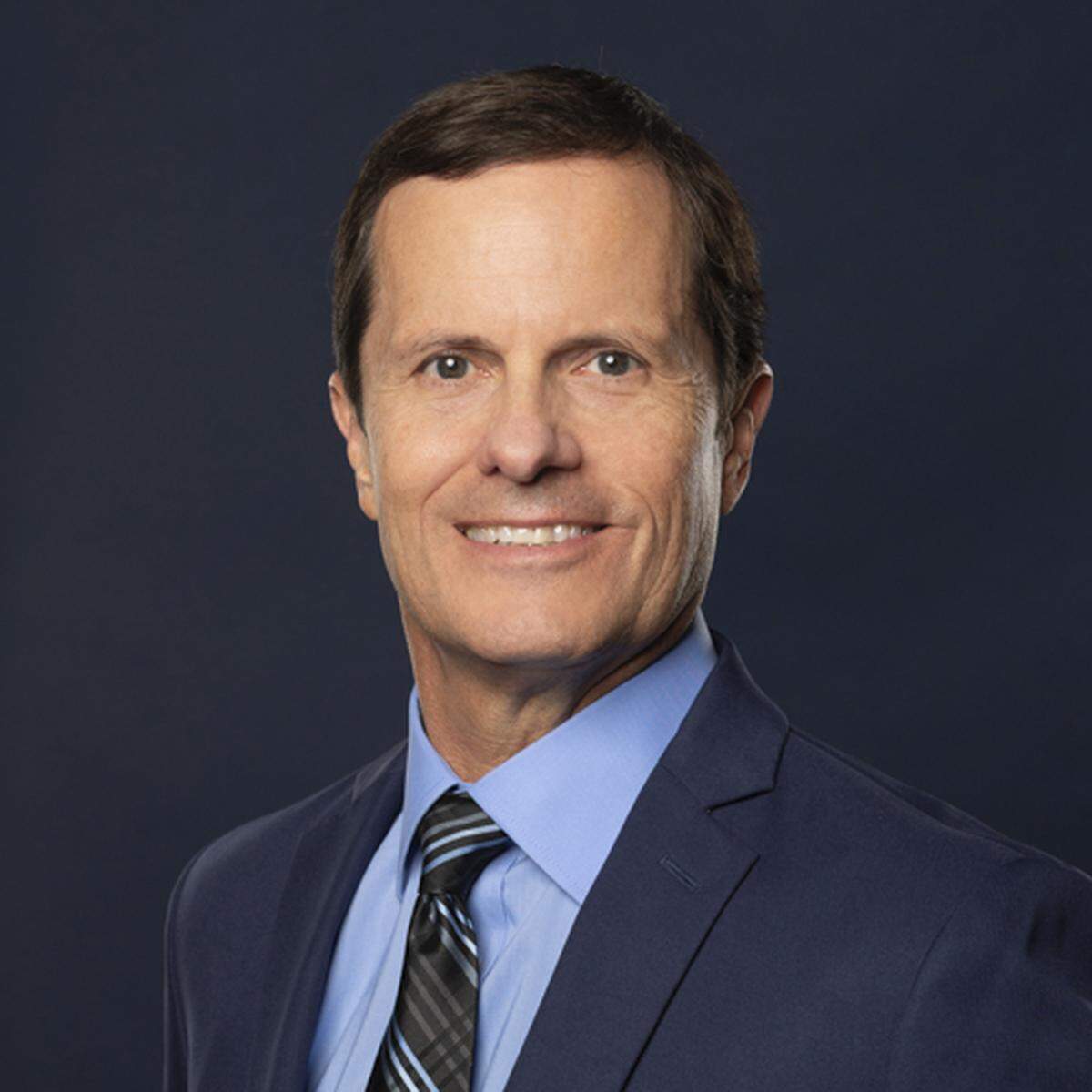
Rick Dunn is general manager of Benton PUD.