
Celebrate Earth Day at free Tri-Cities event with YouTube celeb and others
AI-generated summary reviewed by our newsroom.
- The fourth annual Tri-Cities Earth Day Celebration at the REACH Museum is April 18
- Admission to the museum is free for the event with Spanish translation provided.
- More than 700 attendees and forty local organizations are expected, with limited parking.
Earth Day was first celebrated in 1970. As the global population has grown and become more affluent, we move ever closer to exceeding the carrying capacity of the only planet that can meet our needs.
Water is being extracted from underground far faster than the aquifers are being replenished by precipitation.
Agriculture is facing diminishing water supply as aquifers are depleted and the natural storage of winter precipitation in mountain snowpack declines as the planet warms in response to greenhouse gas emissions from burning forests to clear land for agriculture, burning fossil fuels for energy and methane leaks from mines, wells, and cows.
Forests are burning after decades of fire suppression, declining mountain snowpack, and slash and burn for crops not needed to feed the world. Soil is eroding from our farmlands after being repeatedly disturbed by tilling. Plastic is accumulating seemingly everywhere, even in our bodies.
Wild species are facing extinction as habitat is lost to human development, ocean acidification, and vegetation shifting in response to climate change. As Greenland and Antarctic ice melt and oceans warm, rising seas will flood coastal cities and even some entire nations.
Solutions are available. Population growth is slowing as effective birth control is now available, and affluence and energy abundance are now possible with far less emissions of greenhouse gases. The human population can be fed with far less land and water if it embraces a tasty less beef-intensive diet that still meets dietary requirements for complete proteins.
A small fraction of the millions of acres of land now devoted to growing corn to produce ethanol for transportation can be used much more effectively to produce far more power with solar panels and batteries.
Forests can be managed with selective harvesting to produce timber without destroying habitat or overcrowding competition for water and sunlight, so they are healthier and less prone to burning.
Crops can be planted with direct seeding, so that soil is not disturbed, and cover crops can add carbon to soil so it’s less prone to erosion. Plastic use can be reduced by reusing containers of bulk goods. Carbon emissions can be reduced through electrification of transportation and buildings, and decarbonization of electricity using nuclear, solar, wind, batteries, and geothermal sources.
Earth Day at Museum Reach
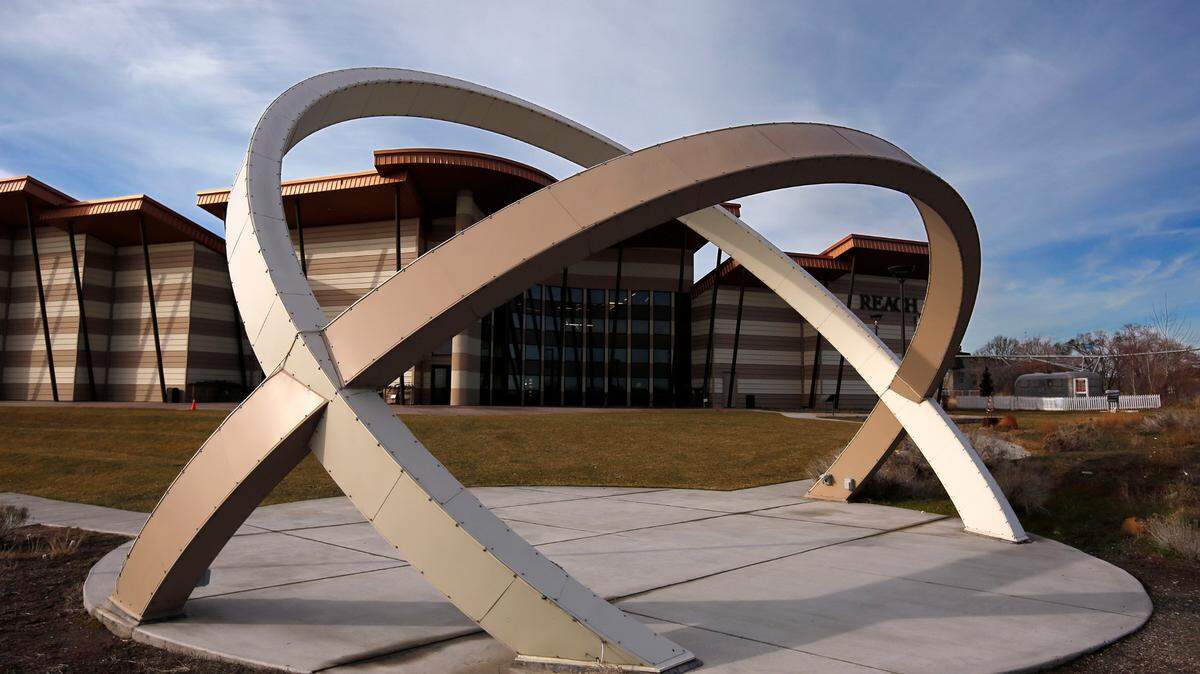
What can you do? I invite you to attend the 4th annual Tri-Cities Earth Day Celebration at the Reach Museum from noon to 4 p.m. on Saturday, April 18.
It will inspire you to live lightly on the Earth. Thanks to generous support from Battelle, Bechtel, Ben Franklin Transit, Energy Northwest, Waste Management, and numerous non-profit organizations, admission to the Museum will be free for the event, and Spanish translation will be provided.
In addition to learning how to lighten your impact on the Earth, you’ll learn about the geology of southeastern Washington by famed geologist and YouTube celebrity Nick Zentner, and, from me, about what the Tri-Cities is doing about climate change.
Forty local organizations will table with information and interactive activities, and Ballet Folklorico and the Tri-Cities Steelband Association will entertain.
A labyrinth will be available for the kiddos and the contemplative. Miss Tamales will provide food, and Diana Knoll of the Tri-Cities Food Coop will demo some food that is healthy for both your body and the Earth.
Parking is limited, as more than 700 people are expected to attend. Consider bicycling to the event. If you must drive, park in the large parking lot near the intersection of Columbia Center Boulevard and Columbia Drive and then take the free shuttle “train” to the museum. Most of the event will be outside, so dress accordingly.
-- Retired climate scientist Steve Ghan leads the Tri-Cities Washington Chapter of Citizens Climate Lobby, guides crews that remove logs from the Pacific Crest Trail and is an officer for the Three Rivers Folklife Society.