
WA can’t keep ignoring public outcry on sex offender homes | Editorial
AI-generated summary reviewed by our newsroom.
- Kennewick residents protested an LRA home and urged lawmakers to act.
- Washington released a record 68 from commitment in 2023; oversight weak; 25% re-arrested.
- Few reform bills received hearings; civil commitment reform should be a 2027 priority.
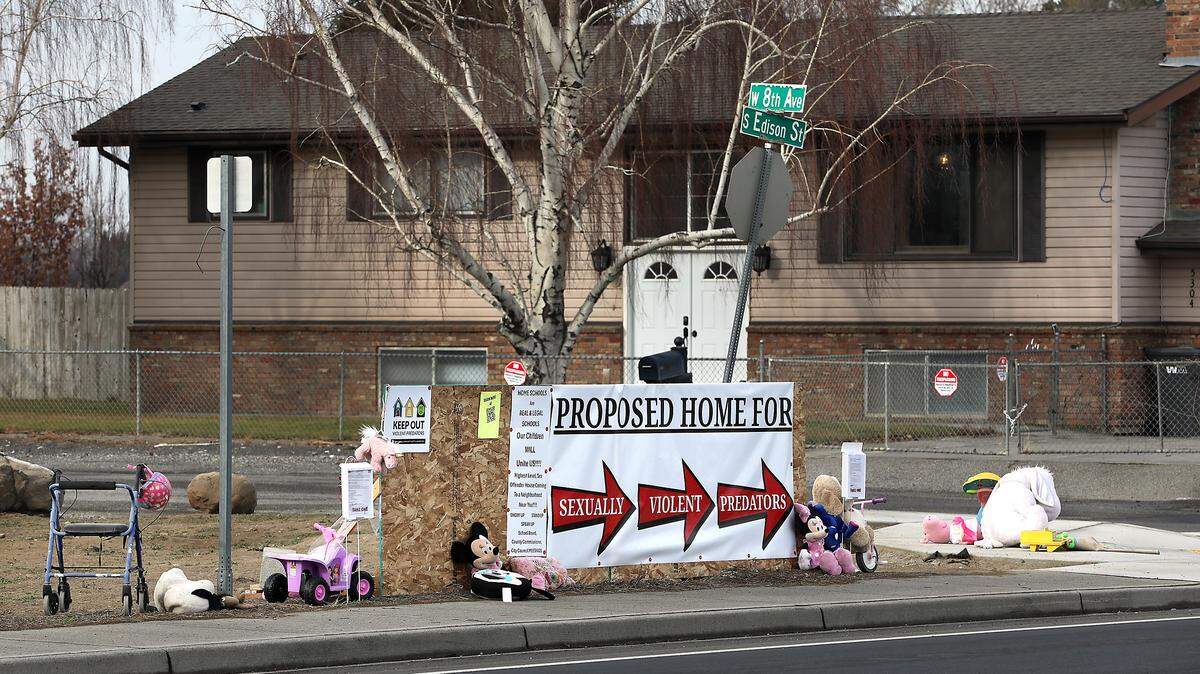
The scene at Kennewick’s Highlands Middle School last month sent a strong message to lawmakers in Olympia. An estimated 300 residents packed an auditorium for the town hall. Parents, grandparents, neighbors and survivors of sexual assault asked state officials not to place a less restrictive alternative (LRA) home for sexually violent predators in their neighborhood.
Lawmakers barely noticed. Their indifference will prove damning if one of those predators offends again.
Legislators from the Tri-Cities introduced eight bills designed to tighten placement rules for those homes. They would have increased safety buffers, required community notification, given prosecutors a formal voice in siting decisions and prohibited those homes adjacent to areas with children.
Some of the ideas in the bill made sense; some probably did not deserve to pass. All of them deserved at least a hearing, but only Senate Bill 6339, sponsored by Sen. Nikki Torres, R-Pasco, got one.
Torres’ bill would have required the owner of a transition home to be the one providing therapy to residents. It faced headwinds from defense attorney and state officials at the hearing. Then Committee Chair Claire Wilson, D-Auburn, said there were too many questions about it, and it died.
This year, the Legislature is meeting for one of its short sessions, 60 days to get work done including rebalancing the budget. It is always tough to get substantive legislation through a short session. That goes double for Republicans from east of the mountains in a Legislature controlled by Democrats. At a minimum Democrats owed Kennewick residents a hearing.
The fact that the concerns of Tri-Cities lawmakers received so little attention should trouble Washingtonians. Olympia refuses to confront the challenge of dealing with sexually violent predators lawfully, humanely and safely.
When lawmakers passed the state’s civil commitment law for predators 35 years ago, they did so based on a faulty legal analysis. They believed that the state could hold predators indefinitely if rehabilitation and release remained a realistic possibility. The courts demanded not just a possibility but a genuine path to release.
As a result, the Special Commitment Center on McNeil Island in Puget Sound, where the state held and treated offenders after their prison time, could no longer serve as a de facto permanent holding location. The courts repeatedly said that that amounted to a life sentence. So the state has released offenders into less restrictive alternative homes and communities without developing a well-regulated system for management.
Investigative reporting by the Seattle Times documented the problem. Washington released a record 68 people from civil commitment in 2023 alone, often with minimal public notice and oversight. One-quarter of people released under the program were arrested for new crimes.
There are few standards for review, no meaningful independent audits and little accountability, especially after the state laid off the ombudsperson who had been investigating troubles at the facility and eliminated the position’s independence.
Legislative inaction on accountability, transparency and community input does not make the problem disappear. The lack of statewide standards on where and how facilities can open invites local overreach.
Yet city councils may not effectively ban those offender homes from any viable site. Defense attorneys are correct that the civil commitment statute survives legal scrutiny only because a realistic path to community release exists. Blocking every feasible site would eliminate that path and invite court intervention.
Kennewick will not be the last community first shocked that a home for sexually violent predators is opening in a residential neighborhood, a half mile from an elementary school and within sight of bus stops and bike paths. Residents can only hope that a predator will not reoffend here.
But some resident of an ill-placed less restrictive alternative home somewhere will reoffend or contact the survivor of their original crime.
When that happens, the lawmakers who refused to even discuss reforming a broken system will share the blame. It is now too late to pass something in the 2026 session, but next year, civil commitment reform should be on the agenda.