
Agritourism can keep farms alive. WA lawmakers must protect it with new bill | Editorial
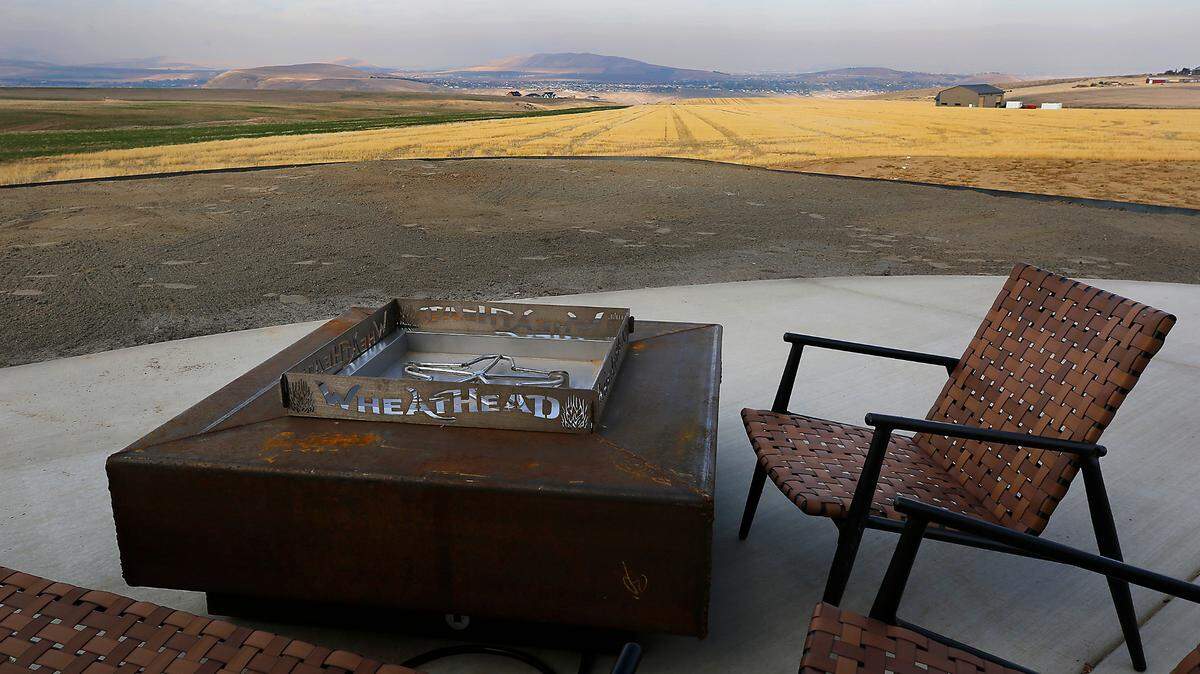
In rural Washington, agritourism is not just a charming day out. It’s a lifeline for farmers and communities.
A recent state Supreme Court decision has imperiled rural wineries, breweries and other agritourism businesses, but a bipartisan group of lawmakers – including Sen. Perry Dozier of Walla Walla and Sen. Judy Warnick of Moses Lake – has proposed a fix.
Their colleagues should support it.
The source of the problem is the Washington State Growth Management Act, which the state adopted to help protect rural agricultural areas from urban sprawl.
It’s not a bad law, but it has been applied in a bad way thanks to the overly broad court decision. The court ruled last fall that wineries, breweries and other agritourism venues may only serve food produced on site.
This isn’t just wineries that grow grapes and breweries that grow hops. Many places that host recreational farming programs, guided tours, petting zoos, farm festivals, barn parties, horseback riding, fishing or camping qualify as agribusinesses.
Lawmakers argue that under the Washington court’s reasoning, the local pumpkin patch with a corn maze next year might not be able to sell burgers and brats. The winery with a spectacular view might not be able to host weddings with caterers.
Agritourism allows farmers and ranchers to supplement or reinvent their businesses, to remain financially viable in tough times. And these are especially tough times. The Trump administration’s trade wars are acutely impacting the agricultural industry.
Welcoming visitors to experience life on the farm or the unique products for sale there is consistent with the goals of the Growth Management Act.
Those businesses are not tearing up farmable land to build a fast food restaurant. Rather, they are trying to provide the goods and services that make their venues appealing to visitors while preserving the rural character. Selling food or letting a food truck operate does not change that.
In fact, having food available can be an important public safety component, at least when alcohol is involved. When patrons buy both food and drink, the likelihood of irresponsible actions decreases.
Senate Bill 5055 would fix the problem by creating an “agritourism zone” within the state’s land use code.
It would redefine agritourism activities to include a broader range of food service options, balancing the need to protect farmland and the need to support economic development in rural Washington. The bill’s only glaring shortfall is that in its current form it would apply only to agritourism that operates six months or less a year. That’s not a viable model for a winery.
The bill is already encountering resistance as lawmakers stripped two critical elements from it. Lawmakers should pass the robust original version of SB 5055, not a watered down one that will allow legislators to pretend they did something without really helping.
Representatives from Futurewise, the advocacy group that brought the case to the Supreme Court in the first place, say the bill is unnecessary.
They contend that counties are overreacting to the ruling by banning food trucks and other food at agritourism sites. They believe the ruling should affect tasting rooms in King County, not a winery in the heart of the state’s growing region.
It’s hard to fault counties for erring on the side of caution when it comes to interpreting the Supreme Court and the propensity of activist groups to file lawsuits. That there is disagreement on the interpretation makes SB 5055 all the more necessary to clarify the issue, not less.
Futurewise’s overarching aim of preserving rural spaces is laudable, but it does so by imposing urban-centric standards on rural communities.
Perhaps that shouldn’t be surprising given that 10 of the group’s 14 board members say they are from the three counties between Olympia and Seattle on the Futurewise website.
The remaining four board members do come from the eastern side of the state. In fact, three of them – Ginger Wireman, Maricela Sanchez and Veronika Meiers – are from Benton and Columbia counties. They ought to understand the value of protecting agritourism in their own communities and should advocate sensible reforms like SB 5055 both with Futurewise and with lawmakers.
Preserving rural areas requires more than busybodies from Seattle dictating what is best for far-off communities. It requires farms and ranches to become dynamic, entrepreneurial enterprises that thrive on innovation and community engagement.
SB 5055 will not abandon the principles of the Growth Management Act but will update them to reflect modern agricultural and economic realities.