
WA is failing to curb homelessness. Gov.-elect Ferguson must figure out why | Editorial
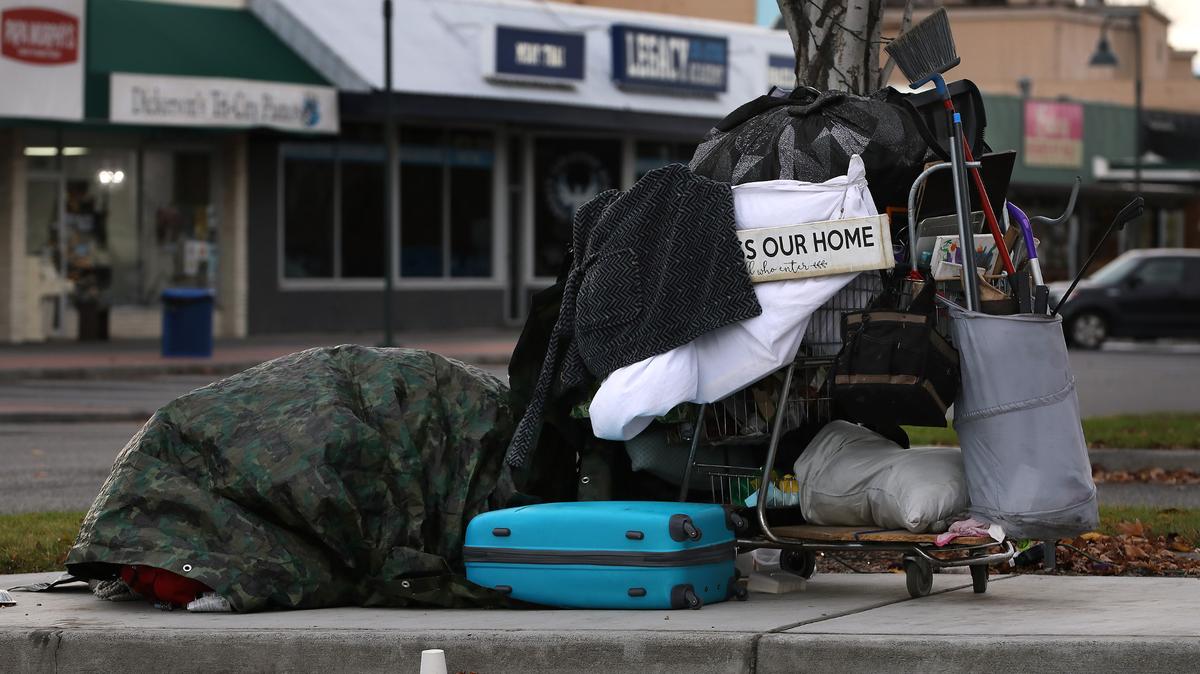
The Biden administration chose the Friday between Christmas and New Year’s Day to release the nation’s most recent census of homeless people, a traditional day to try to bury bad news.
It won’t work.
Americans see the skyrocketing number of people living on streets and in parks, especially here in Washington, which has more homeless residents than almost any other state.
The report issued by the Department of Housing and Urban Development is shocking. It tallied homeless residents based on the January 2024 Point-in-Time count. Homelessness across the country increased 18% year over year to 771,480. That came after a 12% increase the previous year.
Washington had the third-most homeless residents of any state — 31,554 of them — despite being the 13th most populous. Only California and New York had more.
Meanwhile more-populated, warmer states like Texas and Florida had fewer. Washington’s population of chronically homeless grew by more than half in just one year, reaching nearly 12,000. That is almost four times as many people as were chronically homeless in 2007.
Homelessness trends in the Tri-Cities are equally concerning with the state estimating the number of people unsheltered or involved in emergency housing programs as high as 3,500. Another 1,500 are considered at risk of becoming homeless.
Washington also had a dismally high rate of unsheltered population. It’s one thing for warmer places like Southern California and Florida to have a lot of people living outdoors, but January winter in Washington can be harsh.
At least our state’s homeless population grew more slowly than the national rate, and other states have more homeless per 10,000 residents, notably New York, Hawaii and Oregon.
New York has seen a massive influx of undocumented immigrants and asylum seekers in need of housing. Hawaii is dealing with the aftermath of a catastrophic wildfire that destroyed many homes. And Oregon … well, Oregon has issues.
That, however, is small solace. Homelessness remains a widespread humanitarian crisis in Washington.
It’s visible not just in Seattle but also in the Tri-Cities where panhandlers are almost always at the corners of many major intersections.
The U.S. Supreme Court last year ruled that communities may ban outdoor camping, but people without homes must go somewhere. Sometimes sweeping camps is necessary, but sweeps alone do not solve the problem. Shutting down camps only displaces a vulnerable population.
During just the past four years, Washington spent more than $4 billion on homelessness prevention and building new housing. Some of that money came from federal pandemic support, but most of it was state funds.
Taxpayers might rightly wonder what they are getting for such significant spending when there are more people homeless and chronically homeless in the state every year. Some homeless Washingtonians have transitioned into permanent housing thanks to public investment in support programs, but many more have become homeless.
When Bob Ferguson becomes governor this month, he should convene a frank conversation with lawmakers and local leaders about what is working and what is not.
They should demand real data from service providers that prove success. Vague promises and happy anecdotes are not enough.
The state cannot just throw money at a problem and hope for the best. That is doubly true as Washington faces a $15 billion budget shortfall, schools desperately need better funding and Washingtonians cry out for tax relief.
The Point-in-Time count that provided data for the HUD report has shortcomings, not least that the cold weather in many states in January skews where homeless residents are.
The count also relies on volunteers to go out and find homeless people. Nevertheless, it’s the best data available for identifying the people with the most critical needs.
Snow was still on the ground in the Tri-Cities last year when volunteers made contact with about 150 unhoused people.
Less clear is why HUD needs almost a full year to tabulate it and release a report. Timelier data would be more helpful to communities and states looking to budget and plan assistance programs for their homeless residents.