
Smoky skies shouldn’t be the new normal. If we don’t change, they will be

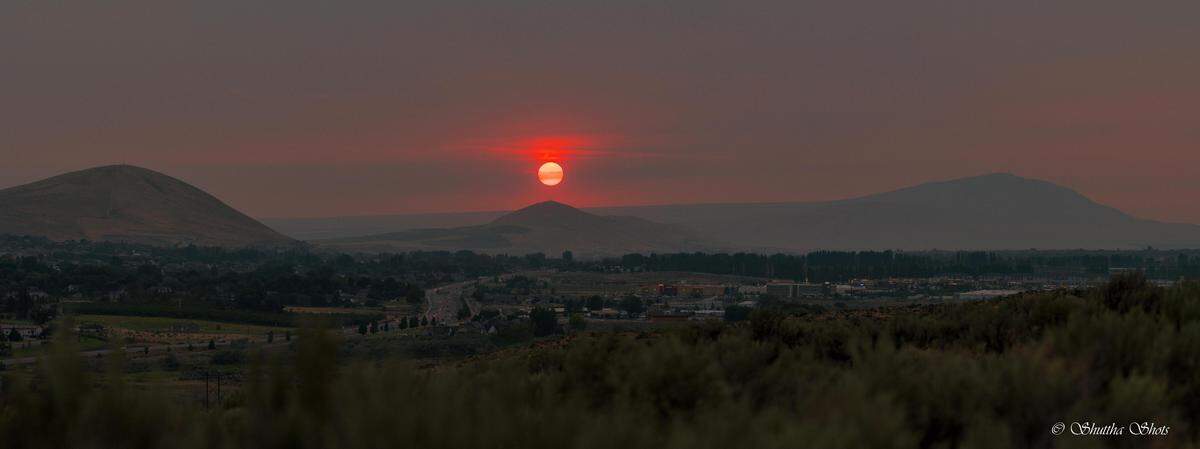
With back-to-back years of drifting smoke choking off outdoor activities in the community, Tri-Citians are beginning to wonder if this pattern might become a regular part of our summers.
We certainly hope not, yet there are state and federal officials calling the extensive wildfire season in the West “the new normal.” That’s distressing.
If this is the case, then the unhealthy haze blanketing the Northwest would also become a recurring problem, which is a sickening thought – literally and figuratively.
While we cannot control wind patterns and fires that rage through Canada, our own lawmakers can start making fire prevention more of a priority in Washington state, at the very least.
For years, money for state land management programs have been sacrificed and now we are paying the price.
In 2017, Washington legislators budgeted less money for fire-control measures than they did a decade earlier, according to The Seattle Times.
The Times also reported that even though private landowners paid fees that helped make up the difference, the budget the last 10 years for fire control has not kept up with the need – growing by only $2.3 million over the past decade.
That has to change.
Fire prevention programs are key to helping reducing devastating wildfires, which would include thinning overgrown forests – a task that has been neglected – and using controlled burns, which can be controversial.
Sen. Maria Cantwell, D-Wash., a ranking member of the U.S. Senate Committee on Energy and Natural Resources, said in an Associated Press story that some Seattle-area residents opposed controlled burns this spring because they feared smoke, but, “I guarantee you now, Seattle would definitely take a little bit of smoke instead of the eventual, all-summer-long smoke that we’re getting.”
She also said that longer and hotter wildfire seasons are the “new normal,” and she has been pushing for meeting forest fires with a very “aggressive” response, which would include drones, satellites and other technology.
Last year, Washington state officials took an encouraging step by releasing a 20-year plan to improve the health of our forests. Over time, this should help limit the spread of devastation caused by wildfires.
But federal agencies have to get on board too. Flames don’t care if it’s federal or state land.
So it was good to hear Agriculture Secretary Sonny Perdue pledge last week that federal agencies will increase fire prevention efforts. According to the AP, he said, “To truly protect our forests, we must increase the number and size of our (prevention) projects across the local landscape and across boundaries.”
It’s a shame, though, that it has taken summer after summer of wildfire devastation to get lawmakers’ attention. We hope our state lawmakers will hold Perdue to his word.
On Sunday the air quality in the Tri-Cities was rated “hazardous” by the Washington state Department of Ecology, which is the worst in recent memory.
Everyone was advised to stay inside with windows and doors closed. And while the air quality improved slightly Monday to “very unhealthy,” that wasn’t much comfort.
High school sports teams that are typically outside – like football, soccer and cross-country – were forced to improvise and practice indoors. Community pools were shut down, and restaurants closed their outdoor patios for diners.
People with breathing issues were told not to venture out at all, and cancel routine appointments.
Smoke in the air is bad for our health and stops us from enjoying what should be pleasant summer days in the Tri-Cities.
For too long fire prevention efforts were ignored and money was used elsewhere. Now we know what a mistake that was.