Late freeze could mean fewer WA cherries. How to check your trees for damage
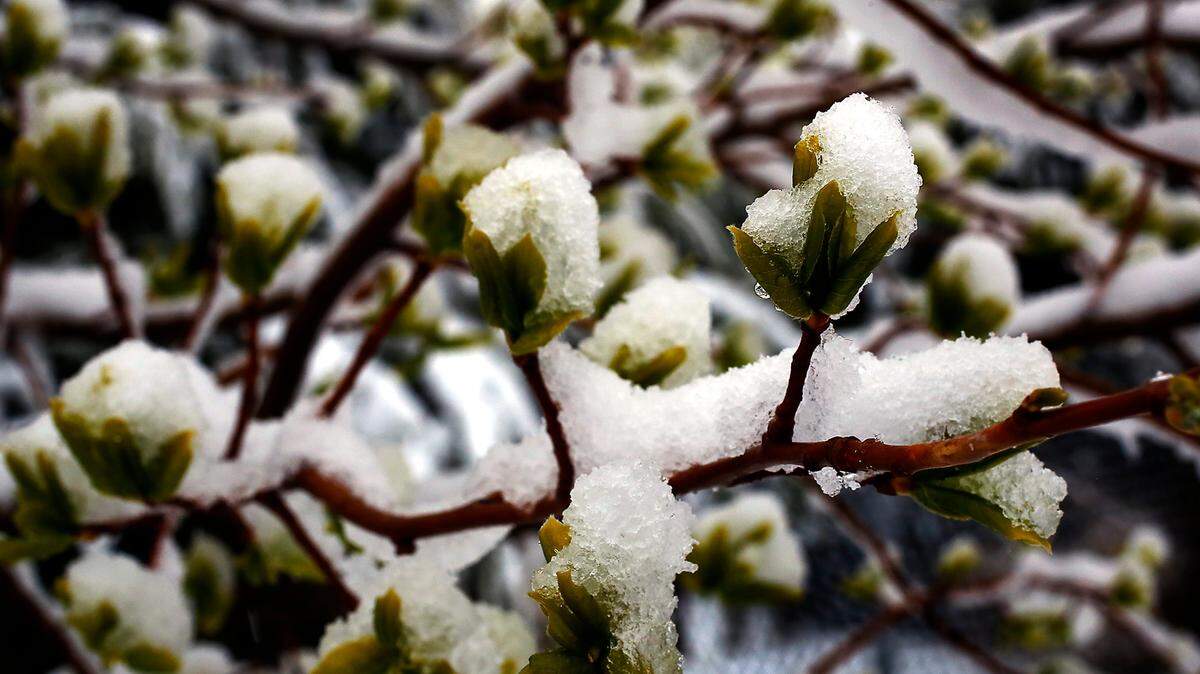
An abnormally late freeze could mean fewer cherries this year, but experts hope it won’t mean higher prices at the grocery store.
If you have a backyard tree, a horticulture expert from Washington State University says checking for damage is easier than hobby growers might think.
Two tree fruit specialists recently hosted an impromptu web conference with hundreds of fruit growers from across Washington state and the nation after the prolonged cold snap began raising concerns.
The call was organized by Matthew Whiting — a whole tree physiologist and horticulture professor — and Bernardita Sallato, a tree fruit extension specialist, based out of WSU’s Irrigated Agriculture Research and Extension Center in Prosser.
Whiting said there are steps home growers can take to assess the health of their fruit trees.
He said that the timing of the cold snap in early April means it was more likely to hurt cherry trees than apples or other fruit.
“Assessing trees can be pretty straight forward to evaluate, you can even do that without damaging the flowers,” Whiting said. “With a cherry, you can look at the central flower structure to see if it’s green and healthy or brown and damaged.”
The next step is to check for your ecosystem’s little helpers.
“The back yard grower who has a handful of trees should pay attention to the same issues (as farmers), so they would have to be looking for pollinator activity,” Whiting said. “They want to see at least reasonable visits to their trees from pollinators … That’s absolutely necessary to have insect mediated transfer of pollen.”
Whiting said that means looking for butterflies, moths, honey bees, bumblebees and other pollinators making frequent trips when temperatures rise above 55 degrees.
If backyard growers have done these things and are still concerned their tree might be having production issues, Whiting recommends checking WSU’s Tree Fruit website for information on how to check trees for various ailments. They can also reach out to an extension specialist with questions.
“Really our role is connecting with and serving the industry, we respond to grower concerns over all things horticulture in their orchards,” Whiting said.
Apple trees
He said that while apple growth typically starts later in the season than cherries, they are expecting a smaller apple crop this year because of the cold weather and low pollination.
He said backyard growers will probably see fewer, but higher quality, apples this year.
Because of the expected lower yield, apple growers will want to prune more aggressively.
Whiting said the fruit tends to produce in cycles where a low yield year is followed by a much heavier growth the next.
“You’re going to have to prune more aggressively for next year, if apples have a light year as we suspect they might, they’ll come back very heavy,” he said. “It’s a simple thing, but next winter they’ll have to be more aggressive with the pruning to remove the crop load to bring it back into balance.”
Commercial concerns
“On the cherry side, we can absolutely expect a significant reduction in production of cherries in Washington this year,” Whiting said. “All signs throughout the state are that frost damage are going to reduce the crop load, and poor pollinating would as well.”
He said that while there would be a reduction in yield, it’s not something consumers are likely to notice at the supermarket beyond a small price bump if production is very low.
Whiting said the fruit growing industry in Washington is more resilient than it used to be thanks to diversity of growing locations and staggered production.
That means a late freeze in one area might not have the same kind of impact that it would in an orchard elsewhere in the state.
“We grow cherries all across the state — high elevations, low elevations, along the riverbanks, in the foothills of the mountains — and we grow so many that we really spread out the flowering and fruiting time,” Whiting said.
“Growers have gotten better about dealing with climate and weather issues. There will definitely be a lot of great Northwest cherries coming out of Washington this summer, but not as much as there might have been had we not had that freeze,” he said.
Whiting said that while many called the late freeze unprecedented, it wasn’t for the reason people might think.
He said what really began to concern growers was that they hadn’t seen pollinators in their orchards for four or more days.
“I was a bit surprised to hear from the industry veterans in Washington state that were calling it unprecedented,” he said.
“I think the part that’s unprecedented isn’t necessarily the frost and the low temperatures … we’ve had more damaging frosts that have been around the Easter weekend, but it was this prolonged period of abnormally low temperatures. They weren’t extreme lows, but it was more like (a longer period),” he said.
Whiting said that when pollinators are missing for the better part of a week, it can begin to cascade into production problems.
Kennewick temperatures began to dip on April 8 and didn’t climb back to a daily high above 55 degrees until April 17.
Over at Ray French Orchard in Richland, trees are beginning to bloom.
Owner Robin French said what he’s really concerned about this year is the pollination. He’s hopeful it will pick up.
French said the varieties they grow are fairly resilient, so he’s confident the orchard will be open for pay-to-pick in the summer and fall for his cherry, peach and apple trees.
This story was originally published April 28, 2022 at 5:00 AM.